Barbell Curl: Proper Form, Step by Step
Definitive barbell curl proper form guide: setup, step-by-step execution, breathing, tempo, common mistakes with fixes, and a short safety note.
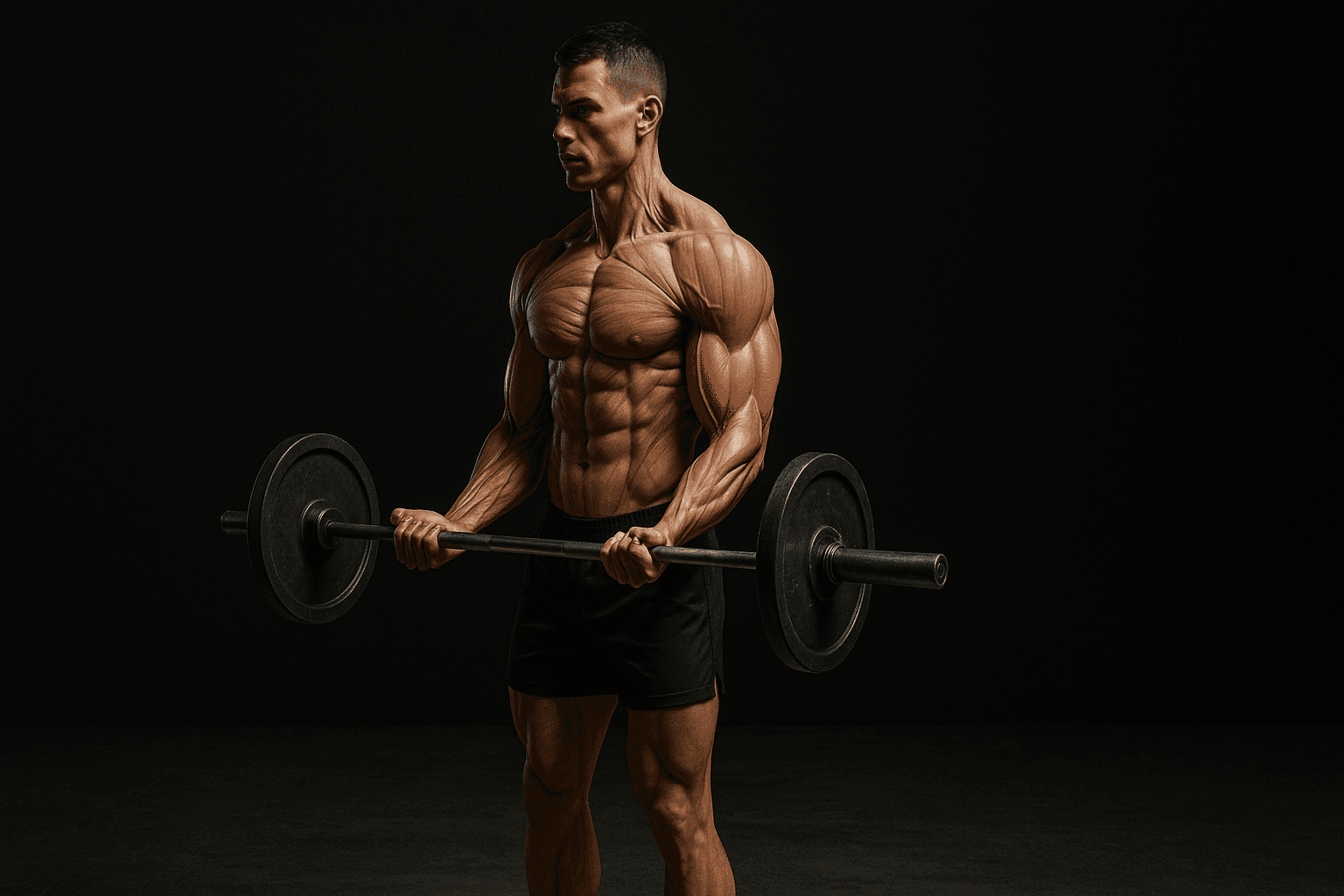
Photo by RepBro.
The barbell curl proper form is: feet hip-width, grip shoulder-width on the bar, elbows held at your sides, chest up, and curl with a controlled tempo—exhale while lifting and inhale while lowering. Keep the spine neutral and avoid using momentum; stop and reassess if you feel sharp pain.
What is the correct setup before the first rep?
- Stand with feet about hip-width (roughly 35–40 cm / 14–16 in), knees soft, weight distributed evenly through the midfoot.
- Use a standard barbell (about 20 kg / 45 lb if unloaded) or an EZ bar if straight-bar wrist position feels uncomfortable.
- Grip the bar with a supinated (palms-up) grip, hands roughly shoulder-width apart. A narrower grip emphasizes the biceps short head; a slightly wider grip shifts tension toward the long head.
- Unrack the bar or pick it up from the floor with a hinge and stand tall. Scapulae should be neutral (not rounded forward), chest lifted, and core engaged.
How do I perform the barbell curl step by step?
- Reset: Stand tall, elbows relaxed at your sides, wrists neutral (not excessively bent). Keep a small natural lumbar curve—don’t hyperextend to cheat.
- Begin the concentric: Exhale and flex the elbows to raise the bar. Think of bringing the forearms toward the shoulders rather than moving the shoulders toward the bar. Move the bar in a straight vertical path.
- Top position: Pause 0.5–1 second at the top—elbows stay roughly against the torso. Squeeze the biceps lightly without shrugging or letting the wrists cock back.
- Eccentric: Inhale and lower the bar under control for the prescribed tempo. Allow the elbows to extend almost fully but avoid locking out aggressively if your program prefers continuous tension.
- Repeat with clean form for the target reps.
Key execution cues: keep elbows pinned to the sides, chest up, wrists neutral, and avoid excessive torso movement. If you need to swing the torso to move the weight, lower the load.
What breathing and tempo should I use?
- Breathing: Exhale during the concentric (lifting) and inhale during the eccentric (lowering). This follows the general rule to exhale on exertion.
- Tempo: Use a controlled tempo. A practical, evidence-informed choice is 2-1-2: 2 seconds concentric (lift), 1 second pause at the top, and 2 seconds eccentric (lower). For heavier strength work, you might do a 1-0-3 pattern (controlled slow lowering). For endurance focus, 1-0-1 with lighter load is OK but keep form strict.
- Rest: 60–120 seconds between sets depending on load and training goal (shorter for hypertrophy endurance, longer for heavier strength sets).
What are common mistakes and how do I fix them?
-
Mistake: Using body swing or hip drive to lift the bar (cheating).
- Fix: Reduce weight by 10–30%, slow the tempo, and perform strict sets. Cue: "elbows stay still." Perform seated curls or preacher curls to learn elbow stability.
-
Mistake: Elbows drifting forward or flaring out.
- Fix: Tuck elbows gently at the sides and imagine keeping your upper arms glued to your ribcage. Use a mirror or video to check alignment.
-
Mistake: Wrists bending backward (extending) at the top.
- Fix: Grip the bar firmly and keep the wrist neutral. Use an EZ bar if wrist position causes pain or forces bending.
-
Mistake: Partial reps or bouncing at the bottom.
- Fix: Use full controlled range: lower until near elbow extension (soft lock) then curl without momentum. Slow the eccentric to increase control.
-
Mistake: Too-heavy loads causing rapid reps and poor tension.
- Fix: Drop the weight and aim for the prescribed tempo and clean movement. Track weights and progress gradually.
How should I warm up and add barbell curls to a session?
- Warm-up: 5–10 minutes of general activity, then 1–2 light warm-up sets for the biceps (e.g., 1 set of 12 with an empty bar or light dumbbells), emphasizing clean tempo.
- Programming: Place seated or compound pulls (rows, pull-ups) earlier in the workout if you prioritize back strength. If biceps are the focus, use curls earlier while you’re fresh. You can track the exercise and load using the RepBro app to log progress and integrate it into a plan: https://apps.apple.com/us/app/gym-workout-coach-repbro/id6763749305. To import this exercise into a training plan, use https://www.repbro.app/import.
Is the barbell curl safe, and what should I watch for?
Safety note: Stop immediately and consult a qualified professional if you experience sharp pain, joint locking, significant swelling, or numbness. This guide is not medical advice; it’s technique-focused. If you have pre-existing shoulder, elbow, or wrist issues, seek assessment and personalized guidance.
Short FAQ
Q: How many reps should I do to build bigger biceps? A: Common hypertrophy ranges are 6–12 reps per set. Use a load that allows that range with good form and 1–3 minutes rest depending on intensity.
Q: Can I use a barbell curl every workout? A: You can do barbell curls frequently if volume is managed. Aim for 6–20 total weekly sets for biceps spread over 2–3 sessions, and monitor recovery and strength.
Q: Will barbell curls hurt my elbows? A: They can if load is excessive or form is poor. Reduce weight, use an EZ bar, control the tempo, and warm up thoroughly. Stop on sharp pain and consult a professional.
One-sentence takeaway: Use a shoulder-width supinated grip, pin your elbows to your sides, control a 2-1-2 tempo, and lower the load rather than sacrificing form when reps break down.
Frequently asked questions
- Should I use a straight bar or an EZ bar for curls?
- Both work. A straight bar loads the biceps more directly; an EZ bar reduces wrist stress for some lifters. Choose what feels pain-free and lets you maintain strict form.
- How many reps and sets are best for biceps growth?
- Common targets: 6–12 reps for muscle-building, 3–5 sets per exercise. You can also use 8–20 reps for higher time-under-tension work. Adjust load so form stays strict.
- What if my elbows or wrists hurt during curls?
- Reduce load, slow the tempo, switch to an EZ bar, and warm up the joint. Stop on sharp pain and consult a qualified professional; don’t self-diagnose.