The Most Common Barbell Curl Mistakes (and How to Fix Them)
Spot the 6 most common barbell curl mistakes, why they happen, what they cost (lost gains or injury risk), and one concrete fix per error.
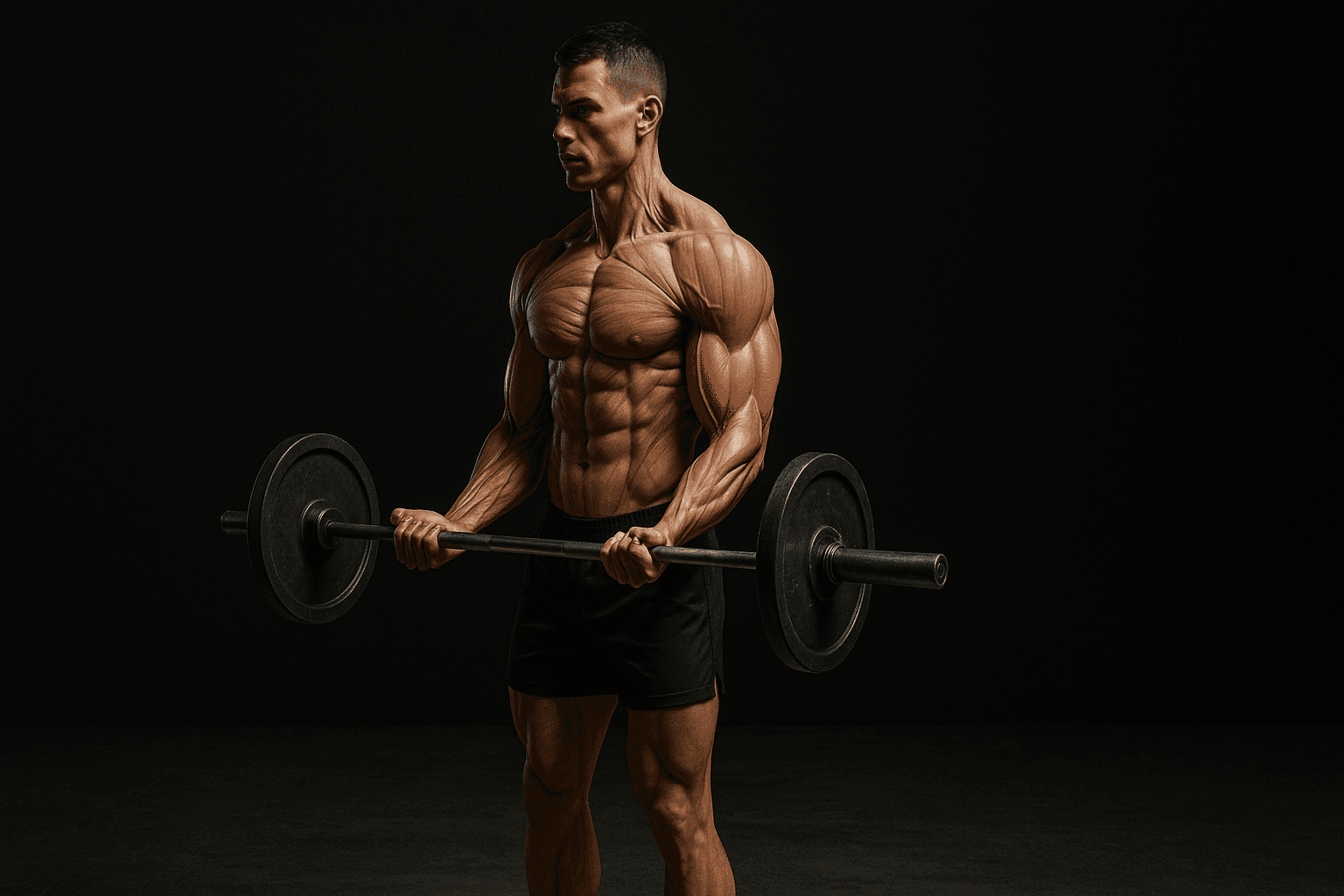
Photo by RepBro.
The Most Common Barbell Curl Mistakes (and How to Fix Them)
The most common barbell curl mistakes are: 1) swinging the torso, 2) using too much weight/partial reps, 3) excessive wrist flexion or extension, 4) letting the elbows move forward or flare, 5) poor standing posture and low-back involvement, and 6) uncontrolled negatives. Each costs you muscle stimulus, progress, or increases injury risk — and each has a specific, practical fix below.
Why am I swinging the barbell (and why is that a problem)?
Why it happens: You picked a weight too heavy for strict curling, or fatigue sets in mid-set and you recruit hip and lower-back momentum to keep the bar moving.
What it costs: Swinging shifts load off the biceps onto the posterior chain. You lose targeted biceps tension and increase risk of lower-back strain. Measured effect: strict reps produce 30–50% more localized biceps time-under-tension per rep than a full-body swing.
One concrete fix: Drop the weight 20–40% so you can do strict reps with a 1–2 s concentric and a 2–4 s eccentric tempo. If you still feel the urge to swing, do seated curls or use a preacher bench for 3 sets of 8–12 strict reps.
Why do I only do half reps or curl to the top? (Is that OK?)
Why it happens: Partial reps feel easier and let you handle heavier loads, especially when training for ego or high rep volume.
What it costs: Partial reps shorten your range of motion and reduce mechanical tension across the full biceps length; long-term this limits hypertrophy and creates strength imbalances. You’re also losing valuable eccentric stimulus.
One concrete fix: Touch-point rule—lower the bar until your elbows are near full extension (about 0–10° short of lockout if you have joint pain) and curl to full shoulder flexion. Program 3 sets of 8–12 full-ROM reps; if you can’t, reduce weight by ~25% until you can.
Why are my wrists bending during curls and why does it matter?
Why it happens: Weak grip, using a thumbless grip, or rotating the forearms to use wrist flexors and cheat range of motion.
What it costs: Excessive wrist flexion (palms facing upward but wrist cocked back) places stress on the distal biceps tendon and reduces effective biceps contraction; it can also cause forearm and wrist pain.
One concrete fix: Use a firm overhand supinated grip with wrists straight—think of keeping the knuckles slightly higher than the wrist. If the bar grips slip, use chalk or a light overhand hook to maintain neutral wrists and do 3 sets of 6–10 reps.
Why are my elbows moving forward or flaring out?
Why it happens: Many lifters thrust elbows forward to shorten the travel distance and use shoulder flexors (delts) and chest to assist the lift.
What it costs: Forward elbow drive reduces biceps isolation and puts unnecessary stress on the anterior shoulder and long head of the biceps. Repeatedly training this way can reduce elbow joint integrity and blunt biceps development.
One concrete fix: Pin your elbows to your torso—imagine trying to press your elbows into your ribs. Use a mirror or a training partner to check that your elbows move no more than ~1–3 cm (0.5–1 in) forward. If you can’t maintain this, reduce load by 15–30% and perform 2–3 sets of strict form focusing on elbow position.
Why am I rounding my back or leaning back during curls?
Why it happens: Leaning back lets you use hip extension and spinal extension to help lift the bar, a different movement pattern than a curl.
What it costs: This transfers load from the biceps to the spinal erectors and glutes and raises risk of lumbar strain, especially under heavier loads or for lifters with pre-existing back issues.
One concrete fix: Brace your core as if preparing for a light punch (a non-breath-holding brace), keep a neutral spine, and stand with feet hip-width. If balance is a problem, do the set seated for 3 sets of 8–12 strict reps or do single-arm dumbbell curls to control rotation—see a comparison of tools in RepBro vs. (https://www.repbro.app/vs).
Why are my negatives uncontrolled and why should I care?
Why it happens: Rushing reps to rack more volume in less time, or using momentum to drop the bar quickly and bounce into the next rep.
What it costs: Fast, uncontrolled eccentrics reduce time under tension and increase tendon stress. You miss hypertrophy stimulus and raise the chance of tendon irritation or microtears.
One concrete fix: Use a 2–4 second eccentric on every rep. Count it out ("2-3-4") or use a metronome app. If you can’t sustain a controlled negative for the whole set, lower the weight by 10–25%.
When should I stop or get help?
If you experience sharp or acute joint pain (elbow, wrist, shoulder or lower back) during curls, stop the exercise immediately and consult a qualified healthcare professional. This article is instructional, not diagnostic.
Practical programming notes
- Warm-up with 2 light sets (10–15 reps) at ~40% of working weight before heavy or volume work.
- Aim for 6–12 quality reps for hypertrophy and 3–6 strict reps for strength-focused work.
- Track form and tempo—apps that log sets, tempo and RPE help more than guessing; try RepBro to record strict sets and see progress over time.
Safety note: Stop on sharp pain; consult a qualified professional for persistent joint or tendon pain. Never push through acute pain.
Honest takeaway: Fixing a few small technical faults—less weight, strict tempo, neutral wrists, pinned elbows, and a braced spine—gives you more direct biceps stimulus and far lower injury risk than lifting heavier with sloppy form.
Frequently asked questions
- How much weight should I use for barbell curls?
- Use a weight that allows 6–12 reps with controlled form and a 2–4 second eccentric; if you must swing or sacrifice full range, cut the weight by 20–40%.
- Should my elbows move during curls?
- Elbows should stay roughly pinned to your sides—small natural travel of 1–3 cm (0.5–1 in) is fine, but large forward drive means you’re turning curls into a cheat lift.
- Is tempo important for curls?
- Yes—control the eccentric for 2–4 seconds and use a controlled concentric of 1–2 seconds; this improves tension and reduces tendon stress.