Bench Press: Muscles Worked and the Best Alternatives
Exactly which muscles the bench press trains, where it belongs in a program, and 4 practical alternatives with when to pick each—equipment, injuries, plateaus.
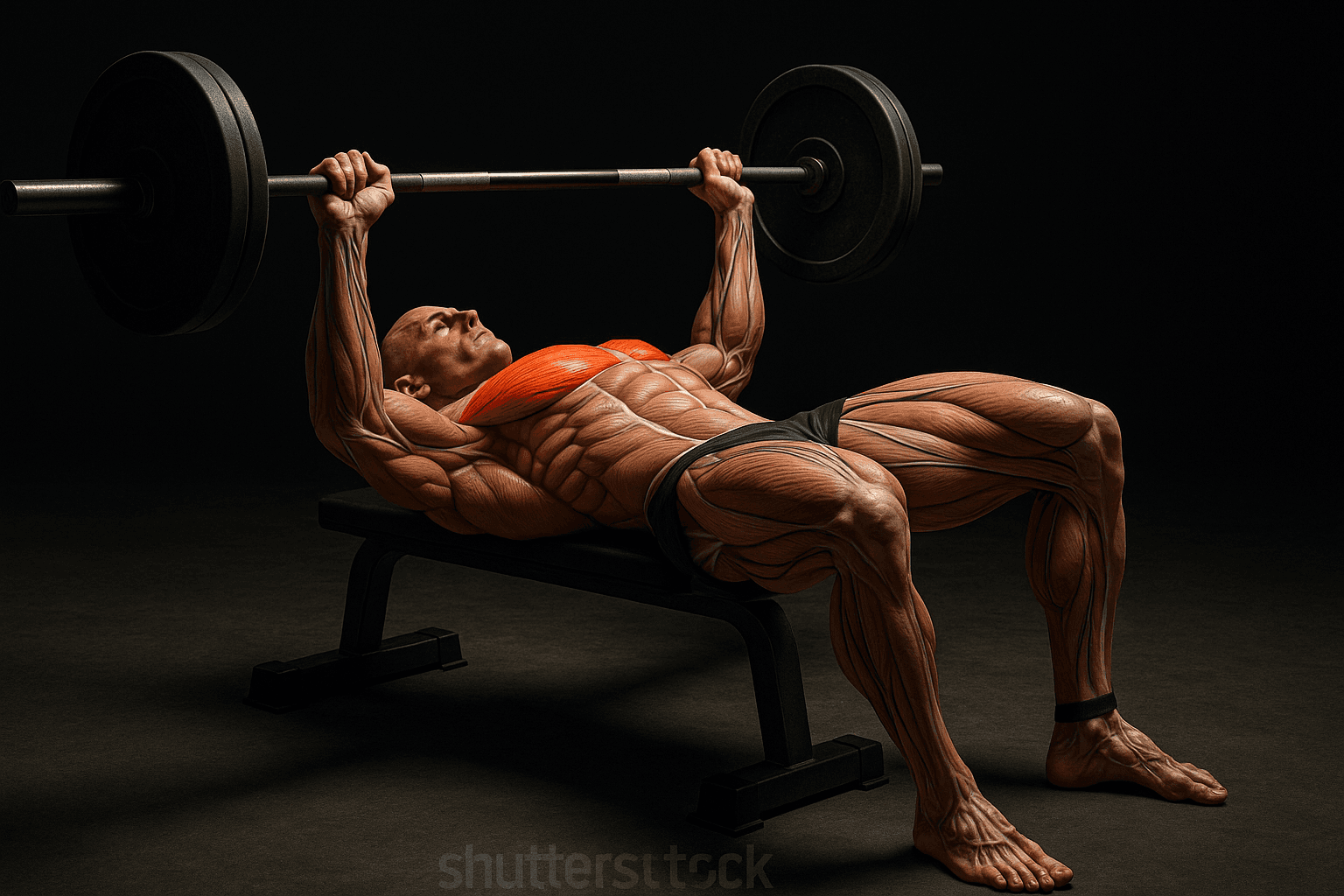
Photo by RepBro.
Bench Press: Muscles Worked and the Best Alternatives
The bench press primarily trains the pectoralis major (chest) and secondarily the triceps brachii and anterior deltoid (front shoulder); it also engages stabilizers such as the serratus anterior, rotator cuff, lats, and core. In plain terms: chest is the main mover, triceps and front shoulder finish the lift, and several smaller muscles control the bar path and shoulder integrity.
What muscles does the bench press train?
- Primary: Pectoralis major (sternal/head and clavicular/head). Rough estimate of contribution: ~55–70% of the horizontal pushing work. The bulk of force in the middle of the press comes from the pecs.
- Secondary: Triceps brachii (medial and lateral heads for lockout) and anterior deltoid (shoulder flexion and helping the bar off the chest). Together they contribute ~30–45% depending on grip width and variation.
- Stabilizers and assistants: Serratus anterior (scapula protraction), rotator cuff (shoulder stability), latissimus dorsi (control of descent and setup), scapular retractors, and core muscles for a stable pressing platform.
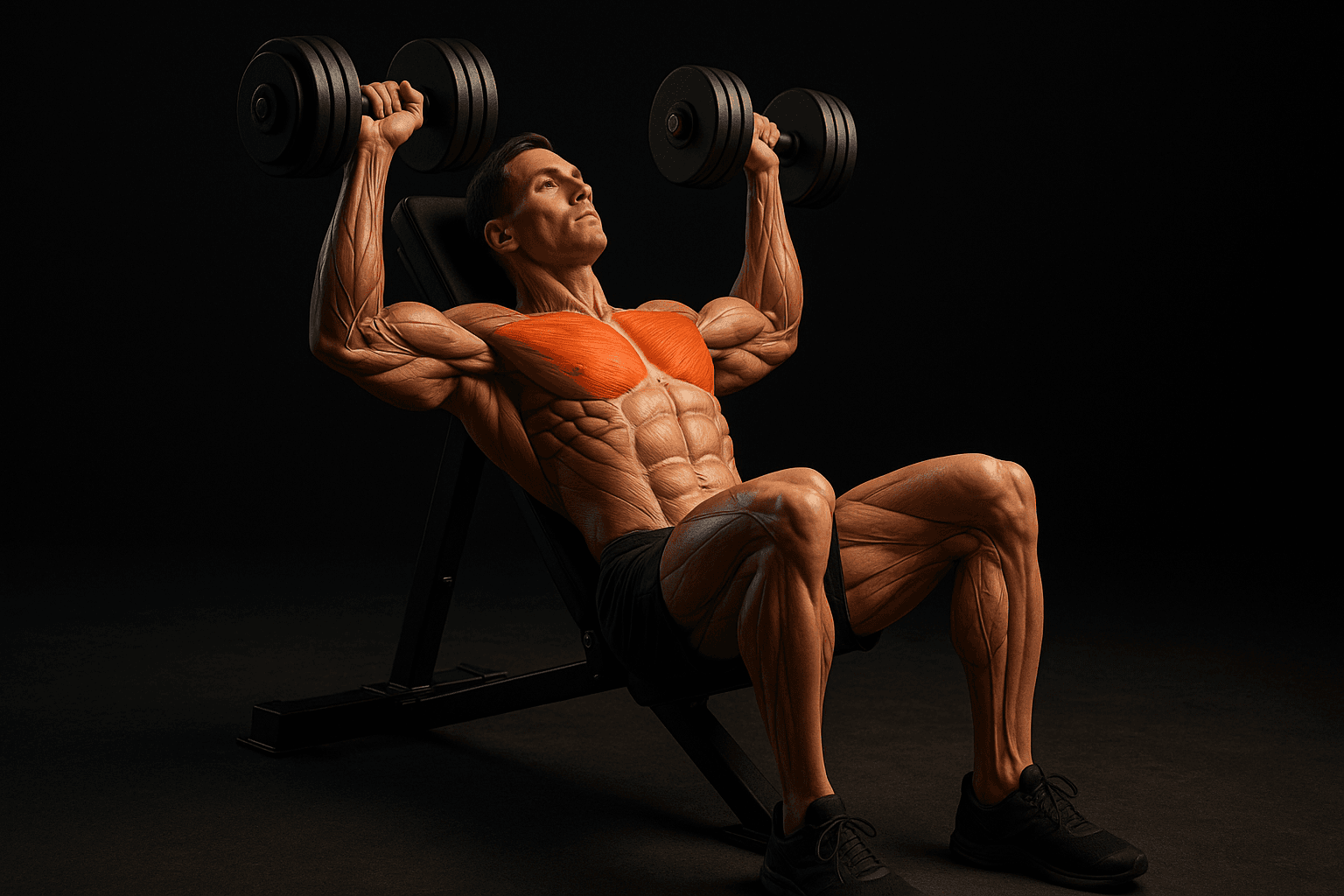
Different bench variations shift emphasis: a wider grip increases chest moment and reduces triceps demand; a close grip increases triceps load; incline bench shifts more work to the clavicular head and anterior deltoid; decline shifts slightly more to the lower pec fiber.
Where does the bench press fit in a program?
- Role: Primary horizontal pushing compound. Use it as a main heavy lift on an upper-body or full-body strength day.
- Frequency: 1–3 times per week. For most lifters, 2 sessions per week balances recovery and progress.
- Volume: 6–12 barbell bench sets per week is common for strength (3–6 sets × 2 sessions). For hypertrophy aim for 10–20 total chest-directed sets/week (bench plus accessories).
- Intensities: For strength use 75–95% of 1RM, 3–6 reps per set; for hypertrophy use 65–80% of 1RM, 6–12 reps; for endurance or technique use lighter loads, 12–20 reps.
- Progression: Add 1–2.5 kg (2–5 lb) to the bar for smaller jumps, or add a set/repeat with the same weight, or improve bar speed. Track it—apps like RepBro make incremental loading and session notes easier.
What are safe form cues and the main risks?
Form cues: plant feet, create a stable arch (not extreme), retract and depress scapulae, touch the lower chest with a controlled path, and drive the bar up and slightly back to rack position. Grip width should let the forearms be roughly vertical at the bottom.
Safety note: Stop on sharp pain and consult a qualified professional for persistent problems. Use a spotter or safety pins when lifting heavy. This is general guidance, not a diagnosis.
What are the best alternatives to the bench press—and when to pick each?
Below are four practical substitutes. For a deeper side-by-side comparison of exercises and decisions, see RepBro's comparison tool at https://www.repbro.app/vs.
- Dumbbell Flat Press
- Why it works: Keeps the horizontal pressing pattern but increases range of motion and forces more unilateral control.
- When to pick it: Choose dumbbells if you don't have a reliable spotter, if you want to fix left/right imbalances, or if you're stalling on a barbell bench press because of asymmetry.
- Equipment: Pair of dumbbells; adjustable bench.
- Programming: Use the same rep ranges as barbell benching. Reduce weight by ~10–20% per hand for comparable stimulus.
- Injury note: More natural shoulder movement can reduce joint stress for some lifters.
- Push-ups (progressed: elevated, banded, or weighted)
- Why it works: Bodyweight horizontal press that trains chest, triceps, and anterior deltoid with added stability demand.
- When to pick it: No bench available, training at home, early rehab or return-to-play phases, or for high-rep conditioning.
- Progressions: Standard → feet-elevated → weighted vest/plate on back → banded for overload at the top.
- Programming: If aiming for hypertrophy, accumulate 50–150+ reps per session with some sets near failure or use added load to reach 6–15 reps per set.
- Floor Press (barbell or dumbbell)
- Why it works: Shortens range of motion and minimizes shoulder extension, putting more emphasis on the triceps and lockout strength.
- When to pick it: Shoulder pain with full ROM benching, or to target sticking points on the mid/lockout portion of the lift and break a plateau.
- Equipment: Barbell/dumbbells and a clear floor space; no bench required.
- Programming: Heavy sets of 3–6 for lockout strength or 6–10 for hypertrophy; use as an accessory to regular benching.
- Landmine Press (single-arm or two-handed)
- Why it works: A shoulder-friendly pressing pattern with a diagonal bar path and anti-rotation demand; useful for unilateral strength and core integration.
- When to pick it: Limited bench access, shoulder soreness that tolerates a more natural arc, or as a variation to break plateaus by loading differently.
- Equipment: Landmine attachment or secure barbell end in a corner.
- Programming: 3–5 sets of 6–12 reps per side; great as an accessory helping pressing strength and stability.
How to choose among these alternatives?
- No equipment or travel: push-ups. Use progressive overload (weighted vest or bands) as you improve.
- No spotter but still heavy: dumbbell press if dumbbells are available; floor press if you want to limit ROM and risk.
- Shoulder pain with full ROM bench: floor press or landmine press. If pain persists, consult a clinician.
- Stalled barbell bench: rotate in dumbbells or floor press for 4–8 weeks to address weak links (stability, triceps lockout), then retest.
How to integrate alternatives into programming?
- Replace the main bench session with an alternative for a training block (4–8 weeks) rather than swapping every workout. That gives time for adaptations.
- Keep total weekly chest volume similar: if you drop heavy bench sets, add equivalent sets of dumbbell presses or push-ups to preserve stimulus.
- Use alternatives as accessories: e.g., bench main day + floor press day for lockout work.
Exercise-form safety reminder: stop if you feel sharp or unusual joint pain and consult a qualified professional for persistent issues; use spotters or safety pins when lifting heavy. This is not medical advice.
One-sentence takeaway: The bench press is the go-to horizontal press for chest, triceps, and front shoulder strength—use dumbbells, push-ups, floor presses, or landmine presses when equipment, joint issues, or plateaus require a safer or more specific approach.
Frequently asked questions
- Is the bench press best for building chest size?
- The bench press is a highly effective compound press for chest hypertrophy but should be combined with variety (dumbbells, incline work, flyes) and enough weekly volume (roughly 10–20 sets for chest) for best results.
- Which muscles limit the bench press?
- Common limiting muscles are the triceps in lockout and the anterior deltoids or pecs in the mid-range; weak stabilizers (rotator cuff, serratus anterior) can also cap progress and compromise form.
- Can push-ups replace bench pressing?
- Push-ups are a viable alternative for strength and hypertrophy when progressed properly (weighted, elevated feet, band-resisted) but they differ in loading, ROM, and transfer—use them if you lack equipment or need a joint-friendly option.