Box Jump: Which Muscles It Trains and Practical Alternatives
Clear, evidence-aware guide: which muscles box jumps train, how to use them in a program, and four practical alternatives for different goals, equipment limits, and injuries.
Photo by RepBro.
Box jump — direct answer (40–60 words):
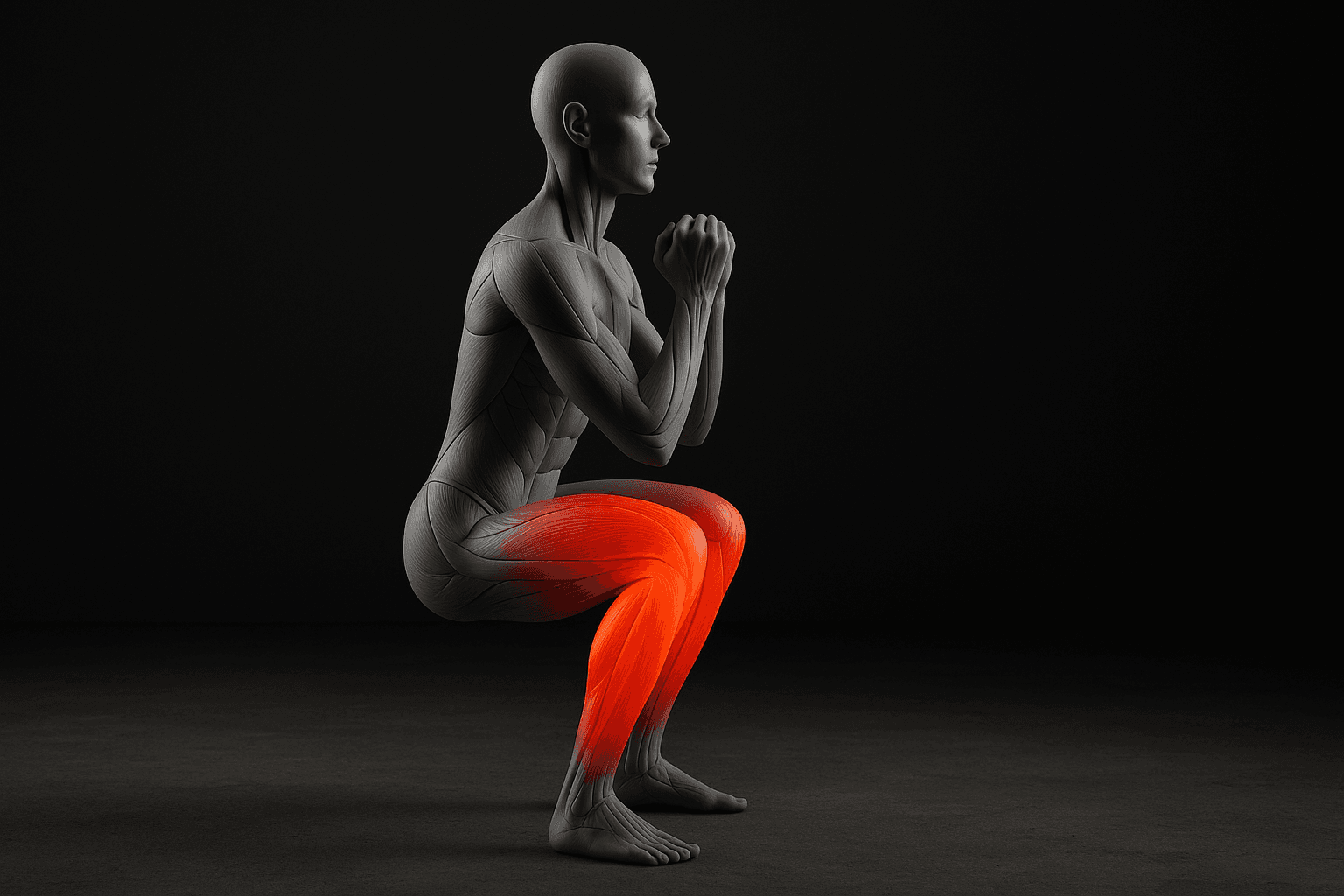
Box jumps primarily train the gluteus maximus and quadriceps by emphasizing explosive hip and knee extension. Secondary contributors are the hamstrings, calves, hip abductors and core. They develop vertical power and reactive ability with relatively low eccentric drop compared with depth jumps.
What primary and secondary muscles does a box jump work?
Primary muscles:
- Gluteus maximus: main driver of hip extension and the largest contributor to upward propulsion.
- Quadriceps group (rectus femoris, vasti): primary knee extensors contributing to takeoff power.
Secondary and stabilizers:
- Hamstrings: assist hip extension and help stabilize the hip and knee during takeoff and landing.
- Calves (gastrocnemius, soleus): provide ankle plantarflexion and spring at toe-off.
- Hip abductors and adductors (including gluteus medius): stabilize the pelvis during single-leg phases and landing.
- Core and spinal erectors: transfer force between lower and upper body and help maintain posture mid-air and on landing.
Biomechanically, a box jump emphasizes the concentric triple extension (hip, knee, ankle) phase with a relatively short ground contact time. Landing onto a box reduces the vertical drop compared with a depth jump, which lowers eccentric loading on the joints.
Where do box jumps fit in a training program?
- Training goal: use box jumps in power or speed-strength phases where improving explosive upward force is the priority. They complement strength work (squats, deadlifts) and technical Olympic-lift variants.
- Session placement: early in the workout after warm-up and mobility but before heavy squats or fatiguing strength sets when the nervous system is fresh.
- Frequency and volume: most coaches program plyometrics 1–2 times per week. Keep volume low and intensity high: multiple short sets of low reps emphasize quality over quantity. Allow full recovery between sets and sessions to preserve power output.
- Progression: increase box height conservatively, increase sets/reps only when technique and jump quality are excellent, or add complexity (single-leg variants, weighted vest) once you’ve mastered baseline performance.
How should I progress box jumps safely?
- Prioritize technical quality: soft, balanced landings on the box with hips back and knees aligned.
- Increase height in small increments and never at the expense of form. If you frequently miss or land with excessive forward lean, reduce height.
- Use regressions (lower box, squat jumps) after fatigue or when recovering from minor soreness.
What safety precautions should I follow?
Stop and consult a qualified professional if you feel sharp pain. Begin with a height that allows confident, controlled landings. Land with knees aligned over toes, hips back and soft knees, and step down rather than jump down when box height is high. Never diagnose injuries from online content—seek an in-person clinician when needed.
Which alternatives train similar qualities, and when should I choose each?
Comparison table (quick reference):
| Exercise | Equipment | Primary stimulus | Impact | When to pick |
|---|---|---|---|---|
| Squat jump (no box) | None | Vertical concentric power | Low–moderate | No equipment, beginners, technical practice |
| Broad jump | None | Horizontal power and hip extension | Moderate | Sport-specific horizontal force, outdoor space |
| Trap-bar jump (or hex-bar jump) | Trap/hex bar | Loaded vertical power and higher overload | Moderate–high | Plateau on bodyweight jumps, want progressive overload |
| Weighted step-up / step-up to box | Dumbbell/kettlebell | Single-leg concentric strength, low-impact | Low | Joint issues, lower-impact alternative, rehab or strength emphasis |
-
Squat jump (bodyweight): a vertical jump performed from a countermovement without landing on a box. Use when you lack a box, are new to plyometrics, or want to practice jump mechanics. Lower impact than repeated box landings and easier to regress.
-
Broad jump: emphasizes horizontal force production and longer takeoff distance. Choose this if your sport requires horizontal explosiveness (sprinting, field sports) or if you want a different transfer of force than vertical box jumps.
-
Trap-bar jump or loaded jump: perform jumps while holding a trap (hex) bar to add progressive overload while keeping a neutral torso. Use these when you outgrow bodyweight jumps and need load for continued adaptation. Ensure you maintain safe technique and keep jumps lower in reps.
-
Weighted step-ups or box step-ups: step-ups remove the high-impact landing and develop single-leg concentric strength and stability. Pick these for joint sensitivity, rehab phases, or when reducing eccentric loading is required.
How do I decide between jumps and strength work?
Use strength work (squats, deadlifts, lunges) to build the force capacity that supports explosive expression. Use box jumps to convert that force into rate-of-force development. In practice, combine both: strength phases with 1–2 plyo sessions per week during power blocks; reduce plyos during maximal strength or heavy loading cycles.
Limitations — what apps, videos, or AI can’t do for you
- No app or algorithm can reliably watch your form and fix subtle technical issues in real time. Video feedback or a qualified coach is necessary for persistent technical faults.
- Online content cannot diagnose injuries or safely manage complex rehab protocols. See a medical or rehabilitation professional for pain or post-injury programming.
- Even the most detailed plan only works if you’re consistent and recovering appropriately; adherence and progressive, monitored overload determine results more than the specific app used.
Final note on safety and expectations
Box jumps are an effective tool for vertical power when used sparingly and with attention to technique and recovery. Stop on sharp pain, step down instead of dropping off high boxes, and consult a qualified coach or clinician for persistent issues or return-to-sport programming.
Frequently asked questions
- Which muscles does a box jump target?
- Box jumps primarily target the gluteus maximus and the quadriceps (knee extensors). Secondary muscles include the hamstrings, calves (gastrocnemius and soleus), hip abductors, and core, which all assist with hip extension, ankle plantarflexion, stabilization and landing control.
- How often should I do box jumps in a routine?
- For most lifters, plyometric work like box jumps is done 1–2 times per week, in short, high-quality sessions. Keep sets and reps low and prioritize recovery; frequency should be lower during heavy strength phases and higher in power-focused cycles.
- What’s a low-impact alternative if I can’t do box jumps?
- Weighted step-ups or controlled squat jumps are lower-impact choices. Step-ups remove the high-impact landing, letting you train concentric strength and single-leg control. Use these if you have joint issues, limited space, or when reducing eccentric load is desirable.