Broad Jump: Muscles Worked and Best Alternatives
Clear breakdown of which muscles the broad jump trains, how to program it, and 3–4 practical alternatives for equipment limits, injuries, or plateaus.

Photo by RepBro.
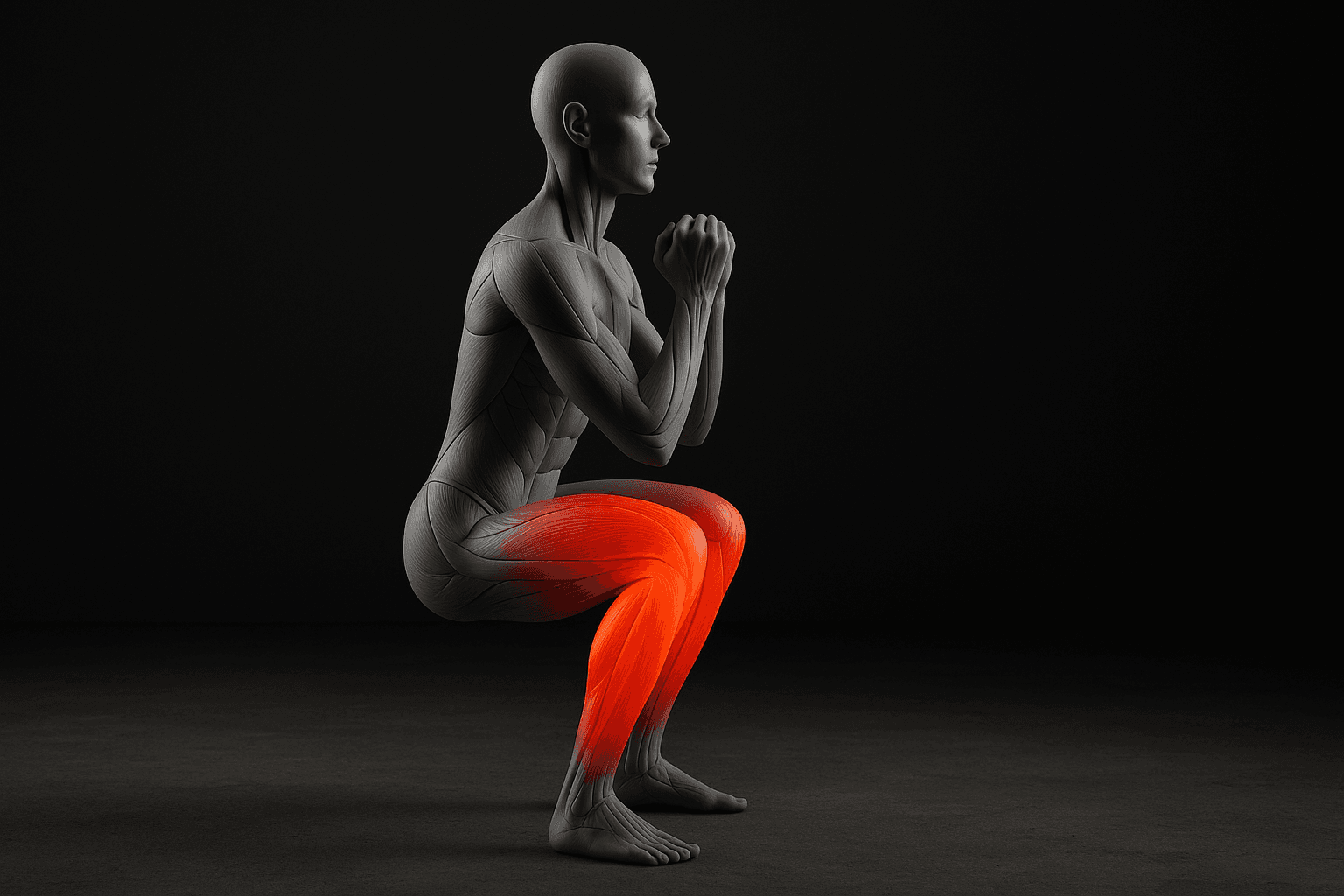
The broad jump trains horizontal explosive power mainly through the glutes, hamstrings, and quads, with calves, core, and upper body contributing to stabilization and arm drive. It’s a low-equipment way to build transferable sprinting and jump force.
Which muscles does the broad jump train and in what order of emphasis?
Primary movers
- Gluteus maximus: primary hip extensor and the main driver of horizontal propulsion.
- Hamstrings: assist hip extension and help control knee extension at takeoff.
- Quadriceps: contribute to knee extension and help transfer force at the ankle-knee-hip chain.
Secondary muscles
- Gastrocnemius and soleus (calves): contribute to final ground push-off and ankle stiffness.
- Core (obliques, rectus abdominis, erector spinae): transfers force from the hips to the upper body and controls landing position.
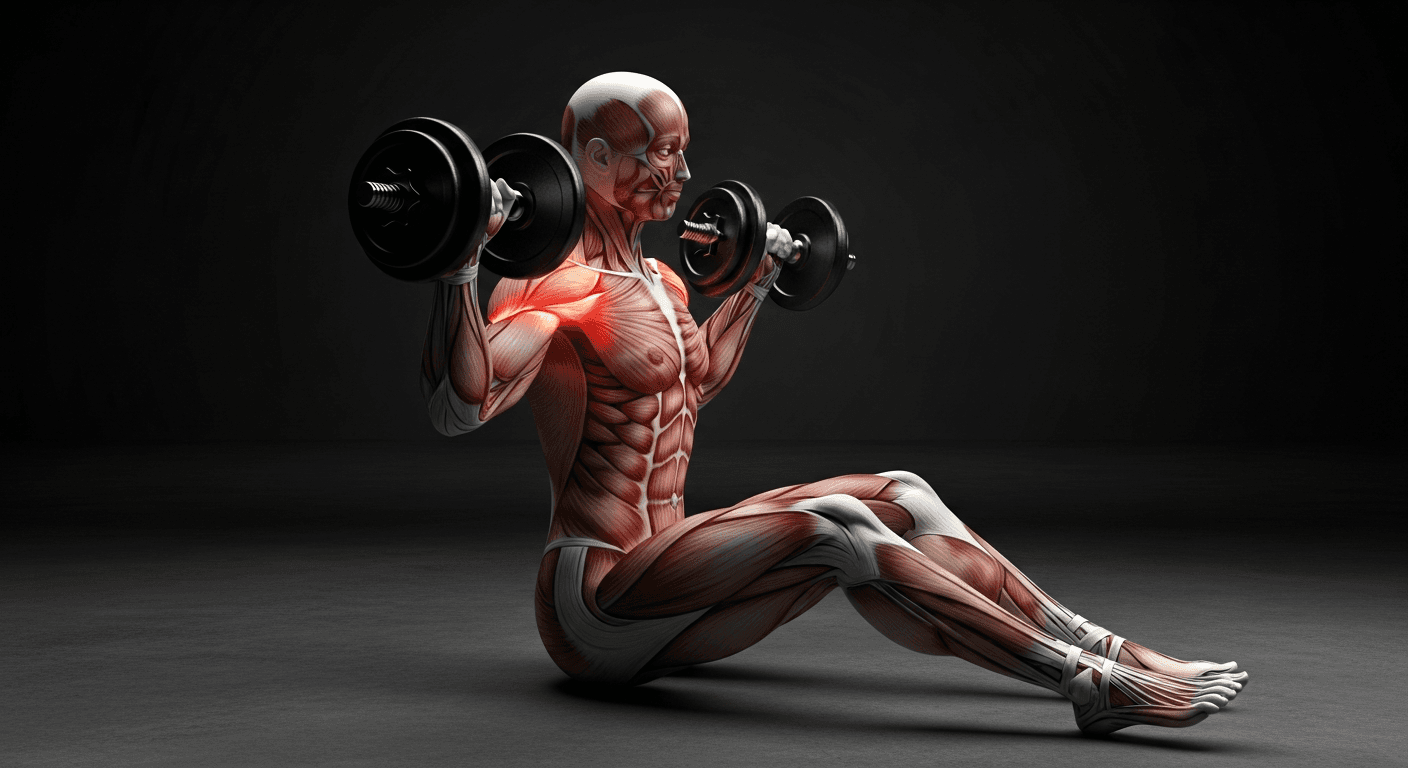
- Upper back and shoulders: arm swing increases horizontal momentum and aids balance.
Neuromuscular component
- The broad jump depends heavily on rate of force development (RFD): the ability to generate force quickly. That recruits fast-twitch motor units and benefits sprint and change-of-direction work.
How does the broad jump fit into a practical training program?
Where to place it
- Warm-up / skill block: early in a session after general warm-up but before heavy squats or long conditioning.
- Power-focused days: pair with light technical sprint work, medicine-ball throws, or low-volume Olympic lift variations if your goal is horizontal power.
Frequency and volume (evidence-aligned guidance)
- Frequency: 1–3 sessions per week depending on emphasis and recovery.
- Volume: keep attempts low and high-quality. Prioritize rest between maximal jumps (longer rest than strength sets).
- Progression: emphasize technique, increase intensity (distance or quality) before increasing attempts. Introduce overload via angled surfaces, slight load, or contrast methods only when technique is solid.
Practical example (conceptual, not prescriptive)
- Power phase: 2 sessions/week, 4–6 maximal attempts/session with full recovery.
- Maintenance: 1 session/week, 2–4 quality attempts.
Note: individual recovery, training age, and goals should guide exact numbers.
What technique cues and safety points matter?
Key technique cues
- Drive through the hips: think horizontal hip extension, not just vertical jump.
- Active arm swing: use the arms to help generate forward momentum.
- Slight forward lean and neutral spine: avoid collapsing at the hips or excessive lumbar extension.
- Land softly with hips and knees flexed to absorb force; avoid rigid or rounded landings.
Safety notes
- Stop on sharp pain; pain that persists after a session should be assessed by a qualified clinician.
- Avoid maximal broad jumps if you have unresolved Achilles, knee, or acute low-back issues without professional clearance.
- Ensure adequate warm-up and build load gradually.
What are solid alternatives to the broad jump and when should I pick each?
Below are four practical alternatives with context about equipment, injury considerations, and transfer potential.
| Exercise | Primary muscles/emphasis | Equipment | When to pick it |
|---|---|---|---|
| Sled push/pull | Horizontal force, posterior chain, low impact | Sled (or prowler) | Use when jumping is limited by impact, lower limb injury history, or bad landing mechanics; great for developing horizontal force without high landing forces. |
| Bounding / single-leg hops | Horizontal power, unilateral strength, RFD | Bodyweight | Choose when you need to improve unilateral takeoff/landing, stride length, or reactive capacity; higher technical demand and plyometric stress. |
| Loaded broad jump / trap-bar jump | Enhanced force production with similar movement pattern | Trap bar or light load vest | Use if plateaued on bodyweight jumps and technique is stable; avoid with acute joint pain—load increases impact and systemic stress. |
| Kettlebell swings / Romanian deadlifts | Hip-hinge strength and high-velocity hip extension | Kettlebell/barbell | Pick when equipment is limited or when you need strength under the movement pattern; less direct horizontal transfer but improves the posterior chain's capacity to generate force. |
When to choose which alternative
- Equipment limits (no jump space): kettlebell swings, RDLs, or sled work.
- Impact or landing issues: sled pushes/pulls or kettlebell swings to reduce eccentric landing stress.
- Unilateral deficits or sprint carryover focus: single-leg bounds or hops.
- Stalled progress on distance: add light load or contrast training after improving technique and landing control.
How should you progress broad jump ability without overreaching?
- Prioritize technique and maximal intent before increasing volume.
- Use progressive overload via complexity (single-leg, approach steps), small load increases, or contrast methods rather than large jumps in attempts.
- Monitor recovery: increases in soreness, drop in jump distance, or fatigue in speed work are signs to reduce volume or add recovery.
What limitations should I be aware of regarding coaching apps and programs?
- No app or AI can reliably see and correct your real-time technique; video feedback from a qualified coach is superior.
- Apps can’t diagnose injuries or prescribe rehab—conservative management requires a physical therapist or sports physician.
- Plans only work if you’re consistent; adherence, sleep, nutrition, and stress matter more than any single drill.
- Individual differences (anatomy, training history, sport demands) mean one-size-fits-all prescriptions are imperfect.
Final practical checklist
- Warm up dynamically and include hip-dominant activation.
- Start broad jumps with sub-maximal reps to groove technique, then perform low-volume maximal attempts.
- Substitute with sleds, bounds, loaded jumps, or hip-hinge work based on equipment and injury status.
- Stop on sharp pain; consult a qualified professional for persistent problems.
Safety reminder: this article does not diagnose or treat injuries. If you have health concerns or an injury history, consult a qualified clinician before introducing maximal plyometrics.
Frequently asked questions
- Which muscles does the broad jump primarily work?
- The broad jump primarily trains explosive hip extension—glutes, hamstrings, and the posterior chain—plus quads for knee drive and calves for push-off. Core and upper back stabilize the torso and arm swing, so it’s a full-body, horizontal power movement.
- How often should I include broad jumps in a program?
- Include broad jumps 1–3 times per week depending on your emphasis: once a week during general training, and up to twice during a focused power block. Keep total high-quality attempts low and allow full recovery between maximal efforts.
- What practical alternatives can I use if I can’t broad jump?
- Good alternatives are sled pushes (horizontal force with low impact), bounding or single-leg hops (carryover to stride), and loaded jump variations or kettlebell swings (develop hip extension when jumping is limited). Choose by equipment, injury, and specific goals.