Cable Crunch: Proper Form, Step by Step
Learn the correct cable-crunch form: setup, execution cues, breathing, tempo, common mistakes and fixes. Safety-first guide for effective ab training.
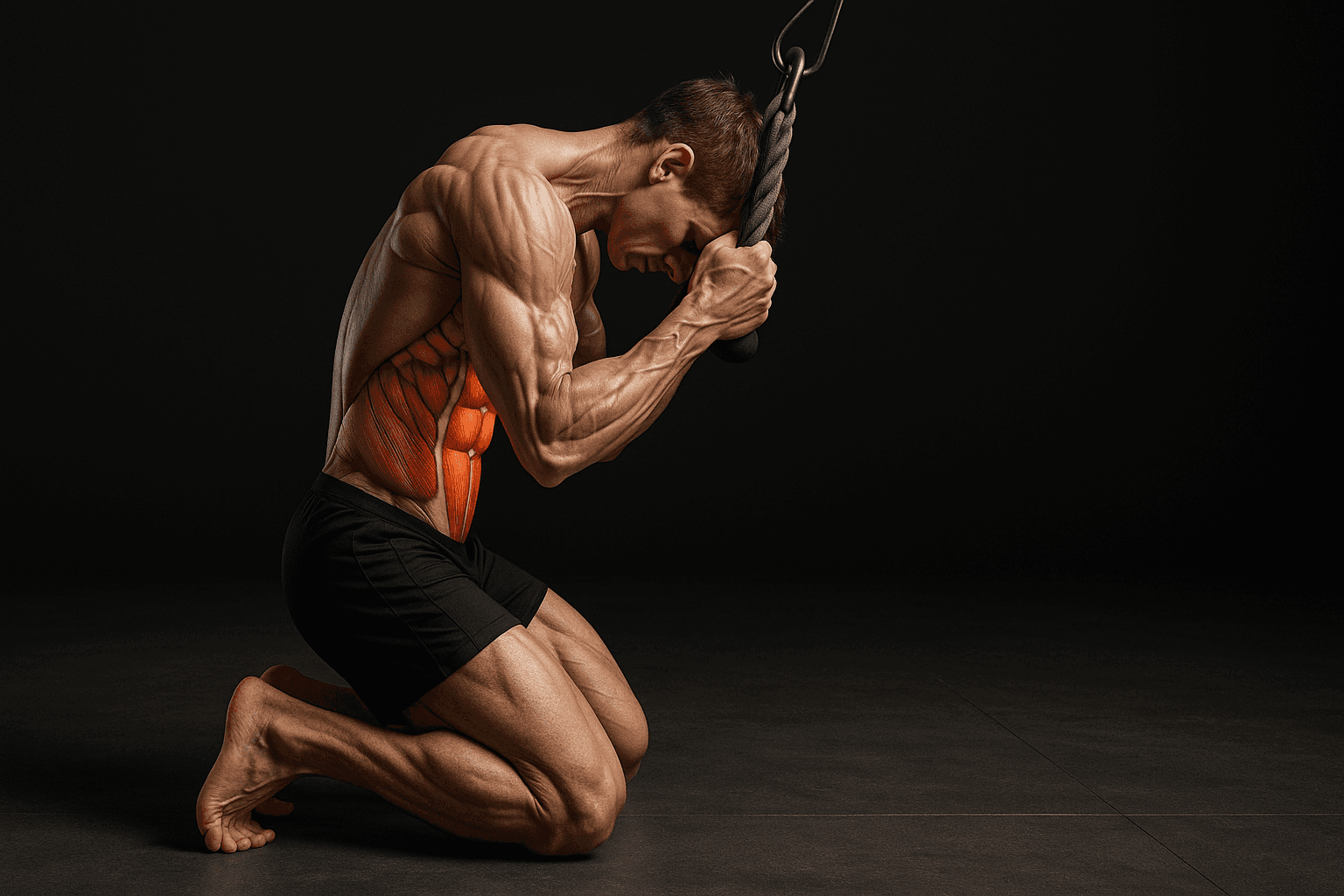
Photo by RepBro.
The cable crunch is an abdominal flexion exercise performed with a rope or handle attached to a high cable. To do it with proper form: kneel, hold the rope next to your head, flex the thoracic and upper lumbar spine to pull ribs toward hips, control the return, breathe out on the crunch, and avoid using the arms or hips to produce movement.
What setup do I need for a correct cable crunch?
- Equipment: high pulley with a rope attachment or double-handle. Use a pad or mat for your knees if needed.
- Weight: pick a load that allows 8–15 clean reps. Start light and increase by 2.5–5 kg (5–10 lb) once form is perfect.
- Position: kneel about 30–45 cm (12–18 in) from the pulley so the rope hangs over your head. Knees should be roughly hip-width, feet on the floor. Hold the rope beside your ears with thumbs wrapped around the rope ends.
- Spine alignment: start tall with a neutral pelvis and a slight natural curve in the lower back. Eyes forward and chest up.
How do I execute the cable crunch step by step?
- Setup breath: inhale to load the diaphragm and brace your core as if you will be lightly struck in the stomach.
- Initiate the movement: exhale and drive your ribs toward your pelvis by contracting the abs. Think of rounding the mid- and upper-spine rather than tucking the pelvis only. Aim to bring your elbows toward the thighs or your forehead toward your knees.
- Range of motion: stop when you feel a solid contraction in the abs — usually about 30–50 degrees of trunk flexion. Avoid forcing a full spinal flexion by pulling on the rope.
- Control the return: inhale slowly and let the torso extend under control until you return to the start. Do not fully relax between reps; maintain 20–40% tension to keep the abs engaged.
- Reps and sets: do 3–4 sets of 8–15 reps for strength/hypertrophy, or 12–20 reps for endurance. Rest 60–90 seconds between sets.
Tempo and breathing cues
- Tempo: 1:2–3:1 or 2:3:1 (1–2 seconds concentric crunch, 2–3 seconds eccentric return, 1-second pause at the top if desired). Controlled eccentrics protect the spine and increase time under tension.
- Breathing: exhale on the crunch (concentric), inhale on the return. Avoid holding your breath; bracing is fine, but maintain a breathing rhythm.
What short cues improve my cable crunch form?
- 'Rib-to-pelvis': focus on pulling the ribs down to the hips, not just bringing the head forward.
- 'Chin tuck': keep a slight chin tuck to avoid neck extension; think of keeping a tennis ball under your chin.
- 'Elbows to knees': visualize pulling elbows toward knees rather than pulling the rope down with the hands.
- 'Slow return': control the descent for 2–3 seconds to train the eccentric phase.
What common mistakes happen with the cable crunch and how do I fix them?
- Using the arms to pull the rope: mistake — arms do most of the work and reduce abdominal load. Fix — shorten the rope so hands stay close to the ears, actively think about pulling with the abs, and lower weight if needed.
- Excessive hip hinge or thrusting the hips: mistake — hips move instead of spine flexing. Fix — lock pelvis position by bracing the glutes lightly and cue 'round the mid-back' rather than hinging at the hips.
- Pulling with momentum or fast reps: mistake — reduces time under tension and increases injury risk. Fix — use a 2–3 second eccentric and keep concentric controlled; reduce weight or reps to maintain tempo.
- Too heavy a load: mistake — leads to incomplete reps, swinging, or spinal stress. Fix — drop 10–30% of the weight and focus on 8–15 strict reps.
- Neck cranking or forward head: mistake — strain on the cervical spine. Fix — keep chin tucked, lead with ribs and chest, and keep hands stationary next to ears.
- Limited range because of fear of stretching: mistake — short ROM underutilizes the abs. Fix — allow a comfortable, controlled extension between reps while keeping tension in the core.
When should I avoid cable crunches or seek professional help?
Stop the exercise and consult a qualified professional if you feel sharp or radiating pain in the back, neck, or limbs. If you have a history of spinal surgery, herniated discs, or chronic low-back pain, get clearance from a healthcare or rehab specialist. This guide is educational and not a diagnosis.
Safety note: stop on sharp pain and consult a healthcare or qualified fitness professional; never diagnose or treat conditions from this article.
How do cable crunches compare to other ab exercises?
Cable crunches are resistance-based and give a large, controlled range of spinal flexion with progressive loading — useful for building abdominal strength and size. For single-session variety, pair them with anti-extension moves like planks or Pallof presses. For comparisons with other exercises or programming choices, check RepBro's comparison resources and program tools at https://www.repbro.app/vs and track sets in the RepBro app at https://apps.apple.com/us/app/gym-workout-coach-repbro/id6763749305.
What is the bottom-line takeaway?
Cable crunches work best when you use a weight you can control, perform 8–15 slow, rib-to-pelvis reps per set, and avoid pulling with the arms or hips — stop for any sharp pain and consult a professional.
Frequently asked questions
- Can cable crunches reduce belly fat?
- No exercise isolates fat loss. Cable crunches build abdominal strength and size when combined with overall training and nutrition, but they don't guarantee fat loss.
- How much weight should I use for cable crunches?
- Use a weight that lets you do 8–15 controlled reps with proper form. If you need to swing or use the hips, reduce the weight by 10–30% and focus on control.
- Are cable crunches safe for people with lower-back pain?
- If you have lower-back pain, stop on sharp pain and consult a healthcare or fitness professional before performing cable crunches. Modifications or alternative exercises may be recommended.