The Most Common Cable Crunch Mistakes (and How to Fix Them)
Spot and correct the 6 most common cable crunch mistakes—why they happen, what you lose, and a single, practical fix for each to get stronger abs safely.
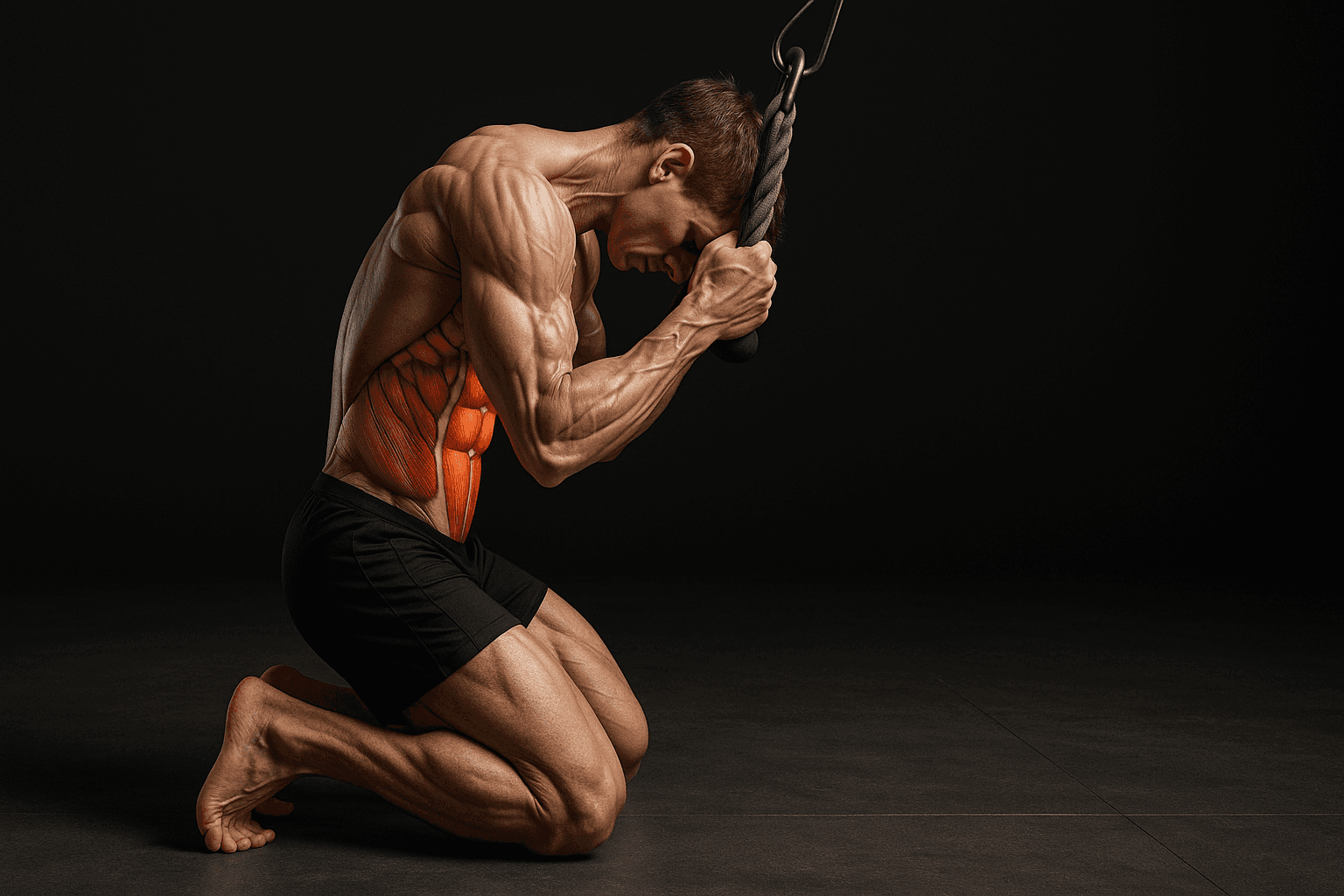
Photo by RepBro.
The most common cable crunch mistakes are: letting your hips/torso drive the movement, pulling with your arms or neck, using too much weight or speed, keeping a shallow range of motion, and setting the cable/rope incorrectly. Fix each with one concrete change and you'll get more abdominal stimulus with less risk.
Is your torso using momentum instead of your abs?
Why it happens: People lean back and then snap forward, using hip flexion and body momentum to move the weight because it's an easy way to lift heavier loads. What it costs: You lose targeted abdominal tension and shift load to the hips and lower back. That means fewer gains in rectus abdominis development and a higher risk of low-back strain. Fix: Anchor your hips and slow the tempo. Sit or kneel with a short, 10–30° forward lean, and keep the hips fixed. Use a 2-second eccentric, 1-second isometric at the bottom, 2-second concentric tempo. Pick a weight you can control for 10–15 reps—if your hips move, drop the weight 10–20%.
Are you pulling with your arms instead of crunching?
Why it happens: If the rope or handle is held too close and elbows pull down, the latissimus and arms contribute more than the abs. It’s also common when people grip the rope tightly and try to "row" rather than crunch. What it costs: Abs get less stimulus and you may develop bad coordination patterns that transfer poorly to other movements. Fix: Keep elbows at your sides or slightly forward, and focus on moving the ribs toward the pelvis. Use the rope so the hands hang beside the head; imagine closing a book from your ribcage down. Tactically, do a set of 12 reps and on rep 13 pause—if your lats are tired first, reduce weight and reposition elbows.
Is your neck and shoulders tensing up?
Why it happens: A common cue is "bring your head down," which some lifters interpret as yanking the head with the hands. A strap or incorrect rope height can also encourage shrugging. What it costs: Neck discomfort, shoulder tension, and distraction from the abdominal contraction. Chronic neck strain is common with this mistake. Fix: Tuck the chin lightly (about 1–2 cm / 0.5–1 in), keep the spine neutral, and let the rope handles rest lightly at the temples—don’t pull the head. If you feel the neck working, switch to a lighter load and increase the abdominal hold phase to 1.5–2 seconds.
Are you using too much weight or too fast a tempo?
Why it happens: Bigger plates and rapid reps feel productive and are ego-friendly, but speed reduces time under tension and encourages cheating via momentum. What it costs: Reduced hypertrophic stimulus for the abs, less neural control, and higher injury risk from sloppy reps. Fix: Reduce weight so you can perform 10–15 reps in strict form at a tempo of 2–0–2 (2 seconds down, no pause, 2 seconds up) or 3–1–3 if you want more time under tension. Measure progress by reps at strict tempo, not by the plates on the pin.
Is your range of motion too shallow or inconsistent?
Why it happens: Fear of lower-back flexion, limited mobility, or bad setup can make people stop short—only moving 30–40% of the possible range. What it costs: You miss the end-range contraction of the abs and the lengthening phase that stimulates muscle growth. Partial reps also teach a weak pattern. Fix: Aim for full rib-to-pelvis closure. If kneeling, move your ribs 8–10 cm (3–4 in) toward your hips on each rep and hold the bottom 0.5–1 second. If you lack mobility, start with smaller ROM and add 1–2 cm per week while keeping strict form.
Is the rope or cable height wrong for your body?
Why it happens: Using a single-handle, a short bar, or setting the cable too high/low changes the pulling angle so the load misses the abs and shifts to the lats or obliques. What it costs: Poor muscle targeting and awkward joint positions that can cause shoulder or wrist discomfort. Fix: Use a rope attachment set to a high pulley for kneeling cable crunches, or a long bar for standing variations where the cable runs from above. For most lifters, a high pulley with the rope at forehead/temple level gives the best vertical resistance. Test setup by doing 5 slow reps: you should feel the front of your ribs pulling toward your pelvis, not your hands pulling down.
Bonus: Are your feet and knee position unstable?
Why it happens: Kneeling without an anchor or standing with a loose stance lets the lower body drift and reduces core stabilization. What it costs: Energy leaks into balance and hip muscles rather than the abs, plus an increased chance of twisting or compensating. Fix: Kneel with the feet anchored under a pad or use a 60–90 cm (2–3 ft) kneeling pad; if standing, take a hip-width stance with a slight knee bend and brace the glutes. Think "create a stable base and then crunch."
Safety note: Stop any set if you feel sharp pain in your spine, neck, or ribs. If pain persists, consult a licensed clinician—this article is educational, not diagnostic.
How to practice the fixes: Pick one mistake to correct for 2 weeks. Record a set on your phone or use a tracker like RepBro to watch form and track strict-tempo reps. If you want to compare different ab variations or programs, see https://www.repbro.app/vs for quick differences.
One-sentence takeaway: Fix one form fault at a time—use lighter weight, a controlled tempo, and a setup that lets your ribs close to your pelvis—and your cable crunches will stop wasting reps and start strengthening the abs safely.
Frequently asked questions
- Are cable crunches better than floor crunches?
- Cable crunches add consistent resistance and allow for a stronger contraction and progressive overload; floor crunches are fine for beginners or rehab, but not inherently superior.
- How much weight should I use for cable crunches?
- Use a weight you can control for 10–15 clean reps with strict form; if you can do 20+ reps, increase load by 10–20%.
- How often should I train cable crunches?
- Train abs 2–3 times per week as accessory work, allowing 48 hours between hard sessions for recovery.