Cable Curl Alternatives at Home (Minimal Equipment)
Five home-friendly substitutes for cable curls using bands, dumbbells, and bodyweight. What each keeps and loses versus a cable, plus when a gym visit matters.
Photo by RepBro.
Answer-first: The most practical cable-curl substitutes at home are (1) resistance-band curls, (2) dumbbell curl variations (incline, preacher-style), (3) hammer curls, (4) underhand chin-ups or inverted rows, and (5) isometric/partial sets with bands or DBs. Each preserves different tension profiles and transfer; choose based on your goals and equipment.
What does a cable curl provide that I should try to replicate at home?
Cable curls provide a consistent line of pull and near-continuous tension through the range of motion, easy single-joint isolation, and fine, repeatable loading. For most lifters the priorities to replicate are: consistent tension, manageable increments for progressive overload, and a clear peak contraction. If your home setup can approximate those features, substitutes will perform well.
Which home exercises most closely mimic the cable curl and what do they preserve or lose?
Below are five practical substitutes using minimal equipment, with what each preserves and loses compared to a cable curl.
-
Resistance-band curls
- What it preserves: variable resistance and continuous tension; you can anchor a band at the floor or low point to get a similar line of pull to a low cable. Great for peak contraction and eccentric control if you slow the descent.
- What it loses: exact linear load increment and small weight jumps. Band tension increases non-linearly—lighter at the bottom, heavier near the top—so absolute loading at short muscle lengths differs from a machine plate stack.
- When it’s adequate: for hypertrophy and general strength at home; useful when you want continuous tension and safety with light equipment.
-
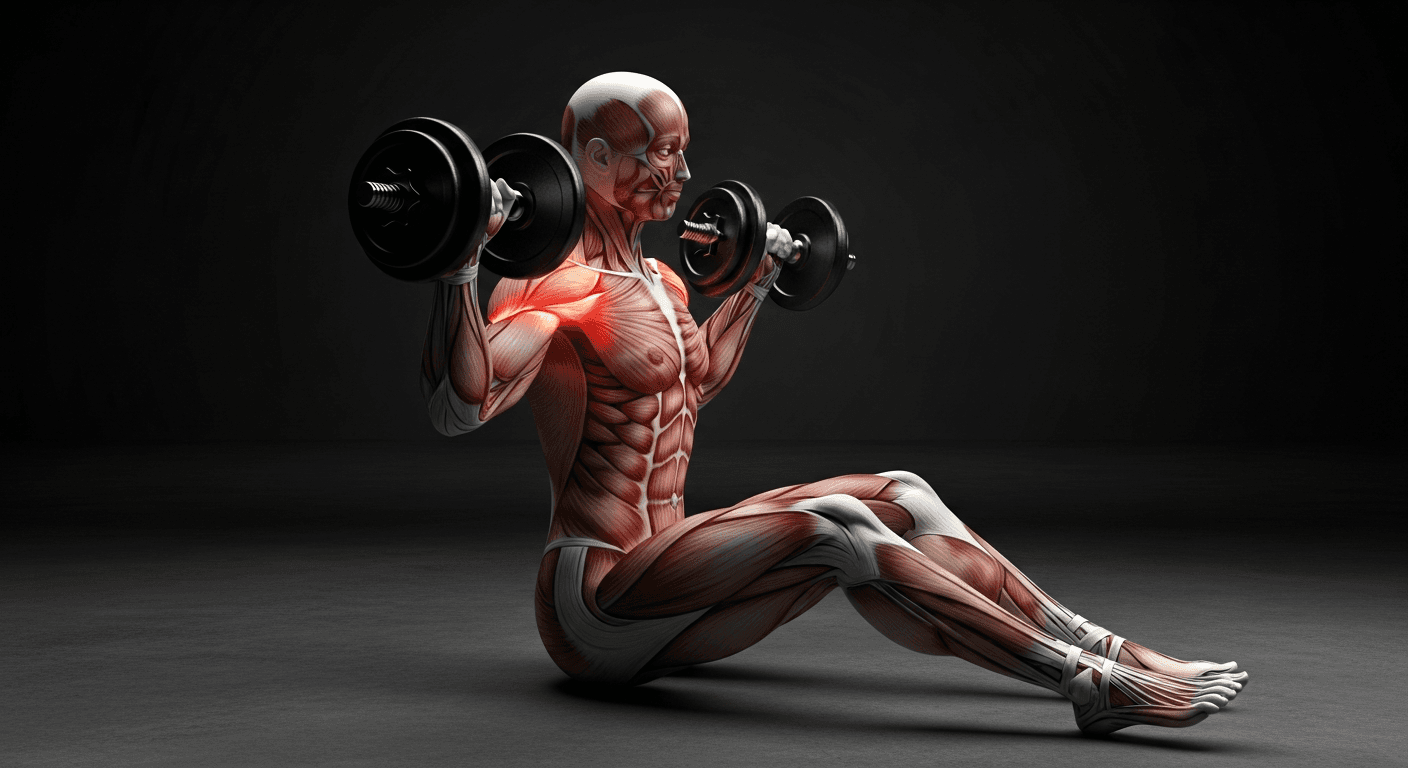
Dumbbell curl variations (standing, incline, concentration)
- What it preserves: good control of range and strong concentric loading across the movement; free weights demand stabilizer control that improves overall arm strength.
- What it loses: a cable’s perfectly steady line of pull and near-constant tension (gravity changes the torque more across the ROM). Isolation is solid but the torque peak shifts depending on arm position.
- When it’s adequate: when you have adjustable dumbbells and want direct hypertrophy work. Incline curls increase stretch on the long head, which can replicate some cable effects.
-
Hammer curls
- What it preserves: excellent overload potential for the brachialis and forearm—transfers to thicker arms and assists elbow flexion strength.
- What it loses: the supinated peak biceps contraction of a classic cable curl. Hammer curls change the emphasis and are less about peak biceps peak contraction.
- When it’s adequate: when you want thicker arms, improved grip and elbow flexor strength, or to relieve elbow stress from supinated work.
-
Underhand chin-ups or inverted underhand rows
- What it preserves: heavy, high-tension loading and long-muscle-length tension—these are compound movers that load the biceps strongly while also training larger pulling patterns.
- What it loses: isolation; you’ll recruit lats, traps, and posterior chain. Chin-ups also require more total-body strength than a cable curl.
- When it’s adequate: when you can’t isolate but want overall pulling strength and carryover to multi-joint performance.
-
Isometrics and partials (band or DB holds; 21s-style partials)
- What it preserves: time under tension and specific angle strength (useful for weak points). Isometrics improve strength particularly at the trained joint angle.
- What it loses: dynamic range practice across all angles and the metabolic character of full reps.
- When it’s adequate: for addressing sticking points, adding volume without heavy weights, or when equipment limits full-range loading.
How should I program these swaps for growth and strength?
Train the biceps 2–3 times per week as part of a balanced upper-body plan. Use multi-set approaches for each exercise (multiple sets of 6–20 reps depending on load): heavier, lower-rep work transfers to strength and chin-up progress; moderate-load higher-rep bands or DBs are good for hypertrophy. Prioritize progressive overload: add reps, sets, or resistance over time, and vary tempo when you can. Replace cable-specific work with a mixture of an isolation movement (band or DB curls) plus at least one compound pulling movement (chin-ups or rows) for complete stimulus.
How do I pick which alternative to use right now?
- If you have bands but no heavy DBs: use band curls anchored low plus slow eccentrics. Add band hammer curls for thickness.
- If you have DBs but no bands: use incline and concentration curls to hit the long head and the peak contraction; add hammer curls for overall arm size.
- If you have a pull-up bar: prioritize underhand chin-ups or inverted rows for heavy loading and strength, then finish with a few focused curl sets for isolation.
Quick comparison table
| Exercise | Equipment | Preserves vs Cable | Loses vs Cable | When adequate |
|---|---|---|---|---|
| Band curl | Bands + anchor | Continuous tension, safe | Non-linear load curve, less micro-loading | Home hypertrophy, rehab-friendly |
| Dumbbell curls (incline/concentration) | Dumbbells/bench | Good isolation & peak contraction | Torque shifts with gravity | When you want strict form & stretch |
| Hammer curl | Dumbbells/bands | Brachialis/forearm overload | Less supinated biceps peak | For arm thickness & elbow health |
| Chin-ups/inverted rows | Pull-up bar or sturdy table | Heavy loading, long-length tension | Less isolation, multi-joint | Strength and functional transfer |
| Isometrics/partials | DB or bands | Angle-specific strength, TUT | Less full-ROM dynamic practice | Sticking points & volume without load |
What are the safety considerations?
Stop immediately on sharp joint pain; mild soreness is normal. Maintain elbow joint alignment—avoid excessive swinging or bang-rep momentum that stresses the tendon. For heavy or novel loading, use conservative progressions and consider a deload week if performance drops. This is general guidance only; do not interpret it as medical advice.
When should I go to a gym instead of doing these home substitutions?
Consider a gym when you need very fine incremental loading, maximal single-joint isolation at very high volumes, or supervised rehabilitation. Also go to a gym if your home equipment limits meaningful progressive overload over months (for example, if your dumbbells or bands are too light for your target rep ranges).
Limitations — what this article and apps cannot do for you
No app or article can see your form and correct it in real time. If you have a persistent injury, pain on exercise, or require rehab, consult a qualified health professional. A training plan only works if you consistently apply progressive overload and recovery—consistency matters more than the tool. Finally, remote coaching can guide programming but cannot replace hands-on assessment when complex movement or pathology is present.
Safety note: never push through sharp or radiating pain. If in doubt about an exercise or an injury, stop and consult a physiotherapist or qualified coach.
References and further reading: look for consensus position statements on resistance training frequency and progression from recognized exercise science organizations for evidence-based programming guidance.
Frequently asked questions
- Can resistance bands really replace cable curls?
- Yes—bands replicate the cable’s line of pull and continuous tension well when anchored properly. They lose some concentric loading at short muscle lengths and are less convenient for fine weight increments. For general hypertrophy and strength, bands are an adequate substitute most of the time.
- Are chin-ups a good substitute for cable curls for biceps growth?
- Chin-ups (underhand or close neutral grips) involve the biceps strongly while also training the lats and scapular system. They preserve heavy loading and long muscle-length tension but lose isolation compared with cables. Use them when you need compound strength and size transfer.
- When should I go to a gym instead of using home alternatives?
- Choose a gym if you need very fine incremental loading, maximum single-joint isolation, or progressive overload beyond your home kit. Also consider a gym for rehab under supervision or when your goal requires heavy daily volume that exceeds your home equipment capacity.