Cable Curl: Muscles Worked and Solid Alternatives
Which muscles cable curls train, how to use them in a program, evidence-based volume/frequency guidance, and four practical alternatives with when to pick each.
Photo by RepBro.
Cable curls primarily train the elbow flexors — the biceps brachii (long and short heads) and the brachialis — with secondary work from the forearm flexors and small stabilizers. They provide near-constant tension and are most useful as an isolation accessory for hypertrophy and finishing work.
Which muscles does the cable curl train and how does tension differ from free weights?
Cable curls target the biceps brachii and brachialis as primary movers. The forearm (wrist) flexors and multiple shoulder/elbow stabilizers assist. The key mechanical difference is the cable’s line of pull: cables keep more consistent horizontal/diagonal tension throughout the lift, whereas dumbbells and barbells shift torque with joint angle.
Practical consequence: constant tension increases time under load across the range of motion, which can be helpful when your goal is to accumulate hypertrophic stimulus rather than maximal strength.
When should I program cable curls in a workout?
Place cable curls after larger compound upper-body movements (rows, pull-ups, presses) so systemic fatigue doesn’t reduce your compound performance. Use cable curls as an accessory on upper-pull or arm-focused days.
Evidence-aligned programming notes:
- Frequency: training biceps 2–3 times per week is consistent with hypertrophy-oriented recommendations.
- Volume: distribute your weekly biceps working sets across sessions; many lifters start with a few weekly sets and increase as recovery allows. Monitor performance and recovery rather than chasing exact numbers.
- Reps: cable curls work well in typical hypertrophy ranges (roughly mid-rep ranges) but can be used from lower-rep strength work to higher-rep metabolic sets depending on goal.
Example session placement: compound back work → vertical/horizontal pull assistance → 2–4 sets of cable curls (8–15 reps) as an accessory.
How should I progress cable curls?
Progress by increasing load, increasing reps at the same load, improving tempo, or adding sets. Track relative performance: if you can add reps or weight for two consecutive sessions, increase the load. Prioritize small, consistent increments in load or volume over abrupt jumps.
Safety note: stop on sharp joint pain, not just muscle burn. If you have persistent elbow, shoulder, or wrist pain, consult a qualified clinician before continuing. This article does not diagnose injuries or promise prevention.
What are solid alternatives and when should I pick each?
Here are four practical alternatives and the situations that make them appropriate.
- Barbell or EZ-bar curl
- Why pick it: Better for heavier, bilateral loading and simple progressive overload when you want to increase pure elbow flexion strength.
- When to pick: gym has a bar; you want to prioritize strength or use heavier absolute loads.
- Trade-offs: less continuous tension at the top compared with cables; can increase momentum unless controlled.
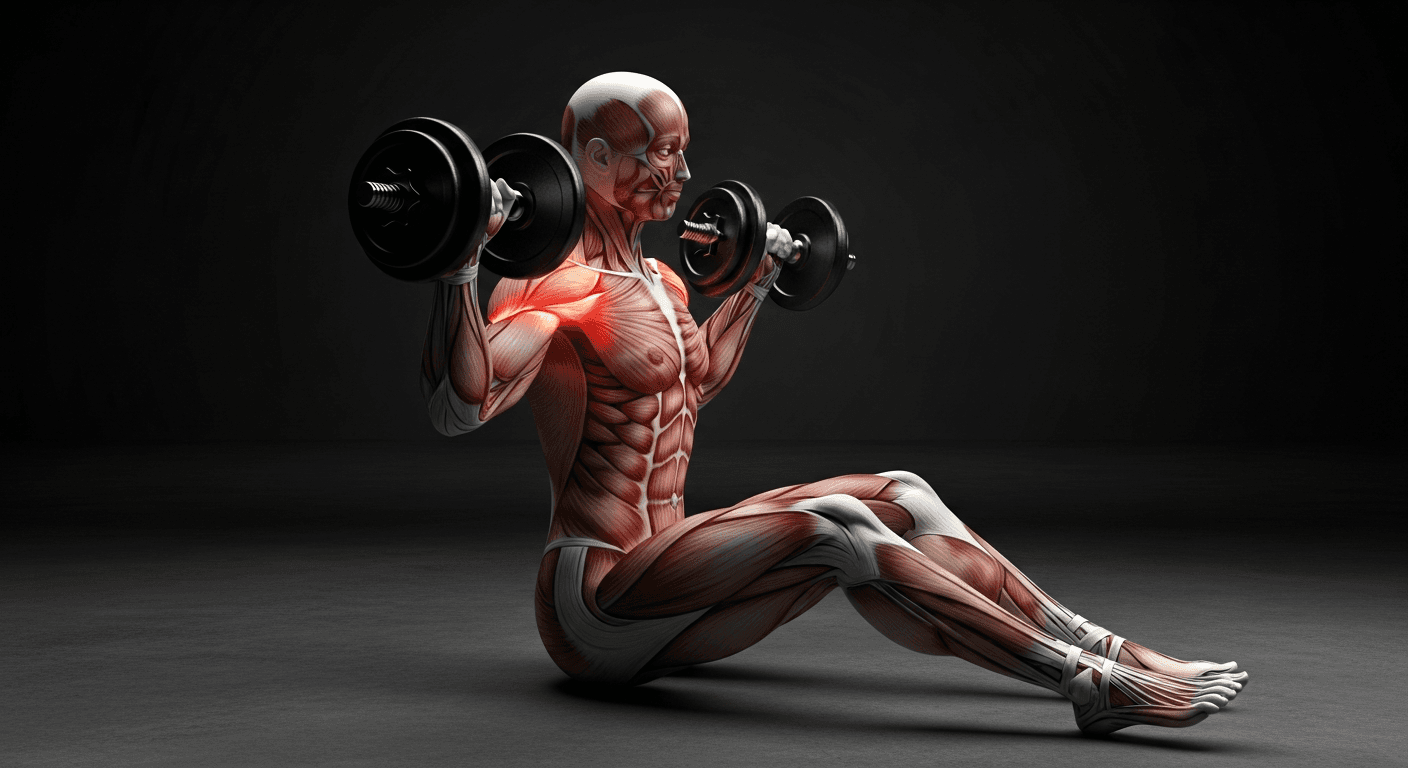
- Dumbbell curls (standing or incline)
- Why pick it: Unilateral work corrects strength imbalances, allows rotation (supination) through the lift, and incline versions emphasize the long head by increasing stretch.
- When to pick: limited cable access, need to fix side-to-side differences, or want greater range-of-motion variation.
- Trade-offs: gravity changes torque across the range; may reduce constant peak tension depending on position.
- Hammer curls (dumbbell or rope on cable)
- Why pick it: Emphasizes the brachialis and forearm muscles; useful if you want thicker upper arms and stronger elbow flexion in neutral grip.
- When to pick: you have forearm or brachialis weakness, or wrist pain with supinated grips.
- Trade-offs: less biceps brachii peak activation in fully supinated positions, but excellent for size and functional strength.
- Resistance-band curls
- Why pick it: Portable, low cost, and provide increasing tension toward the top—useful for home training or rehab progressions.
- When to pick: no weights available, traveling, or you need gentle progressive loading for tendinopathy rehabilitation under clinician guidance.
- Trade-offs: bands often provide different strength curves (lighter at the bottom, heavier at the top) compared with free weights or cables.
How do these options compare at a glance?
| Exercise | Primary muscles | Tension curve | Equipment | Pick this if... |
|---|---|---|---|---|
| Cable curl | Biceps brachii, brachialis, forearm flexors | Near-constant through range | Cable machine | You want isolation with steady tension and simple angle variation |
| Barbell/EZ curl | Biceps brachii, brachialis | Variable (less at top) | Barbell/EZ bar | You want maximal bilateral loading and strength progression |
| Dumbbell curl (incline) | Biceps long head emphasis, brachialis | Variable by position | Dumbbells | You need unilateral work or long-head stretch |
| Hammer curl | Brachialis, brachioradialis | Variable | Dumbbell/rope | You want thicker arms and neutral-grip strength |
| Resistance band curl | Biceps, forearm | Increasing tension to top | Band | You lack gym access or need gentle loading |
Where in a week does cable curl belong relative to volume and recovery?
Use cable curls as one piece of your weekly biceps volume. Spread sets across sessions to manage fatigue. If you’re tracking progress, increase weekly volume in small steps (extra set or two per week) only when recovery and performance permit.
What precautions and form cues matter?
- Keep the shoulder stable; avoid excessive swing or momentum.
- Control both concentric and eccentric phases; maintain tension rather than bouncing at the bottom.
- Adjust pulley height for a comfortable line of pull — mid-pulley for standard cable curls, high-pulley for rope hammer-style curls.
- Stop and seek professional advice if you feel sharp joint pain.
What can't an app or AI coaching do for my curls? (Limitations)
- Apps and AI can track loads, reps, and offer programming guidance, but they cannot see or correct your form in real time. Only a trained coach or clinician can provide reliable hands-on assessment.
- No app can diagnose injuries or replace a medical or physiotherapy evaluation when pain persists.
- A plan only works if you follow it consistently; adherence and lifestyle (sleep, nutrition, stress) determine results more than the specific app you use.
If you want help tracking set-by-set progress, tools like RepBro can simplify logging and progressive overload, but they do not replace in-person coaching.
Final note: Cable curls are a useful, low-skill accessory for isolating elbow flexors and adding consistent tension. Use them when you need a controlled isolation tool and choose alternatives based on equipment, injury history, and the specific adaptation (strength, size, symmetry) you prioritize.
Frequently asked questions
- What muscles does the cable curl target?
- Cable curls primarily load the elbow flexors: the biceps brachii (long and short heads) and the brachialis. They also recruit forearm flexors and small stabilizers. Compared with free weights, cable curls give more continuous tension through the range, which favors hypertrophy and isolation work.
- How often should I do cable curls for growth?
- Aim to train biceps around 2–3 times per week, distributing your total weekly working sets across sessions. Most lifters perform multiple sets per session; adjust total weekly volume upward as you adapt. Prioritize progressive overload (load, reps, or sets) while monitoring recovery.
- What's a practical alternative to cable curls if there's no cable machine?
- Dumbbell curls (standing or incline) are the most practical replacement because they let you vary hand position and load. Resistance bands are a good home option for near-constant tension; barbell/EZ-bar curls are preferable when you want heavier, bilateral loading for strength.