The Most Common Cable Fly Mistakes (and How to Fix Them)
Fix the most common cable fly mistakes — form, load, elbow angle, scapular control, tempo, and cable height — practical fixes to protect shoulders and save gains.
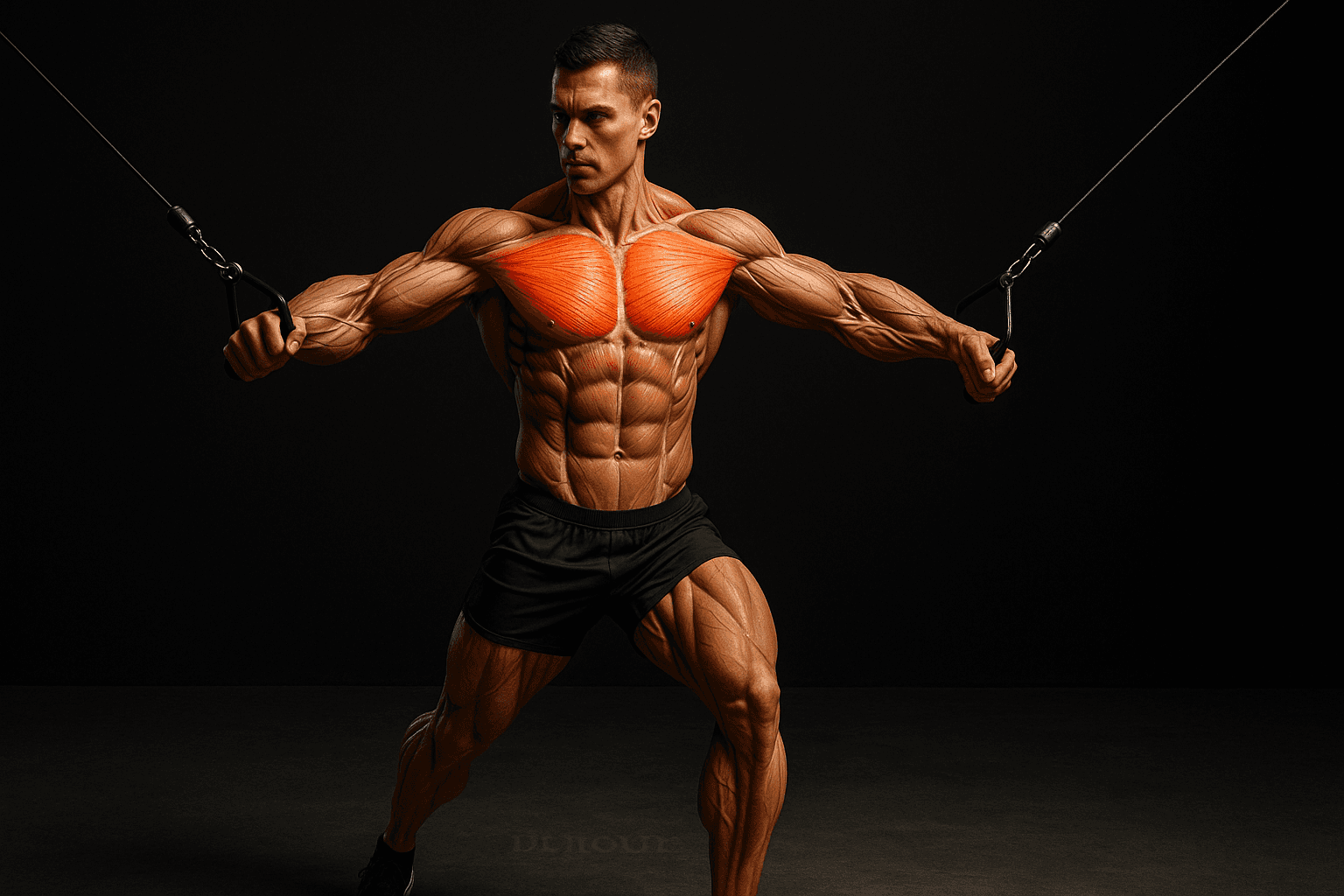
Photo by RepBro.
The most common cable fly mistakes are: using too much weight (short ROM), flaring or locking the elbows, letting the shoulders do the work (scapular drift), using torso momentum, incorrect cable height/line of pull, and collapsing wrists—each costs you muscle growth or increases shoulder injury risk. Below are why they happen, what each costs, and one concrete fix you can apply immediately.
What causes people to use too much weight and a short range of motion?
Why it happens: Lifters chase numbers or want to feel a “burn.” A heavy stack lets you move the handles, but only over a tiny arc. What it costs: Lost pec tension and less hypertrophy; increased tendon and shoulder stress because the pecs aren’t doing the eccentric work. If you can’t control 8–12 reps with full ROM, the weight is wrong. Fix: Drop the weight by 10–30% so you can do 8–12 reps with a 2–3 second eccentric and a 1 second concentric, meeting hands at the midline (or slightly in front of the chest). If your form breaks on set 9, reduce by another 10%.
Why do people flare or lock their elbows during cable flyes?
Why it happens: Many confuse flyes with presses and straighten the arm to "push" more mid-rep. Others flare excessively to mimic pec activation without control. What it costs: Locking transfers load to the elbow joint; excessive flare shifts stress to the anterior deltoid and increases shoulder impingement risk. Fix: Maintain a constant elbow bend of about 10–20°. Picture a soft hinge at the elbow and move from the shoulder joint: the hands travel, elbows stay in that 10–20° position. Cue: “lead with the elbows, not the hands.”
How does scapular drift (shoulders doing the work) happen and why is it bad?
Why it happens: When the scapulae protract or elevate to help the arms meet, the upper traps and delts take over, especially as fatigue sets in. What it costs: Less pec activation, more neck/shoulder tension, and higher impingement risk—especially with overhead or high-pulley positions. Fix: Retract and depress the scapulae initially (about 2–3 cm), then keep them relatively stable through the set. Think “hold the shoulder blades on a shelf” while arms move. If you can’t keep scapular control for 10–12 reps, reduce load or decrease ROM.
Why do people swing their torso or use momentum?
Why it happens: Heavy weights or fatigue push lifters to lean forward/back and use hip drive to finish reps. What it costs: Momentum reduces time under tension for the pecs and adds spinal stress. It also hides muscular asymmetries. Fix: Anchor your feet shoulder-width, brace your core, and keep a slight staggered stance for balance. Use a slow deliberate tempo (2–3s eccentric, 0–1s pause, 1s concentric). If you still swing, either lower the weight by 15–25% or do seated cable flyes to eliminate leg drive.
How does wrong cable height or line of pull reduce effectiveness?
Why it happens: People assume one setup fits all. The pulley height changes the vector and which pec fibers work (upper vs mid vs lower chest). What it costs: Poor transfer to pressing strength and missed targeting of specific pec regions. Training the wrong angle repeatedly limits balanced chest development. Fix: Match the pulley height to your goal: high pulleys (pulling down-and-together) for upper chest, mid pulleys for the mid-pecs, and low pulleys (pulling up-and-together) to hit lower pec fibers. Aim to bring your hands to chest level or slightly above for the upper pec; hands meet near sternum for mid chest; keep the same controlled tempo.
Why do wrists and grips collapse, and why does it matter?
Why it happens: Weak forearms, a death grip, or trying to use hand position to cheat range of motion. What it costs: Wrist pain, reduced force transfer to the chest, and inconsistent arm paths that reduce symmetrical loading. Fix: Keep a neutral wrist (thumbs slightly up), grip the handle firm but not crushing, and keep the forearm aligned—imagine force traveling in a straight line from shoulder to handle. If wrist pain persists, use a neutral grip attachment or strap for a few sets.
Quick checklist to self-correct on the fly (literally)
- Weight: pick a load you can control for 8–12 reps; reduce by 10–30% if form breaks.
- Elbow: constant 10–20° bend.
- Scapula: set with slight retraction/depression and keep it stable.
- Tempo: 2–3s down, 0–1s pause, 1s together.
- Cable height: match fibers (high/mid/low).
- Posture: braced core, minimal torso swing.
Safety note: Stop on sharp pain or worsening joint pain; this article is not medical advice. If you have a pre-existing shoulder issue, consult a qualified clinician before continuing.
If you want to track tempo, load, and set-by-set progress while keeping these technique cues consistent, tools like the RepBro app can help you log and compare sessions — or read how cables compare to dumbbells in practical use at https://www.repbro.app/vs.
One-sentence takeaway: Fixing load, elbow angle, scapular control, tempo, and cable height will recover lost chest stimulus and cut unnecessary shoulder risk on cable flyes.
Frequently asked questions
- Should my elbows be locked during cable flyes?
- No. Keep a slight bend of about 10–20° at the elbow to protect the joint and keep tension on the pecs; straight elbows increase elbow stress and reduce chest activation.
- What cable height targets the upper chest?
- Set pulleys high and pull down-and-together (approximately 30° below horizontal) to emphasize upper pec fibers; mid-height for middle chest, low pulleys for lower chest.
- How heavy should I use for cable flyes?
- Use a weight you can control for 8–15 clean reps with a 2–3s eccentric and 1s concentric; if you need to cheat on every rep, drop 10–25% of the load.