Cable Lateral Raise Alternatives You Can Do at Home (Minimal Equipment)
Practical, evidence-aware alternatives to the cable lateral raise using dumbbells, bands, or bodyweight. What each swap keeps, what it loses, and when you should go to a gym.
Photo by RepBro.
Yes — you can replicate the cable lateral raise at home using dumbbells, bands, or simple bodyweight setups. Different substitutes preserve some qualities (isolation, abduction plane, or continuous tension) and lose others (precise load increments, constant cable line). Below are 4–5 practical swaps and when each is appropriate.
What exactly does a cable lateral raise do for the shoulder?
The cable lateral raise primarily targets the lateral (middle) deltoid through shoulder abduction with a horizontal line of pull that provides near-constant tension through the entire range. It reduces momentum, allows fine loading, and keeps the movement in a single plane — useful for hypertrophy and shaping the mid-deltoid.
Which minimal-equipment exercises most closely replace the cable lateral raise?
Here are four practical at-home options, what each preserves and loses versus the cable, and guidance on when each is adequate or when to use the gym.
1) Standing dumbbell lateral raise (strict, no swing)
- Equipment: pair of dumbbells or makeshift weights (water jugs, backpack).
- What it preserves: Same abduction pattern and peak mid-deltoid activation when performed with strict technique; easy to control reps and tempo.
- What it loses: Cable-style constant tension at some points of the arc (gravity provides variable resistance) and finer micro-loading if you lack small weight increments.
- When this swap is adequate: For beginners and intermediates who can progressively increase load or reps and who practice strict technique to avoid momentum.
- When to get to a gym: When dumbbells are too heavy and you can’t increase resistance safely, or when you need single-pound increments for precise progression.
How to do it: Keep a slight bend in the elbow, raise to ~90° abduction, pause at the top for a brief squeeze, lower under control. Limit torso lean or swing.
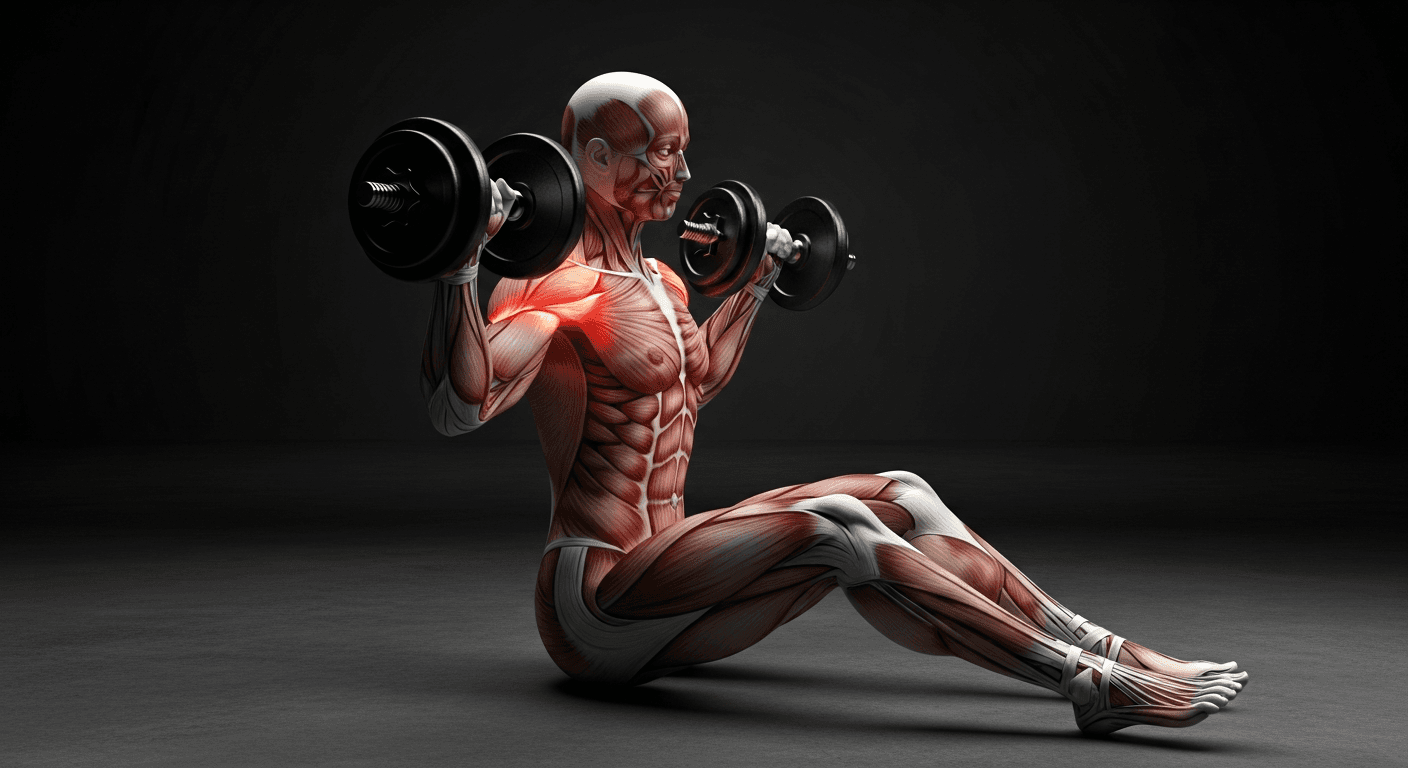
2) Seated dumbbell lateral raise (strict)
- Equipment: dumbbells, bench or chair.
- What it preserves: Better isolation than standing because sitting removes body swing. Good for strict tension and for targeting mid-deltoid.
- What it loses: Same gravity-based variable resistance; less ability to load heavily without cheating.
- When this swap is adequate: When you want cleaner isolation and are prioritizing strict form or rehabbing compensatory movement patterns.
- When to get to a gym: When you need heavier progressive overload beyond what seated strict raises allow.
3) Banded lateral raise (anchor low, step out)
- Equipment: loop or long resistance band and an anchor point low (door, table leg).
- What it preserves: Continuous, variable tension through the range — more similar to a cable’s line of pull if anchored low and stepped away from. Good for maintaining tension at both bottom and top.
- What it loses: Bands change resistance non-linearly (more tension at end range); you may lose exact weight equivalence and need to learn band tension scaling.
- When this swap is adequate: When you want continuous tension and a portable option that scales by band thickness and stance distance.
- When to get to a gym: If band tension plateaus or you need precise incremental loading for high-level progressive overload.
How to set it up: Anchor band near floor, stand sideways, hold band with arm furthest from anchor, step away until starting tension feels challenging, then perform single-arm abduction with the same strict form as a dumbbell raise.
4) ‘‘Lean-away’’ single-arm band lateral raise (mimics cable line)
- Equipment: resistance band and a fixed anchor (door or post).
- What it preserves: The vector of pull more closely matches a standing cable machine when you lean away from the anchor. This produces more even tension through the range and better horizontal abduction alignment.
- What it loses: Precise micro-loading and some stability requirements (you must control posture while leaning).
- When this swap is adequate: When you want the closest home approximation of the cable’s line-of-pull and consistent tension without gym equipment.
- When to get to a gym: If you’re unable to hold stable posture while leaning or if the band cannot provide sufficient maximum tension.
Practical note: adjust your anchor height and stance so the band pulls slightly upward across the arm — experiment until the path feels similar to a cable.
5) Side-lying (side-lying dumbbell lateral) raise
- Equipment: dumbbell or small weight.
- What it preserves: Excellent isolation of the lateral deltoid at the top of the move and removes temptation to use momentum. Useful as an accessory for detail and peak contraction work.
- What it loses: Gravity and resistance feel are different; you might lose strength carryover at standing ranges and won’t get the same full-range resistance profile as a cable.
- When this swap is adequate: For accessory work, overload at different points in the range, or when rehabbing/tapering load.
- When to get to a gym: When you need heavy, standing-load training with consistent tension.
How should I program these substitutes for growth or strength?
Follow standard resistance-training principles: train the shoulders 2–3 times per week, include multiple sets per session, use progressive overload (increase load, reps, or sets over weeks), and manage recovery. Organizations like the American College of Sports Medicine recommend 2–3 sessions weekly for each major muscle group and multiple sets per exercise; adapt those principles to your equipment limits.
If you lack fine weight increments, use more frequent, smaller-volume progressions (add reps, reduce rest, slow tempo) and track volume over the week so total weekly stimulus increases gradually.
Comparison: at-a-glance
| Exercise | Equipment | Preserves vs Cable | Loses vs Cable | Use when |
|---|---|---|---|---|
| Standing dumbbell lateral raise | Dumbbells | Movement plane, isolation (if strict) | Constant cable tension, fine increments | Beginners/intermediates with progressive loading |
| Seated dumbbell lateral raise | Dumbbells + chair | Better isolation, less momentum | Same variable resistance vs cable | When focusing on form or rehab |
| Banded lateral raise (anchor low) | Resistance band + anchor | Continuous tension, portable | Non-linear resistance, scaling learning curve | If you want cable-like tension at home |
| Lean-away single-arm band raise | Band + anchor | Closest line-of-pull mimic to cable | Need balance/stability; band limits | When you need consistent tension and line control |
| Side-lying lateral raise | Dumbbell | Peak contraction, strict isolation | Different gravity vector, less standing carryover | Accessory work and detail training |
What are the safety considerations?
Stop training and consult a qualified professional if you feel sharp or unusual joint pain. Keep the elbow slightly bent, avoid elbows travelling too far forward, and don’t use momentum — better to reduce load. For existing shoulder issues, get clearance and direction from a clinician before loading.
When is it time to use a gym cable instead of home options?
Use the gym when: you can no longer progressively overload with available dumbbells or bands; you need very fine micro-loading increments; you're rehabbing with a required line-of-pull; or a clinician prescribes cable-based rehab. The gym offers precise resistance curves and repeatability that are hard to match at home.
Limitations — what apps and online guidance cannot do for you
No app or AI can reliably see and correct your real-time form, diagnose injuries, or replace hands-on clinical assessment. Programs only work if you consistently follow them; adherence and proper recovery drive results more than small program tweaks. For persistent pain, recent injuries, or individualized rehab, consult a qualified professional.
Track sets, reps, and progressive overload consistently. If you want a simple way to log and progress these home substitutions, RepBro can help you record sessions and monitor progression, but it does not replace a coach’s eye or medical evaluation.
References and evidence base are in line with mainstream resistance-training guidance: prioritize progressive overload, 2–3 sessions per week per muscle group, multiple sets per exercise, and strict technique. These principles determine whether your at-home swap will produce measurable shoulder development or when you should return to a gym for more precise loading.
Safety reminder: this article is informational. Do not take it as medical advice. If in doubt, consult a qualified coach or clinician before changing your training.
Frequently asked questions
- Can I build lateral delts at home without a cable machine?
- Yes. You can stimulate the lateral deltoid at home with dumbbell and band variations that emphasize shoulder abduction and constant tension. Progression, frequency, and adequate weekly volume matter more than the exact machine; bands and strict dumbbell work can be effective while you track load and recovery.
- How often should I train lateral delts with these substitutes?
- Train shoulder lateral work roughly 2–3 times per week and distribute your weekly sets across those sessions. Use multiple sets of moderate reps and progress load or reps over weeks. This matches common resistance-training guidance emphasizing frequency and progressive overload.
- When should I stop using home options and return to the gym?
- Switch to gym cables when you outgrow available band tension or dumbbell increments, need precise line-of-pull for injury rehab, or want very high loads with minimal momentum. If you can’t progressively overload the lateral delts at home, a gym will offer finer load control.