Cable Lateral Raise: Muscles Worked and Best Alternatives
Which muscles does the cable lateral raise train, where it fits in a program, and clear alternatives with when to pick each for equipment limits, injuries, or plateaus.
Photo by RepBro.
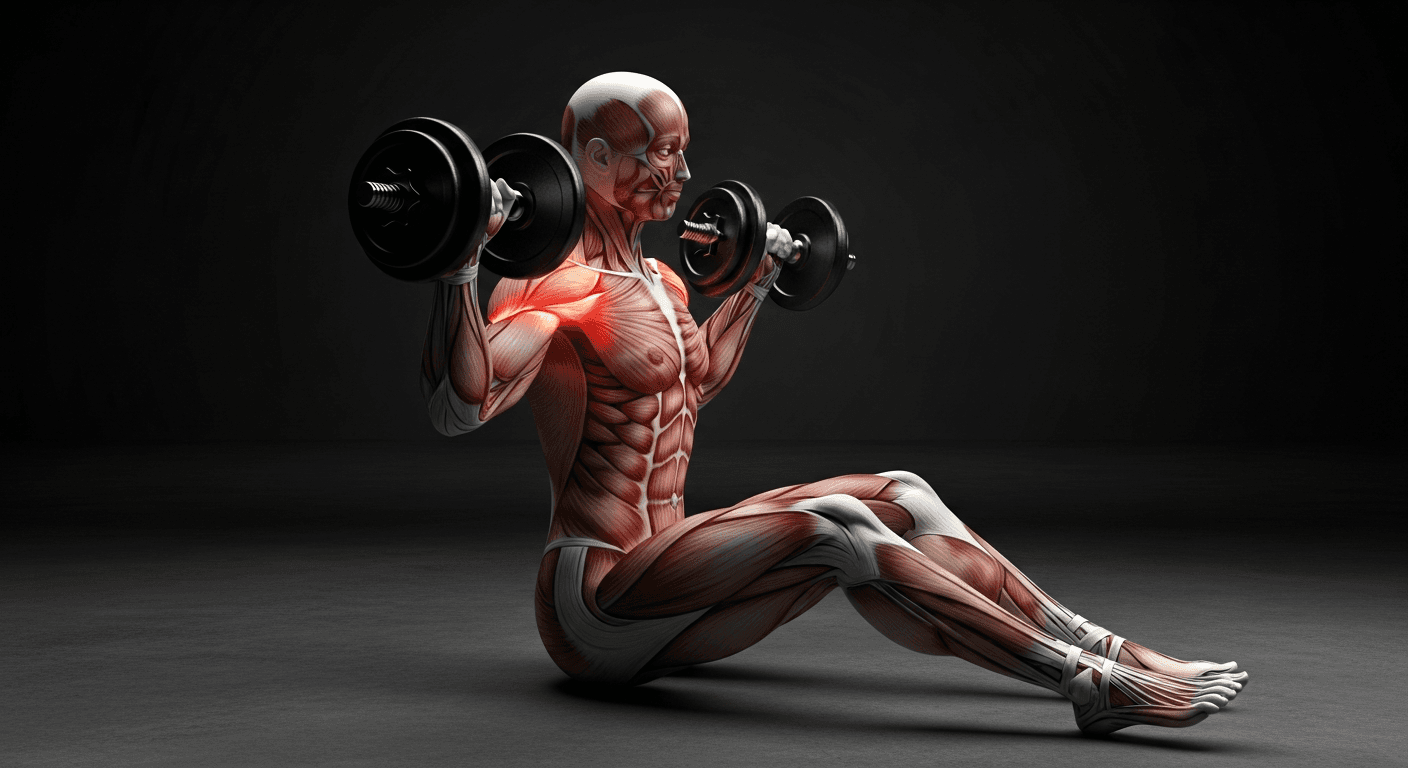
Cable lateral raises primarily load the lateral (middle) deltoid, with secondary activation of the supraspinatus and upper trapezius plus rotator cuff muscles for stabilization. They provide continuous lateral tension, useful as an isolation accessory after compound pressing to target shoulder width and end-range strength.
What muscles does the cable lateral raise target and how much?
Primary: the lateral or middle deltoid. This head abducts the arm away from the body and is responsible for shoulder width and the classic rounded shoulder line.
Secondary: supraspinatus assists the initial portion of abduction, upper trapezius and levator scapulae assist the shoulder girdle, and rotator cuff muscles (infraspinatus, teres minor, subscapularis) stabilize the humeral head. Forearm muscles contribute to grip and handle control.
Why cable changes the stress: compared with free weights, a cable produces near-constant horizontal tension across the motion, increasing end-range loading at the top of the lift. That makes it useful when you want more tension through the finish rather than just peak load mid-range.
How should I include cable lateral raises in a program?
Where to place them: use cable lateral raises as an accessory after heavy compound lifts such as overhead press or bench press. They are an isolation movement intended to add volume and shape rather than be a maximal strength driver.
Frequency and load: schedule lateral-dominant shoulder work around two times per week to allow recovery and progressive adaptation. Work in a rep range that supports hypertrophy and technical control; use moderate loads that let you maintain strict form. Progress by increasing reps, sets, or load gradually and track performance across sessions.
Interaction with overall shoulder volume: balance lateral raises with pressing and pulling volume so you do not chronically overshoot total shoulder workload. If you feel persistent fatigue in the shoulder complex, lower accessory sets or reduce frequency temporarily.
How do I perform the cable lateral raise with good form?
Step-by-step, standing single-arm:
- Set the cable at the lowest position and use a single handle. Stand sideways to the machine so the working arm is across your body.
- Keep a slight bend in the elbow and a neutral wrist. Initiate the lift from the lateral deltoid by raising the arm out to the side to about parallel with the floor. Avoid shrugging the shoulder up.
- Pause briefly at the top for control; lower slowly to maintain tension.
- Maintain an upright torso; a small torso lean away from the working side increases ROM but avoid large torso swings.
Form cues: lead with the elbow rather than the hand, keep the chest up, and avoid rotating the arm excessively. If you feel the movement strongly in the traps or upper back, reduce load and focus on elbow-leading movement.
What common errors reduce effectiveness?
- Excessive momentum and torso swing that shift load off the lateral deltoid.
- Shrugging the shoulder, which moves emphasis to the traps.
- Using too heavy weight that causes the arm to cross the body on the way up or to externally rotate excessively.
If these errors persist, drop load, reduce range of motion, or switch to a variation better suited to your mobility.
What are solid alternatives and when should I pick each?
Below are practical alternatives, with context for when to choose them.
| Exercise | Primary muscle focus | Equipment | When to choose | Trade-offs |
|---|---|---|---|---|
| Dumbbell lateral raise | Lateral deltoid | Dumbbells | No cable available; build strict, end-range control; easy unilateral loading | Less constant tension at top compared with cable |
| Resistance band lateral raise | Lateral deltoid | Bands | Traveling or home workouts; gentle progressive overload; good for early rehab/reciprocal tension | Variable resistance may be light at start of ROM |
| Leaning single-arm cable or dumbbell raise | Lateral deltoid with longer ROM | Cable or dumbbell | Want extra stretch and ROM; emphasize end-range activation | Requires space and trunk stability |
| Machine lateral raise (plate-loaded or selectorized) | Lateral deltoid with guided path | Machine | Balance or stability issues; consistent path reduces technical variability | Fixed path may limit individual biomechanics |
When to pick each in practice:
- Equipment limits: use dumbbells or bands if no cable machine is available. Bands are especially useful when traveling.
- Injury or shoulder irritation: choose lighter, controlled band work or machine variations with a guided path; avoid overhead pinching positions and stop any movement that causes sharp pain.
- Plateau in progress: change the tension curve. Try leaning cable raises for a longer ROM or switch to slow eccentrics to increase time under tension, then return to standard cable laterals for heavier load.
How does the cable lateral raise compare to other shoulder work?
Cable lateral raises isolate the lateral deltoid more than compound presses, which distribute load across anterior deltoids, triceps, and upper chest. For overall shoulder size and strength, combine compound pressing for strength and isolation movements like cable lat raises for targeted hypertrophy.
Safety note
Stop any set if you experience sharp or radiating pain. Rotator cuff and impingement symptoms require assessment by a qualified health professional. Do not use this article to self-diagnose. A conservative approach to load and emphasis on clean technique reduce risk but do not eliminate it.
Limitations of apps and AI coaching
No app or AI can see you lift in real time or provide a reliable clinical diagnosis. Program suggestions here are general guidelines and cannot replace an individualized plan from a qualified coach or medical professional. Consistency, progressive overload, and recovery adherence matter more than which single exercise you choose. For injury, mobility, or rehabilitation needs, consult a clinician or physiotherapist.
Summary: cable lateral raises are an effective lateral deltoid isolation tool thanks to constant tension and end-range emphasis. Use them as accessory work twice weekly, prioritize strict form, and swap to dumbbells, bands, or machines based on equipment, injury considerations, or to break plateaus. Remember to stop on sharp pain and seek professional advice when needed.
Frequently asked questions
- Does a cable lateral raise target the middle deltoid more than a dumbbell raise?
- Yes. The cable lateral raise emphasizes the lateral deltoid by keeping tension through the whole range of motion. Compared with a dumbbell raise, cable variations often provide more consistent lateral load at the top, though both train the middle deltoid effectively when performed with strict technique.
- How often should I do cable lateral raises for shoulder growth?
- Train lateral deltoids two times per week as part of a balanced shoulder routine. Use moderate volume per session and progressive overload over time. Consistency, reasonable load, and recovery are more important than which single exercise you pick.
- Will cable lateral raises prevent shoulder pain?
- Cable lateral raises can strengthen the lateral deltoid and rotator cuff when done with appropriate load and good form, but no exercise guarantees pain prevention. Stop on sharp pain and consult a qualified clinician if you have persistent or worsening symptoms.