Cable Pull-through: Muscles Worked and Best Alternatives
Clear, evidence-aware guide: which muscles the cable pull-through trains, where it fits in a program, and four practical alternatives with when to choose each.
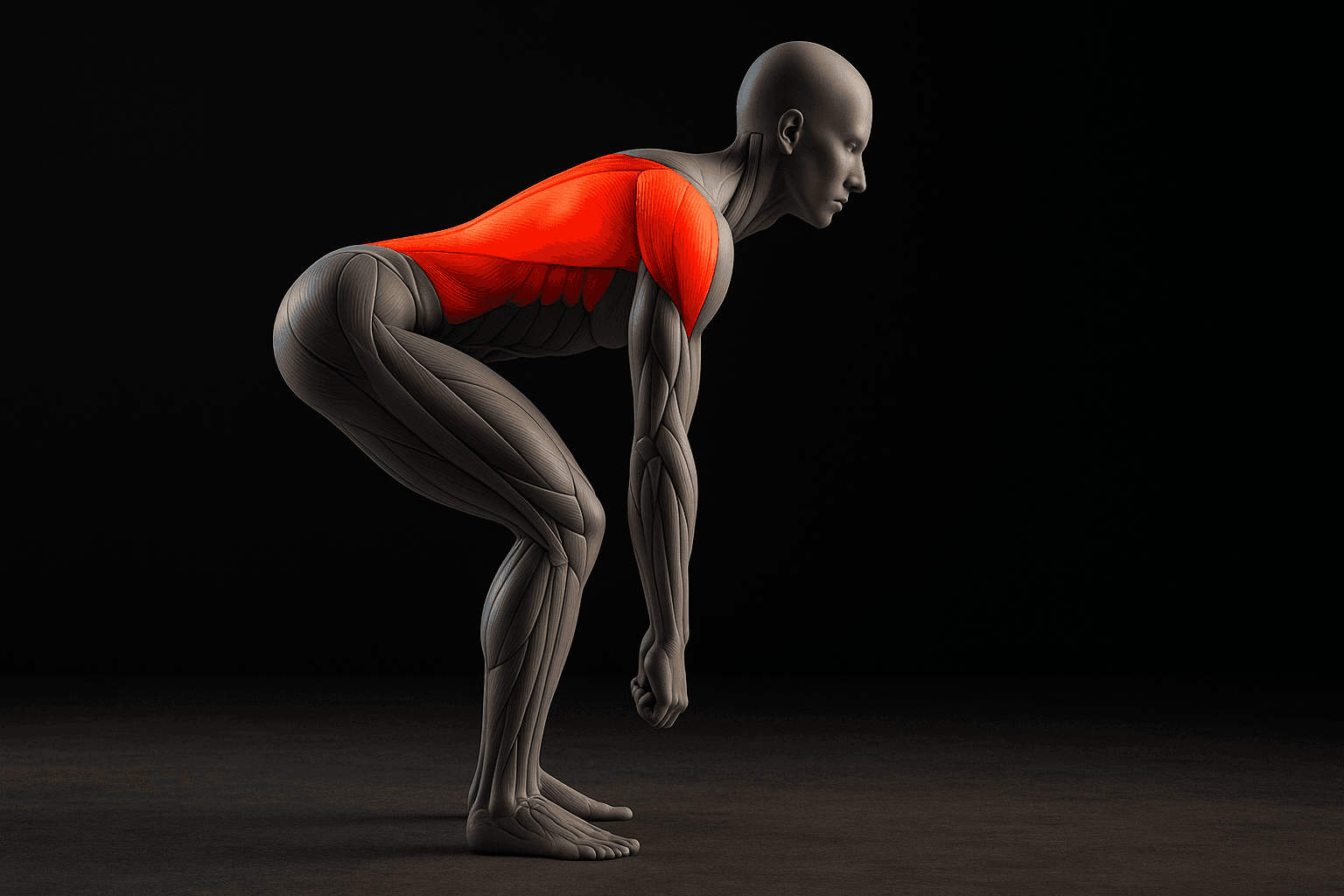
Photo by RepBro.
The cable pull-through mainly targets the hip extensors—gluteus maximus and hamstrings—while also loading the spinal erectors and core for stability. It’s a horizontal-cable hip-hinge variation useful for glute development and teaching hip-drive mechanics.
What primary and secondary muscles does the cable pull-through train?
Primary: gluteus maximus and the hamstrings (especially the proximal, hip-extending function). Secondary: spinal erectors (isometric control through the torso), the deep core (anti-flexion), and to a lesser extent the adductors and upper-back for cable control.
The exercise emphasizes hip extension from a flexed-hip start, so it biases posterior chain work with less compressive spinal loading than some heavy barbell hinges when performed with good technique.
How should the cable pull-through fit into a program: purpose, load, sets, reps, and frequency?
Purpose: use it to train hip extension, glute development, or as an accessory hinge to reinforce the movement pattern.
Load and reps: for hypertrophy, commonly use 8–12 reps per set with a controlled eccentric and strong hip snap; for strength or power work you can use heavier loads with lower reps or perform more explosive variations. Sets: 2–5 sets per session is typical. Frequency: train hip extensors 2–3 times per week across all exercises to support growth and strength.
Progression: increase load, increase reps/sets within your volume targets, improve tempo (slower eccentric, stronger concentric), or reduce assistance (stance/narrower grip) to make it harder. Track load and RPE and aim for incremental overload over weeks.
Program placement: place it after heavy compound lifts if your priority is squats/deadlifts, or earlier if glute development is the focus. It’s a lower-back friendly option for accessory posterior-chain volume when heavy barbell deadlifts or RDLs are already in the session.
How do you perform a cable pull-through safely and with proper form?
Setup: use a low cable pulley with a rope attachment. Stand facing away from the machine, feet hip-width, walk forward so the rope hangs behind your legs.
Execution cues:
- Hinge at the hips, push hips back while keeping a neutral spine, knees soft.
- Grip the rope between your legs and let it pull your hands through as you descend until you feel a stretch in the hamstrings.
- Drive the hips forward to stand, squeezing the glutes at the top. Keep chest up and avoid lumbar rounding.
- Control the eccentric return.
Common errors: using knee extension instead of hip hinge, hyperextending the lower back at the top, using too light a load and relying on momentum, or too tall a stance that reduces hip travel.
Safety note: stop on sharp pain and consult a qualified professional. This is general guidance, not a diagnosis or rehab plan.
How does the cable pull-through compare to other hip-hinge exercises? (quick table)
| Exercise | Main emphasis | Equipment | When to pick |
|---|---|---|---|
| Cable pull-through | Hip hinge, glute-dominant, lower compressive spinal load | Cable machine | When you want adjustable horizontal resistance, lower spinal compression, or high-rep glute work |
| Romanian deadlift (RDL) | Hamstrings + glutes with heavier axial load | Barbell or dumbbells | When you can load the posterior chain heavy and want strength carryover to deadlifts |
| Hip thrust | Glute isolation, peak contraction | Barbell, bench | When you want maximal glute contraction and isolation for growth |
| Kettlebell swing | Explosive hip extension, power and conditioning | Kettlebell | When you want power, conditioning, or limited gym equipment |
| Single-leg RDL | Unilateral posterior-chain and balance | Dumbbell/kettlebell | When addressing imbalances or improving single-leg control |
What are four solid alternatives and when to choose each?
- Romanian deadlift (barbell or dumbbells)
- Choose when: you have a barbell or heavy dumbbells and want to build hamstring/glute strength with higher axial load and transfer to deadlifts.
- Notes: prioritize hip-hinge mechanics and spinal neutrality; start lighter to learn the movement.
- Barbell or band hip thrust
- Choose when: you need maximal glute isolation and peak contraction, or when focusing specifically on glute hypertrophy.
- Notes: hip thrusts load the glutes through a wide range of motion and are often used to increase glute activation beyond many hinge variations.
- Kettlebell swing
- Choose when: you want to train explosive hip extension, improve power, or have limited space/equipment.
- Notes: swings are ballistic; technique and cadence matter. They add conditioning and posterior-chain power in one exercise.
- Single-leg Romanian deadlift (dumbbell/kettlebell)
- Choose when: you need unilateral strength, balance work, or to address asymmetries. Also useful if a lower-back issue limits heavy bilateral loading.
- Notes: reduces absolute load but increases stability demands; use conservative loads if balance or technique is limiting.
When should you avoid or modify the cable pull-through?
Modify or avoid if you have acute low-back pain or if the cable setup forces a compromised spine position. Substitute with a single-leg RDL or hip thrust that allows better control. If a cable machine isn't available, pick an alternative from the table above.
Limitations: what apps and AI coaching cannot do for your cable pull-through work
No app or AI can visually assess and correct your lifting form in real time; that requires a qualified coach or physical therapist. AI cannot diagnose injuries or replace a clinician for rehab. Programs only work with consistent effort—tools help, but adherence and progressive overload are what produce change.
Safety reminder If you experience sharp or unusual pain, stop and seek professional evaluation. This article provides general information for healthy lifters and is not a medical diagnosis or personalized rehab plan.
If you track workouts digitally, an app can help log progress and volume; some users find RepBro convenient for that purpose, but it’s optional.
References and further reading Look to consensus resistance-training recommendations and posterior-chain EMG literature to deepen understanding; consult peer-reviewed reviews for detailed dose–response guidance on hypertrophy and strength programming.
Frequently asked questions
- What muscles does the cable pull-through primarily train?
- The cable pull-through primarily trains the hip extensors—gluteus maximus and hamstrings—by loading the hip-hinge pattern. It also recruits spinal erectors for posture and the core for stability; adductors and quads assist less. It's a horizontal cable variation of weighted hip extension.
- How should I program the cable pull-through for growth or strength?
- Use it as a moderate-load hip-hinge exercise: for hypertrophy pick 8–12 reps for 2–5 sets; for strength use lower reps with heavier load or pair with heavy compound hinges. Train hip extensors 2–3 times per week within total weekly set targets for growth.
- Which exercises are good alternatives if I can’t do cable pull-throughs?
- Solid alternatives are Romanian deadlifts (barbell), barbell or band hip thrusts, kettlebell swings, and single-leg RDLs. Choose based on equipment, need for isolation versus power, unilateral work, or if a cable setup is unavailable or painful.