Chest-Supported Row Alternatives at Home (Minimal Equipment)
Four to five practical chest-supported row substitutes you can do at home with bodyweight, dumbbells, or bands; what each keeps, what it loses, and when to use a gym.
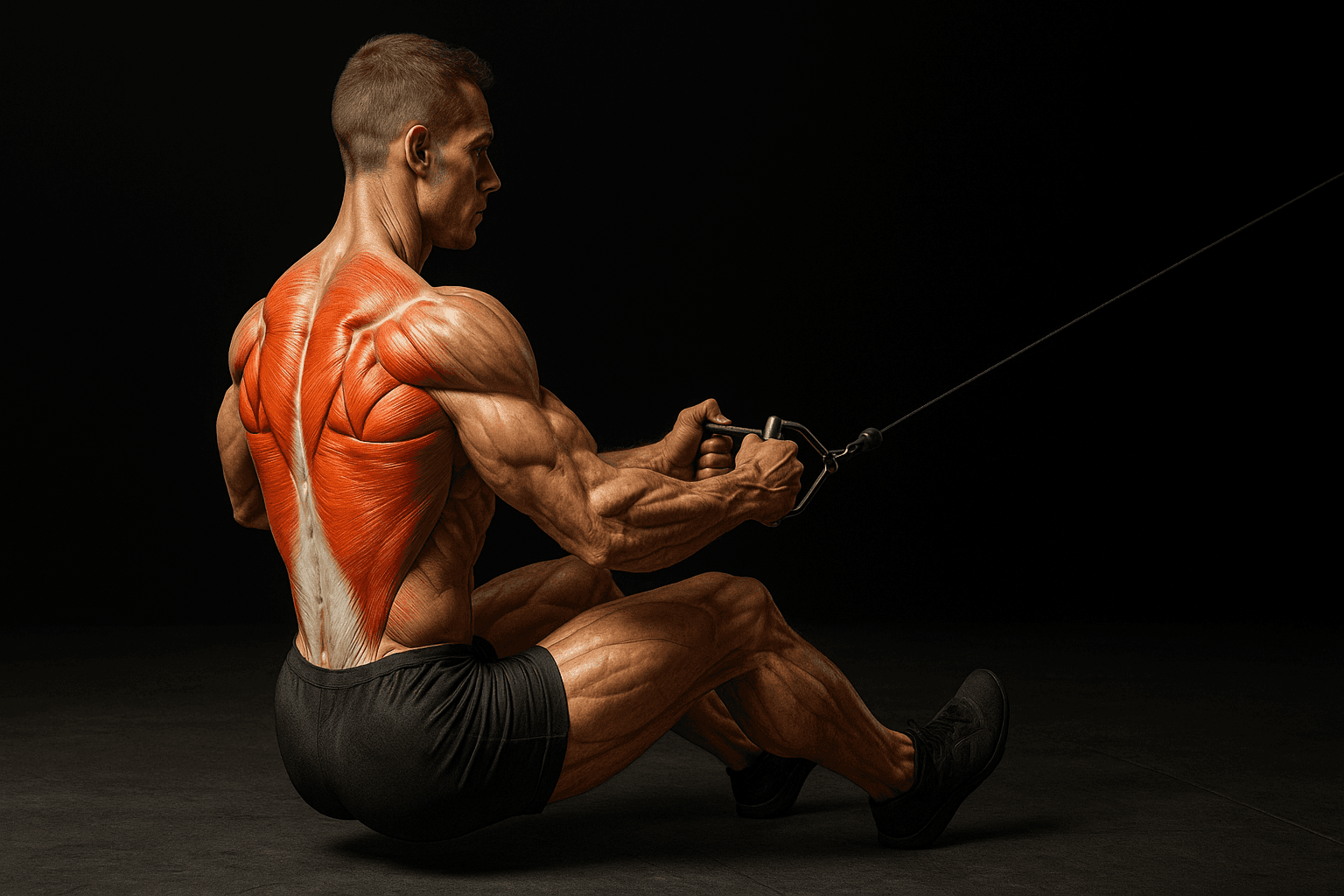
Photo by RepBro.
Direct answer (40–60 words): If you don’t have a bench, usable substitutes for the chest‑supported row are inverted rows, single‑arm dumbbell rows with a brace, two‑hand band rows, an improvised chest‑supported dumbbell row, and prone Y/T/I scapular drills. Each preserves horizontal pull and scapular retraction to varying degrees; differences affect load, spinal demand, and progression options.
What does the chest-supported row actually give you?
The chest‑supported row removes lumbar loading and forces the lats, rhomboids and posterior deltoids to do the pull without cheating with extension. That creates a very consistent horizontal pull pattern, easy to load progressively, and good for people who want back work without taxing the lower back.
Which at-home alternatives preserve the most important features?
Below are 5 practical alternatives with equipment noted. For each I list what it preserves and what it loses compared to the classic chest‑supported row.
| Exercise | Equipment | Preserves | Loses | Progression notes |
|---|---|---|---|---|
| Inverted row (bodyweight) | Sturdy table / rings / TRX | Horizontal pull angle; scapular retraction; very scapula‑centric; low spine load | Absolute load ceiling; might be too easy for advanced lifters unless feet elevated/weighted | Progress by elevating feet, adding weight vest, changing grip width |
| Single‑arm dumbbell row (bench hand/knee support) | 1 dumbbell, chair/bench | Unilateral loading; high load potential; similar lat activation | Not true chest support (one side braced), some torso rotation risk | Increase DB weight, slow eccentrics, add paused reps |
| Standing/two‑hand band row | Resistance band anchored low | Continuous tension; easy volume work; good for tempo and rehab | Changes resistance curve (more at end range); no chest support; less peak load potential | Use stiffer bands or double up; vary handles and tempo |
| Improvised chest‑supported dumbbell row (couch/coffee table) | Dumbbells + firm elevated surface | Closest to bench variation: stabilises torso and isolates back | Requires a stable, comfortable surface; limited range if surface too high | Increase weight; use slower tempo or higher reps |
| Prone Y/T/I (bodyweight, light dumbbells/bands) | None or light weights | Improves scapular control and posterior deltoid activation; low spine load | Not a heavy pulling exercise; low hypertrophy stimulus by itself | Use as warm‑up/assistance; increase reps/time under tension |
How similar are these to the chest‑supported row in muscle activation?
All five tax the scapular retractors (rhomboids, mid traps) and the posterior shoulder to some extent. The single‑arm dumbbell row and the improvised chest‑supported dumbbell row allow the highest external load and therefore the best stimulus for strength and hypertrophy. Inverted rows are excellent for bodyweight strength and teach scapular retraction, while band rows give continuous tension and volume-friendly work.
When is a substitution adequate and when should you go to a gym for a true chest‑supported row?
Use home substitutes when:
- You need to maintain training frequency or technique and don’t have a bench.
- You’re working on scapular control, volume, or higher‑rep hypertrophy.
- You prefer lower spine stress (inverted rows, prone Y/T/I).
Consider going to a gym when:
- You need to lift heavy for strength and your single‑arm/db progression is capped.
- You require a stable incline bench to eliminate torso contribution for strict horizontal pulling.
- You’re rehabbing with protocols that specifically call for a chest‑supported position prescribed by a clinician.
How should I program these into a week (evidence‑aligned guidance)?
Train horizontal pulling 2–3 times/week. Use 2–4 sets per exercise. For hypertrophy aim for moderate reps (6–12) where load is challenging for those reps; for endurance use higher reps and bands. Progress by increasing load, reps, or band tension before adding more frequency. Include at least one session per week focused on heavier, lower‑rep sets (if your goal is strength) and one focused on volume/tempo.
What are simple progressions and regressions?
- Progress: add external weight (weighted vest/dumbbell), increase band stiffness, elevate feet in inverted rows, increase time under tension.
- Regress: reduce range of motion, use lighter bands, perform many reps with strict form, or add a support point for the torso.
Safety note — what to watch for
Stop if you feel sharp pain. Keep a neutral spine during rows; do not cheat with spinal extension. If you have a current back injury or shoulder pain, consult a qualified clinician before loading these movements. This article does not diagnose or prescribe rehabilitation.
Comparison at a glance
(Quick take: choose inverted rows for bodyweight horizontal pulls and scapular control; choose single‑arm DB or improvised chest‑supported DB rows to approach gym‑level loading; use bands for volume and convenience.)
Limitations — what apps, guides, and AI can’t do for you
No app or article can see your lift and correct your form in real time. If you have pain, an acute injury, or complex rehab needs, you need an in‑person assessment from a licensed clinician or a qualified coach. Program recommendations only work when you apply them consistently; a plan is not a substitute for attendance and progressive overload. Tools can help track load and volume, but they cannot replace hands‑on coaching when technique or injury risk is the issue.
If you track sets, reps, and progressive overload with an app, a single‑tool mention worth checking is RepBro for logging and simple plan adjustments.
Final practical takeaway: use inverted rows and band rows for volume and scapular control; use single‑arm dumbbell rows or an improvised chest‑supported surface when you need heavier, more consistent loading. Move to a gym when you outgrow home progressions or when a clinician prescribes strict chest support.
Frequently asked questions
- Can I replace chest-supported rows with band rows for hypertrophy?
- Yes—band rows can stimulate the same upper-back muscles and allow high-rep work, but they change resistance curve and offer less peak load than heavy dumbbells. Use multiple sets (2–4) at a challenging rep range and progress tension or volume over weeks.
- How often should I train horizontal pulling if I only have minimal gear?
- Train horizontal pulling 2–3 times per week, spreading volume across exercises. Follow general resistance-training guidelines: 2–4 sets per exercise and adjust reps for goals (higher for endurance, moderate for hypertrophy). Prioritise consistency and progressive overload.
- Is form easier or harder without chest support?
- Without chest support you must control torso stability, which increases demand on the lower back and core and can make consistent technique harder, especially with heavy loads. Use support or lighter loads until you can maintain a neutral spine and controlled scapular motion.