Close-grip Bench Press: Proper Form, Step by Step
Step-by-step form guide for the close-grip bench press: setup, grip, breathing, tempo, common mistakes and fixes. Safety-first coaching for lifters.
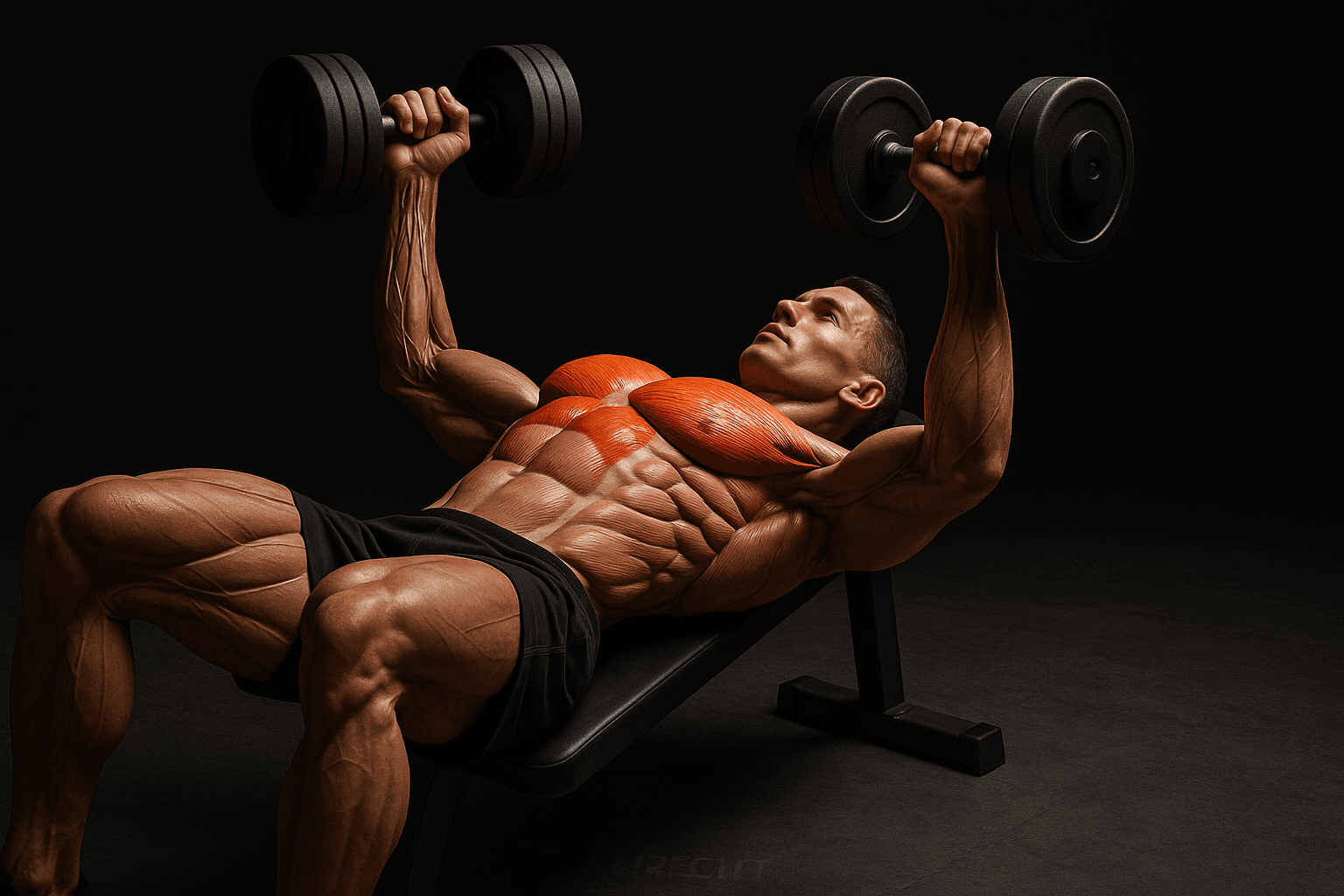
Photo by RepBro.
Direct answer: The close-grip bench press is a compound press with a narrower grip that emphasizes the triceps and anterior deltoids while reducing pectoral contribution. Set up with retracted shoulders, feet braced, hands roughly shoulder-width or slightly narrower, and press with controlled tempo, elbow tuck, and solid breathing and bracing.
How do I set up properly for the close-grip bench press?
- Rack and bar: Use a flat bench with the bar racked at a height that allows easy unracking without excessive shoulder elevation. Load weight you can control for the planned reps.
- Body position: Lie so the bar tracks over the middle of your chest. Your eyes should be roughly under the bar when it’s racked.
- Foot placement: Plant feet firmly on the floor—either flat or with a modest heel lift—so you can drive through your legs for stability. Keep feet stable throughout the set.
- Scapula and chest: Retract and depress your shoulder blades (pinch them down and back) to create a stable base. Maintain a modest arch through the thoracic spine if comfortable; do not force an extreme arch.
- Grip width: Place hands about shoulder-width or slightly narrower (roughly 40–50 cm / 16–20 in for many lifters). The exact distance depends on shoulder width and comfort; avoid a grip so narrow it causes wrist or elbow pain.
Where should the bar travel and how should my elbows move?
- Bar path: Lower the bar to the lower chest/nipple line area, then press in a slightly diagonal path back to the starting position over your shoulders. The bar should not travel to the upper chest as in a wide bench press.
- Elbow position: Tuck elbows at about a 45-degree angle relative to the torso. Keep elbows closer than in a wide bench to load the triceps and reduce shoulder impingement risk.
- Wrists: Keep wrists neutral—don’t let them collapse backward. Use a grip that keeps the forearm roughly vertical at the bottom of the rep.
What tempo and breathing should I use?
- Tempo: A controlled eccentric of about 2–3 seconds; optional 0.5–1 second pause at the chest to remove elastic rebound; a controlled but forceful concentric (explode up) to full elbow extension. For strength focus, use slower eccentrics and controlled concentrics; for hypertrophy, controlled tempo with time under tension is useful.
- Breathing and bracing: Take a full diaphragmatic breath and brace the core before unracking. Hold the breath while descending and initiating the press (Valsalva) for stability, then exhale near or after lockout. Avoid shallow chest breathing.
How many reps, sets, and frequency should I use with the close-grip bench?
Treat the close-grip bench as a primary triceps/lockout exercise or an accessory to the flat bench. For strength-focused phases, use heavier loads for lower reps; for size, use moderate loads with higher reps. Distribute pressing volume across the week and allow adequate recovery. Adjust frequency based on total weekly pressing volume, recovery, and goals.
How does the close-grip bench compare to regular bench and dips?
| Variation | Primary emphasis | Typical elbow angle | Best used for |
|---|---|---|---|
| Close-grip bench | Triceps, anterior deltoid | More tucked | Triceps strength, lockout work |
| Standard bench press | Pectoralis major, deltoids, triceps | More flared (varies) | Overall pressing strength, chest development |
| Dips | Lower chest and triceps (depends on torso angle) | Tucked but with different shoulder stress | Bodyweight triceps/chest development |
Use the close-grip when you specifically want to emphasize the triceps or improve the top portion of the bench press.
What are the most common mistakes and how do I fix them?
- Mistake: Grip too narrow. Fix: Move hands to roughly shoulder-width; ensure wrists aren’t excessively bent. Reducing extremes lowers wrist/elbow stress.
- Mistake: Flaring elbows. Fix: Cue a 45-degree tuck and practice with lighter loads until the pattern is consistent.
- Mistake: Letting the bar bounce off the chest. Fix: Pause at the chest, control the eccentric, and use the chest as a stable touchpoint, not a rebound.
- Mistake: Poor shoulder setup (rounded shoulders). Fix: Retract and depress scapula before each rep; think of creating a stable platform to press from.
- Mistake: Lifting feet or losing leg drive. Fix: Keep feet planted and use leg drive for stability; practice bracing between sets.
What safety checks and cues should I use every set?
- Check shoulder blades are retracted and the chest is stable before unracking.
- Confirm wrist, elbow, and bar alignment—forearms vertical at the bottom.
- Use a spotter when near maximal loads. If training alone, use safety pins in a power rack adjusted to a safe height.
- Stop if you feel sharp joint pain. Consult a qualified professional for persistent pain; do not self-diagnose.
How should I progress over time?
Progress by increasing load, adding reps, improving rep quality, or increasing volume within a sensible weekly pressing plan. Track lifts, allow for deload weeks when performance and recovery decline, and prioritize recovery (sleep, nutrition). Avoid rapid jumps in load—incremental progression reduces risk.
Limitations: what apps and AI coaching cannot do
No app or AI can see subtle joint angles, range-of-motion asymmetries, or pain patterns the way an in-person coach or clinician can. Apps can guide programming and track numbers but cannot replace real-time hands-on feedback, clinical assessment, or personalized rehabilitation. If you have persistent pain, recent injury, or unusual movement, consult a qualified coach or medical professional. A plan only works if you show up and recover—consistency matters more than the choice of app.
Safety note: Stop immediately on any sharp or unusual pain. This guide is educational and not a diagnosis; consult a qualified professional for pain, injuries, or individualized programming.
References and further reading: consult peer-reviewed strength training consensus reviews and reputable strength-coaching resources for detailed programming and shoulder/elbow health guidance.
Frequently asked questions
- Is the close-grip bench press good for triceps?
- Yes. The close-grip bench shifts more load to the triceps and anterior deltoids compared with a wider bench press. It’s an effective compound movement for triceps strength and pressing lockout. Use controlled reps and progressive overload while monitoring elbow comfort and shoulder position.
- How narrow should my grip be for a close-grip bench?
- Use a grip about shoulder-width or slightly narrower—roughly 40–50 cm (16–20 in) between hands for many lifters. Avoid a very narrow grip that stresses the wrists or elbows. Adjust to comfort and keep wrists stacked over elbows for a straight press path.
- How often should I include close-grip benching in my routine?
- Include close-grip benching as an accessory 1–3 times per week depending on your goals and overall training volume. Use it more often when prioritizing triceps strength or lockout, but monitor recovery and distribute pressing volume across the week for shoulder health.