The Most Common Conventional Deadlift Mistakes (and How to Fix Them)
Learn the 6 most common conventional deadlift mistakes, why they happen, what they cost (lost progress or higher injury risk), and one concrete fix for each.
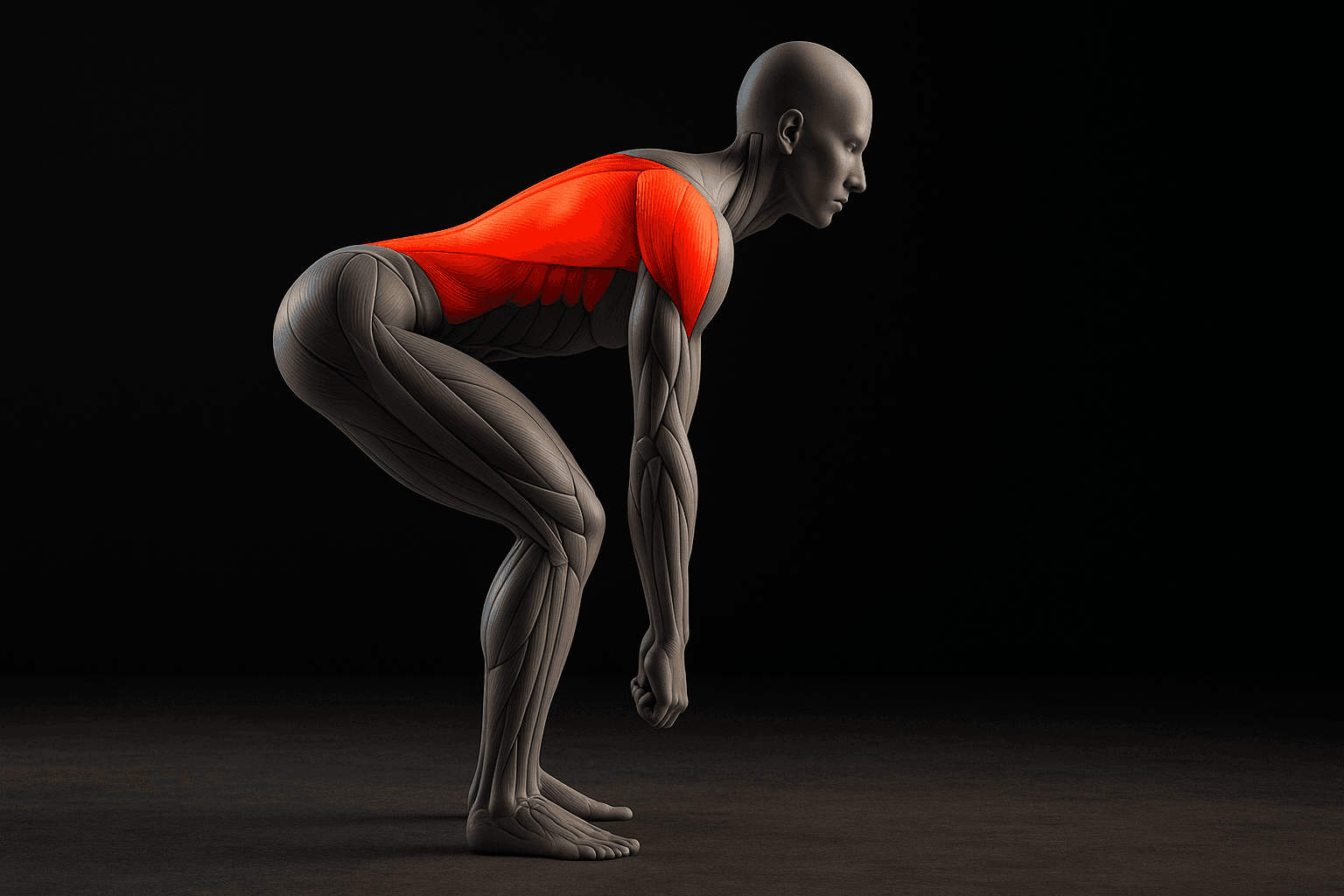
Photo by RepBro.
The Most Common Conventional Deadlift Mistakes (and How to Fix Them)
The most common conventional deadlift mistakes are: lower-back rounding, hips shooting up early, the bar drifting away from your shins, poor bracing/breathing, starting with hips too low (squat-style pull), and grip or foot-weight problems. Below I explain why each happens, what it costs (lost strength or higher injury risk), and one concrete, actionable fix.
Why does my lower back round?
Why it happens: Lumbar rounding usually shows up when the load exceeds your ability to maintain a neutral spine, when hamstrings are too tight, or when you fail to brace. Fatigue or chasing the bar with your hips can also let your lower back flex.
What it costs: Repeated lumbar flexion under heavy loads increases compressive/shear stress on passive structures and reduces force transfer from legs/hips to the bar, so you lose potential strength gains and raise injury risk.
One concrete fix: Start with hip-hinge and Romanian deadlift (RDL) practice for 3 sets of 6–8 reps at 50–60% of your conventional working weight, focusing on a rigid neutral spine. Take a 2–3 second pause at the top and maintain a breath-and-brace (diaphragmatic inhale) before each rep. Progressively increase load only when you can hold neutral for all reps.
Why do my hips shoot up early (the "good morning" pull)?
Why it happens: Hips that rise before your shoulders indicates your hips and posterior chain are too weak or your starting position is too hip-dominant. Often lifters set their hips too high to leverage stronger glutes/hamstrings but lose knee drive, turning the pull into a hip hinge too soon.
What it costs: Early hip rise makes the lift quad-weak, reduces bar speed off the floor, and transfers load awkwardly—lowering your 1RM potential and increasing low-back loading.
One concrete fix: Lower your starting hip height by 1–3 cm (0.5–1 in) so your shins contact the bar. Practice paused deadlifts with a 1-second pause when the bar is just off the floor for 3 sets of 5 at 60–70%; this trains simultaneous hip and knee extension and prevents the hips from leading.
Why does the bar drift away from my shins?
Why it happens: A bar path that moves forward away from the legs is usually from poor setup (bar too far forward), lack of lat engagement, or weak quads early in the pull. A forward bar increases moment arm and forces your back to do more work.
What it costs: A forward bar path raises the mechanical disadvantage and forces more spinal flexion/extension work, reducing efficiency and increasing fatigue and risk.
One concrete fix: Set the bar over mid-foot, then pull your shins back to touch the bar and squeeze lats like you’re trying to rip the bar into the floor. Cue “bar to shin” — perform slow singles focusing on keeping the bar close for 3–5 sets of 1–3 reps at 70–80% while filming from the side to monitor the path.
Why can't I keep my breath and brace?
Why it happens: Poor bracing is commonly because lifters forget to inhale into the belly or exhale too early. Mental stress, rushing reps, or lack of instruction leads to weak intra-abdominal pressure and spinal instability.
What it costs: Inadequate bracing decreases trunk stiffness, making it harder to transfer force and increasing the chance of flexion under load. You’ll lift less and risk painful episodes.
One concrete fix: Use the 3-part breath: inhale into your belly and lower ribs, hold a tight brace, then perform the lift while maintaining the hold. Practice with 3 sets of 5 reps at 50–60% focusing on holding the breath-through-the-lift for 3–4 seconds.
Why are my hips starting too low (squat-style pull)?
Why it happens: Starting with the hips too low is often from copycat squatting mechanics, poor hip mobility, or trying to pull with the knees instead of hinging. The knees travel too far forward and you lose hamstring/hip involvement.
What it costs: A squat-style start makes the deadlift more quad-dependent and reduces leverage; you’ll typically pull less weight and fatigue the knees quicker.
One concrete fix: Raise hips 2–4 cm (about 1 in) from your lowest comfortable start to create a stronger hip hinge. Do hip-hinge drills (kettlebell swings, banded good mornings) 2 times a week and check position on video — hips should be higher than a full squat setup but lower than a pure RDL.
Why do my knees cave or my weight shift to one foot?
Why it happens: Knees caving (valgus) or asymmetric loading comes from weak glutes/abductors, uneven setup, or an imbalanced bar grip/foot placement. Fatigue will exaggerate small imbalances.
What it costs: Lateral instability increases knee strain and reduces force transfer; chronic asymmetry can limit progressive overload and cause compensatory pains.
One concrete fix: Strengthen the glutes with single-leg work like 3 sets of 8–10 Bulgarian split squats per leg and practice deadlifts with a narrow visual cue (a line on the floor) to keep feet even. Also check footwear and stance width—move feet 1–2 cm outward/inward until your knees track over the second toe.
Safety note: Stop immediately for sharp pain and consult a qualified coach or medical professional if pain persists—this article is guidance, not a diagnosis.
If you're tracking technique drills or comparing approach options, tools like RepBro can help you log sets, film lifts, and test changes; compare program styles at https://www.repbro.app/vs.
One-sentence takeaway: Fix the pull by fixing the setup—neutral spine, correct hip height, bar close to shins, and a solid breath will buy you the most reliable strength gains while reducing unnecessary risk.
Frequently asked questions
- How often should I practice deadlift technique vs. heavy sets?
- Do technique-focused sessions 1–2 times every 1–2 weeks using 50–75% of your working weight, then keep 1 heavy session per week at your normal intensity to maintain strength and test form under load.
- Is back rounding always bad on a deadlift?
- Small, controlled thoracic rounding often happens but repeated lumbar (lower-back) flexion under load increases risk and likely reduces force transfer; prioritize a neutral spine under heavier sets and address mobility/brace issues with light technical work.
- Should I use straps or a mixed grip to fix grip problems?
- Use straps for very heavy sets to keep training volume without grip failure; use mixed grip sparingly to avoid imbalances—prefer double-overhand while building grip strength and rotate into straps for top-end lifts.