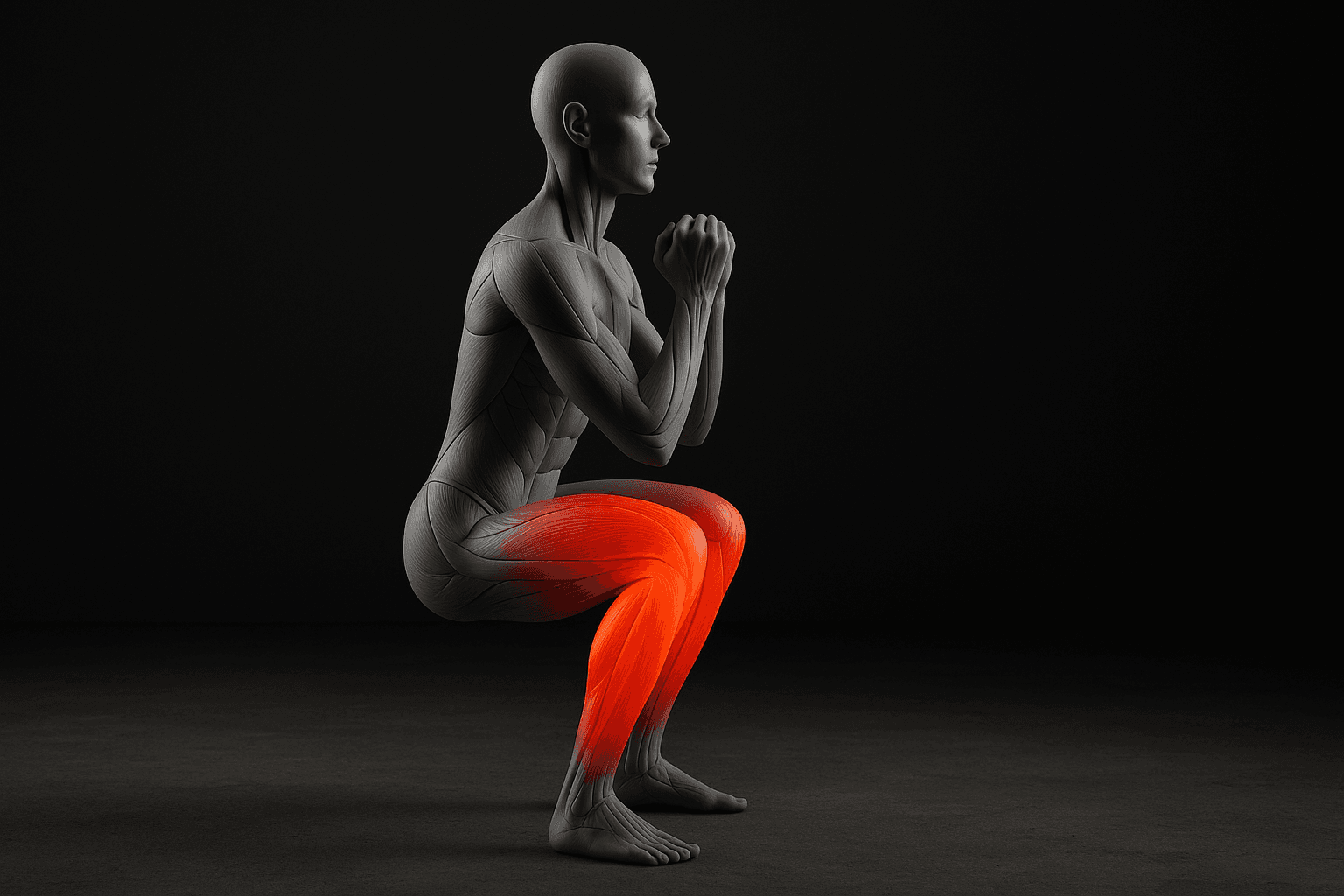
How Many Sets and Reps (Hold Times) for the Copenhagen Plank
Practical, evidence-aware set/rep (hold-time) ranges and week-to-week progressions for the Copenhagen plank, by goal: strength, hypertrophy, endurance.

Photo by RepBro.
Answer-first (40–60 words):
If your goal is strength, do short, intense Copenhagen holds 3–5 sets per side with heavy assistance reduction or added load. For hypertrophy, aim for 3–5 sets of 20–45 second holds per side. For endurance, use 2–4 sets of 45–90+ second holds. Progress by adding time, sets, or load once the upper range is easy.
What is the Copenhagen plank and why program sets/reps as hold time?
The Copenhagen plank is a side-lying, adductor-focused variation of the side plank where the top leg rests on an elevated surface and the bottom leg is suspended, forcing the adductors and abductors to stabilise the hip. It is an isometric/anti-abduction exercise, so programming uses hold time (seconds) instead of traditional concentric reps. Time under tension, set count, and added load are the primary variables for overload.
How many sets and how long should each hold be for strength, hypertrophy, and endurance?
Below are practical, evidence-consensus ranges adapted to an isometric hip-adduction exercise. These align with general resistance-training recommendations for frequency and volume applied to hold-based work.
| Goal | Sets per session (per side) | Hold time per set | Weekly frequency |
|---|---|---|---|
| Strength (max force) | 3–5 | 6–15 s high-intensity holds or heavy-loaded short holds | 2–3× per week |
| Hypertrophy (size) | 3–5 | 20–45 s moderate-intensity holds | 2–3× per week |
| Endurance (local muscular endurance) | 2–4 | 45–90+ s lower-intensity holds | 2–3× per week |
Notes:
- Strength: treat each hold like a near-maximal contraction. You can achieve this by reducing assistance (support) or adding external load. Short, high-effort holds produce neural and maximal-force adaptations.
- Hypertrophy: moderate-duration holds that induce noticeable fatigue (but not failure on every set) help increase time under tension and metabolic stress, both relevant to muscle growth.
- Endurance: longer holds build sustained isometric capacity and fatigue resistance.
How should I progress week to week on the Copenhagen plank?
Progression options (apply one or combine):
- Increase hold duration by 5–15% each week when the current holds feel manageable. That could be +5–10 seconds for many lifters.
- Add a set when you can consistently complete the upper end of the hold range for two sessions in a row with good form.
- Increase intensity by decreasing assistance (raise the contact surface, move hips higher) or adding external load (ankle weights, weighted vest, or partner resistance) once time/sets are easy.
- Manipulate tempo — brief pulses (small oscillations) during a hold can increase metabolic demand without changing duration.
A simple linear progression example (hypertrophy): start 3 sets × 20 s. Week 1: 3×20 s. Week 2: 3×25 s. Week 3: 4×25 s. Week 4: 3×30 s. If week-to-week progress stalls, back off one variable (reduce volume or intensity) or take a deload week.
What are clear signals to add weight versus add reps/time?
Add more time or sets first to build baseline capacity. Consider adding external load when:
- You can complete the upper end of your chosen hold-range for two consecutive sessions with RPE ≤6/10 and perfect form.
- Holds last long enough that further time increases are impractical for training density (for example, multi-minute holds that disrupt session flow).
Add load rather than time when you want to prioritize maximal strength or carryover to loaded tasks. Add time/sets when your goal is endurance or hypertrophy and the exercise intensity is already in the target range.
How many total seconds per week should I aim for?
Total weekly time is a useful metric for isometrics. For general guidance: hypertrophy-focused Copenhagen work commonly falls in the 2–6 minutes total time per side per week range, strength-focused work may have less total time but higher intensity, and endurance work will have higher total time. Adjust based on how the rest of your program loads the adductors and hips.
How does Copenhagen programming fit into a full training plan?
Place Copenhagen work on days without heavy adductor-dominant lifting (heavy squats, heavy legs with adductor emphasis) or separate them by adequate recovery. Two to three short sessions per week fits within typical resistance training recommendations for muscle groups. Progression should be coordinated with overall lower-body volume.
What about sets/reps for beginners or those rehabbing adductor issues?
Beginners should start with easier regressions (lower support height, shorter holds, fewer sets) and build to the above ranges. Pain-free range and perfect form are mandatory. For rehabilitation, follow a clinician's protocol — use low-intensity, high-frequency exposures and avoid ballistic changes until cleared.
Safety and form notes
Stop and consult a qualified professional if you feel sharp or radiating pain. Keep hips aligned, avoid collapse of the spine, and progress from regressions (lower support height, bent-knee variations) before adding load. This article does not replace hands-on coaching; if you have prior hip or groin injury, get a professional assessment.
Limitations — what apps and AI can’t do here
No app or AI can watch your form live and correct subtle compensations. Programming guidance cannot diagnose injuries or replace in-person evaluation; a clinician or coach is required for rehab or persistent pain. Finally, even the best plan only works when you show up consistently; adherence and sleep, nutrition, and overall recovery drive results.
(If you track sets, holds, and progression digitally, you may find RepBro useful for logging and progressive overload.)
Summary quick reference:
- Strength: 3–5 sets of short, intense holds (6–15 s) 2–3×/week; add load when time/effort is easy.
- Hypertrophy: 3–5 sets × 20–45 s per side 2–3×/week; increase time/sets before adding load.
- Endurance: 2–4 sets × 45–90+ s per side 2–3×/week; increase total weekly time gradually.
Progress when the top of your range is easy for two sessions; prioritize form and stop on sharp pain.
Frequently asked questions
- How many reps or hold time should I do per side for the Copenhagen plank?
- For most lifters, use hold-based work: strength — shorter, harder holds; hypertrophy — moderate holds; endurance — longer holds. Typical session prescriptions are in ranges (see article). Progress by increasing time, sets, or load when the upper range is easy for two workouts in a row.
- How often should I train the Copenhagen plank each week?
- Train the Copenhagen plank 2–3 times per week for most goals. That frequency matches general resistance-training guidance for a muscle group and gives recovery time. Reduce to 1–2 weekly sessions if you add heavy external load or are managing other adductor-heavy work.
- When should I add weight versus add more time on the Copenhagen plank?
- Add time (or sets) first to build capacity. Once you can complete the top of your time range for two consecutive sessions with low perceived effort and perfect form, add external load (ankle weight or weighted vest) or change leverage to increase intensity.