The Most Common Dead Bug Mistakes (and How to Fix Them)
Learn the 6 most common dead bug mistakes, why they happen, what they cost (lost gains or injury risk), and one concrete fix for each to make your core work.
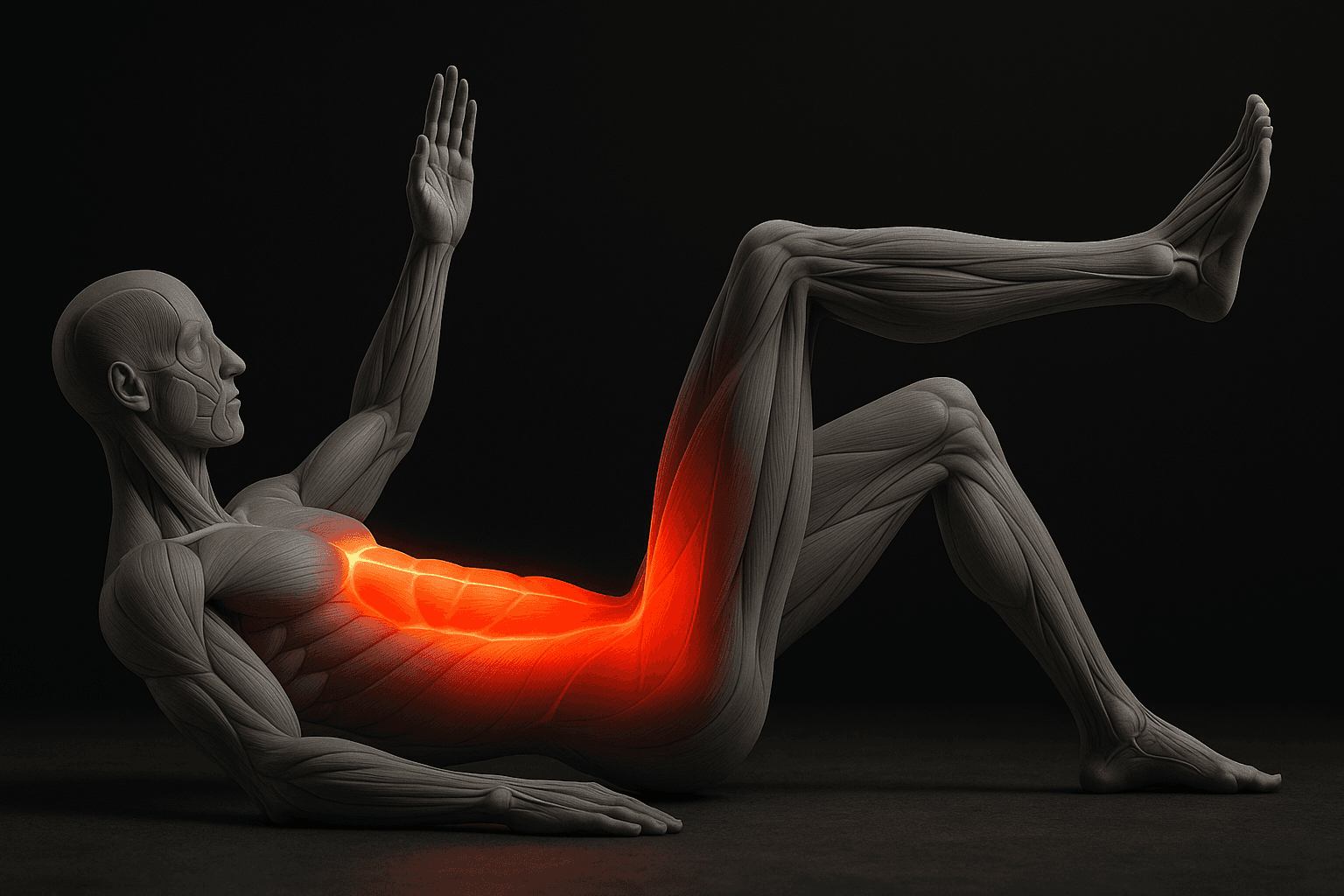
Photo by RepBro.
The quickest answer: the most common dead bug mistakes are lower-back lifting (lumbar extension), moving too fast (momentum), wrong breathing or breath-holding, using too much range of motion, letting hip flexors drive the movement, and neck/head tension. Each costs you either lost core training effect, worsening low-back stress, or both — and each has a single, simple fix you can try right away.
Why does the dead bug matter?
The dead bug is a high-value, low-load core exercise that trains anti-extension and coordination between the trunk and limbs. Done correctly it improves core stiffness and movement control with minimal spine compression. Done poorly, it becomes a hip-flexor or momentum drill that leaves the lumbar spine vulnerable and wastes training time.
Is my lower back arching or lifting off the floor?
Why it happens: You’re letting the lumbar spine go into extension because the abs aren’t braced or the legs are too far away from the floor. Many people overestimate their ability to resist hip-driven torque. What it costs: Loss of targeted abdominal activation; repeated lumbar extension under load increases strain and can transfer loads to passive tissues. One concrete fix: Tuck and set. Start supine with knees bent, feet on the floor. Perform an active posterior pelvic tilt (think “zipper up” the front of the pelvis) and hold it while you slowly extend one leg. If the lumbar spine starts to lift, reduce leg extension by 30% and retrain the tilt. Use a thin towel under the low back to feel constant contact.
Am I moving too fast and using momentum?
Why it happens: The dead bug has a tempting rhythm—faster reps feel easier and let you fake control. Fatigue also drives faster, choppier movement. What it costs: Momentum reduces time under tension for the core, lowers neuromuscular control gains, and hides asymmetries. One concrete fix: Slow down with a 3-0-3 tempo: 3 seconds to reach the end range on the away movement, 0 pause, 3 seconds to return. Use a metronome or count aloud. If you can’t maintain form for 6 reps at that tempo, reduce range or use a regression.
Am I holding my breath or breathing shallowly?
Why it happens: People brace by holding their breath, thinking it stabilizes the spine. In reality, inappropriate breath patterns change intra-abdominal pressure and reduce coordinated core control. What it costs: Breath-holding creates stiffness that can feel stable but reduces dynamic control and may increase blood pressure spikes and neck strain. One concrete fix: Coordinate exhale with the effort. Inhale to reset; exhale slowly while you extend a limb and actively draw the belly button slightly toward the spine (not a forceful vacuum). Aim for 5–7 breaths per minute during a set to keep it controlled.
Are my legs starting too high or moving through too much range?
Why it happens: To make the movement feel easier people lift the legs closer to vertical or swing them farther out, which changes leverage and shifts load off the abs or onto the hips. What it costs: Either the exercise becomes too easy (no training stimulus) or too hard (compensations occur). Too much range increases lumbar torque. One concrete fix: Use the 90/90 baseline: start with hips and knees at 90°. Only lower the moving leg until your low back wants to lift—then stop 50% of that distance. Increase depth by 1–2 cm per session as control improves.
Are my hip flexors doing the work instead of my core?
Why it happens: If the core doesn’t create a stiff cylinder, the hip flexors will pull the femur and move the pelvis, especially during leg lowering. What it costs: Overuse of the hip flexors reduces abdominal recruitment, increases anterior pelvic tilt stress, and can irritate the lumbar spine. One concrete fix: Limit leg straightening and cue “no hips moving.” Practice 1-leg dead bug: keep one knee bent and stationary, move only the opposite arm; progress to controlled opposite-arm/leg lifts once the pelvis stays still for 8–12 reps.
Is my neck or head tense and lifted off the floor?
Why it happens: People try to watch their feet or hold the head up to look at form, which recruits neck extensors. What it costs: Neck fatigue, headaches, and disrupted breathing patterns that interfere with core function. One concrete fix: Rest the back of your head lightly on the floor and look straight up. If you need visual feedback, use a mirror or record video—don’t lift the head to watch each rep.
What safety checks should I use during the dead bug?
Stop if you feel sharp or radiating pain in the back, hips, or legs. This guide isn’t a diagnosis; consult a qualified professional if pain persists. Keep load low: if you add bands or weights, only progress after you can do 3 sets of 12 reps perfectly controlled. Track form, not reps—apps like RepBro are useful for logging tempo and progressive improvements.
Final quick checklist (do these before you add reps):
- Can you maintain a slight posterior pelvic tilt with feet at 90/90? If not, regress.
- Can you exhale on the moving phase without lifting the chest or head? If not, slow down.
- Can you do 6 reps per side at a 3-0-3 tempo without lumbar movement? If not, reduce range.
One-sentence takeaway: Fix the six common dead bug errors—lumbar lifting, speed, breath, excessive range, hip-flexor dominance, and neck tension—by slowing down, reducing range, and prioritizing a stable pelvis for far better core training results.
Frequently asked questions
- How many reps and sets should I do for the dead bug?
- Aim for 2–4 sets of 6–12 controlled reps per side (or 30–60 seconds per set) depending on your fitness; prioritize quality over quantity.
- What’s an easy regression if I can’t keep my low back down?
- Regress by reducing leg range of motion: start with one leg moving at a time or keep knees bent and move just one arm, then progress range as control improves.
- How often should I practice the dead bug?
- Practice 2–4 times per week; consistency matters more than volume—add it as a warm-up or core finisher and track progress using slow, controlled reps.