Dip: Muscles Worked and Best Alternatives
Which muscles do dips work? Learn the primary and secondary muscles trained, where dips fit in a plan, and 4 practical alternatives for equipment limits, injuries, or plateaus.

Photo by RepBro.
First paragraph answer:
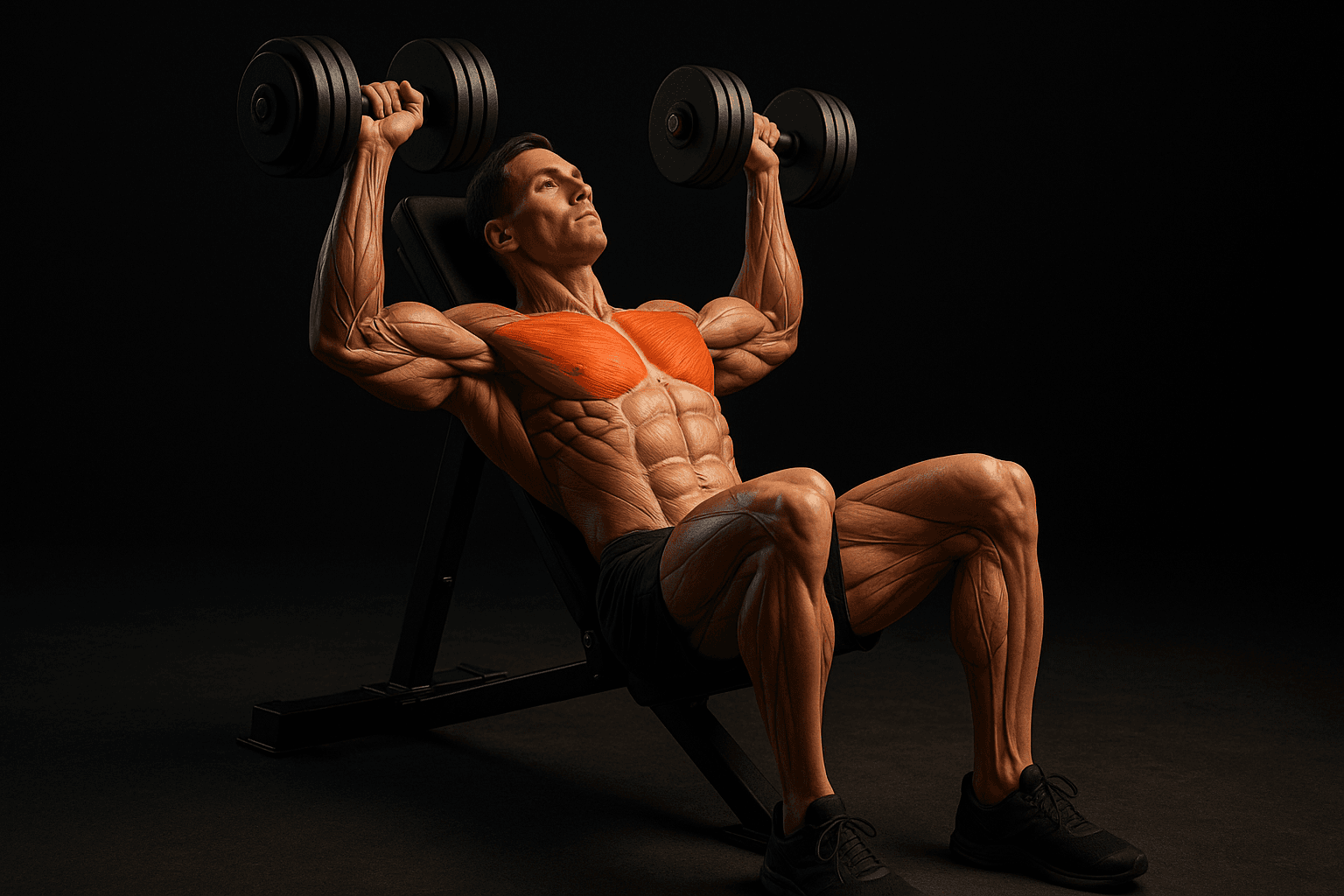
Dips primarily train the triceps brachii and the lower portion of the pectoralis major; the anterior deltoid is a consistent secondary mover. Other supporting muscles include the scapular stabilizers (serratus anterior, trapezius, rhomboids) and the core for stabilization.
What exactly does a dip target?
Primary muscles:
- Triceps brachii (all heads) — main elbow extensors delivering most of the force to lift your body.
- Pectoralis major (especially the lower sternal fibers) — more engaged when you lean forward.
Secondary and stabilizers:
- Anterior deltoid — assists shoulder flexion and stabilization.
- Serratus anterior, trapezius, rhomboids — control the scapulae during the movement.
- Core muscles — maintain torso position, especially on rings or unstable bars.
Dips are a compound pressing pattern that combines elbow extension (triceps) and shoulder extension/adduction (chest/shoulder). How you perform the movement changes the emphasis.
How does technique change which muscles are worked?
- More forward lean = more chest activation. If you deliberately lean the torso forward and flare the elbows slightly, the pectoralis major contributes more.
- Torso upright = more triceps emphasis. Keeping the body vertical and elbows tucked increases elbow-extension demand.
- Deeper range of motion increases muscle lengthening stress but raises shoulder joint load — be cautious if you have anterior shoulder issues.
Practical cue: think chest forward/shoulders down to bias chest; elbows close to the body to bias triceps.
Where do dips fit in a program?
- Push day staple: Use dips as a main compound press on a push-focused day (bench/overhead/dips). If you prioritize dips, place them earlier in the session.
- Strength template: 3–5 sets of 3–6 reps with added weight for strength. Progress with a weight belt or weighted vest.
- Hypertrophy template: 3–4 sets of 6–12 (or up to 15+) reps with controlled tempo and full tension.
- Assistance role: If bench press or overhead pressing is your priority, treat dips as a supplemental movement later in the workout.
Programming note: Allow 48–72 hours recovery for the pushing muscles when training dips heavy. Frequency of 1–3 sessions/week fits most lifters depending on volume and intensity.
What are the best alternatives and when should you pick them?
Pick an alternative based on goals, equipment, injury history, and where you are in a progression. Here are four solid options with clear use cases.
- Incline/decline/close-grip push-ups — Use when equipment is limited or you need simple regressions/progressions
- Why: No barbell or dip station required. Adjust body angle to change load: incline reduces load for beginners; decline (feet elevated) increases chest demand; close-grip/diamond variants bias triceps.
- When to pick: You have no dip station, are new to pressing, or need higher-volume conditioning. Great for circuits and warm-ups.
- Limitations: Harder to progressively overload beyond bodyweight unless you add a weighted vest or bands.
- Band-assisted or machine-assisted dips / negatives — Use when you need to learn the pattern or reduce joint load
- Why: Preserve the dip movement pattern while reducing load. Negatives (slow, controlled lowering) build eccentric strength without full concentric capacity.
- When to pick: Beginners who cannot lift full bodyweight, people returning from short-term deconditioning, or lifters temporarily avoiding heavy concentric loading.
- Limitations: Assistance can change mechanics; be sure to practice full-range reps as strength improves.
- Close-grip bench press or floor press — Use when you want heavy triceps overload with safer shoulder mechanics
- Why: Barbell/dumbbell close-grip pressing lets you add measurable weight and keep a controlled range of motion. The floor press limits shoulder extension, reducing anterior shoulder stress.
- When to pick: You want to prioritize triceps strength/hypertrophy, need a safer option for mild anterior shoulder irritation, or need heavy progressive overload.
- Limitations: Less scapular mobility demand than dips and different shoulder angle, so it’s not a direct mechanical substitute for chest development.
- Ring dips (or instability variations) — Use when you need a progression or more neuromuscular challenge
- Why: Rings increase instability and require more scapular and core control, producing higher activation for stabilizers and providing a progression if parallel-bar dips plateau.
- When to pick: Advanced lifters seeking a new stimulus or wanting to improve scapular control and core integration.
- Limitations: Greater shoulder demand and injury risk for lifters with poor scapular control — not a first-choice regression.
How to perform a safe dip?
Key cues:
- Start from a stable set-up: shoulders packed, scapulae slightly retracted then controlled into the movement.
- Move through a controlled range — avoid forcing elbows far behind the torso if it causes discomfort.
- Keep tension through the core and avoid excessive swinging.
Safety note: Stop immediately on sharp or radiating pain. Dips place substantial load on the anterior shoulder; if you have ongoing shoulder issues, reduce depth, use regressions (band-assisted, floor press, incline push-ups), and consult a qualified clinician or coach for an individual assessment. This is not medical advice.
How to progress dips sensibly?
- Load progression: add small increments of weight (1.25–5 kg / 2.5–10 lb plates, weight vests, chains).
- Volume progression: increase reps per set, then add sets once reps are comfortably in range.
- Variation progression: move from assisted → bodyweight → weighted → rings or slow tempos.
Program example: If training for hypertrophy, aim for 3 sets of 8–12 bodyweight dips twice a week, add 1–2 kg/2–5 lb total when you can do 3 sets of 15, or switch to weighted dips for 4–6 reps.
Want to compare dips with other moves?
For side-by-side comparisons of dips versus presses (bench, push-up variants, machine options), see the RepBro comparison resources: https://www.repbro.app/vs and download the RepBro app for programming and tracking: RepBro.
Honest takeaway: Dips are an effective compound press for triceps and lower chest but require smart technique and appropriate progressions; pick the alternative that matches your equipment, injury history, and training goal.
Frequently asked questions
- Are dips better for chest or triceps?
- Dips can emphasize either muscle depending on technique: a forward-leaning dip stresses the lower chest more, while an upright dip emphasizes the triceps. Both get worked as prime movers.
- Can dips cause shoulder pain?
- Dips put large loads through the anterior shoulder when taken deep. Stop on sharp pain and reduce depth, switch to regressions, or consult a qualified practitioner if pain persists.
- How should I program dips for strength and size?
- For strength: 3–5 sets of 3–6 reps with added weight. For hypertrophy: 3–4 sets of 6–12+ reps at a challenging but controlled intensity. Match frequency to recovery (typically 1–3x/week).