Dumbbell Bench Press: Proper Form, Step by Step
Learn dumbbell bench press proper form with a clear setup, step-by-step cues, breathing, tempo, common mistakes and fixes. Safety-first, no hype.
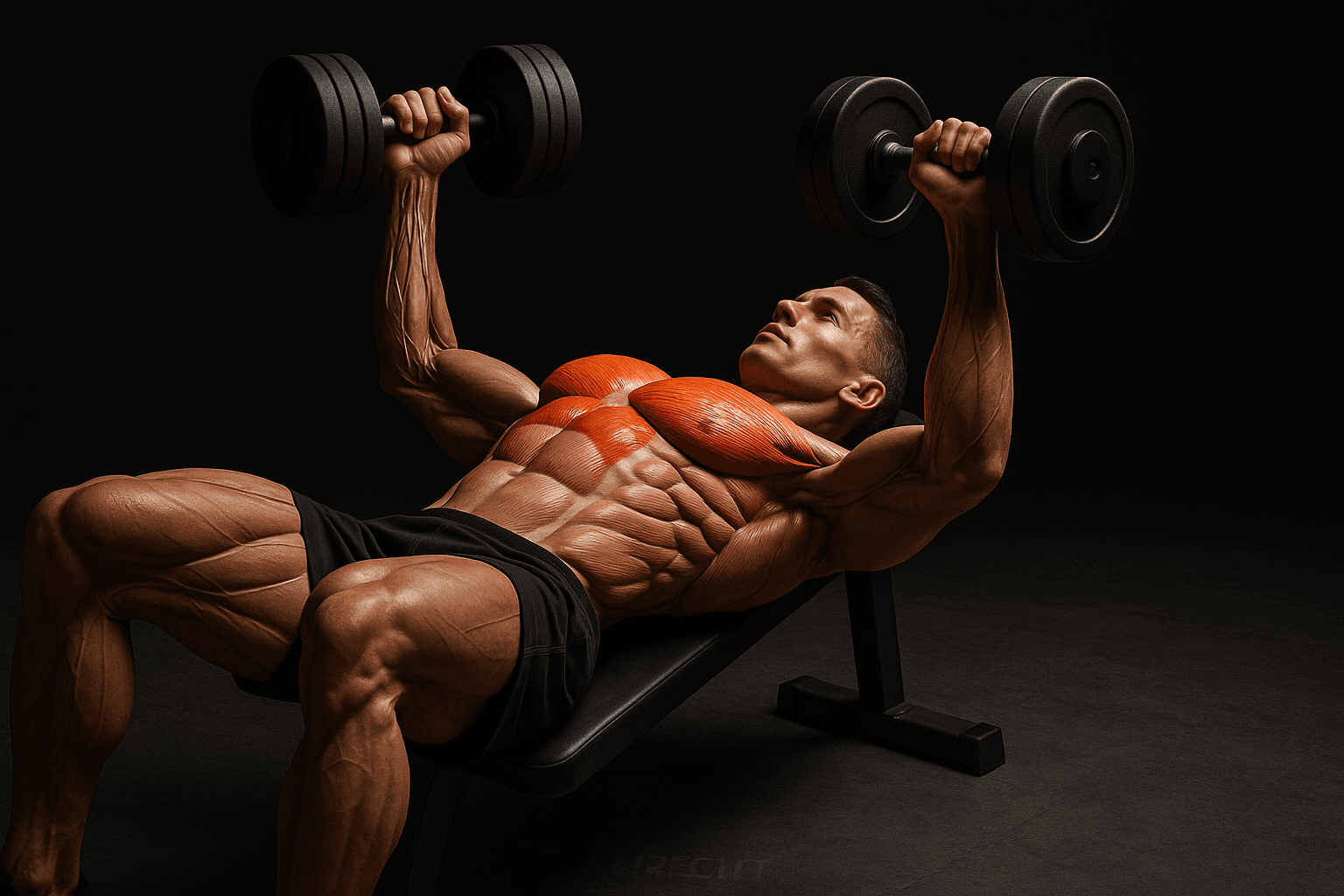
Photo by RepBro.
Dumbbell Bench Press: Proper Form, Step by Step
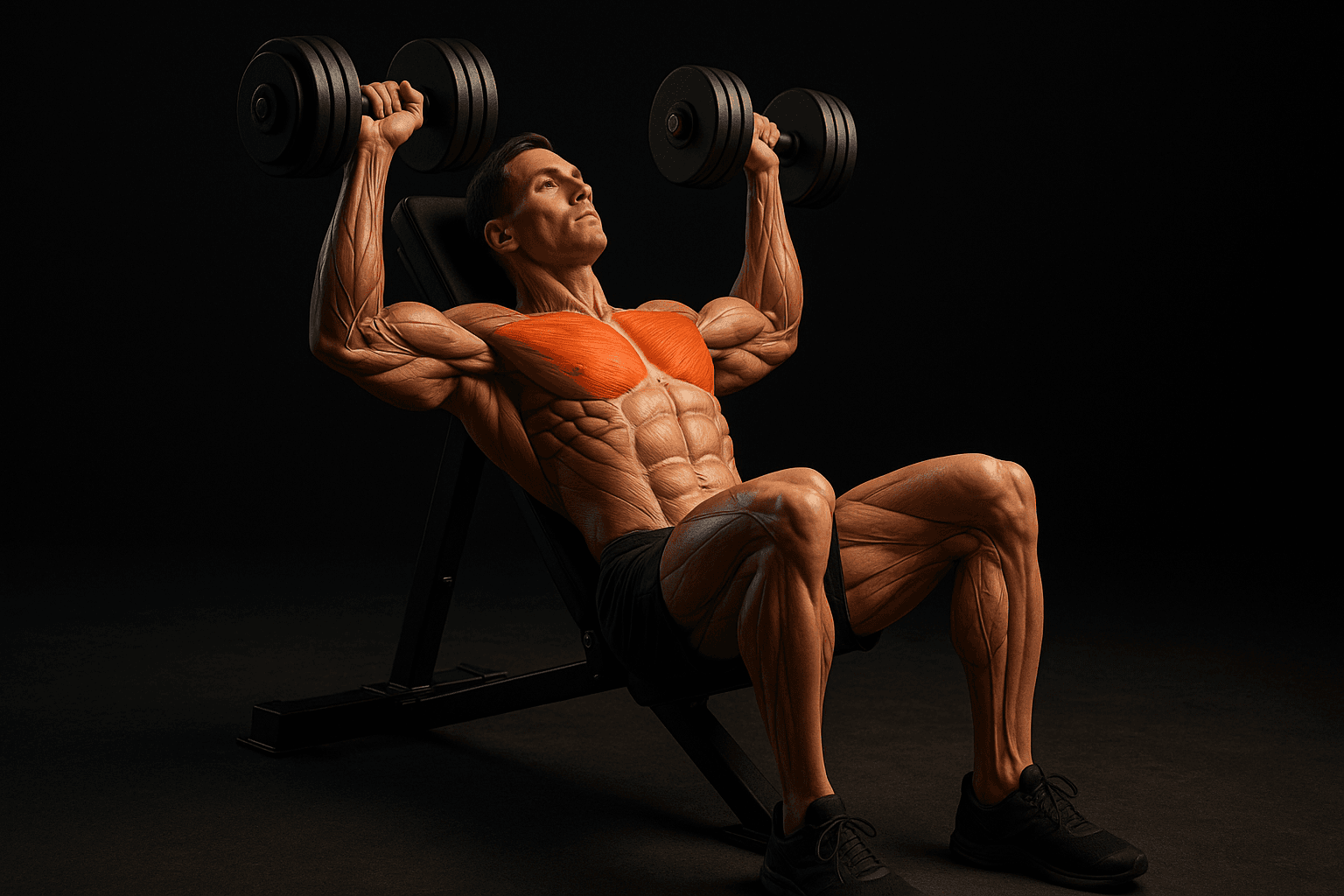
The dumbbell bench press proper form is: set your feet flat, retract your scapula slightly, hold dumbbells directly over your chest with wrists neutral, lower until your upper arms are roughly parallel to the floor (or a comfortable stretch), then press up while exhaling—keeping elbows at about a 30–50° angle from your torso and avoiding bouncing or excessive arch. Below is a definitive step-by-step guide with breathing, tempo, common mistakes and fixes.
What is the correct starting setup?
- Bench and weight choice: Use a flat bench and pick a pair of dumbbells you can control for 8–12 clean reps.
- Foot position: Feet flat on the floor about hip-width, heels under or slightly behind knees. Keep toes forward; do not let feet float.
- Body position: Lie with eyes roughly under the dumbbells. Maintain a neutral spine with a small natural lumbar curve—don’t force an excessive arch.
- Scapula: Retract your shoulder blades slightly (bring them down and toward the midline) to create a stable base; not an exaggerated squeeze.
- Hand and wrist: Grip neutral—dumbbells lined over wrists and forearms. Wrists stacked and firm, not collapsed backward.
- Elbow angle: Start with elbows under or slightly inside the dumbbells and aim for a 30–50° angle from the torso during the press.
How do I perform the dumbbell bench press step-by-step?
- Pick up the dumbbells safely: Use a spotter or pick each dumbbell up from the rack/stand and sit to bring them into position, or use a hinge-and-lift from the end of the bench.
- Starting position: Press the dumbbells up so they touch or are within 2–5 cm (1–2 in) of each other above your sternum. Palms can face each other (neutral) or slightly rotated.
- Breathe and brace: Take a full diaphragmatic breath (2–3 seconds), brace your core like you’ll be pushed in the stomach.
- Lower (eccentric): Inhale as you lower the dumbbells under control for 2–3 seconds. Lower until the upper arm is about parallel to the floor or you feel a comfortable tension—don’t force a deeper stretch.
- Touch point: Optionally touch the dumbbells lightly to your chest or pause 0–1s at the bottom; avoid bouncing off the chest.
- Press (concentric): Exhale forcefully as you press the dumbbells up using the chest and triceps; the concentric should be deliberate (about 1 second). Visualize driving the dumbbells together while maintaining a slight gap.
- Lockout and repeat: Stop just short of an aggressive elbow lockout to keep tension on the muscles, then repeat for the planned reps.
Recommended tempo: 2–3s down, 0–1s pause, 1s up (commonly written as 2-0-1 or 3-0-1). For strength work, slower eccentrics help control; for power, you can speed the concentric but keep technique strict.
How should breathing and bracing work?
- Inhale (2–3s) and brace before you begin the descent.
- Hold intra-abdominal pressure through the eccentric.
- Exhale during the concentric (pressing up), releasing some air but not collapsing the brace entirely.
- For heavy singles, a controlled Valsalva (brief breath hold) can be used by trained lifters, but beginners should prioritize breathing and core tension rather than breath-holding.
What tempo and rep ranges are sensible?
- Hypertrophy: 6–12 reps, tempo 2–0–1 or 3–0-1.
- Strength: 3–6 reps, a bit slower eccentrics (2–3s) and controlled but powerful concentrics.
- Endurance or conditioning: 12–20+ reps with lighter weight.
If you track workouts, apps like RepBro can help you log tempo and volume and compare variants.
How does the dumbbell press differ from the barbell press?
Dumbbells allow more range of motion and independent arm paths, which can help fix imbalances. They require more shoulder stability and a slightly different elbow path compared with the barbell. If you want a quick comparison of pros and cons, see this overview: https://www.repbro.app/vs.
What are common mistakes and how do I fix them?
- Mistake: Flaring elbows to 90°.
- Fix: Tuck elbows to ~30–50°; think “drive the elbows slightly toward your feet” or “press with the chest, not the shoulders.”
- Mistake: Letting wrists collapse backward.
- Fix: Keep wrists stacked over forearms; imagine pushing through the heel of your hand.
- Mistake: Bouncing the dumbbells off the chest.
- Fix: Use a deliberate 2–3s eccentric and pause 0–1s at the bottom; control is key.
- Mistake: Feet floating or shuffling.
- Fix: Plant feet flat and drive them into the floor for stability; if mobility prevents it, place feet wider but stable.
- Mistake: Uneven range or one arm lagging.
- Fix: Lower until the weaker arm matches the stronger arm; include single-arm presses in accessory work.
- Mistake: Excessive low-back arching.
- Fix: Keep a natural arch but avoid exaggerated lumbar extension; lower weight if form breaks down.
- Mistake: Going too heavy and sacrificing control.
- Fix: Reduce weight until you can complete 8–12 reps with perfect technique.
Safety note
Stop immediately if you feel sharp joint pain or unusual neurological symptoms (tingling, numbness). Consult a qualified professional—physiotherapist or physician—before continuing; do not rely on internet diagnosis. If you train heavy, use a spotter or a competent coach for load progression.
FAQ (short)
Q: Can I touch the dumbbells to my chest?
A: A light, controlled touch is fine for many lifters; avoid bouncing or compressive force. Pause 0–1s if you touch.
Q: Should my feet be flat or elevated?
A: Keep feet flat for stability and force transfer. Elevating feet reduces stability and isn’t recommended for heavy sets.
Q: How do I progress?
A: Progress with small increases (1–2.5 kg per dumbbell) or add reps/sets while keeping form strict.
One-sentence takeaway: Use controlled tempo, a stable base, and a 30–50° elbow angle to press safely and effectively—stop for sharp pain and consult a professional if needed.
Frequently asked questions
- Should my elbows be flared or tucked?
- Aim for a roughly 30–50° elbow angle from your torso (partial tuck). This balances shoulder safety and pressing leverage; avoid full flare (90°).
- How long should each rep take?
- Use a controlled eccentric of 2–3 seconds and a deliberate concentric of 1 second (tempo 2–0-1 or 3–0-1). Pause 0–1s at the chest; avoid bouncing.
- What weight should I start with?
- Start with a weight you can control for 8–12 reps with perfect form. If you fail form before reaching 8 reps, lower the weight.