Dumbbell Bench Press: Muscles Worked and Best Alternatives
Which muscles does the dumbbell bench press train, where it fits in a program, and 4 practical alternatives for equipment limits, injury, or plateaus quickly.
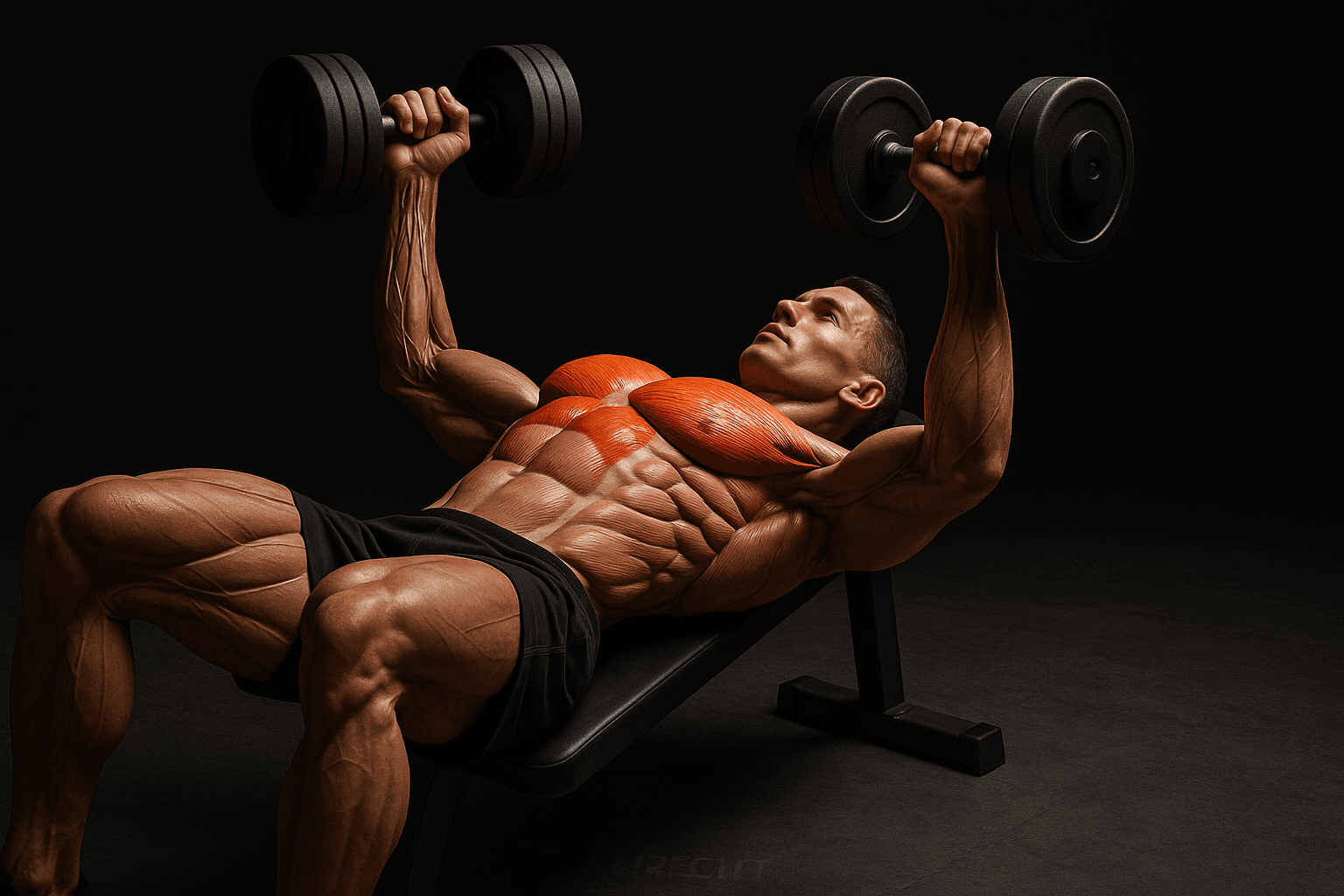
Photo by RepBro.
What muscles does the dumbbell bench press work?
The dumbbell bench press primarily trains the pectoralis major (the big chest muscle). Secondary movers are the anterior deltoid (front shoulder) and the triceps brachii (back of the upper arm). It also recruits stabilizers: serratus anterior, rotator cuff muscles, and core musculature to control the torso and each arm independently.
In short: primary = pectoralis major; secondary = anterior deltoid and triceps; stabilizers = serratus anterior, rotator cuff, and core.
How does the dumbbell bench press differ from other pressing lifts?
Why those differences matter: dumbbells increase range of motion and require more unilateral stability. Each arm moves independently, which helps reveal and correct left-right strength imbalances. Compared with a barbell, maximal load is lower but muscular activation of stabilizers tends to be higher. That makes dumbbells a solid choice for balanced chest development and shoulder-friendly pressing for many people.
If you track workouts, tools like RepBro make logging unilateral progress and load progression easier.
Where does the dumbbell bench press fit in a training program?
When to use it:
- As a main horizontal pressing exercise on upper-body days when a mix of stability and hypertrophy is desired.
- As an assistance movement after heavier compound lifts (barbell bench or overhead press) to add volume without the same CNS demand.
- As the primary press for lifters with shoulder pain or limited barbell access.
Programming guidelines:
- Hypertrophy: 3-4 sets of 6-12 reps, 60-120 seconds rest.
- Strength focus: 3-6 sets of 3-6 reps using heavier dumbbells and longer rest, but expect smaller absolute loads than a barbell.
- Endurance/conditioning: 2-3 sets of 12-20 reps with lighter load.
Safety note for form work: stop on sharp pain and consult a qualified professional if pain persists. Keep scapulae retracted, feet planted, and avoid excessive lumbar arching. Lower dumbbells with control to about chest level and press until elbows are near full extension without locking aggressively.
What are the best alternatives and when should you pick each?
Below are 4 evidence-aware alternatives with clear scenarios for picking each.
- Barbell Bench Press
- What it trains: Similar primary and secondary muscles, but allows heavier absolute loads and more consistent bar path.
- When to pick it: You want maximal strength development, have a spotter or safety rig, and no shoulder restrictions. Use when your goal is to increase top-end press strength or you need simpler progressive overload.
- When not to pick it: Limited equipment, persistent shoulder pain with a bar, or you want to fix left-right imbalances.
Compare the two in more depth at RepBro vs page: https://www.repbro.app/vs
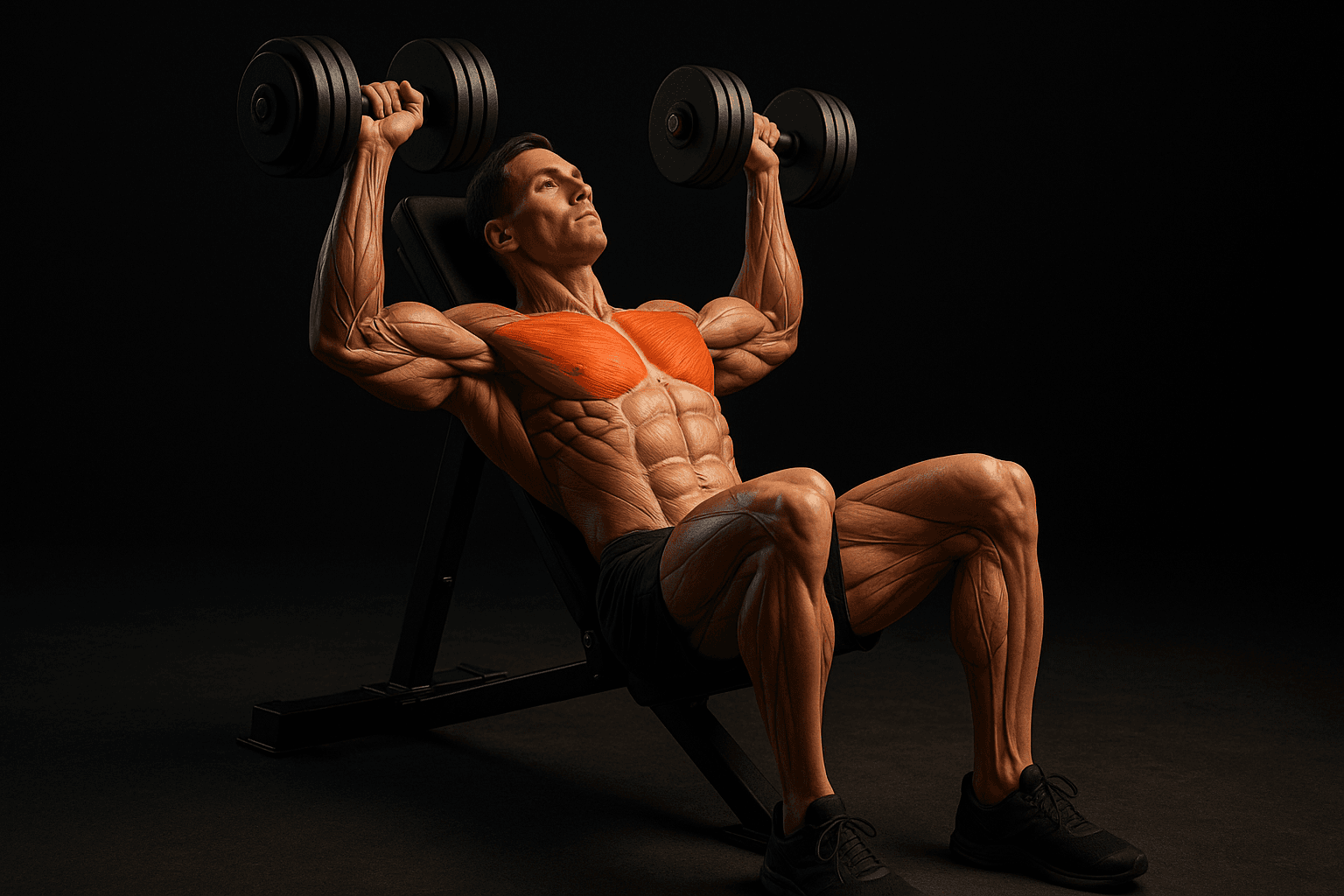
- Incline Dumbbell Press
- What it trains: Places more emphasis on the clavicular head of the pectoralis major and anterior deltoid.
- When to pick it: You want to shift work to upper chest to address aesthetic or strength imbalances, or relieve lower-chest irritation. Good if your flat press has plateaued and you need a new stimulus.
- When not to pick it: If you have anterior shoulder pain aggravated by incline angles.
- Push-ups (progressions or weighted)
- What it trains: Chest, triceps, and shoulders with additional scapular control and core demand.
- When to pick it: Limited equipment, bodyweight-focused programming, or rehabilitation contexts when load must be managed precisely. Progress by elevating feet, adding a weight plate or vest, or increasing tempo.
- When not to pick it: You need high absolute load for maximum strength; push-ups may be hard to progress beyond certain loads without equipment.
- Cable or Machine Chest Press
- What it trains: Chest and triceps with constant tension through the range of motion and reduced need for stabilizer strength.
- When to pick it: You have shoulder instability, want to target a specific portion of the press, or need a safer single-arm option with machines. Machines are useful for high-volume sets with less technical demand.
- When not to pick it: You want to train stabilizers and unilateral control; machines reduce that requirement.
Bonus alternative: Dumbbell Floor Press
- What it trains: Similar to flat dumbbell press but with reduced shoulder extension and range of motion; emphasizes lockout and triceps.
- When to pick it: Shoulder pain on full ROM, or when you want to overload the top half of the press without a rack or spotter.
Safety note for alternatives: stop on sharp pain and consult a professional. Modify ROM, grip, or angle if a joint feels sore during an exercise.
How to pick the best option for you?
Use this decision flow:
- Equipment available? Barbell + rack -> consider barbell bench for strength. Only dumbbells -> dumbbell bench or floor press. No weights -> push-ups.
- Joint pain or instability? Prefer dumbbells, cables, or floor presses; reduce ROM and load.
- Plateau on flat dumbbell bench? Change angle (incline/decline), swap to barbell for heavier loads, or use tempo and higher volume for a 4-8 week block.
- Need to balance left-right strength? Emphasize unilateral work (single-arm dumbbell presses or one-arm cable presses).
If you use a training app to import programs, RepBro supports program imports to help compare different press progressions: https://www.repbro.app/import
Quick form checklist
- Feet planted, back neutral, scapulae retracted.
- Dumbbells start level at chest, lower with control, press without bouncing.
- Keep elbows at a 30-60 degree angle relative to the torso to help shoulder health.
Safety reminder: stop immediately on sharp pain and seek professional guidance; this article is educational and not a diagnosis.
Takeaway: The dumbbell bench press is primarily a chest exercise with shoulder and triceps assistance, and solid alternatives exist depending on equipment, joint health, and training goals.
Frequently asked questions
- Is the dumbbell bench press better than the barbell bench press?
- Neither is universally better. Dumbbells increase unilateral control and range of motion; barbells allow heavier loading and simpler progressive overload. Choose based on goals, equipment, and shoulder tolerance.
- How many sets and reps should I do with the dumbbell bench press?
- Common approaches: 3-5 sets of 6-12 reps for hypertrophy, 3-6 sets of 3-6 reps for strength with heavier loads, or 2-4 sets of 12-20 reps for endurance. Adjust load so the last reps are challenging but controlled.
- Does the dumbbell bench press work the triceps and shoulders?
- Yes. The triceps brachii and anterior deltoid act as secondary movers. They assist the pectoralis major during lockout and shoulder flexion, respectively.