Dumbbell Curl: Proper Form, Step by Step
Step-by-step guide to dumbbell curl proper form: setup, cues, breathing, tempo, common mistakes and fixes. Safety-first, practical coaching cues.
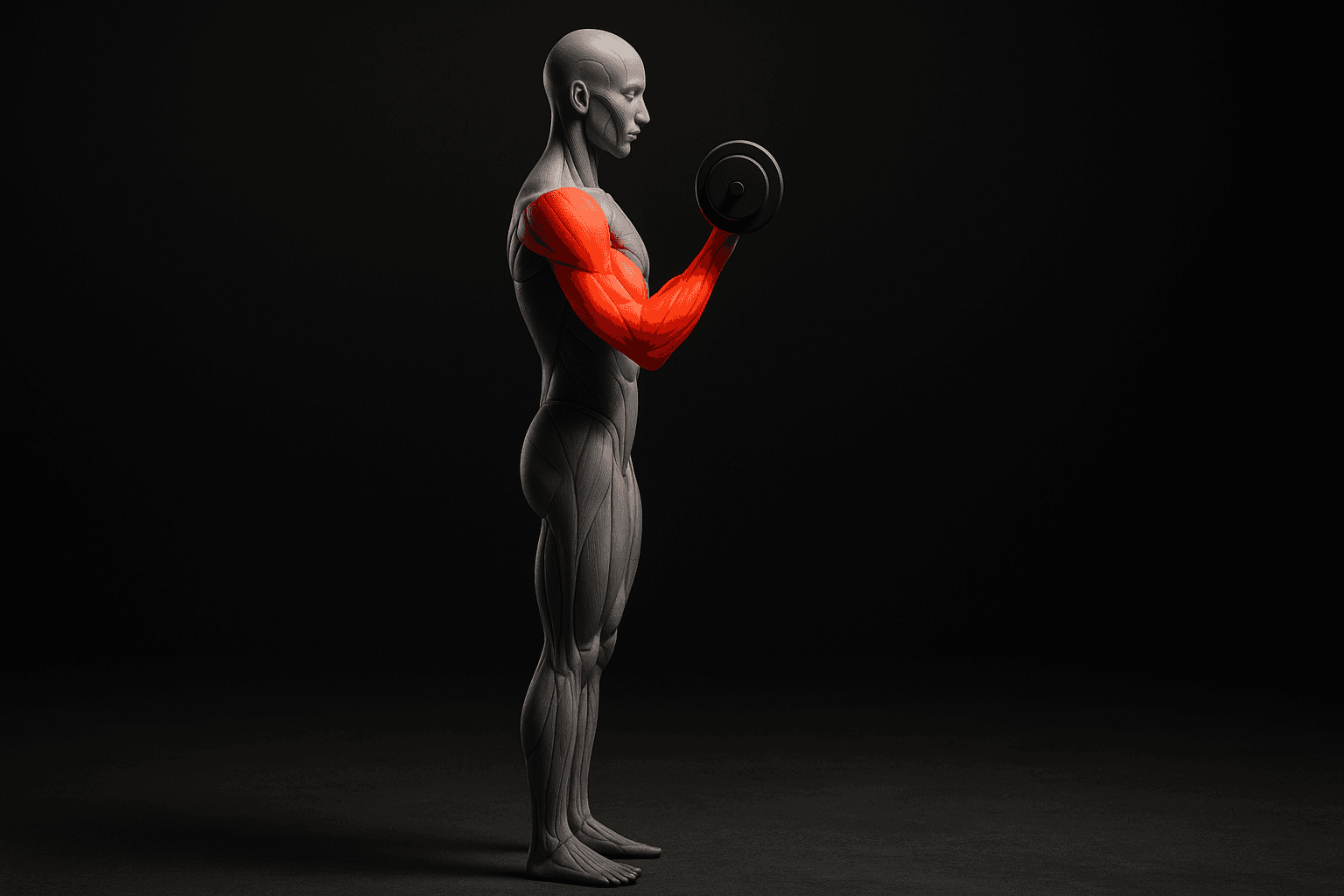
Photo by RepBro.
To perform a dumbbell curl with proper form, stand tall with a dumbbell in each hand, elbows pinned at your sides, and curl the weights using your biceps while keeping the rest of your body stable. Move the weight in a controlled line, breathe on the effort, and lower under control — that’s the core of proper form.
What is the correct setup for a dumbbell curl?
- Foot placement: stand with feet hip- to shoulder-width apart for a stable base.
- Grip: hold one dumbbell in each hand with a neutral wrist and palms facing forward (supinated) for standard curls. For hammer curls, keep palms facing each other.
- Posture: stand tall with a slight bend in the knees, ribcage down, shoulders back and down, and head neutral. Avoid overarching the lower back.
- Elbow position: elbows should sit at your sides and remain mostly stationary during the lift. Think of your elbow as a hinge, not a sled that moves forward.
- Weight selection: pick a load you can lift with strict form for your intended rep range (commonly 8–12 reps). If you cannot control the lowering phase, choose a lighter weight.
How do I perform the curl step by step?
- Start: Hold the dumbbells at your sides with palms turned forward and a slight bend in the elbow.
- Initiate: Brace your core, draw your shoulder blades slightly down, and keep your chest up.
- Curl up (concentric): Exhale and flex your elbow to raise the dumbbell in a smooth arc toward your shoulder. Aim for 1–2 seconds to lift.
- Top position: Stop when the dumbbell is near shoulder height. Avoid banging the weight against your chest or using a big shoulder shrug. Pause 0–1 seconds.
- Lower (eccentric): Inhale and lower the dumbbell slowly to the start, taking 2–4 seconds depending on your goal; control is key.
- Repeat: Complete the set while maintaining the same tempo and posture.
Tempo example: 1–0–2 (1s concentric / 0s pause / 2s eccentric). For extra time under tension use 1–0–3. Use a metronome app if timing helps.
What breathing should I use?
- Exhale during the concentric (lifting) phase.
- Inhale during the eccentric (lowering) phase.
- Keep breathing steady — don’t hold your breath for multiple reps. If you brace for a heavy single near-maximal lift, a short controlled breath is fine, but for standard sets stick to the exhale-up, inhale-down pattern.
How many reps, sets, and tempo are best?
- Typical range: 2–4 sets of 6–15 reps depending on your goal. 8–12 reps is a common sweet spot for general strength and size.
- Tempo: 1–2s up, 2–4s down. Slower eccentrics increase time under tension; faster reps should still be controlled.
- Rest: 60–90 seconds between sets for hypertrophy-style work; 90–180 seconds for strength-focused sets.
What are common mistakes and how do I fix them?
-
Mistake: Using torso swing or momentum.
- Fix: Reduce the weight 10–30%. Keep the torso upright and imagine the elbows glued to your sides. Slightly stagger your stance (one foot back) if you need more balance but not to create momentum.
-
Mistake: Letting the elbows travel forward.
- Fix: Keep a vertical forearm path by focusing on the elbow hinge. Lightly touch your elbow to your hip at the bottom to remind yourself where it should stay.
-
Mistake: Overusing the shoulders (shrugging) at the top.
- Fix: Actively pull shoulders down and back before each rep. Stop the curl just shy of a full shoulder shrug.
-
Mistake: Fast, uncontrolled lowering.
- Fix: Slow the eccentric to 2–4 seconds; count it in your head. This improves control and muscle stimulus.
-
Mistake: Wrist bending/backing out at the top.
- Fix: Keep wrists neutral. Imagine pulling the barbell with your knuckles toward the ceiling; that will keep the wrist straight.
Are variations useful and when should I use them?
- Hammer curl (neutral grip): Targets brachialis and forearms. Use when you want thicker upper arm profile or if full supination bothers your wrists.
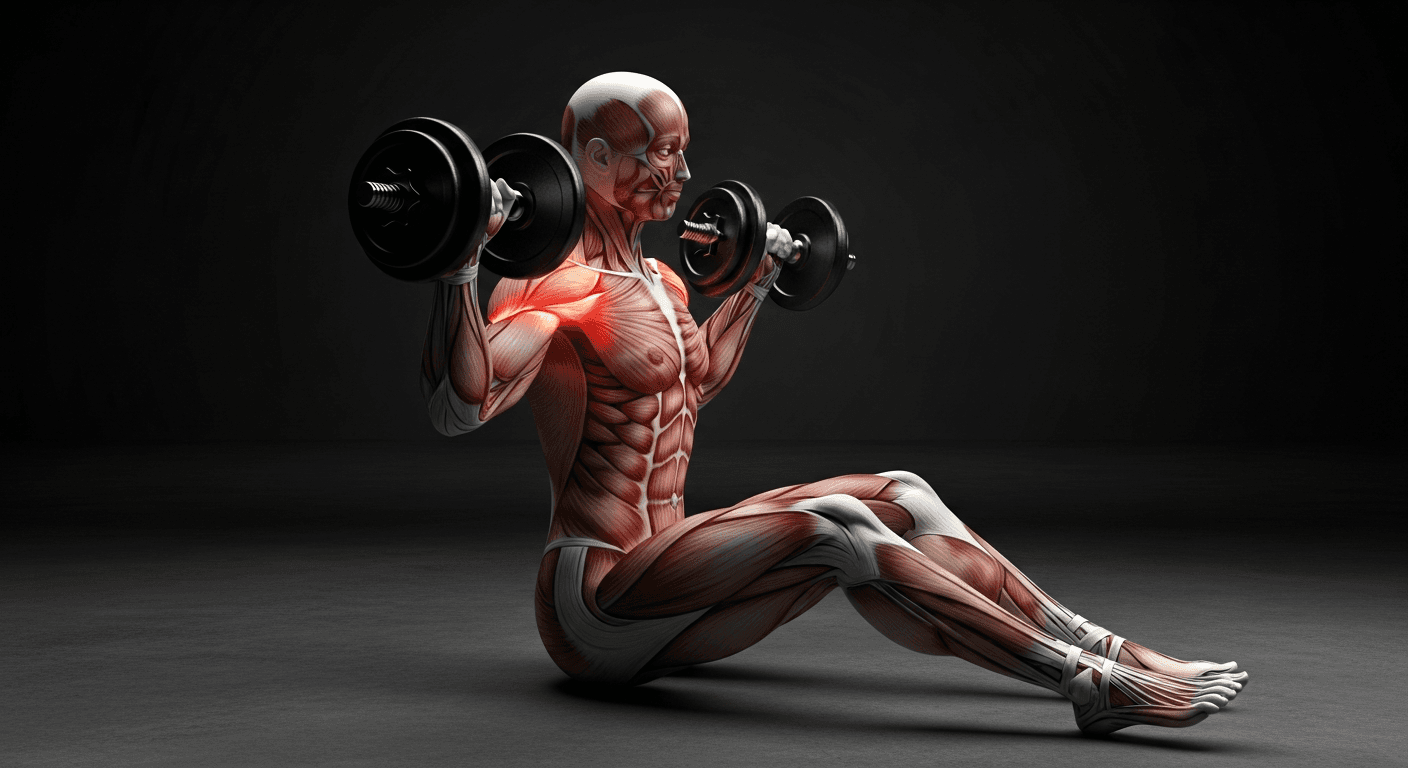
- Incline dumbbell curl (seated on an incline bench): Increases stretch on the long head of the biceps. Use for variety after mastering standing curls.
- Concentration curl: Great for strict single-arm work when form tends to break.
Mix variations across training weeks rather than every set to avoid overuse and to target slightly different parts of the muscle.
Safety note
Stop immediately if you feel sharp or sudden pain during a curl. If pain persists, consult a qualified professional (physiotherapist, physician, or certified coach). This guide is educational — not a diagnosis or medical advice.
Quick checklist: Proper dumbbell curl
- Feet hip-width, chest up, shoulders down.
- Elbows at sides, hinge at elbow, not shoulder.
- 1–2s up, 2–4s down tempo; exhale up, inhale down.
- Use a weight you can control for your target reps.
- Reduce weight if you swing, shrug, or rush the lowering phase.
What if I still can’t keep form?
Drop the load by 20–30%, decrease reps per set, or switch to a stricter variation (seated curls, preacher curls, or single-arm concentration curls). Practice slow negatives with very light weights to groove the movement.
One-sentence takeaway: A proper dumbbell curl is about controlled elbow hinge, intentional breathing, and steady tempo — reduce weight to protect form, stop on sharp pain, and get professional help if needed.
For tracking and logging curls or building workouts around these cues, consider using RepBro to keep consistent progress.
Frequently asked questions
- Should I swing my body or use momentum?
- No. Use a controlled motion and keep the torso still. If you need momentum to complete reps, lower the weight or switch to fewer reps.
- How heavy should the dumbbells be?
- Choose a weight you can lift with strict form for your target reps (commonly 8–12). If form breaks before 6 reps, reduce the weight.
- Can I do dumbbell curls every day?
- Avoid training the same muscle hard every day. Aim for 2–3 direct biceps sessions weekly with 48+ hours between intense sessions.