Dumbbell Shoulder Press Alternatives at Home (Minimal Equipment)
Practical at-home substitutions for the dumbbell shoulder press using bodyweight, dumbbells, or bands. What each option keeps, loses, and when to choose the gym.
Photo by RepBro.
Dumbbell shoulder press alternatives at home: pike push-ups (and elevated), standing single-arm dumbbell press, dumbbell push press, resistance-band overhead press, and handstand push-up progressions. Each preserves vertical pressing stimulus but trades load, range, or stability — use them for strength and hypertrophy short-to-medium term; return to gym for maximal single-rep load or heavy progressive overload.
What are practical, minimal-equipment alternatives to the dumbbell shoulder press?
Here are 5 reliable options you can do at home with bodyweight, one pair of dumbbells, or a band. For each I summarize what it preserves (muscle action, plane, stability) and what it sacrifices versus the seated/standing DB press.
- Pike push-up (and elevated pike): bodyweight vertical press that emphasizes anterior and medial deltoids and trains pressing angle. Preserves vertical load path and scapular control; loses external progressive overload and maximal eccentric control.
- Handstand push-up progressions (wall-supported): closer to a true vertical press and high shoulder loading. Preserves pure vertical loading and overload potential within bodyweight limits; loses easy incremental loading past your bodyweight.
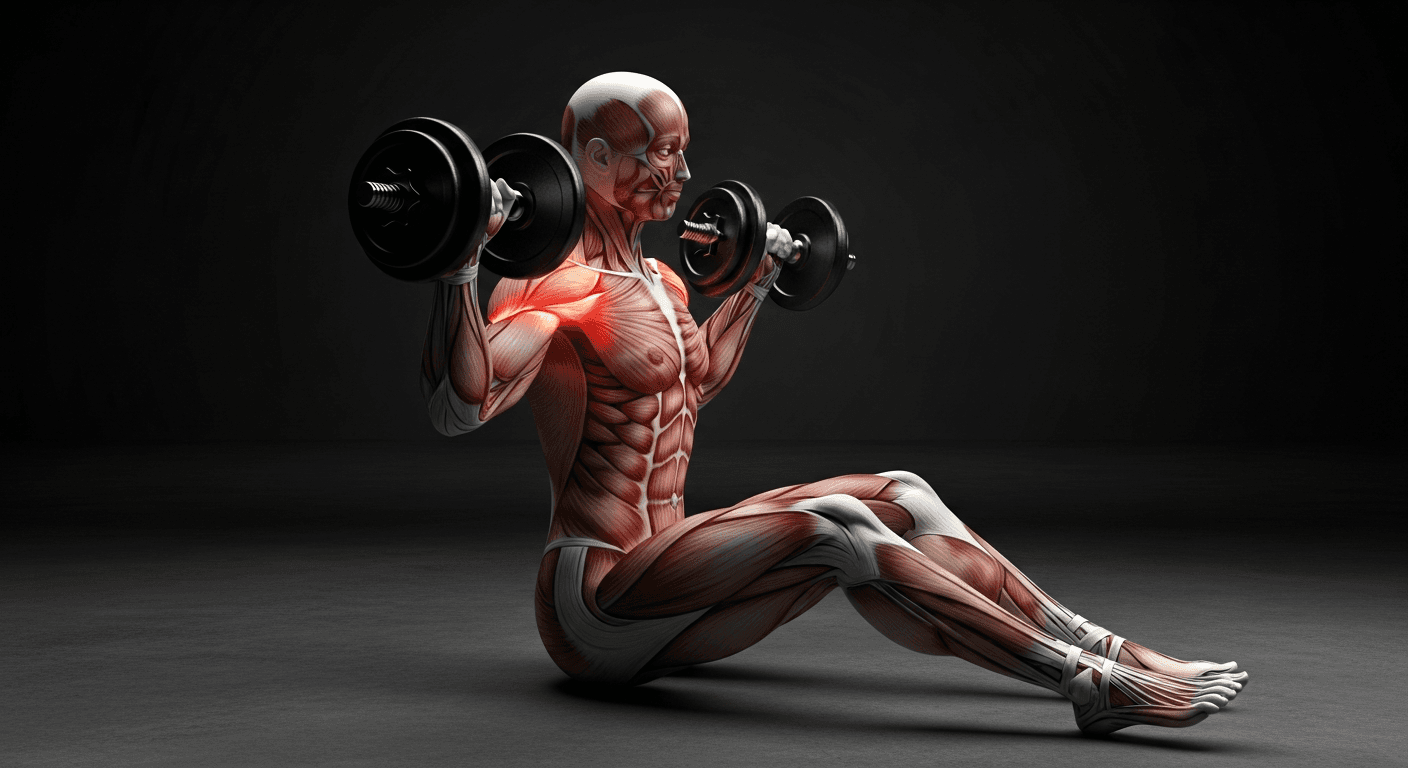
- Standing single-arm dumbbell overhead press: keeps external load and unilateral stability demands. Preserves progressive loading; loses strict bilateral symmetry and, if using light dumbbells, maximal overload.
- Dumbbell push press: uses leg drive to move heavier loads overhead. Preserves overload capacity and trains power; loses pure strict shoulder isolation but increases ability to progress weight at home.
- Resistance-band overhead press: portable progressive resistance that preserves constant tension and allows high-rep hypertrophy work; loses the same absolute top-end load as heavy dumbbells and changes the resistance curve (more resistance near lockout).
How well does the pike push-up replace a dumbbell shoulder press for size and strength?
Pike push-ups are an effective bodyweight substitute for the vertical pressing pattern. For hypertrophy, you need enough mechanical tension and fatigue across sessions; pikes can do that if you increase difficulty (elevate feet, add tempo, add reps/sets). For pure maximal strength or testing a 1RM, pikes are limited because your bodyweight caps absolute load.
Programming guidance: treat pikes like a compound press—use multiple sets across 6–20 rep ranges depending on goal. Progress by adjusting lever angle, elevation, or tempo.
When should I use handstand push-ups or progressions instead of dumbbell presses?
Handstand push-ups are the closest bodyweight analogue to the vertical press. Use them when you want high shoulder mechanical tension and are comfortable with inverted positions. They suit intermediate-to-advanced trainees who can control scapula and tolerate neck/loading through the cervical area. If you cannot safely invert or lack the work capacity, progress through pike/elevated pike first.
What does a single-arm dumbbell press keep and lose compared to bilateral overhead presses?
Single-arm DB presses keep external load and allow progressive overload while forcing anti-rotation core stability. They often reveal side-to-side asymmetries more clearly than bilateral presses. The trade-off: you may use slightly less absolute load compared to two-handed pressing, and unilateral work can increase session time.
Progression tip: work toward matching weekly volume per side to your bilateral work; add sets or reps as you progress.
Why use the dumbbell push press at home, and what changes in training effect should I expect?
The push press lets you handle heavier loads by adding leg drive. It shifts some demand from strict shoulder strength to total-body power and can accelerate strength gains by increasing overload. Use it when strict press stalls but your goal includes stronger overhead numbers. Keep technique cues: short dip, fast hip extension, and controlled lockout.
Are resistance bands worthwhile for overhead pressing and hypertrophy?
Yes. Bands give progressive tension, are portable, and are excellent for higher-rep hypertrophy work or as an accessory to heavier dumbbell sets. They change the resistance curve (more tension near lockout), which can help lockout strength but underload the bottom portion versus dumbbells.
Use bands to increase set density, accumulate volume, or for finishers. Combine band presses with slow eccentrics on heavier dumbbell sets when possible.
How do I choose which alternative is adequate and when should I go back to a gym?
Choose an alternative based on your goals and available equipment:
- Keep training at home when your goal is general strength, hypertrophy, shoulder health, or improving pressing endurance.
- Prioritize progressions (more reps, harder variations, added sets, denser sessions) when you lack heavy load.
- Consider returning to a gym when you need to test or chase heavy 1–5RM strength, require precise incremental load increases, or need machines/plates/barbells for specialized overload and recovery modalities.
If you consistently plateau on all progressions (6–12 weeks without meaningful load or rep increases), access to heavier external load at a gym becomes valuable.
How should I program these replacements within a week?
Follow evidence-aligned principles: train pressing muscles about twice weekly, distribute weekly volume across sessions, and apply progressive overload. Use a mix of rep ranges: lower reps for strength/power, moderate for hypertrophy, and higher reps for endurance. Include planned recovery (deload weeks) every few months or when performance drops.
Example micro-structure for two weekly shoulder sessions (adjust by experience): heavy variant (push press or single-arm DB press) + bodyweight vertical presses (pike/handstand) + banded accessory (rear delt/band face pulls) for balance.
Safety note: stop on sharp pain, especially around the neck, rotator cuff, or AC joint. If you have shoulder pathology, consult a qualified clinician before loading. This article does not diagnose or promise injury prevention.
Can I track progress remotely or with an app?
Yes—track sets, reps, load, and perceived difficulty to ensure progressive overload. Apps that log workouts help spot trends; for guided programming that adapts to your logged performance and fatigue, you might consider tools like RepBro for tracking.
What can apps or AI not do for my shoulder work?
- They cannot see or correct your real-time form; only a trained coach or clinician can give individualized hands-on cues.
- They cannot diagnose injuries or prescribe medical rehab—seek a qualified medical professional for pain or structural issues.
- They cannot replace consistency: even the best program is ineffective without adherence. Plan realistic frequency and recovery and adjust based on objective progress.
Limitations: this guide summarizes practical alternatives and common programming principles. Individual responses vary; if you have a history of shoulder injury, mobility restrictions, or pain with vertical loading, consult a physiotherapist or certified coach for personalized assessment and progression.
If you need a simple, progress-based template for home shoulder work, say which equipment you have and your current rep/strength level and I can outline a two-week starter plan.
Frequently asked questions
- Can I replace dumbbell shoulder presses with bodyweight moves for strength?
- You can make meaningful strength and size gains with bodyweight vertical presses (pike push-ups, handstand work) if you progress difficulty and volume. For maximal 1RM strength or heavy overload you need heavier external load or gym equipment; bodyweight has practical limits on peak load.
- How often should I train my shoulders at home to see progress?
- Train shoulders about twice per week for most lifters, splitting volume across sessions. Use progressive overload (more reps, sets, difficulty, or resistance). Allow 48–72 hours recovery between hard shoulder sessions and reduce volume during deload weeks.
- Are resistance bands effective for overhead pressing?
- Yes—bands provide a valid vertical pressing stimulus and allow progressive overload when you increase tension or reps. They alter the load curve (more top-end tension) and reduce absolute maximal resistance compared with heavy dumbbells, so they're suited to hypertrophy and general strength work.