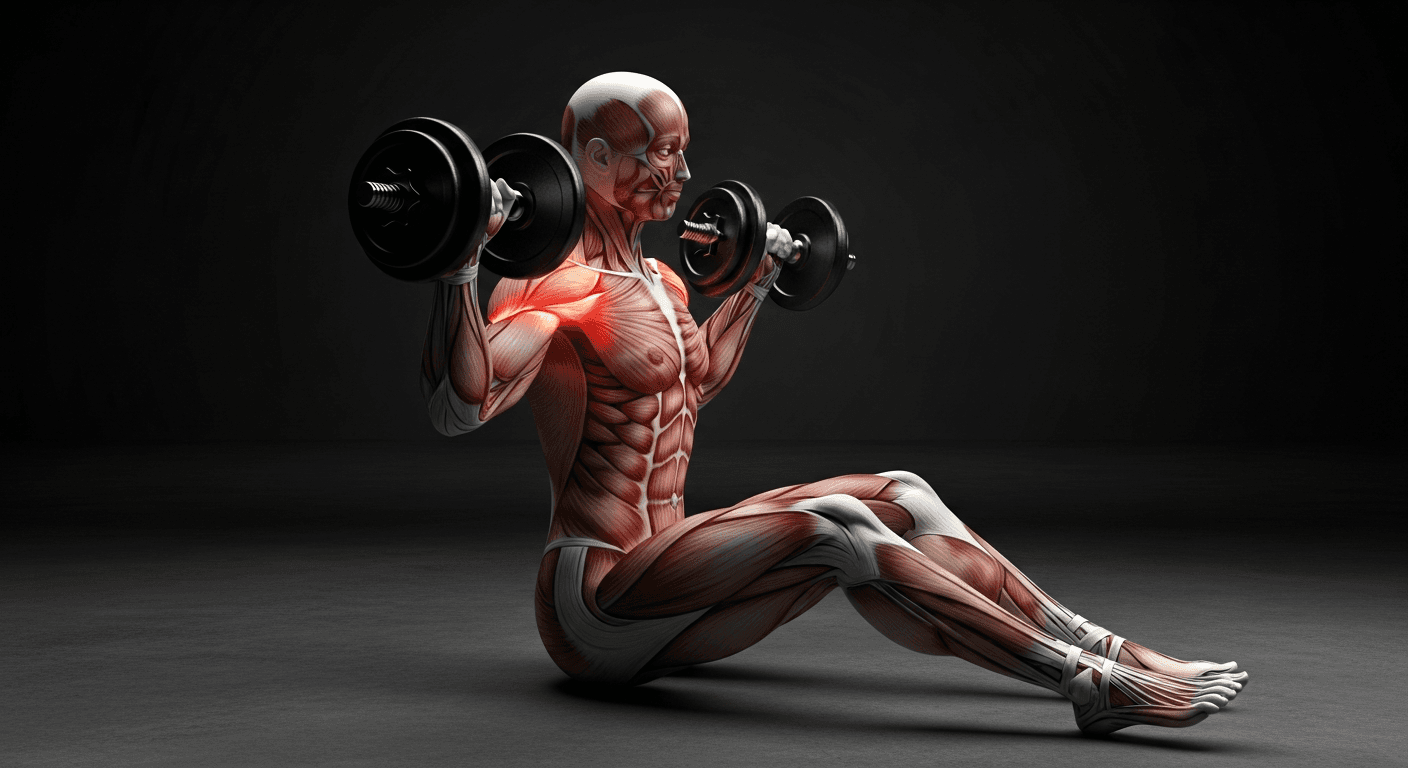
How Many Sets and Reps for the Dumbbell Shoulder Press?
Evidence-based set, rep, frequency and progression ranges for the dumbbell shoulder press by goal (strength, hypertrophy, endurance), plus clear signals for adding weight or reps.
Photo by RepBro.
How many sets and reps for the dumbbell shoulder press?
Direct answer — For strength, do about 3–6 sets of 1–6 reps; for hypertrophy, 3–6 sets of 6–12 reps; for endurance, 2–4 sets of 12–20+ reps. Train pressing muscles 2–3 times per week and use double-progression to add reps then weight.
What set and rep ranges match common training goals?
Below are pragmatic, evidence-consensus ranges used by coaches and position-stand guidance for the dumbbell (overhead) shoulder press.
| Goal | Sets per session | Reps per set | Frequency (per week) | Load cue |
|---|---|---|---|---|
| Strength | 3–6 working sets | 1–6 reps | 2 times (up to 3) | Heavy, long rests, high effort |
| Hypertrophy | 3–6 working sets | 6–12 reps | 2–3 times | Moderate weight, controlled tempo |
| Muscular endurance | 2–4 sets | 12–20+ reps | 2–3 times | Lighter load, shorter rests |
These ranges reflect common practice in strength and conditioning literature and coach consensus. Adjust within these windows for training age, recovery, and program context.
How often should I perform the dumbbell shoulder press each week?
Train pressing movements for the shoulders and triceps about 2–3 times weekly. Beginners can progress with more frequent, lower-volume sessions; intermediates and advanced lifters should distribute weekly volume across 2–3 sessions to maintain intensity and recovery. Frequency helps practice technique and increases weekly volume without excessively fatiguing any single session.
How should I progress week to week?
Use a double-progression model: choose a target rep range (for example 6–10 for hypertrophy). Increase reps within that range first each session week-to-week. When you can complete the top of the rep range for all working sets in two consecutive sessions, increase weight (the smallest practical increment) and drop back toward the lower end of the rep range.
Practical progression pointers:
- Keep a log (load, reps, sets) and aim for small, consistent increases. Small increments (e.g., 0.5–2 kg / 1–5 lb per dumbbell) are typical for dumbbell progressions.
- Prioritize completing the prescribed number of quality reps with strict form before adding load.
- If progress stalls, adjust volume or increase rest between sets rather than immediately adding weight.
What are clear signals to add weight versus add reps?
- Add reps first when you can consistently complete the top of the rep range across all working sets.
- Add weight when you hit the top of the range for all working sets for at least two sessions in a row.
- If technical breakdown (cheating, shoulder hitching, torso leaning) appears, reduce weight or reps; technical cleanliness is the priority.
- If recovery is poor (persistent soreness, declining reps across sessions), reduce weekly volume or add a recovery week.
Example: Hypertrophy plan
- Goal: 3 sets × 8–10 reps. Week 1: 3×8. Week 2: 3×9. Week 3: 3×10. Week 4: 3×10 again — now increase dumbbell weight and return to 3×8 with the heavier load.
How many sets per week should the shoulder get for growth?
Consensus guidance suggests an intermediate target of multiple weekly working sets directed at a muscle group rather than a single session total. Many practitioners use roughly 8–20 weekly working sets for a muscle group (lower for beginners, higher for trained lifters). For the overhead press specifically, distribute pressing volume across the week using seated/standing variations, incline presses, or accessory work to reach your weekly target without excessive fatigue.
How should I structure rest, tempo, and set types?
- Rest: Strength 2–5 minutes; hypertrophy 60–120 seconds; endurance 30–60 seconds.
- Tempo: Controlled concentric and eccentric phases; avoid bouncing or ballistic motion.
- Set types: Use straight sets for most work. Include occasional drop sets or incline/arnold press variations for extra hypertrophy stimulus once technique and load are established.
When should I plan a deload?
Deload when performance or motivation drops, or after several weeks of progressive overload. Typical approaches include a 1-week reduction in volume (30–60%) or intensity. Frequency of deloads depends on intensity and individual recovery: some lifters deload every 4–8 weeks, others less often. Use perceived recovery and performance data to decide.
What about form and common technique cues?
- Keep a neutral wrist and a stable scapula; avoid shrugging the shoulders upward under load.
- Press in a comfortable path — some lifters prefer slightly angled hands or a slight forward lean to protect the shoulder joint.
- Avoid excessive arching of the lower back; brace your core and breathe deliberately.
Safety note: Stop if you experience sharp or unusual joint pain. If you have a shoulder injury or persistent pain, consult a qualified clinician before continuing. This article does not diagnose or promise injury prevention.
What can't apps or AI coaching do?
Apps and AI can track sets, suggest progression, and remind you to train, but they cannot see your technique, feel your pain, or provide hands-on correction. For niggles, structural pain, or rehab, work with a qualified coach, physiotherapist, or medical professional. Also, a plan only works if you consistently show up and recover.
Limitations: Evidence and consensus give ranges, not guarantees. Individual responses vary by anatomy, recovery, training age, and lifestyle. Use the ranges above as a framework and adjust based on objective progress and subjective recovery.
If you want a simple tracker for double-progression and weekly volume, tools such as RepBro can help you log sets and spot consistent trends, but they are not a substitute for professional technique feedback.
Final practical session examples
- Strength-focused session: Warm up, then 4 working sets × 3–5 reps with heavy dumbbells; long rests (2–4 minutes). Accessory pressing or triceps work afterward.
- Hypertrophy session: 4 working sets × 8–10 reps; 60–90 seconds rest; maintain controlled tempo.
- Endurance/conditioning: 3 sets × 15–20 reps with lighter weight; shorter rests, focus on movement quality.
Follow the rep/set ranges above, log progress, and use the double-progression rule to decide whether to add reps or increase weight. Consistency and clean technique produce the most reliable gains over time.
Frequently asked questions
- How many sets and reps should I do for strength on the dumbbell shoulder press?
- For strength, train with low reps and multiple sets. Aim for about 3–6 working sets of 1–6 reps per session, focusing on heavy, controlled lifts and full recovery between sets. Repeat 2–3 times per week for the exercise or the pressing muscle group depending on recovery.
- What set/rep scheme is best for shoulder hypertrophy with dumbbells?
- For hypertrophy, use moderate reps and moderate sets. Do about 3–6 working sets of 6–12 reps per session, 2–3 sessions per week for pressing muscles. Use a double-progression (add reps first, then weight) and keep technique solid to maximize muscle stimulus.
- When should I add weight versus add reps on the dumbbell shoulder press?
- Use double progression: if you can complete the top of the prescribed rep range for all sets across two consecutive sessions, add weight. If you can’t hit the top range yet, add reps first. If form breaks, reduce load or reps—never sacrifice technique to chase numbers.