Good Morning Alternatives at Home (Minimal Equipment)
Practical at-home alternatives to the barbell good morning using bodyweight, dumbbells, or bands. What each option keeps, what it loses, and when to visit a gym.
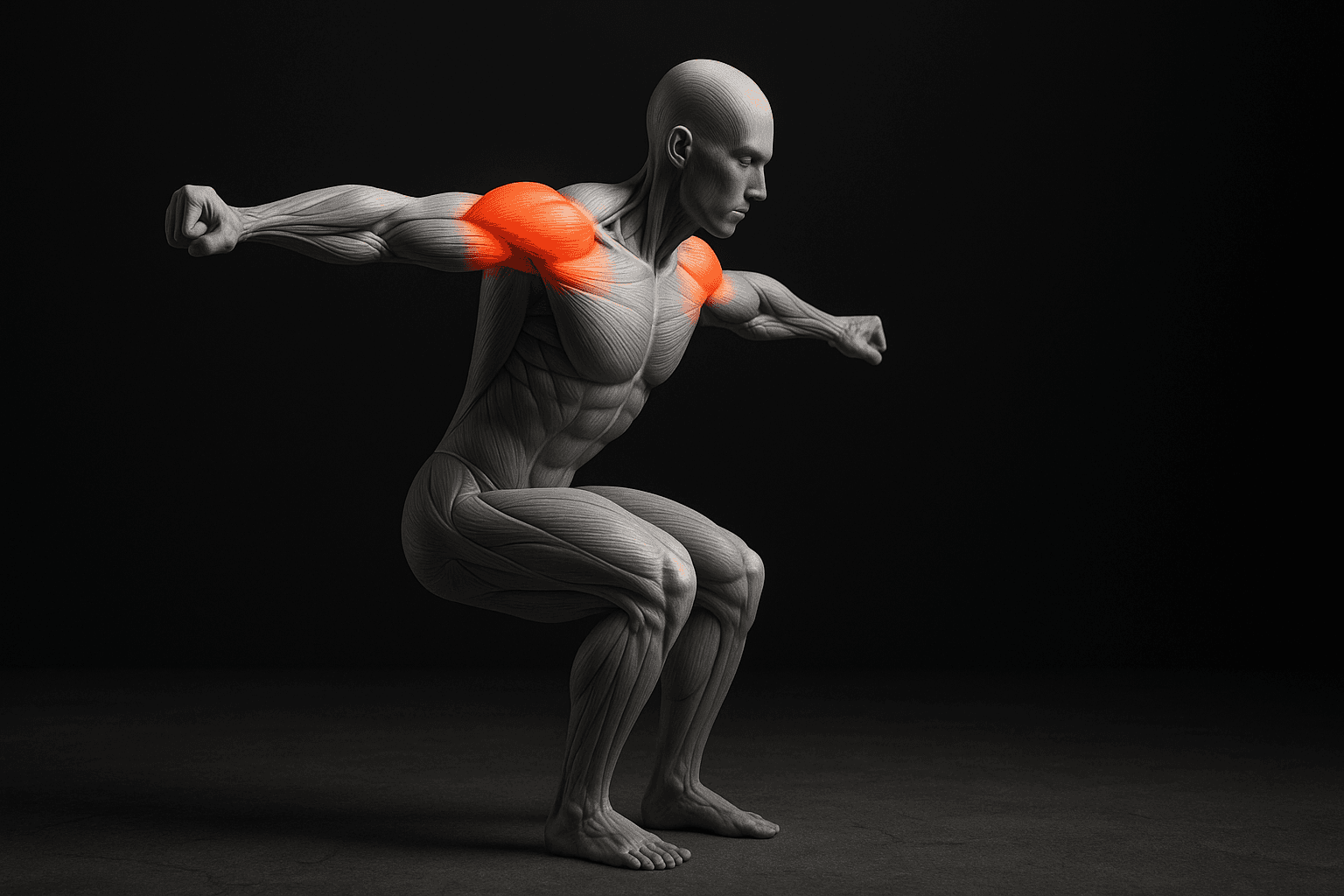
Photo by RepBro.
Direct answer (40–60 words):
You can replicate most of a barbell good morning’s benefits at home with dumbbell RDLs, single‑leg RDLs, banded good mornings, hip thrusts/glute bridges, or bodyweight/prone back extensions. Each preserves the hip‑hinge stimulus but trades off maximal axial loading or simple progressive overload—adequate for general strength and hypertrophy, but not for barbell-specific heavy training.
What does a barbell good morning actually train?
A barbell good morning is primarily a hip‑hinge movement that stresses the posterior chain: hamstrings, glutes, and spinal erectors, plus core anti‑flexion. The bar across the back creates an axial/compressive load pattern and allows relatively large absolute loads. It also develops eccentric control of hip extension and lumbar stability under compressive load.
Which at‑home exercises preserve the key features of a good morning?
Below are 4–5 practical substitutions that work with bodyweight, dumbbells, or bands. For each I explain what is preserved compared with the barbell good morning, what is lost, and when it’s an appropriate swap.
- Dumbbell Romanian Deadlift (RDL)
- Equipment: pair of dumbbells (or heavy single dumbbell).
- Preserves: hip hinge, hamstring and glute loading, eccentric control, and progressive overload potential.
- Loses: the same axial load distribution across the upper back and the same absolute loading ceiling as a barbell.
- When it’s adequate: when you want similar technique and progressive strength/hypertrophy without a barbell. Keep torso angle and hip travel consistent.
- Single‑Leg RDL (bodyweight or dumbbell)
- Equipment: none or one dumbbell/kettlebell.
- Preserves: hip hinge mechanics, unilateral loading for balance, and increased posterior chain activation per leg.
- Loses: the ability to load symmetrically and the same absolute load per leg; it’s less suited for maximal bilateral strength.
- When it’s adequate: for improving unilateral strength, addressing imbalances, and when you lack heavy bilateral load.
- Banded Good Morning
- Equipment: loop or long band anchored low or held across the shoulders.
- Preserves: hinge pattern, tempo control, and posterior chain activation with increasing resistance through the concentric range.
- Loses: linear, heavy loading and exact bar path; band tension curve changes resistance at different joint angles.
- When it’s adequate: for technique work, higher‑rep sets, deload weeks, or when you need a low‑impact loading option.
- Glute Bridge / Hip Thrust (including single‑leg and banded variations)
- Equipment: bodyweight, band, or dumbbell across hips.
- Preserves: strong hip‑extension stimulus for the glutes and some hamstring involvement. Easier on the lumbar spine because load is at the hips.
- Loses: the same eccentric load on spinal erectors and hamstrings achieved by a good morning.
- When it’s adequate: when your priority is glute hypertrophy or reducing lumbar shear; useful in rehabilitation and high‑rep hypertrophy blocks.
- Prone Back Extension / "Superman" or Stability Ball Back Extension
- Equipment: bodyweight or stability ball.
- Preserves: spinal‑erector endurance and active trunk extension control.
- Loses: easy progressive overload unless you add weight; less hamstring hip‑hinge emphasis.
- When it’s adequate: for building erector endurance, technical carryover, or when other loading options are unavailable.
Optional advanced add: Nordic hamstring curl (requires anchor) — preserves eccentric hamstring overload that good mornings also produce, but often needs a partner or anchor.
How do these swaps fit into a practical program (frequency, sets, reps)?
- Frequency: hinge/hamstring work is commonly trained 2–3 times per week for hypertrophy and strength across the week.
- Volume: aim to progressively increase load, reps, or sets over weeks. Evidence supports spreading targeted weekly volume across multiple sessions rather than cramming it into one session.
- Rep ranges: use lower reps (4–8) with heavier dumbbells for strength; 6–20 for hypertrophy depending on exercise and load. Bands and bodyweight options often work better in the 8–20 range.
- Deloads: schedule periodic lighter weeks based on performance and fatigue—individual needs vary from every few weeks to every few months.
These are consistent with broad sports‑science guidance emphasizing progressive overload, adequate recovery, and distributed volume.
Quick comparison table
| Exercise | Equipment | Preserves vs good morning | Loses vs good morning | When adequate |
|---|---|---|---|---|
| Dumbbell RDL | Dumbbells | Hip hinge, hamstrings, progressive overload | Axial/back load, absolute top-end load | Most general strength/hypertrophy needs at home |
| Single‑leg RDL | Bodyweight/dumbbell | Hinge, unilateral strength | Bilateral maximal load | Balance, imbalance correction, moderate strength |
| Banded good morning | Bands | Movement pattern, tempo | Linear heavy loading, consistent resistance curve | Technique, deload, high‑rep work |
| Glute bridge/hip thrust | Bodyweight/band/dumbbell | Hip extension, glute focus | Eccentric hamstring/spine load | Glute hypertrophy, rehab-friendly |
| Prone back extension | Bodyweight/ball | Erector endurance, trunk control | Easy progressive overload | Spinal endurance, accessory work |
When is it time to go back to a gym for barbell good mornings?
Go to a gym when you need barbell‑specific overload (e.g., close to maximal strength goals, powerlifting specificity), or if your progress stalls because you cannot apply sufficient load at home. Also consider a gym if you require specific coaching, specialized equipment (safety bars, heavier plates), or supervised maximal testing.
Safety note: stop any exercise that causes sharp pain. If you have a history of low‑back problems, consult a qualified health professional before loading. This article does not diagnose injuries or promise prevention.
Limitations — what apps and AI guidance can't do for you
- No app or AI can reliably see and correct your form in real time; in-person coaching or video review by a trained professional is necessary for high‑risk technical corrections.
- Apps can track sets and load trends, but they can’t diagnose underlying injuries or prescribe individualized medical rehab — that requires a clinician.
- Written plans only help if you follow them consistently; adherence, sleep, nutrition, and progressive overload determine results more than tool choice.
If you want simple tracking while you work from home, you can log sets and progression in an app such as RepBro.
If you’re unsure about swapping exercises for a specific goal or have pain with hinge movements, seek a qualified coach or clinician for an assessment.
Frequently asked questions
- Can I replace barbell good mornings with dumbbell RDLs at home?
- Yes. Dumbbell Romanian deadlifts keep the hip-hinge pattern, hamstring and glute emphasis, and allow progressive overload. They lose the same axial load distribution and absolute loading potential of a barbell, so they’re appropriate until you need heavier, barbell-specific strength.
- Are banded good mornings effective for posterior-chain strength?
- Banded good mornings reproduce the hinge pattern and teach tempo/positioning well, and are useful for higher-rep strength-endurance. They’re limited in maximal load and exact bar path, so use them for technique, deloading phases, or higher-rep work rather than maximal strength preparation.
- How often should I train hinge/hamstring work at home?
- Train hinge/hamstring-focused work roughly 2–3 times per week depending on recovery and overall volume. Use progressive overload across sessions (more load, reps, or sets over weeks) and schedule periodic lighter weeks or deloads based on fatigue and performance.