Hammer Curl: Proper Form, Step by Step
Learn hammer curl proper form: setup, step-by-step execution, breathing, tempo, common mistakes with fixes, and a safety-first FAQ for pain-free training.
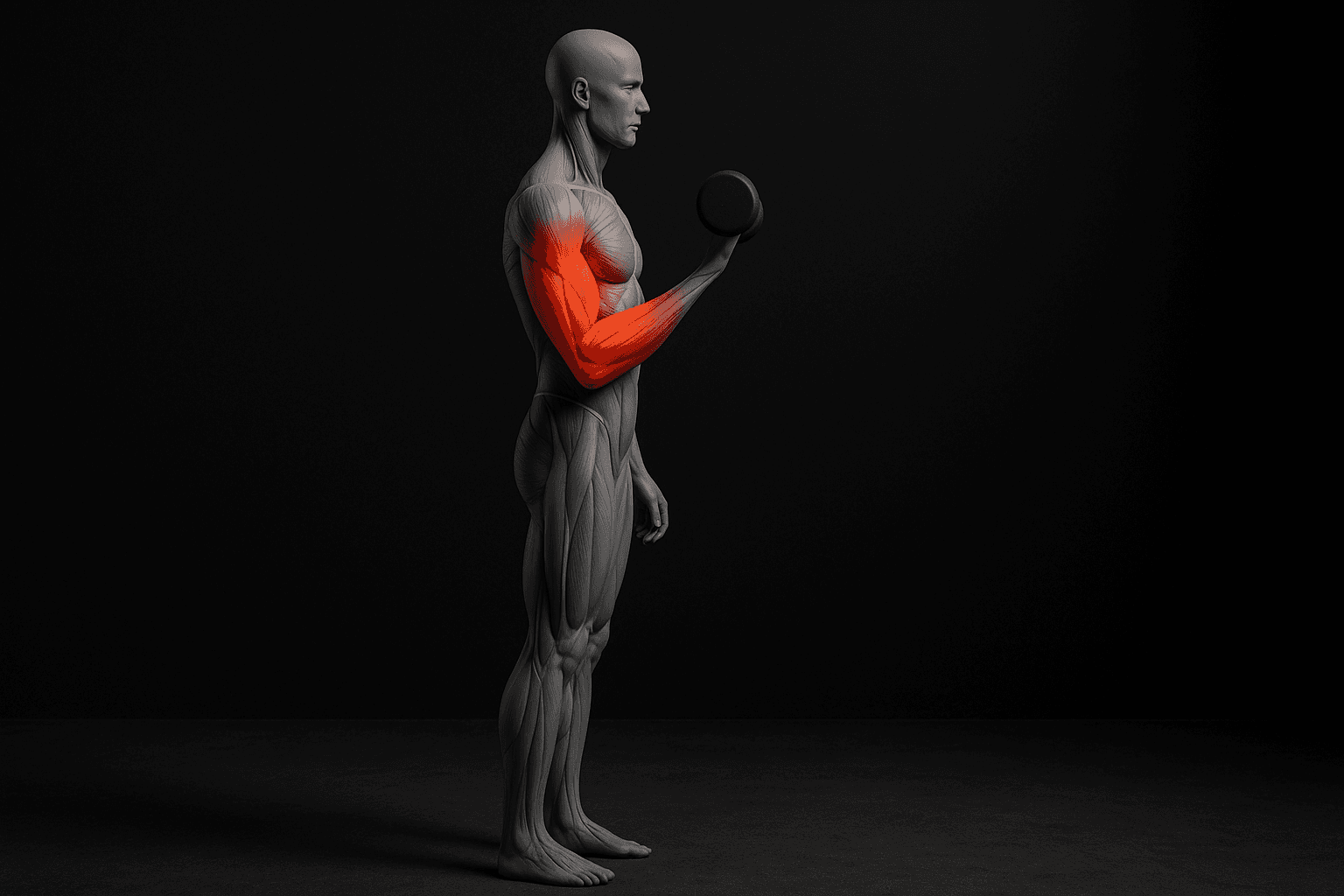
Photo by RepBro.
Hammer curl proper form means standing or sitting with a neutral (thumbs-up) grip, elbows tucked close to the torso, forearms moving only at the elbow, lifting the weight until the forearm is near vertical, then lowering with control — all while keeping the wrist neutral and avoiding torso momentum. This single-paragraph summary is the short answer; below is a complete, step-by-step guide you can use immediately.
What is the hammer curl and why do it?
The hammer curl is a dumbbell curl variation performed with a neutral grip (palms facing one another). It loads the elbow flexors including the brachialis and brachioradialis as well as the biceps brachii. Use it to add elbow flexor strength and thickness and to balance elbow and forearm development. For a side-by-side comparison with other curl grips, see our hammer vs supinated curl notes: https://www.repbro.app/vs.
How do I set up for a hammer curl?
- Equipment: dumbbells, kettlebells (handle-oriented), cable with rope, or a neutral-grip bar.
- Position: Stand tall with feet hip-width (about 30–40 cm / 12–16 in apart) or sit on a bench with back support to limit torso movement.
- Grip: Hold the dumbbells so your palms face each other (thumbs up). Keep a neutral wrist — not flexed or extended.
- Body alignment: Brace your core, retract your shoulder blades slightly (not a hard squeeze), and keep your chest neutral. Keep elbows close to the ribs — within 0–2 cm of the torso.
How do I perform the hammer curl, step by step?
- Start: Arms fully extended (but not locked) at the sides, shoulders down and back, neutral wrists. Pick a weight you can control for the target rep range.
- Initiate the lift: Exhale and begin curling by flexing at the elbow. Keep the forearm moving; the upper arm should remain stable.
- Range and end point: Curl until your forearm is approximately vertical or the dumbbell is near shoulder height — typically when elbow flexion is around 90–110°. Stop before shoulder elevation or torso leaning.
- Top position: Pause 0–1 second. Avoid rotating the wrist or shrugging the shoulder.
- Lower: Inhale and lower the weight over 2–3 seconds under control until near full elbow extension (stop just shy of hyperextension).
- Repeat: Complete the prescribed reps and sets.
Concrete tempo and load examples: use a 1–2s concentric (up) and 2–3s eccentric (down) tempo for 8–12 controlled reps. If you need to do 15–20 reps for conditioning, maintain control and a 1:2 tempo.
What breathing and tempo should I use?
- Breathing: Exhale during the concentric (lifting) phase; inhale during the eccentric (lowering) phase. This is a reliable cue for most people.
- Tempo: 1–2 seconds up, 2–3 seconds down. Slower eccentrics (3–4s) increase time under tension and can be used occasionally, but keep form strict.
How should I choose weight and volume?
- Weight: Pick a load that allows the full range of motion for 8–12 strict reps without using body momentum. If you must swing, reduce weight by 10–25%.
- Volume: 2–4 sets per session is common for direct elbow flexion work. Train 2–3 times per week for frequency, adjusting for recovery and your overall program.
What are common mistakes and how do I fix them?
- Mistake: Torso swinging or using momentum.
- Fix: Use a lighter weight, brace your core, perform seated hammer curls, or lean against a backrest to eliminate cheating.
- Mistake: Elbows drifting forward or flaring out.
- Fix: Keep elbows tucked within 0–2 cm of the torso. Lightly press the elbow against your ribcage on each rep if needed to feel the position.
- Mistake: Wrist bending (flexion or extension).
- Fix: Focus on keeping a firm neutral wrist; reduce weight and practice with isometric holds at the midpoint (pause 2–3s).
- Mistake: Short range of motion (not fully extending or not reaching sufficient flexion).
- Fix: Lower the weight to near full elbow extension without locking and curl until the forearm is near vertical; use lighter loads to preserve form.
- Mistake: Shrugging shoulders and upper-arm elevation.
- Fix: Consciously depress the shoulders and keep the upper arm stable; if shrugging persists, reduce load and reset shoulder position before each rep.
What are regressions and progressions?
- Regression: Seated hammer curls, lighter dumbbells, single-arm hammer curls with tempo control, or cable rope curls with light load.
- Progression: Increase weight while maintaining tempo, use slow eccentrics (3–4s) for 6–8 reps, or perform hammer curls as part of a superset with other arm work. For variety, try neutral-grip barbell or rope cable hammer curls.
What safety checks should I follow?
- Stop immediately and consult a qualified professional if you feel sharp or unusual joint pain. This guide does not diagnose injuries or replace professional advice. If you have an existing elbow, shoulder, or wrist issue, get clearance from a clinician before loading.
- Keep wrist neutral, avoid sudden jerks, and don't load beyond the weight you can control for the full tempo.
When should I see a professional?
If pain persists beyond typical muscle soreness, if you have swelling, numbness, weakness, or a previous elbow/shoulder condition, consult a physiotherapist, sports physician, or certified strength coach for diagnosis and individualized programming.
Short practical checklist before your set
- Weight: lets you do 8–12 strict reps.
- Stance: feet hip-width, chest neutral, core braced.
- Grip: neutral, wrists straight.
- Elbows: tucked, stable against torso.
- Tempo: 1–2s up, 2–3s down.
- Breathing: exhale up, inhale down.
For tracking, programming, or guided workouts that include hammer curls and related progressions, consider using RepBro to log tempo, weight, and notes.
Honest takeaway: Hammer curls are best performed with a neutral wrist, elbows held steady, and controlled tempo — pick a weight that lets you maintain those things every rep.
Frequently asked questions
- Do hammer curls build the same muscles as regular biceps curls?
- Hammer curls emphasize the brachialis and brachioradialis as well as the biceps brachii; they complement supinated (palms-up) curls rather than replace them.
- What weight and rep range should I use for hammer curls?
- Choose a weight you can lift with strict form for 8–12 reps; if you’re working endurance, 12–20 controlled reps is fine. Reduce load if you must swing or cheat to complete the set.
- How often can I train hammer curls?
- Train forearm and elbow-flexion work 2–3 times per week with at least 48 hours between direct sessions, adjusting for recovery, overall volume, and other arm work.