The Most Common Hammer Curl Mistakes (and How to Fix Them)
Stop wasting reps: the 6 most common hammer curl mistakes, why they happen, what they cost, and one concrete fix for each—no fluff, just practical fixes.
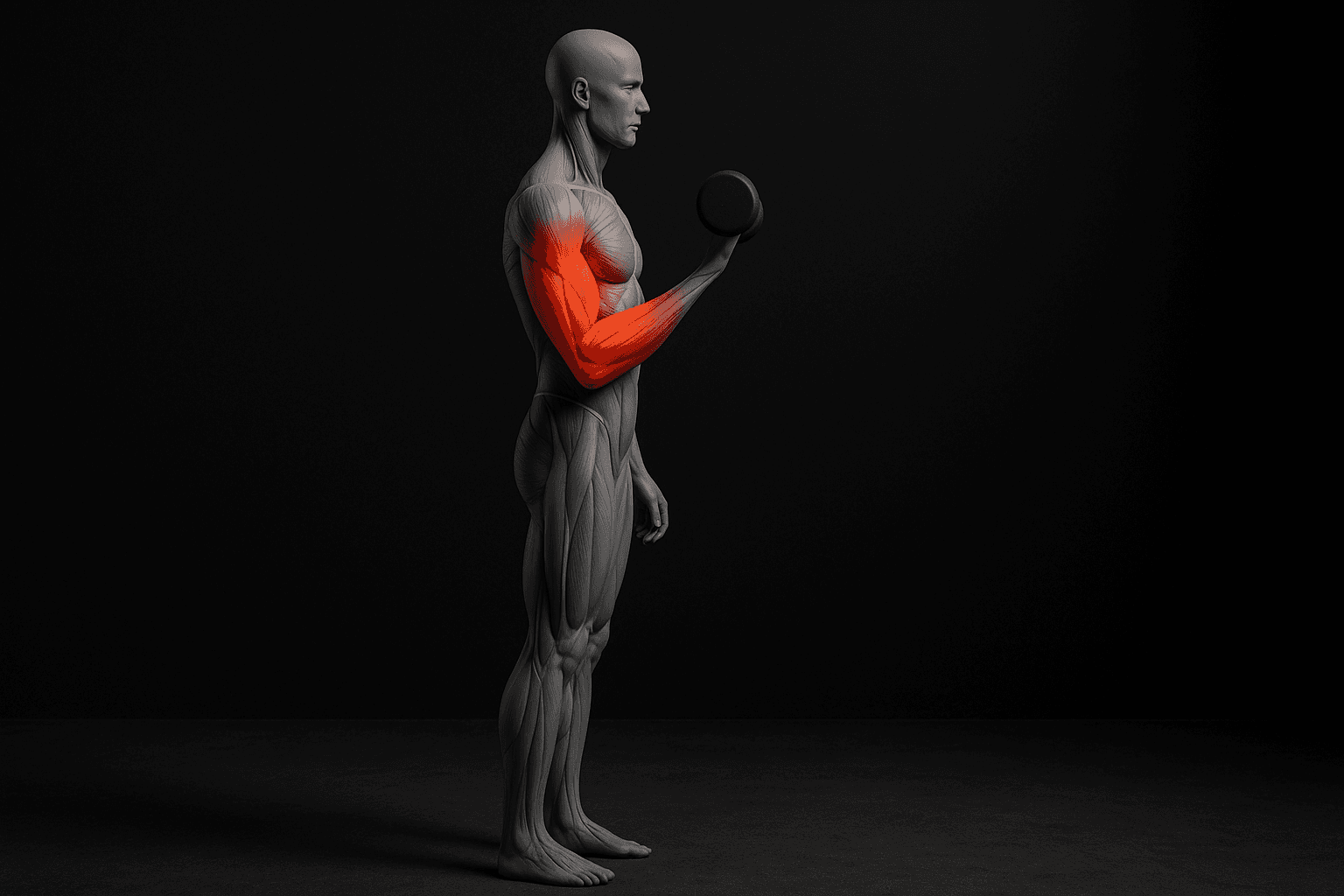
Photo by RepBro.
The Most Common Hammer Curl Mistakes (and How to Fix Them)
If you searched "hammer curl mistakes," the short answer is: the most common errors are using momentum, letting the elbow move, rotating the wrist, going too heavy, doing partial reps, and neglecting eccentric control — each wastes tension and reduces biceps/brachialis stimulus or raises injury risk. Below are why each happens, what it costs, and one concrete fix you can use today.
Why am I using my whole body to curl?
Why it happens: You pick a weight that feels heavy and compensate by swinging the torso and using hip drive to get the dumbbell moving.
What it costs: You remove the targeted load from the brachialis/biceps and transfer it to momentum and larger muscles. Expect 30–60% less direct arm stimulus and higher low-back strain if repeated over time.
Fix: Use a strict seated or supported single-arm hammer curl. Sit on a bench with back support, feet flat, and perform 3 sets of 8–12 strict reps; if you cannot finish the set without sway, reduce load by 20–30%.
Why are my elbows moving forward or back during the curl?
Why it happens: The elbow is meant to act as a hinge, but many lifters let it travel forward (shoulder flexion) or flare back, which recruits the deltoid and reduces arm isolation.
What it costs: Less mechanical tension on the target muscle and increased shoulder fatigue; over time you get smaller biceps stimulus and worse shoulder load distribution.
Fix: Pin your elbows to your sides or use preacher/bench support. Cue "elbow stays by ribs" and use a 2s concentric / 3s eccentric tempo. If you still drift, perform preacher hammer curls for 3 sets of 8–10 reps to enforce elbow position.
Why is my wrist bending or rotating mid-rep?
Why it happens: Weak forearm stabilizers, gripping too tight, or unknowingly rotating into supination turns the movement into a standard curl.
What it costs: Wrist strain and loss of hammer-grip-specific stimulation of the brachialis and brachioradialis; you also risk tendon irritation.
Fix: Hold the dumbbell neutral with thumb pointing up and imagine squeezing the handle only enough to not drop it (not white-knuckled). Use lighter weight and add 3 sets of 12 controlled wrist-neutral hammer curls, focusing on keeping the wrist stacked over the forearm.
Why am I always using too much weight?
Why it happens: Ego, progress measured by load not form, or program instructions that don't consider strict reps.
What it costs: Breaks tempo, increases momentum, increases risk of tendon load and elbow or shoulder pain, and reduces the number of effective reps under tension.
Fix: Use the 8–12 strict-rep test: pick a weight you can lift for 8–12 strict reps with a 2s up/3s down tempo. If you can do more than 12 easily, increase weight 5–10%; if you fail before 8, reduce by 10–30%.
Why are my reps so short (partial range)?
Why it happens: Pain at the end ranges, impatience, or misunderstanding of what a full hammer curl looks like.
What it costs: Reduced time under tension and incomplete muscle development; partial reps bias certain points of the range and create strength imbalances.
Fix: Use full controlled range: start with the arms fully extended (not locked hyperextended) and curl until your forearm touches the biceps at the top. Add a 1–second pause at the top and a 3–second controlled lowering. Do 3 sets of 10 with this tempo.
Why don’t I control the negative (eccentric) portion?
Why it happens: People rush down after the concentric, or the goal becomes moving the weight rather than controlling it.
What it costs: You lose the high-tension benefits of eccentrics (up to 40% higher force per rep) and increase impulse stress on tendons, which can lead to soreness or chronic issues.
Fix: Intentionally slow the eccentric to 3–4 seconds. If a full set becomes impossible with that tempo, drop the load 10–25% and focus on clean negatives for 3 sets of 6–10 reps.
How do I check I'm doing it right between sets?
Why it happens: You don't have objective checks and rely on feel.
What it costs: Bad habits persist.
Fix: Record a side-view video every 2–3 workouts or use a mirror: elbows should stay by the ribs, wrists neutral, torso still, and the dumbbell path straight up and down. Use an app or notebook to track load and tempo; for tracking, consider RepBro for simple logs and comparisons. If you want to compare hammer curls against other curl grips, see a quick comparison at https://www.repbro.app/vs.
Safety note: Stop any set if you feel sharp joint pain. If pain persists more than 48 hours or you have a pre-existing condition, consult a qualified professional; this article is not medical advice.
Summary checklist (quick):
- Sit or use support to eliminate swing.
- Keep elbows pinned to the sides.
- Maintain a neutral wrist; don’t supinate.
- Use a weight you can strict-curl for 8–12 reps.
- Perform full-range reps with 2s up / 3–4s down tempo.
- Record form periodically to self-correct.
One-sentence takeaway: Fix the six common hammer curl errors—no swing, stable elbows, neutral wrists, appropriate weight, full range, and controlled negatives—to turn more reps into real arm stimulus without unnecessary risk.
Frequently asked questions
- How many reps and sets should I do for hammer curls?
- For most hypertrophy-focused work, do 8–12 reps for 3–4 sets with controlled tempo; for strength use 4–6 reps. Choose a weight you can control for the entire set.
- Should my thumb point up or forward during a hammer curl?
- Keep a neutral grip with the thumb roughly pointing up toward the ceiling; avoid rotating into supination (palm-up) which turns it into a regular biceps curl.
- Is it better to do hammer curls seated or standing?
- Seated hammer curls reduce torso momentum and help maintain strict elbow position; standing is fine if you can keep strict form and a stable core.