Hanging Leg Raise: Proper Form, Step by Step
Definitive guide to hanging leg raise proper form: setup, step-by-step cues, breathing, tempo, common mistakes and fixes. No hype, evidence-aware.
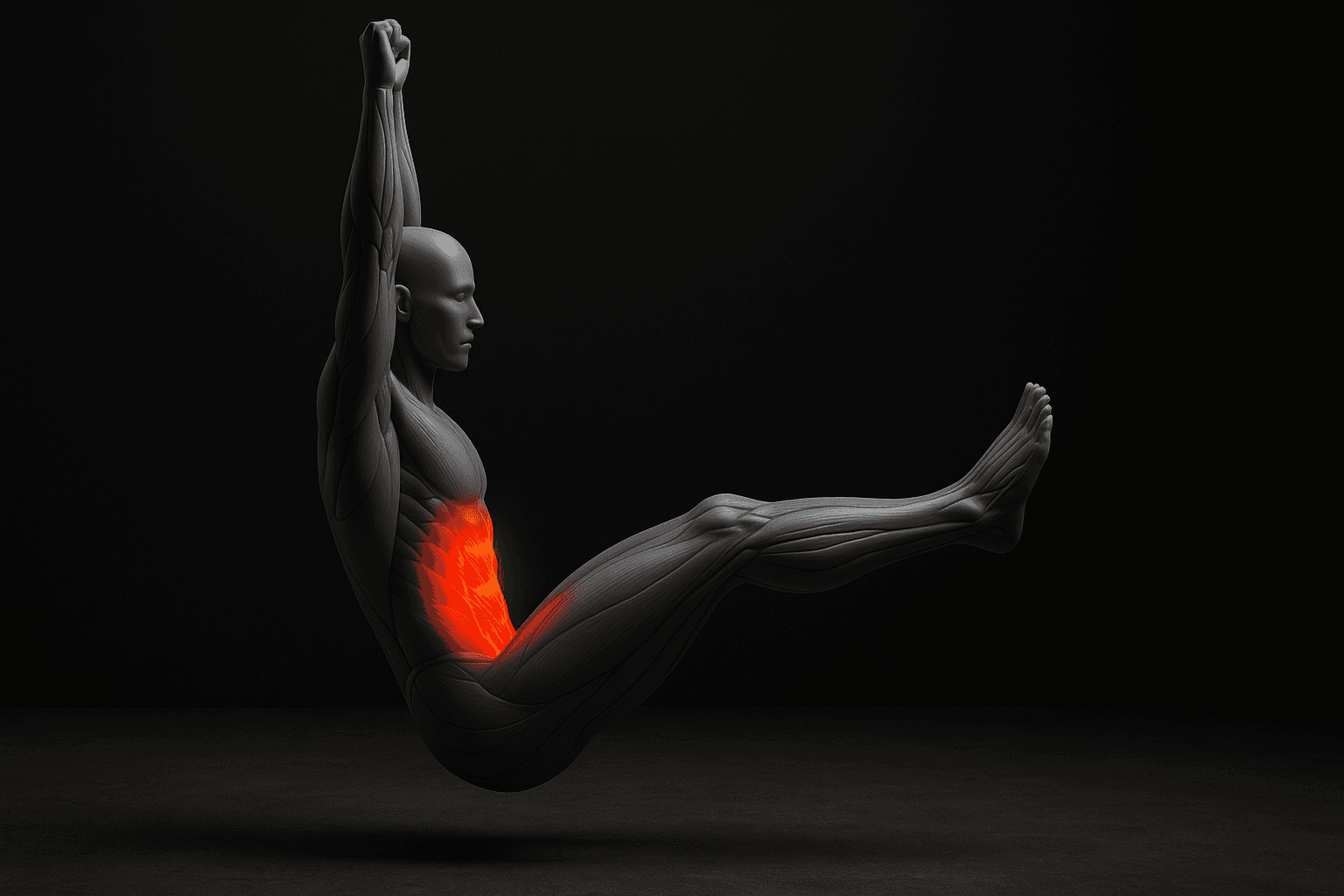
Photo by RepBro.
Hanging leg raise proper form: hang from a stable overhead bar with shoulders depressed, brace your core, initiate with a posterior pelvic tilt, and lift your legs in a controlled arc until your hips reach roughly 90° (thighs parallel to the floor) for a standard knee/leg raise — exhale on the lift, inhale lowering. Avoid swinging, hyperextending the low back, and kipping unless deliberately training that skill.
What is a hanging leg raise and who should do it?
The hanging leg raise is a vertical-hanging core exercise that targets the hip flexors and the rectus abdominis plus the deep stabilizers when performed with strict technique. It’s useful for intermediate and advanced trainees who can hang from a bar for 20–30 seconds and who want a vertical-loading core challenge. Beginners should use regressions listed below.
How do I set up properly?
- Choose a stable, overhead pull-up bar or a commercial captain's chair. The bar should let you hang with arms straight and feet clear of the floor.
- Grip the bar using a shoulder-width or slightly wider grip. Use a false grip only if you’re comfortable with it; thumb-over grips are fine.
- Hang tall, then actively depress and retract your scapula (think "pull your shoulder blades down and slightly back") so your shoulders are stable — do not let them shrug.
- Brace your midline by taking a diaphragmatic breath and gently drawing your belly button toward your spine. Maintain a slight posterior pelvic tilt (tuck your tailbone) to reduce lumbar extension.
How do I perform the hanging leg raise, step by step?
- Starting position: full hang, arms straight, scapula depressed, ribs down. Legs are straight or slightly bent depending on progression.
- Initiate with a posterior pelvic tilt: contract your lower abdominals and tilt the pelvis upward. This helps the abs do the work rather than the hip flexors alone.
- Concentric (lift): Exhale and lift by flexing the hips and bringing the legs up in a controlled arc. For a knee raise hinge at the hips and bring knees toward chest; for straight-leg raises keep legs straight and aim for 45–90° hip flexion depending on ability. Aim for roughly 0.5–1 second to reach the top.
- Optional pause: Hold a 0–1 second isometric contraction at the top if you’re training control.
- Eccentric (lower): Inhale and lower the legs slowly under control, resisting gravity. A 2–4 second descent builds strength and reduces momentum. Avoid dropping.
- Repeat for planned reps, then carefully place feet on the floor or step down rather than jumping off.
What breathing and tempo should I use?
- Breathing: Exhale during the concentric (lifting) phase, inhale during the eccentric (lowering) phase. Avoid breath-holding, especially if you have blood pressure concerns.
- Tempo: Use a controlled tempo: concentric 0.5–1s, pause 0–1s, eccentric 2–4s. For strict strength work you can slow the concentric slightly; for endurance increase reps with the same controlled tempo.
What are sensible progressions and regressions?
- Regressions: lying leg raises, dead bugs, captain's chair knee raises, hanging knee tucks (knees to chest), band-assisted hangs.
- Progressions: straight-leg raises to 90°, toes-to-bar, weighted knee raises, slow eccentrics with longer descent (4–6s), adding isometric holds at the top.
What common mistakes happen and how do I fix them?
- Mistake: Excessive swing or momentum.
Fix: Shorten range, bend knees, use a hollow-body cue (ribs down, pelvis tucked), slow the eccentric. Consider band assistance to reduce time hanging while you build control. - Mistake: Arching the lower back or flaring the ribs.
Fix: Maintain posterior pelvic tilt and keep ribs stacked over the pelvis. Visualize pulling the sternum toward the pelvis rather than leading with the chest. - Mistake: Using hip flexors to jerk the legs up (hip-dominant pattern).
Fix: Initiate movement with the abs by tucking the pelvis and thinking of curling the pelvis toward the ribs; use bent-knee regressions until you can feel abdominal engagement. - Mistake: Holding breath or straining neck/shoulders.
Fix: Breathe rhythmically; keep shoulders actively depressed and avoid shrugging. If neck tension appears, check that the head stays neutral, not jutting forward.
Is it safe to do hanging leg raises?
Stop if you experience sharp pain in the spine, hips, or shoulders. Hanging leg raises place load through the shoulder girdle and the lumbar region; if you have shoulder instability, recent shoulder surgery, or acute low-back issues, consult a qualified clinician before attempting them. This guide does not diagnose; seek a professional assessment for persistent pain. Track progress and volume responsibly — use apps like RepBro if you want consistent logging and progression.
Short FAQ
Q: Should knees be bent or straight?
A: Beginners should use bent knees (knee raises) to reduce lever length and hip-flexor demand. Straight-leg raises increase difficulty and require more hip flexor and hamstring mobility.
Q: How many sets and reps are effective?
A: For strength/hypertrophy, 3–4 sets of 6–12 reps; for muscular endurance, 2–4 sets of 12–20. Adjust based on ability to maintain strict form.
Q: Can I do kipping or toes-to-bar for more reps?
A: Kipping is a different skill and uses momentum; only use it when you have a stable overhead position and trained kipping patterns, otherwise stick to strict reps for core development.
Safety note: If you feel sharp pain, stop immediately and consult a qualified healthcare or movement professional; this article is instructional and not a medical diagnosis.
Takeaway: Use a controlled pelvic tilt, scapular depression, and a slow eccentric to perform hanging leg raises with proper form and minimal risk.
Frequently asked questions
- Are hanging leg raises bad for my lower back?
- No — when done with a neutral spine or a slight posterior pelvic tilt and controlled motion, hanging leg raises are generally safe. Stop if you feel sharp pain and consult a healthcare or movement professional.
- Can beginners do hanging leg raises?
- Yes. Start with regressions such as hanging knee tucks, captain's chair knee raises, or lying leg raises. Progress only when you can control form for 8–12 reps.
- How many reps and sets should I do?
- For strength/hypertrophy aim for 3–4 sets of 6–12 reps; for core endurance 2–4 sets of 12–20. Adjust load, range, and rest (60–120s) to match your goals.