Hanging Leg Raise: Muscles Worked and Best Alternatives
Which muscles does the hanging leg raise train, where it fits in a program, and 4 practical alternatives with when to pick each (equipment, injuries, plateaus).
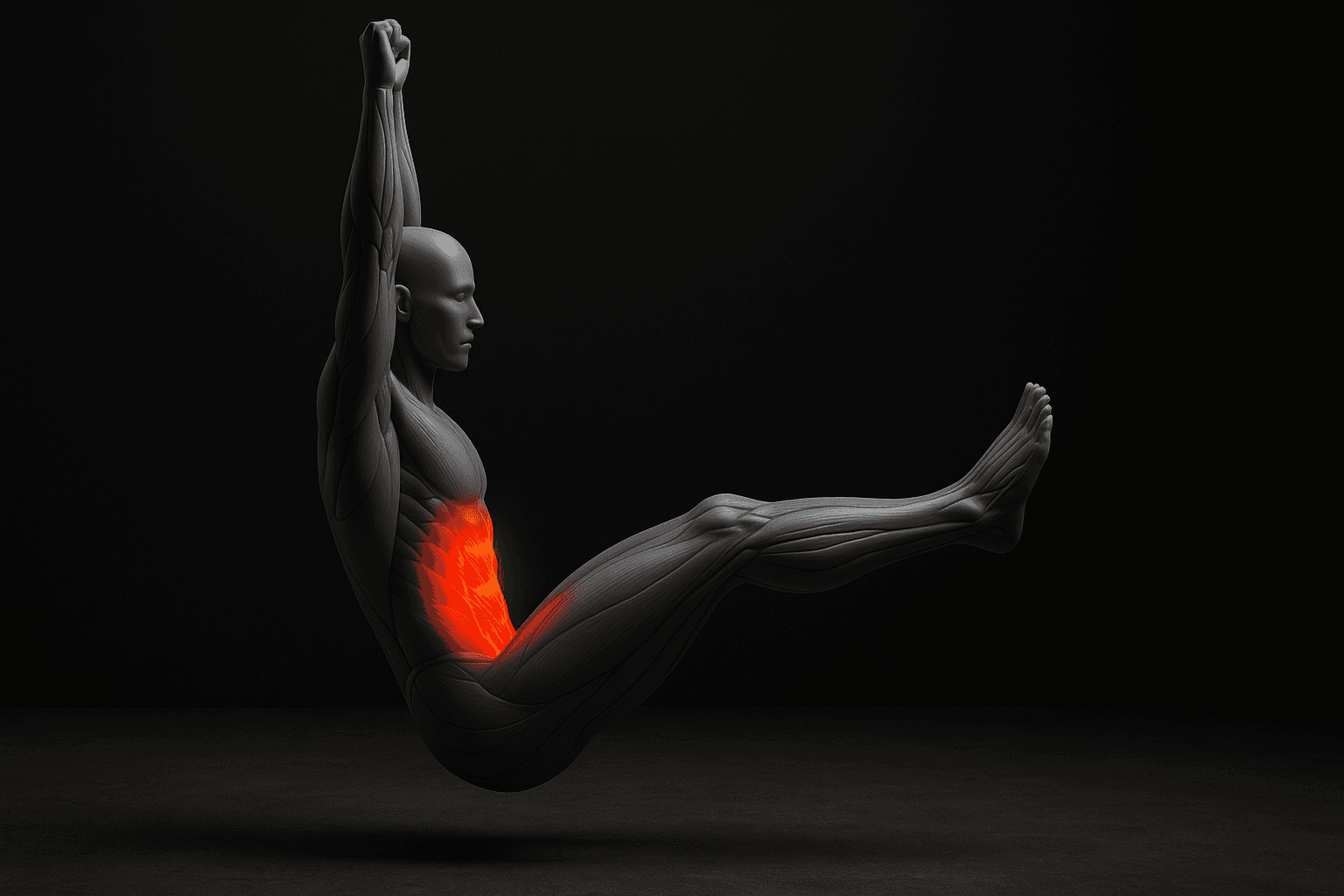
Photo by RepBro.
The hanging leg raise primarily trains the hip flexors (iliopsoas and rectus femoris) and the rectus abdominis; it also strongly recruits the obliques, transverse abdominis and demands grip/shoulder stabilization from the lats, scapular depressors and forearms. In other words: it’s both a hip-flexor-dominant and abdominal-dominant move depending on technique and range of motion.
What exactly are the primary and secondary muscles worked?
- Primary movers (most load):
- Iliopsoas (hip flexors)
- Rectus femoris (part of the quadriceps)
- Rectus abdominis (spinal flexion and pelvic control)
- Secondary stabilizers and assistors:
- Obliques (especially with leg raise to the side/rotation or windshield-wiper variations)
- Transverse abdominis (compressive stabilization)
- Latissimus dorsi, teres major, and scapular depressors (hold you on the bar)
- Forearms and grip musculature
Technique and range of motion change which group dominates. Short, high-hip raises emphasize hip flexors; full pelvic curl and deliberate posterior pelvic tilt increase rectus abdominis involvement.
How to perform a safe, effective hanging leg raise
- Grip a pull-up bar with a shoulder-width overhand or neutral grip; hang with scapula slightly depressed (not shrugged).
- Brace your core (imagine a hollow-body tension) and initiate a posterior pelvic tilt.
- Raise knees or straight legs in one controlled motion to at least hip height; higher increases demand on abs and hip flexors.
- Lower slowly under control; avoid swinging or using momentum.
- Breathe steady: exhale on the lift, inhale on the descent.
Suggested loading and rep ranges: beginners 2–4 sets of 8–15 reps with knees bent; straight-leg progressions 3–4 sets of 6–12; loaded/weighted variations 3–5 sets of 4–8.
Safety note: stop on sharp pain (especially low-back, groin, or shoulder); consult a qualified healthcare or movement professional for persistent pain. This is guidance, not a diagnosis.
Where hanging leg raises fit in a program
- Placement: after compound upper-body work or as part of a dedicated core finisher. Because they require a strong grip and shoulder stability, avoid doing them when shoulders or grip are already exhausted in the session.
- Frequency: 2–3 times per week is appropriate for most trainees.
- Progression strategy: first build strict reps (no swing), then increase ROM (straight legs), then add load or try harder variations (toes-to-bar, windshield wipers, or weighted HLR).
- Complementary lifts: anti-extension work (planks, Pallof press) and posterior chain exercises balance the hip flexor demand.
Four solid alternatives — when to pick each
- Captain’s Chair Knee Raises (equipment: dip/leg-raise station)
- Why pick it: removes grip and lat demand, making it easier to isolate the core and hip flexors.
- Use when: you have weak grip/shoulder fatigue, or the gym lacks a pull-up bar but has a captain’s chair. Also good for beginners learning pelvic tilt and control.
- Programming: 3 sets of 8–15 reps. Progress by straightening legs, slowing tempo, or adding weight between feet.
- Lying Leg Raises / Knees-to-Chest (equipment: none or bench)
- Why pick it: minimal shoulder stress and no hanging required; useful when you have shoulder issues or no bar.
- Use when: managing shoulder pain, gym-free days, or rehabbing from upper-body injuries. Also good as a regression if you can’t control hanging leg raises yet.
- Cue: posteriorly tilt the pelvis before lifting to reduce lumbar extension. If you feel low-back strain, bend the knees or use a tucked-crunch variation. 3–4 sets of 10–20 reps.
- Hollow Body Hold and Hollow Rocks (equipment: none)
- Why pick it: reduces hip-flexor dominance and forces spinal/tension control. Great for improving pelvic control and transferring to better leg-raise form.
- Use when: you plateau because your hip flexors take over, or you want a core exercise that emphasizes anti-extension and global tension.
- Progression: hold for 20–60 seconds or perform controlled rocks for sets of 20–40 seconds. Integrate as activation before leg-raise work.
- Decline Sit-up / Cable Crunch (equipment: decline bench or cable)
- Why pick it: targets the rectus abdominis with less hip-flexor range; easier to add progressive load without heavy hip flexor involvement.
- Use when: you have hip-flexor tendinopathy, groin issues, or need a way to overload the abs without more hanging volume. Also useful mid-cycle when you want to prioritize abdominal hypertrophy over hip flexion strength.
- Programming: 3–4 sets of 8–15 reps, increase load conservatively.
Optional advanced alternative: Dragon Flag
- Use when: you’ve mastered strict hanging raises and need a high-skill progression. Requires excellent scapular control and spinal stability.
For side-by-side comparisons of similar core choices, see this internal comparison resource: https://www.repbro.app/vs. If you track or import workouts, consider using RepBro to manage progressions and note where your weaknesses are.
Practical cues to fix common problems
- “I swing”: reduce ROM, slow the tempo, increase scapular depression and core tension.
- “My hip flexors burn but abs don’t engage”: pause at the top and consciously posteriorly tilt the pelvis; add hollow holds between reps.
- “Low-back pain”: regress to knees or lying variations, and check pelvic control with a clinician or coach.
One-sentence takeaway: Hanging leg raises are a powerful hip-flexor + abdominal exercise but require good pelvic control and shoulder stability—use regressions or the four alternatives above when equipment, injury, or plateaus make strict hanging raises impractical.
Frequently asked questions
- Are hanging leg raises primarily an ab exercise or a hip-flexor exercise?
- They train both. Primary movers are the hip flexors (iliopsoas, rectus femoris) and rectus abdominis; the hips often dominate unless you focus on posterior pelvic tilt and hollowing.
- How many reps and sets should I do?
- For technique: 2–4 sets of 8–15 reps (knees bent). For straight-leg progressions: 3–4 sets of 6–12. For weighted HLR: 3–5 sets of 4–8.
- What injury precautions should I take?
- Stop on sharp pain, especially in the low back or groin. If you have known lumbar issues or hip flexor tendinopathy, use regressions (knees, floor) and consult a qualified clinician before progressing.