Hip Thrust: Muscles Worked and Best Alternatives
Clear breakdown of which muscles the hip thrust trains, where it fits in a program, and 4 practical alternatives with when to pick each.
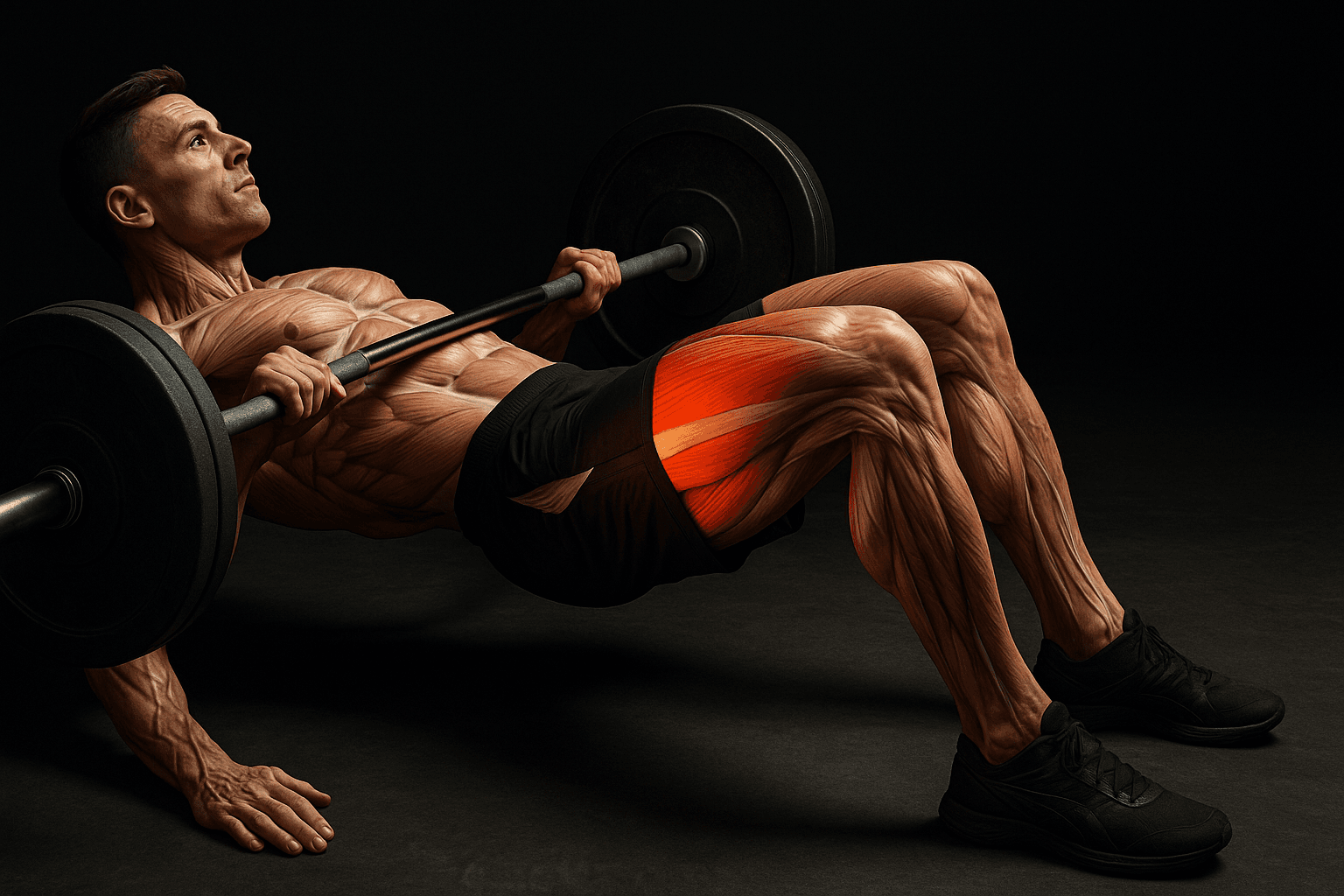
Photo by RepBro.
The hip thrust primarily trains the gluteus maximus (hip extensor) as the main mover; secondary muscles include the hamstrings, gluteus medius/minimus (hip stabilizers/abductors), adductors, and spinal erectors/core for stabilization. In short: hip thrust = glute-dominant hip extension with accessory posterior-chain and stability demand.
What muscles does the hip thrust train?
- Primary: gluteus maximus (hip extension, especially at or near full hip extension).
- Secondary: hamstrings (assist hip extension), gluteus medius/minimus (hip stability and frontal-plane control), adductor magnus (assists hip extension), erector spinae and deep core muscles (isometric stabilization of torso).
The hip thrust places the greatest load on the glutes when the hip is extended, which is why it often shows higher glute EMG than many squatting variations. It still recruits hamstrings and lower-back stabilizers, but less knee-extension/quad demand than a squat.
Where does the hip thrust fit in a training program?
- Goal: prioritize it when your main objective is glute hypertrophy or improving hip extension strength for sports tasks like sprinting or jumping.
- Placement in session: after a specific warm-up and activation work, place the hip thrust early if it’s your primary lift for the day (heavy sets), or later if using it as an accessory.
- Volume guideline: 9–20 working sets per week for glute-focused programming is a reasonable range to progress; distribute across 2–3 sessions. For strength-focused phases, use heavier loads and lower reps (3–6 reps, 3–6 sets); for hypertrophy use 6–15 reps, 3–5 sets.
- Progression: increase load, add reps, reduce rest moderately, or increase time under tension via tempo. If you plateau, change volume, add paused reps at the top, or vary range (e.g., elevated feet or deficit bridges).
If you track workouts or import programs, tools like RepBro make it easy to slot hip thrusts into weekly plans and compare variations (see related comparisons at https://www.repbro.app/vs).
How should I perform the hip thrust safely?
Short form cues:
- Upper back on a bench, feet flat and shoulder-width, barbell across hips (use pad).
- Drive through the heels, extend the hips until torso and thighs form a roughly horizontal line—don’t overextend the lumbar spine.
- Squeeze the glutes at the top for 1–2 seconds, control the descent to below hip level if mobility allows.
Safety note: stop on sharp or radiating pain and consult a qualified professional; this article is informational and not a diagnosis.
Common errors to avoid:
- Overextending the lower back at the top (use glute squeeze, not lumbar extension).
- Letting knees cave inward—push knees out over toes.
- Feet too far or too close: aim for shins vertical at the top or slightly behind vertical depending on limb lengths.
What are the best alternatives and when should I pick each?
- Barbell Glute Bridge (floor)
- Why: Very similar movement to hip thrust but with a slightly reduced range (bench not required).
- When to pick: if you lack a bench, want less torso range-of-motion, or are training at home with a barbell. It's also good for beginners learning hip drive.
- Equipment: Barbell and mat; can substitute dumbbells or loaded backpack.
- Romanian Deadlift (RDL)
- Why: Emphasizes the hip hinge and lengthened hamstring under tension, with significant glute loading at lockout.
- When to pick: if you want a standing hinge that trains posterior chain and hamstring strength more; useful when hip thrust loading is plateauing or if you prefer not to have a bar across the hips.
- Equipment: Barbell, dumbbells. Works well if you have lumbar stability and can keep a neutral spine.
- Bulgarian Split Squat
- Why: Single-leg option that trains glutes and quads strongly, plus balance and stability.
- When to pick: if you need to correct unilateral imbalances, have knee-friendly alternatives, or lack heavy barbells but have dumbbells. It's also helpful for athletic transfer and building single-leg strength.
- Equipment: Dumbbells or barbell and a bench/step.
- Cable Pull-Through
- Why: Hip-hinge pattern that keeps load behind the body and reduces compression across the pelvis; good for teaching hip extension mechanics without a barbell on hips.
- When to pick: if barbell placement is uncomfortable, gym has cables but no squat rack or bench, or you want a machine-like, low-skill option for high-volume work.
- Equipment: Cable machine with rope or handle.
Picking among these: prioritize the movement that best targets your limiting factor. If your glutes are the limiting factor under heavy hip thrusts, keep thrusts primary. If hamstring strength or posterior chain stiffness limits you, add RDLs. If unilateral control or knee/hip comfort is the issue, use split squats or bridges.
How to pick an alternative given injuries, equipment, or plateaus?
- Equipment limits: no bench but you have a barbell—choose glute bridges; no barbell—use kettlebell/dumbbell RDLs or Bulgarian split squats.
- Injury accommodation: if barbell across hips irritates soft tissues, use cable pull-throughs or floor bridges; if lumbar extension triggers pain, reduce load and prioritize RDLs with strict neutral spine, and consult a clinician.
- Plateaus: change the stimulus—switch from heavy low-rep hip thrusts to moderate-load higher-rep sets, add pause/tempo, or swap in RDLs and single-leg variations for 4–8 weeks.
How many sets and reps should I do for alternatives?
- Strength: 3–6 sets of 3–6 reps for heavy RDLs or loaded bridges.
- Hypertrophy: 3–5 sets of 6–15 reps for most alternatives; cable pull-throughs and split squats respond well to slightly higher reps (8–15).
- Unilateral work: include 2–4 sets per leg for split squats or single-leg bridges.
One-sentence takeaway: The hip thrust is the most direct heavy glute exercise for hip extension—use it when glute development or hip-extension strength is a priority, and pick alternatives (bridges, RDLs, split squats, cable pull-throughs) based on equipment, comfort, and the specific weak link you need to target.
Frequently asked questions
- Is the hip thrust better than squats for glute growth?
- The hip thrust targets the gluteus maximus more directly and at greater peak activation than a squat in many studies, but both can build glutes—use both or pick the one that fits your goals, equipment, and comfort.
- How often should I do hip thrusts?
- 2–3 times per week per muscle group is a practical range; for hip thrusts, 1–3 focused sessions weekly works well, depending on volume and recovery.
- Can I do hip thrusts with lower back pain?
- If bar placement or ramping sets cause sharp lumbar pain, stop and consult a professional; some people find banded bridges, cable pull-throughs, or RDLs more comfortable.