Incline Bench Press: Muscles Worked and Best Alternatives
Learn which muscles the incline bench press trains (primary and secondary), how to use it in a program, and 4 practical alternatives for equipment limits, injuries, or plateaus.
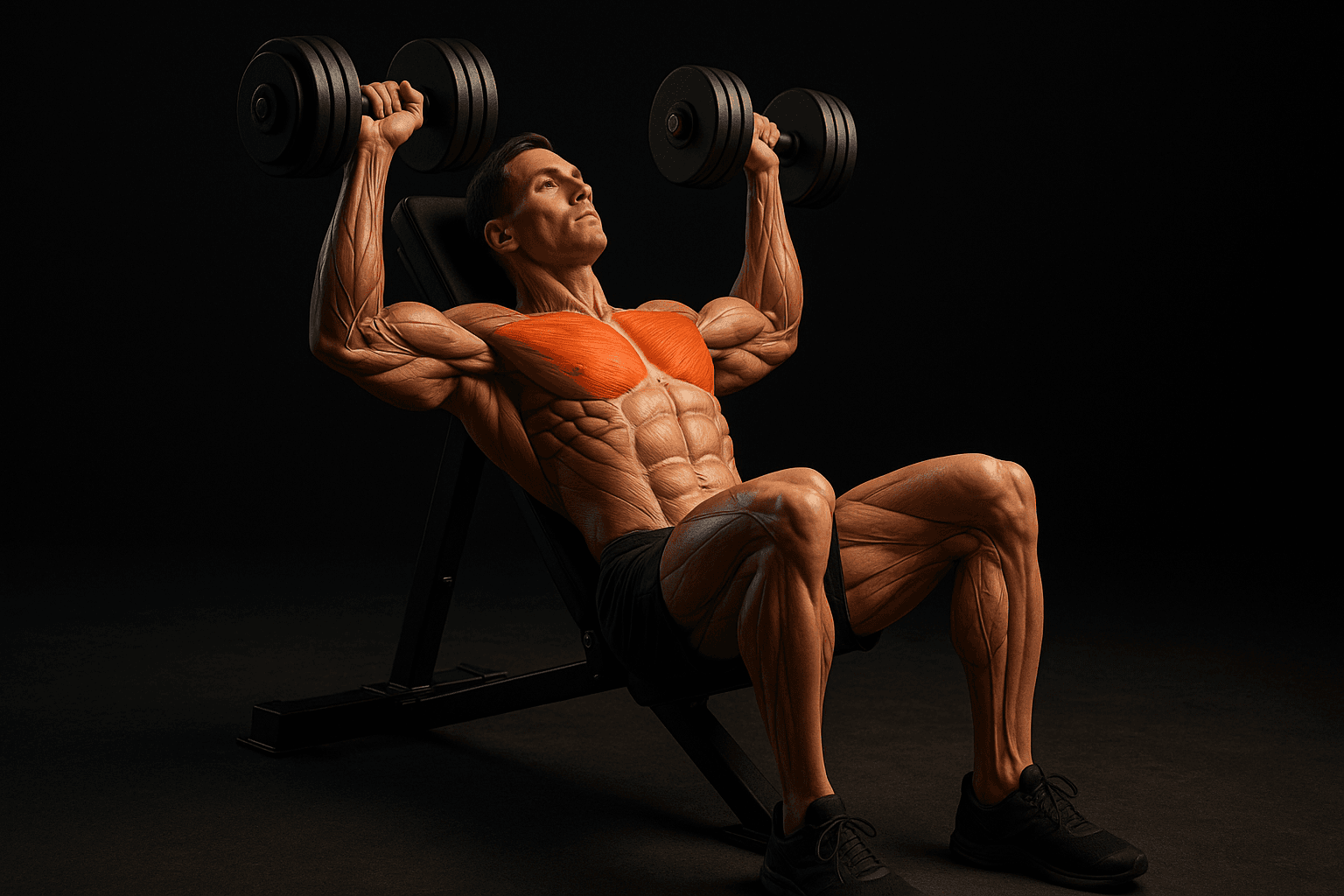
Photo by RepBro.
First paragraph: The incline bench press primarily trains the clavicular (upper) head of the pectoralis major, with secondary work from the anterior deltoid (front shoulder) and triceps brachii — it’s essentially a more shoulder-biased chest press that emphasizes the upper chest more than flat presses.
Which muscles does the incline bench press target?
Primary: the clavicular head of the pectoralis major (upper chest). Secondary: the anterior deltoid (front of shoulder) and the triceps brachii. Stabilizers: serratus anterior, rotator-cuff muscles (small role), and scapular stabilizers (rhomboids, traps) to a lesser extent.
Biomechanically, the incline angle changes the line of pull so the muscle fibers of the upper pecs are shortened and loaded more than on a flat bench. Expect roughly a 10–30% increase in anterior deltoid contribution as you move the bench beyond 30°.
How much does the bench angle change emphasis?
Keep the backrest at 15°–30° to maximize upper-pec emphasis while minimizing excessive anterior deltoid dominance. At 0° (flat) the load is distributed across the entire pec; at 15°–30° you shift toward the upper pec; above 45° you’re effectively doing a shoulder press.
Practical numbers:
- 15°–30°: Best balance for upper-pec hypertrophy.
- 30°–45°: More shoulder involvement; useful if you also want deltoid hypertrophy.
-
45°: Use this if you want a strict shoulder press movement.
Where does the incline bench press fit in a program?
- Goal: Upper-pec hypertrophy — 2–4 weekly sets of incline work per week is a reasonable starting point (for example, 3 sets × 8–12 reps twice per week).
- Goal: Strength on incline press — 3–6 sets of 3–6 reps, 2–3 minutes rest, twice per week if recovery allows.
- Order: Place it early in the chest/upper-body workout when energy is highest (after warm-up and before accessory isolation movements).
- Progression: Increase load by 2.5–5% when you can complete the top of your target rep range with good form for all sets, or add 1–2 reps per set before increasing weight.
Recovery and frequency: Most trainees benefit from training chest-related pressing 2× per week. If incline bench causes shoulder soreness, reduce frequency to once weekly and replace one session with an alternative that reduces shoulder strain.
What are the best alternatives to the incline bench press and when to pick each?
Below are four practical alternatives, when to pick them, and short form/safety notes.
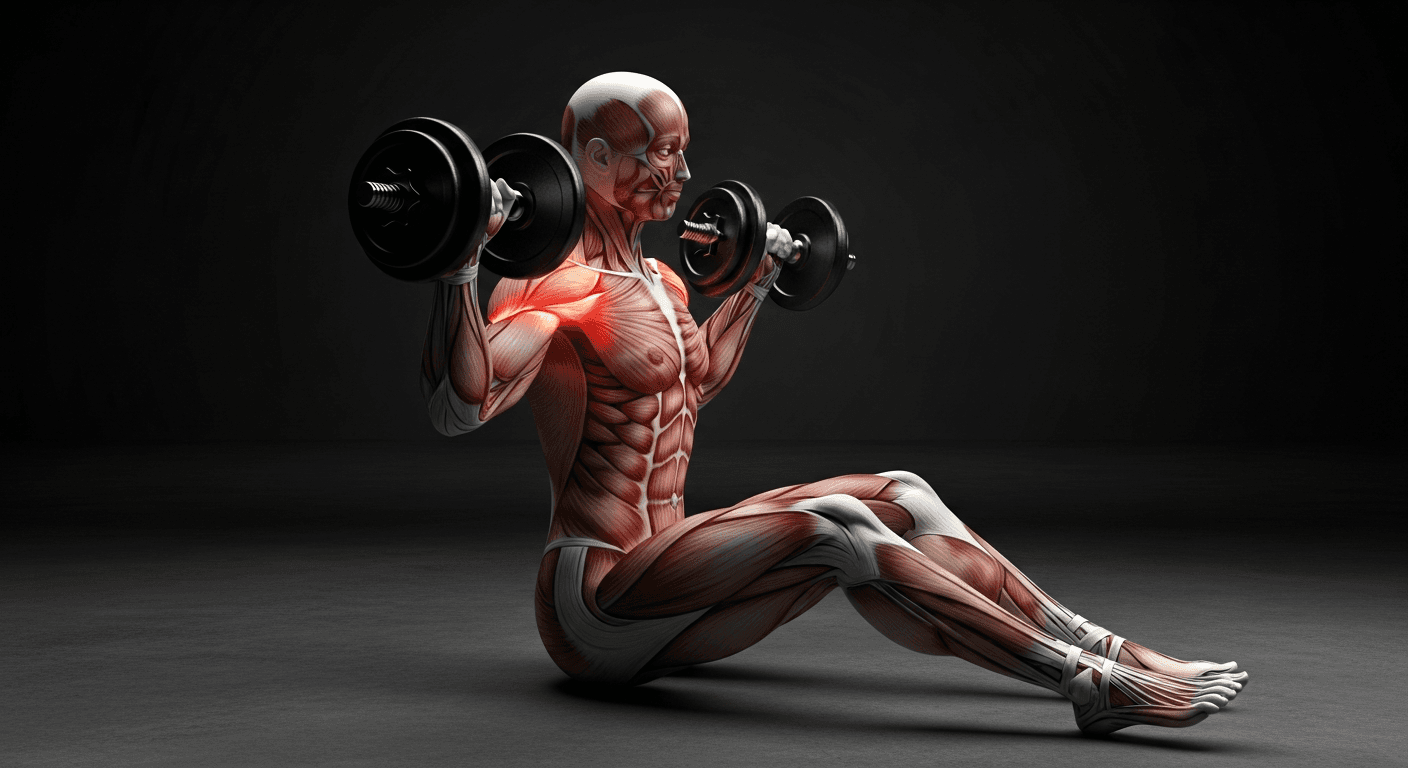
- Dumbbell Incline Press
- Why pick it: Offers identical plane of movement but increases range of motion and reduces joint torque differences between sides. Better for fixing left-right asymmetries and shoulder comfort.
- Best when: You have a dumbbell set and want the same upper-pec stimulus with improved mobility and stability demands.
- Programming: Same sets/reps as barbell incline. Use 3–5 sets of 6–12 reps for hypertrophy.
- Safety note: Use a spotter for heavy sets; avoid letting elbows flare dramatically; stop if you feel a sudden sharp shoulder pain.
- Incline Cable Press or Low-to-High Cable Fly (set to incline)
- Why pick it: Provides continuous tension and allows varied angles. Good for tight contraction at the top and for working weaker ranges if barbell/dumbbell aggravates a joint.
- Best when: You have access to cables and want to emphasize upper-pec peak contraction or reduce load spikes at the bottom.
- Programming: 3–4 sets of 8–15 reps; include slow eccentrics (2–3 s) to increase time under tension.
- Safety note: Watch shoulder position and avoid heavy single-arm rotations under load if you have a rotator cuff history.
- Landmine Press (single-arm or bilateral)
- Why pick it: Shoulder-friendly pressing pattern with a diagonal, less externally rotated path. Good for people with shoulder pain or limited equipment.
- Best when: You lack an adjustable bench or have shoulder irritation with traditional incline pressing; also useful for building pressing strength and core stability.
- Programming: 3–5 sets of 6–12 reps per side. Single-arm sets deliver unilateral volume and anti-rotation demand.
- Safety note: Keep scapula stable and don’t overarch the low back; stop on sharp pain and regress to lighter loads.
- Push-Up Progressions on an Incline (feet-elevated push-ups) or Decline Push-ups
- Why pick it: No equipment option that closely mimics incline pressing mechanics (feet-elevated places torso at an incline relative to hands). Scalable via load, tempo, or band resistance.
- Best when: You have no barbell/dumbbells but want an upper-pec focused pressing exercise; also good for beginners or as high-volume accessory work.
- Programming: 3–4 sets of 8–20+ reps depending on strength. Add weight vest or bands for progressive overload.
- Safety note: Maintain a neutral spine and stop if you get sharp shoulder pain; reduce elevation if the movement feels uncomfortable.
When to choose each alternative (quick guide):
- Equipment-limited (no bench/barbell): choose feet-elevated push-ups or landmine press.
- Shoulder pain or rotator cuff issues: try landmine press or low-to-high cables for reduced joint torque.
- Plateau on barbell incline: switch to dumbbells for unilateral overload and range-of-motion advantage, or use slower eccentrics on cables.
- Want core/anti-rotation training with pressing: landmine single-arm press.
Is the incline bench press safe?
Generally safe when performed with controlled tempo, full shoulder/scapular warm-up, and appropriate load. Common safety points: avoid extreme bench angles (>45°) if your goal is upper chest; use a spotter for heavy sets; stop on sharp pain and consult a qualified professional for persistent joint issues. This article does not diagnose injuries.
How should I pick reps and sets for my goal?
- Strength: 3–6 reps, 3–6 sets, 2–3 minutes rest.
- Hypertrophy: 6–12 reps, 3–5 sets, 60–90 seconds rest.
- Endurance/conditioning: 12–20 reps, 2–3 sets, shorter rest.
Concluding note: The incline bench is a valuable upper-pec movement; if equipment, pain, or a plateau prevents its use, pick an alternative above based on your constraints and return-to-progress via consistent overload and 1–2 weekly sessions.
For programming tools and to compare exercises or import plans, see the RepBro app and related comparison guides at https://www.repbro.app/vs.
Takeaway: Use a 15°–30° incline to emphasize the upper chest, program 2× weekly for hypertrophy, and pick alternatives (dumbbells, cables, landmine, or incline push-ups) based on equipment, pain, and training goals.
Frequently asked questions
- Does incline bench press target the upper chest only?
- No. The incline bench places more emphasis on the clavicular head of the pectoralis major (upper chest), but the mid-pecs, anterior deltoid and triceps still contribute significantly.
- What incline angle is best for upper pecs?
- Use a bench angle between 15° and 30° to prioritize the upper pecs; angles above 45° shift emphasis toward the anterior deltoid.
- How often should I include incline bench press in a week?
- Train the incline press or equivalent 1–2 times per week. For strength use 3–6 sets of 3–6 reps; for hypertrophy use 3–5 sets of 6–12 reps.