Incline Dumbbell Curl: Proper Form, Step by Step
Clear, evidence-aware guide to the incline dumbbell curl: setup, execution cues, breathing, tempo, common mistakes and safety notes for lifters.

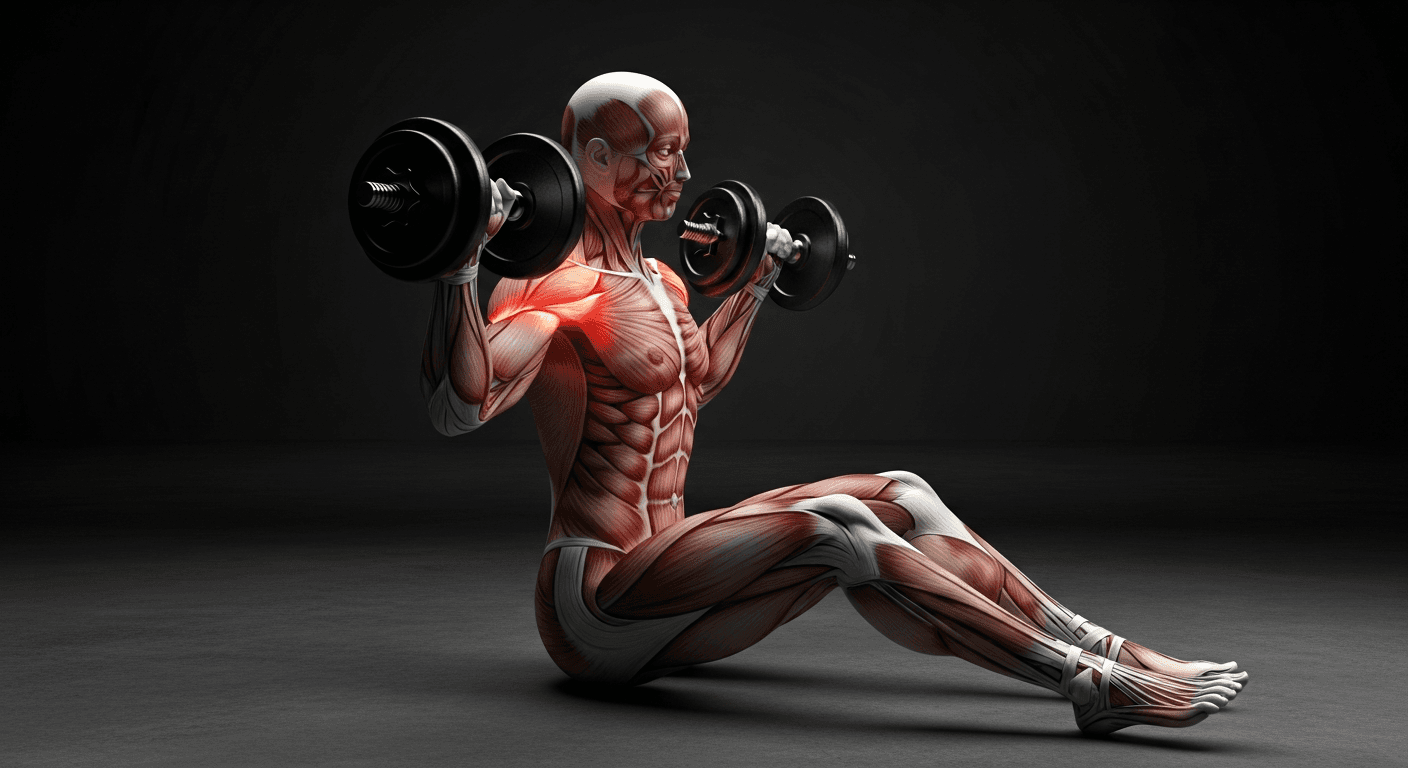
Photo by RepBro.
Direct answer
The incline dumbbell curl is a seated curl done on an incline bench that increases stretch on the long head of the biceps and reduces torso swing. Set the bench at about 30–45 degrees, keep the upper arm fixed, lift with a controlled concentric and lower slowly, and stop if you feel sharp pain.
What setup do I need for the incline dumbbell curl?
- Bench angle: set an incline bench to approximately 30–45 degrees. Lower angles reduce the stretch; higher angles approach a supine position and can shorten ROM.
- Seat position: sit so your upper back rests against the pad and your shoulder blades are supported. Your arms should hang nearly vertical when dumbbells are at your sides.
- Feet and core: feet flat on the floor, knees at about 90 degrees. Tension your core and keep a neutral spine.
- Grip and weights: hold a dumbbell in each hand with a supinated grip (palms facing up). Start with a weight that lets you maintain form for all planned reps.
How do I perform the incline dumbbell curl, step by step?
- Start position: sit fully back on the bench, let your arms hang straight down. Keep the elbow inline with the torso so the humerus stays behind the body.
- Tighten: brace the core, retract the shoulder blades slightly, and keep the upper arms stationary. Think of the elbow as a hinge joint.
- Concentric: exhale and curl the dumbbells up by flexing the elbow. Lead with the elbow rather than supinating aggressively; aim to bring the dumbbells toward the shoulders without swinging or lifting the elbows forward.
- Peak contraction: pause briefly at the top for 0.25–0.5 seconds. Avoid bouncing or forcefully shrugging the shoulders.
- Eccentric: inhale and lower the dumbbells under control until the arms are near full extension and the biceps are under a comfortable stretch. Do not lock out aggressively; maintain tension.
- Repeat: perform the planned number of repetitions with controlled tempo and consistent form.
Execution cues
- Keep the elbows fixed; imagine they are taped to your sides in a slightly posterior position.
- Lead with the elbow, not the wrist or shoulder.
- Keep wrists neutral; avoid excessive extension.
- Maintain a tall chest and neutral neck.
What breathing and tempo should I use?
- Breathing: exhale during the concentric (lifting) phase and inhale during the eccentric (lowering) phase.
- Tempo options: 2-0-2 or 2-1-3 are common choices. For example, 2 seconds up, 0–1 second squeeze, 2–3 seconds down. Slower eccentrics increase time under tension and can help with control.
- Rest between sets: choose 60–120 seconds depending on load and exercise ordering.
What rep ranges and progression work well for this exercise?
Use the incline curl as part of a broader arm routine. For hypertrophy, many practitioners use moderate rep ranges with controlled tempo; for strength-focused work, lower reps with heavier loads can be used while preserving form. Progression should be gradual: increase reps, sets, or load over time while keeping form strict. Monitor recovery and adjust volume or frequency if performance stalls.
What common mistakes do lifters make and how do I fix them?
Mistake: swinging or using torso momentum. Fix: reduce weight, slow the tempo, and focus on keeping the upper arm rigid. Visualize pulling with the elbow.
Mistake: letting elbows drift forward or flaring. Fix: reposition on the bench so the elbows hang behind the body and cue the elbows to track vertically. Lightly touch the bench with the back of the upper arm if needed.
Mistake: using too much wrist flexion or curling the wrists. Fix: use a neutral, strong wrist; consider slightly lighter weight until you can maintain a firm wrist position.
Mistake: very fast, uncontrolled negatives. Fix: use a controlled eccentric of 2–3 seconds; this improves muscle tension and reduces injury risk.
Mistake: bench set too flat or too upright. Fix: adjust to 30–45 degrees to get the intended long-head stretch without compromising range of motion.
How does the incline dumbbell curl compare with other curl variations?
| Variation | Primary difference | Typical use case |
|---|---|---|
| Incline dumbbell curl | Places biceps under greater stretch, reduces shoulder involvement | Targeting long-head emphasis and controlled ROM |
| Standing dumbbell curl | More torso stabilization required; may allow heavier loads | General strength and mass work with greater kinetic chain involvement |
| Preacher curl | Limits shoulder movement and isolates mid-range | Removes cheating at the top for strict isolation |
Use the incline curl as one tool among these; each has a slightly different emphasis and role in a program.
When should I include this exercise in my program?
Place incline curls early in a workout when you want quality, controlled biceps work, or later as an accessory depending on overall fatigue. If you do heavy compound back work the same session, consider how fatigue will affect biceps performance. Typical programming includes 2–4 sets per session and 1–3 sessions per week, adjusted to your total arm training volume and recovery.
Safety note
Stop if you experience sharp or unusual pain. This guide is educational and not a medical diagnosis. If you have persistent pain, a history of shoulder or elbow injury, or specific concerns, consult a qualified health or strength professional before continuing.
What are the limitations of written instruction and apps?
No app or article can see your movement in real time or provide a formal diagnosis. Apps and AI can offer guidance, reminders, and programming, but they cannot replace an in-person coach or clinician for live technique correction, hands-on assessment, and injury rehab. A training plan only works if you follow it consistently and adapt based on real-world feedback.
References and next steps
Use this technique checklist the next session: set the bench to 30–45 degrees, choose a conservative weight, and focus on fixed elbows and a 2-0-2 tempo for 3 sets. If you want guided programming or tracking, consider reputable coaching tools and verify any plan with a coach or clinician when in doubt.
Frequently asked questions
- Is the incline dumbbell curl better than standing curls for biceps?
- The incline dumbbell curl places the biceps under stretch and reduces shoulder involvement compared with a standing curl, which can increase time under tension for the long head. It is not inherently superior; use it as one variation within a well-rounded program.
- What weight and reps should I use for incline dumbbell curls?
- Choose a weight that allows strict form for your intended goal. For typical hypertrophy aim for moderate loads and controlled reps. Adjust weight so you can complete sets without cheating; increase load or reps gradually over weeks to progress.
- How often should I train incline curls?
- Include incline curls within a biceps routine 1–3 times per week depending on total arm volume and recovery. Spread work across the week and monitor recovery; increase frequency only if you can maintain quality and progress.