Incline Dumbbell Curl Alternatives at Home (Minimal Equipment)
Five at-home substitutes for the incline dumbbell curl using bodyweight, dumbbells, or bands, with what each preserves, loses, and when to use them.
Photo by RepBro.
You can replace incline dumbbell curls at home with several low-equipment options: seated incline-style dumbbell curls using a reclined chair, band incline curls, supinated inverted rows, hammer/neutral dumbbell curls, and concentration curls. Each keeps elbow flexion and progressive overload but trades some long-head stretch or strict isolation.
What does the incline dumbbell curl (IDC) uniquely give my biceps?
The IDC puts the upper arm behind the torso so the long head of the biceps starts in a lengthened position. That increases stretch-mediated tension on the long head and reduces shoulder and torso cheat. It’s a relatively isolated elbow-flexion pattern with a long eccentric range of motion.
Which at-home exercises mimic the IDC most closely, and what do they preserve or lose?
Below are 5 practical substitutes using only dumbbells, bands, a chair, or bodyweight. For each I list what it preserves versus what it gives up compared to the IDC.
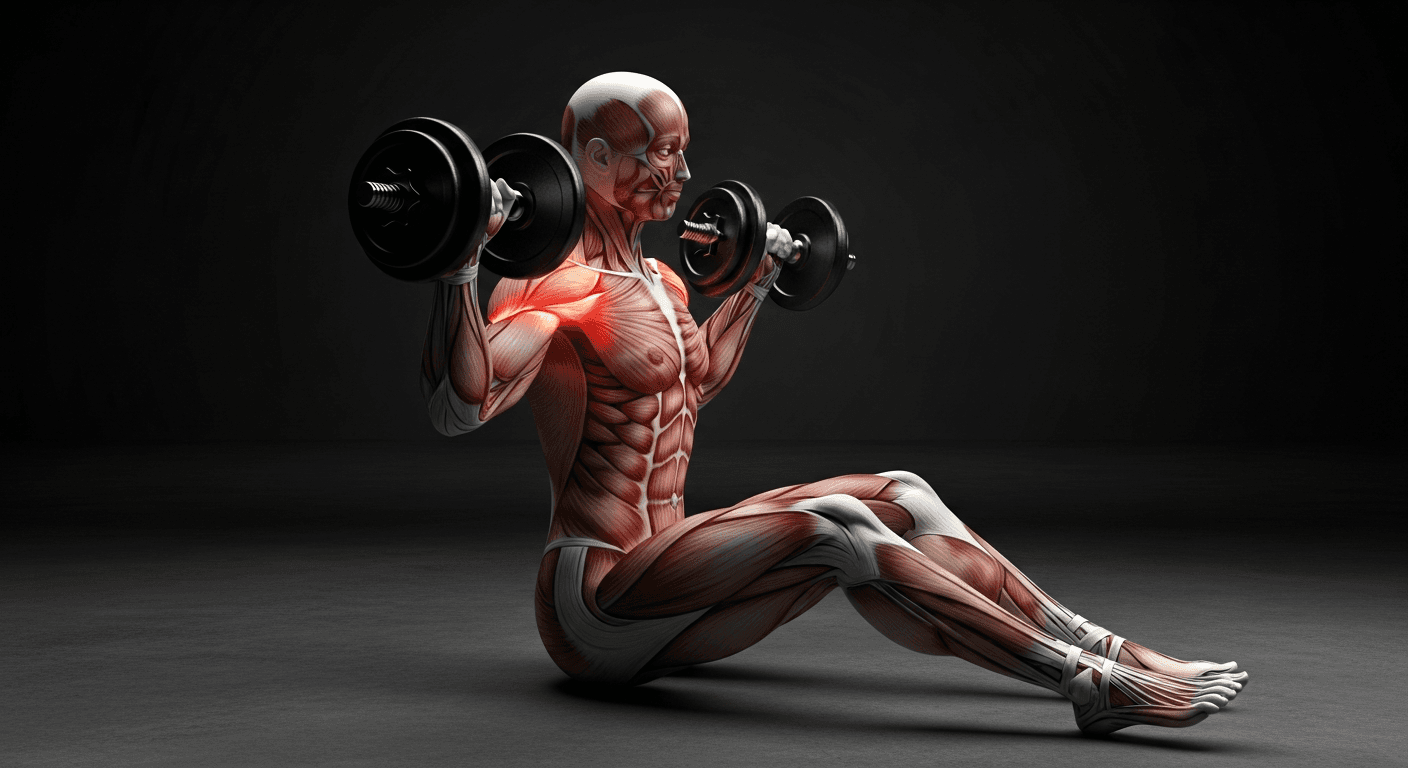
- Seated incline-style dumbbell curl (reclined chair)
- Equipment: Dumbbells + reclined chair, stacked cushions, or car seat leaned back ~20–40°.
- What it preserves: Upper-arm-behind-torso starting position and long-head stretch; strict seated position reduces torso swing.
- What it loses: Hard-to-match bench stability and exact incline angle; available loading limited by home dumbbells.
- Use when: You want closest-feeling substitute with the exact muscle geometry and can control position.
- Band incline curl (band anchored low or stepped forward)
- Equipment: Resistance band anchored low behind you or looped under a foot while you step forward to create band behind upper arm.
- What it preserves: Long-head stretch when you position the arm behind the torso; continuous tension through the range (no slack).
- What it loses: Linear load profile—bands increase tension toward the top; max absolute load usually lower than heavy dumbbells.
- Use when: You need constant tension and safe eccentrics, or you own light equipment.
- Supinated inverted row (under table or low bar) — “supinated bodyweight row”
- Equipment: Sturdy table, broom + chairs, or low bar.
- What it preserves: Strong elbow flexion demand; trains biceps in a compound pulling pattern and allows progressive difficulty (feet elevated to increase load).
- What it loses: Pure isolation and the specific long-head stretch of the IDC; more posterior chain contribution (shoulder/scapular control).
- Use when: You need a compound, higher-force option that uses bodyweight and trains pulling strength as well as biceps.
- Hammer/neutral dumbbell curls (seated or standing)
- Equipment: Dumbbells.
- What it preserves: Elbow flexion and progressive overload; hits brachialis and brachioradialis which support thicker-looking upper arms.
- What it loses: Supinated biceps peak emphasis and the stretched long-head position of IDC.
- Use when: You lack an incline option but want to keep training volume and increase overall arm robustness.
- Concentration curls (seated, elbow against inner thigh)
- Equipment: Dumbbell and a chair.
- What it preserves: Peak contraction and isolation; easy to control form and mind-muscle connection.
- What it loses: Long-head stretch and full eccentric length seen in the IDC; limited ability to increase load significantly without heavier dumbbells.
- Use when: You want strict single-arm isolation and fatigue management in a small-space setup.
How should I program these substitutes to keep progressing?
- Frequency: Train biceps 2–3 times per week if that fits your split — evidence supports multiple weekly exposures for hypertrophy.
- Volume per session: Use a range of sets that fits your weekly target (commonly multiple working sets across the week). Choose sets that let you reach technical near-failure in a target rep range.
- Rep ranges: 6–20 reps is useful for hypertrophy; lower reps for strength emphasis and higher reps for metabolic stress. Mix ranges across sessions.
- Progression: Increase reps first, then load or band tension, then alter tempo or add partials. Track loads and reps; progressive overload is the driver of growth.
Where possible, use the seated incline-style curl or band incline curl when your goal is to specifically target the biceps long head. Use inverted rows or hammer curls for added strength and structural balance.
Quick comparison table: what changes vs incline dumbbell curl?
| Exercise | Equipment | Preserves most | Loses most | When to pick |
|---|---|---|---|---|
| Seated incline-style curl | Dumbbells + reclined chair | Long-head stretch, isolation | Bench stability, max load | When you want closest match at home |
| Band incline curl | Bands | Stretch (if positioned), continuous tension | Absolute load at lockout | When you want safe eccentrics and tension |
| Supinated inverted row | Bodyweight under table/bar | Elbow flexion, progressive difficulty | Pure isolation, long-head stretch | When you need compound strength with no equipment |
| Hammer curl | Dumbbells | Elbow flexion, overload | Supinated peak biceps emphasis | When you want thicker arms and load capacity |
| Concentration curl | Dumbbell + chair | Peak contraction, strict control | Long eccentric stretch, heavy loading | When you need isolation and strict technique |
When are home swaps adequate and when should you return to the gym?
Adequate at home when: you can progressively overload, maintain training frequency, vary exercises across weeks, and recover. Home setups are fine for long-term hypertrophy for most lifters. Return to gym when: you need very high absolute loads, specialized implements (decline/incline benches at specific angles), barbell-focused strength work, advanced machines for rehab, or coach-supervised technical changes.
Safety note
Stop if you feel sharp or unusual joint pain; mild muscle soreness is normal. If you have an existing shoulder or elbow injury, consult a qualified medical or rehabilitation professional before loading. This article is informational and not a medical diagnosis.
Limitations — what apps and AI can’t do for you
No app or AI can reliably see your form and make real-time corrections; they also can’t diagnose injuries or replace a qualified physical therapist or coach for rehab. Tracking tools only help when you consistently execute sessions and follow progressive overload. Behavioral consistency and qualified supervision matter more than which app you use.
If you want simple logging for progressive overload at home, the RepBro app is one lightweight option for tracking sets and weights.
References and further reading: follow established resistance-training consensus on frequency (multiple weekly exposures for hypertrophy), progressive overload, and safety guidelines from certified strength and conditioning organizations.
Frequently asked questions
- Can I replace incline dumbbell curls at home with minimal equipment?
- You can replace incline dumbbell curls at home with several low-equipment options: seated incline-style dumbbell curls using a reclined chair, band incline curls, supinated inverted rows, hammer/neutral dumbbell curls, and concentration curls. Each keeps elbow flexion and progressive overload but trades some long-head stretch or strict isolation.
- Which home alternative most closely mimics the incline curl’s long-head stretch?
- A seated incline-style curl done with your upper arm positioned behind your torso (using a reclined chair or stacked cushions) best recreates the long-head stretch. A band-based incline curl can also approximate that stretch if you position the anchor and posture correctly.
- When should I stop using home alternatives and return to gym equipment?
- Stay home if you can progressively overload and feel muscle stimulus. Return to the gym when you need heavier absolute loads, specific angle isolation that home gear can’t supply, or supervised rehab/technical coaching. Also go back if your gains plateau despite consistent progression.