Landmine Press Alternatives at Home (Minimal Equipment)
Four to five at-home substitutes for the landmine press using dumbbells, bands, or bodyweight. What each keeps, what it loses, and when to go to a gym.
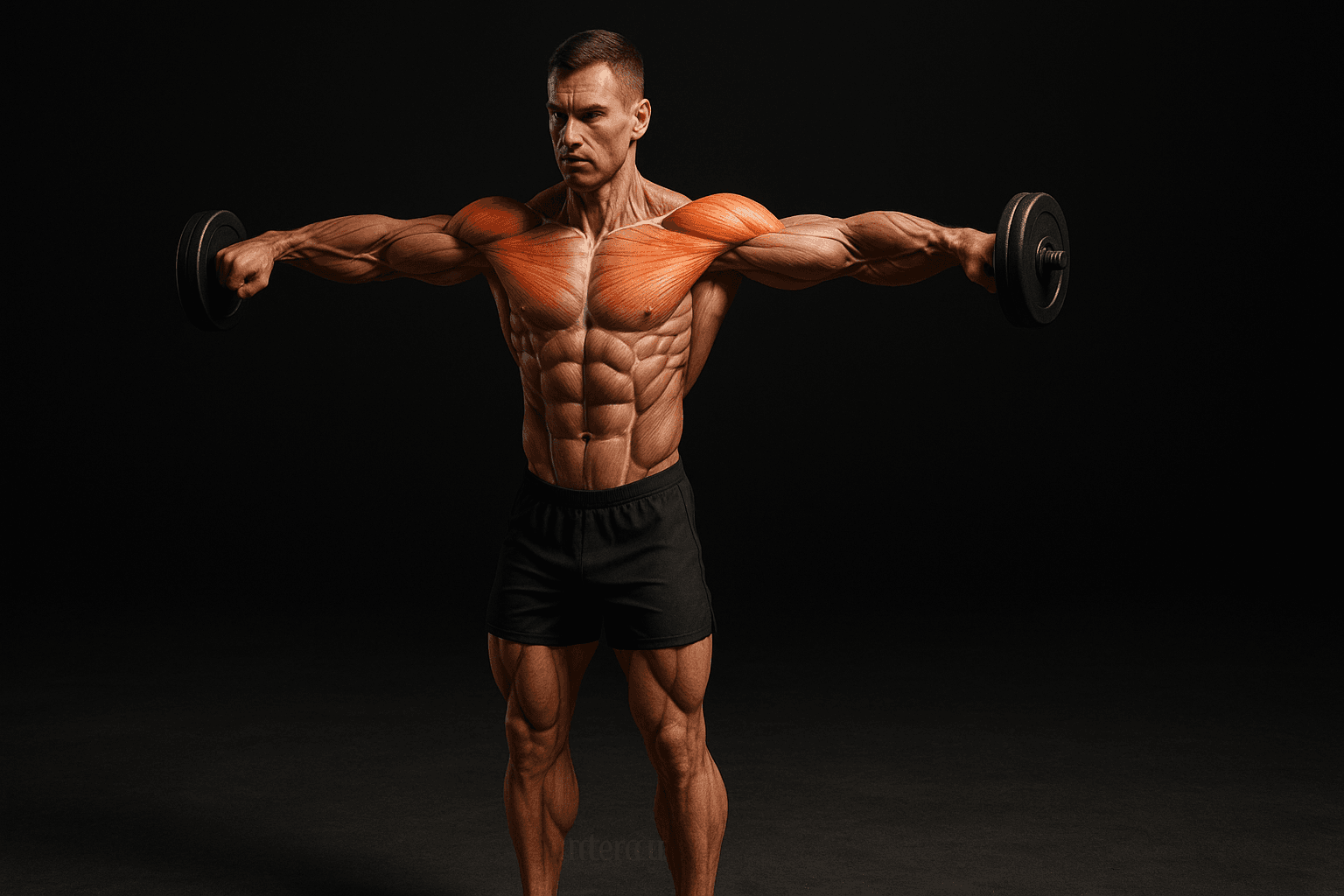
Photo by RepBro.
Short answer: You can reproduce the landmine press’s single-arm diagonal vector and anti-rotation challenge at home with single-arm dumbbell presses, low-anchored band presses, staggered/incline push-ups, or an arcing dumbbell press. Each preserves some mechanical features and sacrifices others—pick the substitute that matches your goal and equipment.
What does the landmine press give you that matters?
The landmine press is a unilateral, diagonal press that blends shoulder strength, upper‑body horizontal/vertical components, and core anti‑rotation/bracing. The fixed pivot changes the bar path compared with a straight dumbbell or barbell press and often feels more shoulder-friendly because the hand can travel in a slightly diagonal arc.
When replacing it at home, focus on three qualities to preserve: the diagonal pressing vector, unilateral load and anti‑rotation demand, and progressive overload capacity.
Which at‑home exercises mimic the landmine press with minimal equipment?
Below are four practical substitutes that use dumbbells, bands, or bodyweight. For each I describe what it preserves, what it loses, and when it’s an adequate swap.
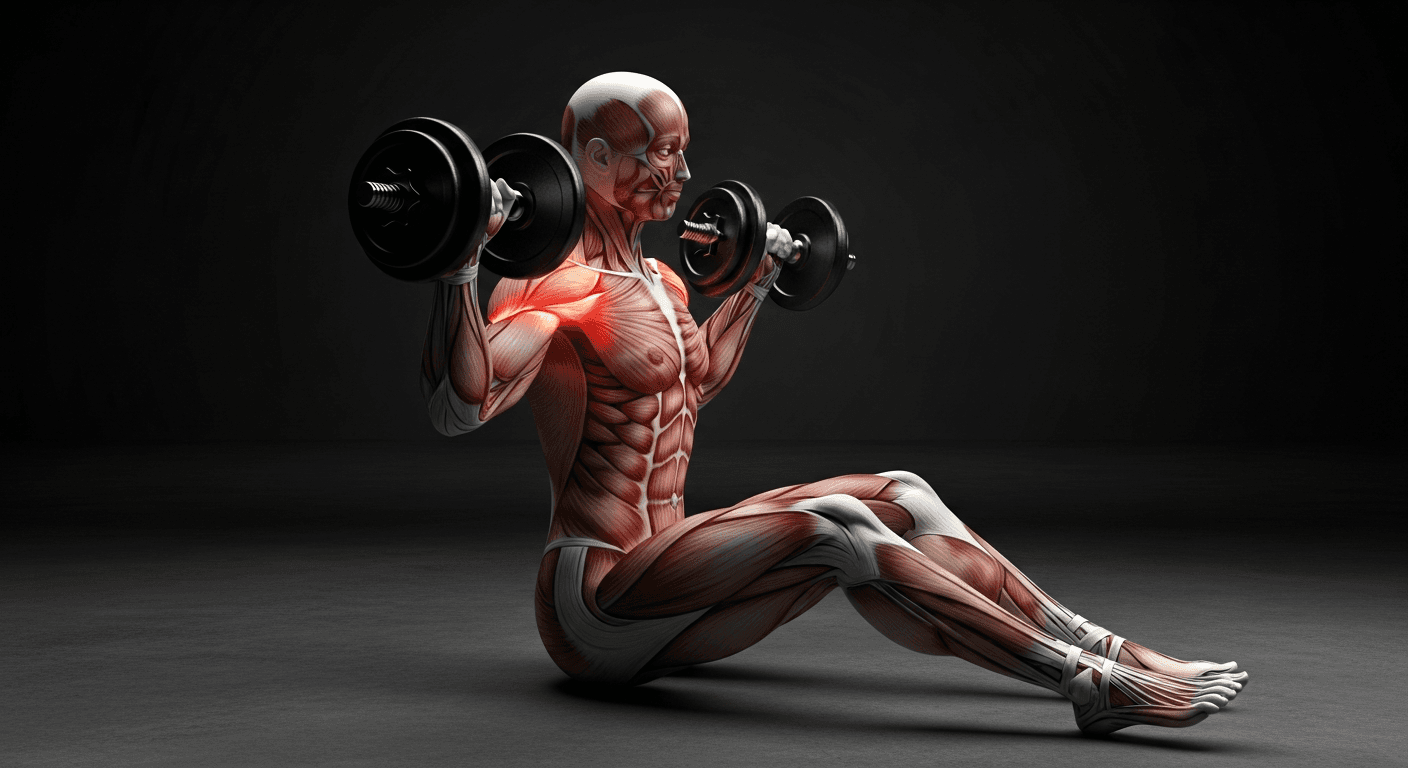
- Single‑arm kneeling or staggered‑stance dumbbell press
- How to: Kneel on one knee or take a staggered stance, hold a dumbbell at shoulder in a neutral or slightly rotated grip, and press on a forward‑diagonal path to overhead. Keep the ribs down and brace your core to resist rotation.
- Preserves: Unilateral load, anti‑rotation demand, and a diagonal press path similar to a landmine.
- Loses: The bar’s fixed pivot; loading increments depend on dumbbell availability.
- When it’s adequate: When you want single‑arm strength, core carryover, and progressive load up to the heaviest dumbbell you own. Go to a gym if you need heavier incremental loading or the exact landmine feel.
- Dumbbell arc/diagonal press (standing)
- How to: Start with the dumbbell near the opposite hip or lower chest and press in an arcing diagonal path to overhead, finishing with elbow slightly forward of the ear.
- Preserves: The diagonal trajectory and rotational/anti‑extension challenge.
- Loses: The smooth pivot and sometimes the same stabilizing demand of a landmine; the movement can be more shoulder‑dominant.
- When it’s adequate: For shoulder development and functional pressing patterns when you have settable dumbbells.
- Low‑anchored band diagonal press
- How to: Anchor a band at floor height to a sturdy point (door anchor or heavy furniture), stand perpendicular, hold the band with one hand at shoulder, and press on a diagonal away from the anchor.
- Preserves: Diagonal line of force, unilateral demand, and easier manipulation of resistance if bands are available.
- Loses: Absolute top‑end load (bands can be progressed, but feel different), possible band stretch curve changes the strength curve versus a barbell landmine.
- When it’s adequate: If you lack heavy dumbbells but want variable tension and travel‑friendly setup. Use bands long term for hypertrophy and stability; move to gym weights if you need maximal strength loads.
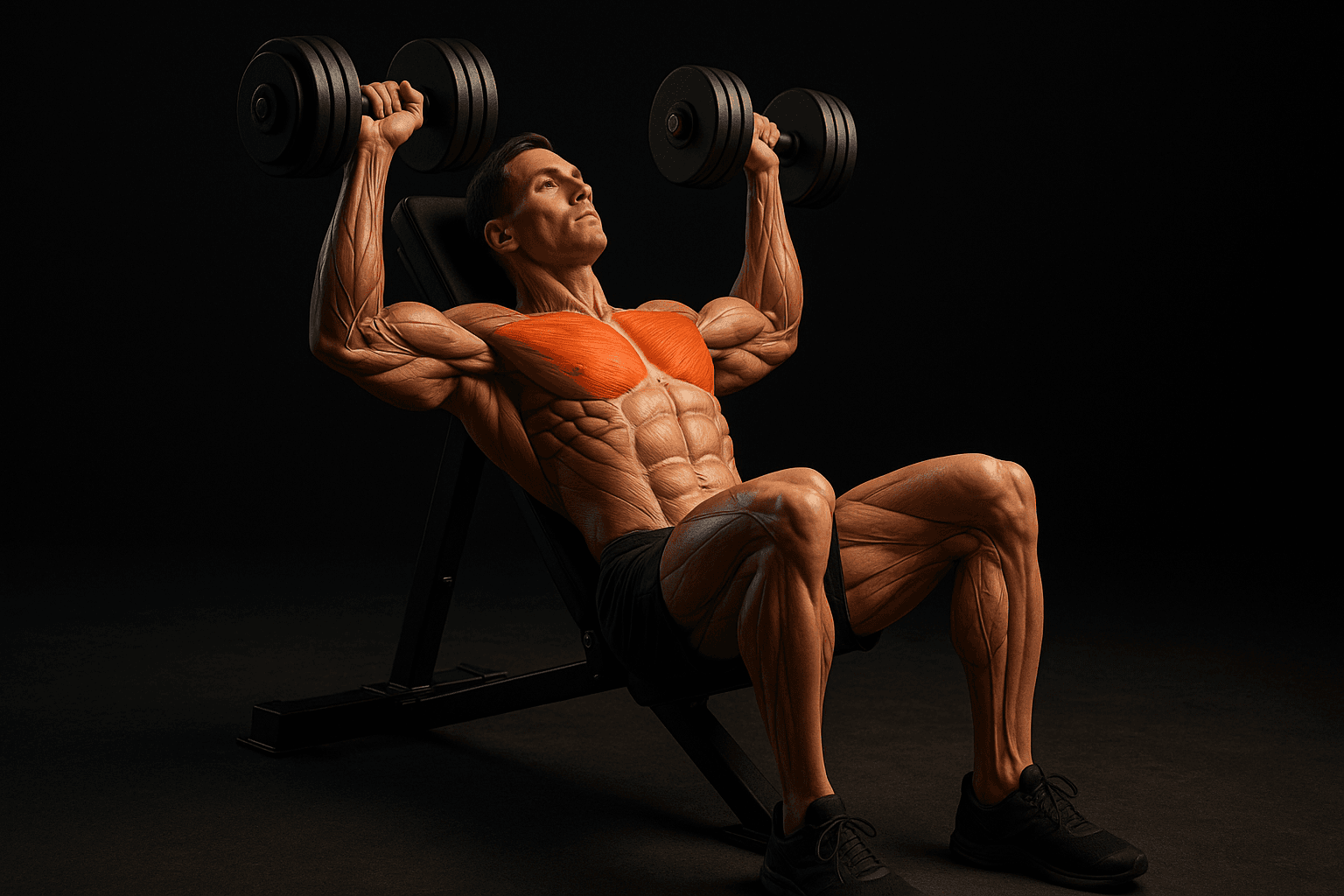
- Staggered or single‑arm incline push‑ups (bodyweight)
- How to: Elevate your hands or feet to change angle; shift weight to one arm or use a staggered hand position to create a diagonal bias.
- Preserves: Angle of push, unilateral emphasis (if staggered/single‑arm), and core anti‑rotation when braced.
- Loses: Absolute loading control and easy incremental overload beyond added weight or rep work.
- When it’s adequate: For endurance, hypertrophy at lower intensities, or as accessory work. If you pursue heavy strength gains, gym equipment helps.
How should I program these substitutes compared to a landmine press?
Frequency: Train the pressing movement 2–3 times per week to provide enough stimulus and recovery for strength and hypertrophy. Intensity and volume: For strength focus, use heavier loads and lower reps; for hypertrophy, use moderate loads and higher reps. Progress every 1–3 weeks by adding load, reps, or improving form. Plan periodic lighter weeks (a deload) when performance or recovery drops.
Practical progression examples (tools vary):
- Dumbbells: increase weight or reps per set, reduce rest to increase density.
- Bands: use stiffer bands, shorten slack, or increase reps.
- Bodyweight: add a weighted vest, elevate feet/hands, or slow tempo for time under tension.
Comparison: what do these options actually change?
| Movement | Equipment | Preserves vs landmine | Loses vs landmine | When swap is adequate |
|---|---|---|---|---|
| Single‑arm kneeling dumbbell press | Dumbbell | Diagonal vector, unilateral core demand | Fixed pivot feel, fine incremental loading | Good for strength up to dumbbell max |
| Dumbbell arc/diagonal press | Dumbbell | Pressing arc, shoulder strength | Exact bar path and pivot | Good for shoulder development and carryover |
| Low‑anchored band diagonal press | Bands | Diagonal force, variable tension, unilateral | Max absolute load, different resistance curve | Good for hypertrophy, portability, early‑phase strength |
| Staggered/incline push‑ups | Bodyweight | Press angle, unilateral bias (if staggered) | Precise overload control, heavy strength | Good for endurance/hypertrophy and where no equipment exists |
When should I go to a gym to use a real landmine?
Go to a gym if you: need heavier or finer incremental loading than home gear allows, want the specific fixed‑pivot mechanics for carryover to sport or rehab, or have plateaued despite varied progression methods. A gym offers access to heavy plates, incremental loading, and the exact bar path.
Safety note
Stop any lift that causes sharp or unusual pain. Maintain neutral spine and controlled tempo; brace your core for unilateral presses. If you have a current injury or pain, consult a qualified medical or rehabilitation professional before loading the movement. This article does not diagnose or prescribe treatment.
What limitations should I keep in mind?
- No app or AI can see your technique or correct form in real time; remote feedback can help but is not a replacement for qualified in‑person coaching for technique or complex rehab.
- If you have a shoulder or spine injury, a clinician or physiotherapist must clear and guide your load progression.
- A program only works if you adhere to it—consistency, sleep, nutrition, and progressive overload matter more than small differences between variants.
If you want to track progressive overload and auto‑record sets/reps for these substitutes, a training log app such as RepBro can help you measure progress objectively without replacing coach feedback.
Bottom line: With a little creativity you can preserve the landmine press’s core benefits at home using dumbbells, bands, or bodyweight. Choose the substitute that fits your equipment and goals; if you need heavier absolute loads or the exact fixed‑pivot stimulus, plan a gym session to complement home training.
Frequently asked questions
- Can a band really replace a landmine press?
- Yes, a low-anchored band press can replicate the landmine’s diagonal vector and anti-rotation demand. It trades constant tension and top-end load for variable resistance and easier transportability. Use bands until you need heavier, consistent absolute load for strength progression.
- Are single-arm dumbbell presses as effective for shoulder strength?
- Single-arm dumbbell presses reproduce unilateral demand, trunk bracing, and a similar pressing path if you press on a diagonal. They provide reliable progressive overload for strength and hypertrophy, but you lose the landmine’s fixed pivot feel and potentially the exact arc of motion.
- When should I stop using home alternatives and get to a gym?
- Head to a gym when you need heavier, incremental loading beyond your home equipment, want the unique fixed-pivot feel for carryover, or have a sport-specific reason to train that exact bar path. If progress stalls despite progressive overload, gym access can help.