Lat Pulldown Alternatives at Home (Minimal Equipment)
Four practical lat pulldown alternatives you can do at home with bands, dumbbells, or bodyweight, what each preserves/loses versus the machine, and when to seek a gym.

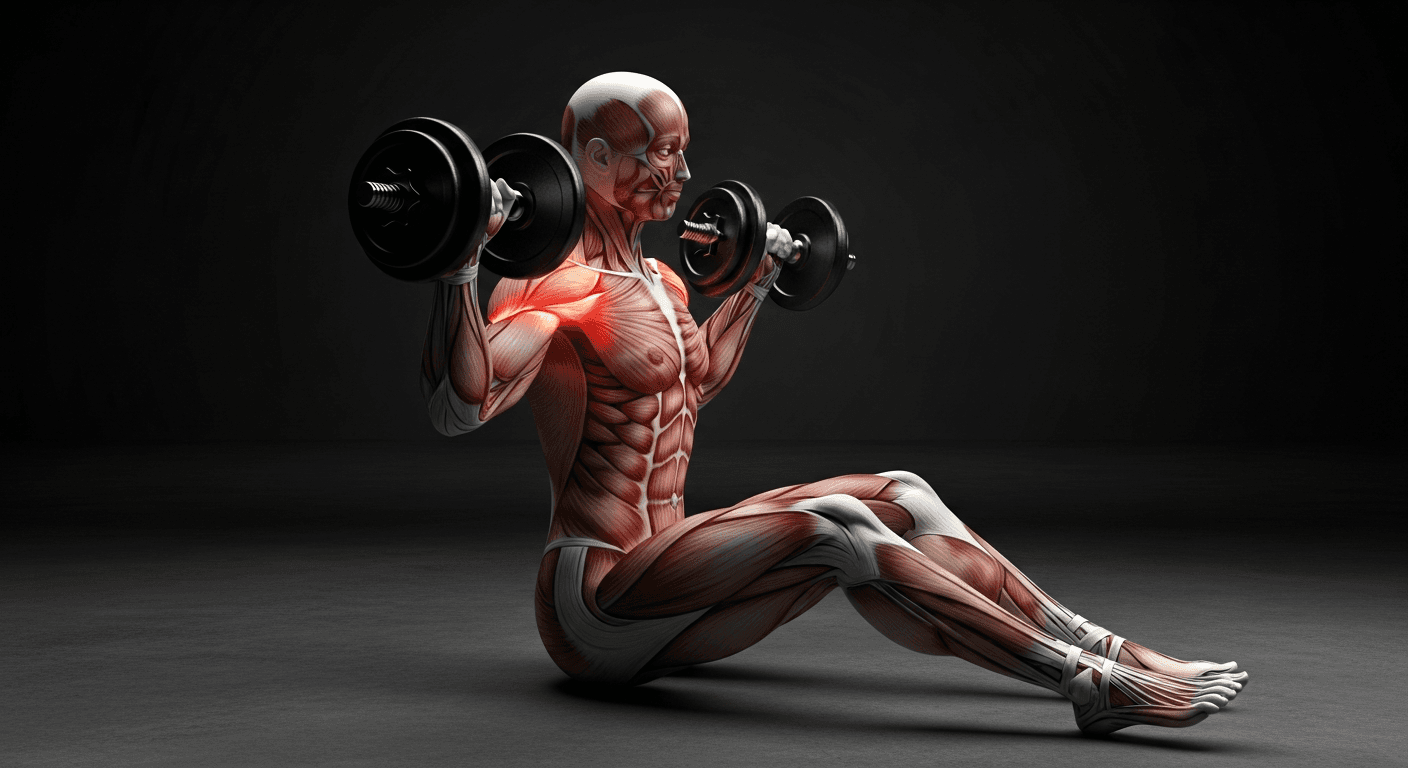
Photo by RepBro.
Direct answer: You can approximate lat pulldowns at home with heavy bands, inverted/bodyweight rows, dumbbell pullover variants, and single-arm dumbbell rows. Each preserves some mechanical features of the pulldown but trades off load curve, stabilization demands, or exact vertical pull mechanics—sufficient for most goals until your loading limits are reached.
What does a lat pulldown mechanically provide that I need to replicate?
A lat pulldown is a vertical, two-arm, often-pronate grip pull from an overhead anchor. Key features:
- Long axis vertical pull with high lat and teres major involvement.
- Stable seated position that isolates the lats with reduced lower-back demand.
- Smooth, adjustable loading with a consistent eccentric-resistance profile from a stack. When replacing it, ask whether the substitute preserves: pull direction, stability, bilateral loading, and the ability to progressively overload.
Which at-home substitutes mimic the lat pulldown and what do they preserve or lose?
Below are four practical substitutions using minimal equipment.
- Resistance-band lat pulldowns (long loop or anchored band)
- What it preserves: Vertical pull angle, bilateral pattern, and continuous tension through the range. Good for hypertrophy and technique work.
- What it loses: Exact linear resistance curve of a cable stack—bands increase resistance toward the top. Load increments are less precise; heavy bands may be necessary for strength work.
- When adequate: For most hypertrophy phases and technique practice; good when you can anchor high (door anchor, pull-up bar).
- Assisted or negative pull-ups with bands (if you have a bar)
- What it preserves: Overhead, vertical pull with authentic scapular and lat engagement. Eccentric control on negatives is valuable.
- What it loses: Seated isolation; you add greater demand on stabilization and forearms, which can limit lat loading for beginners.
- When adequate: When you can complete controlled reps or negatives and need to build pull-up strength.
- Inverted rows (bodyweight horizontal pull)
- What it preserves: Horizontal pulling pattern, scapular retraction, hitting mid-back and posterior deltoid more. Easy to vary difficulty by foot elevation.
- What it loses: Vertical pull vector and the emphasis on the lower lats. Different muscle emphasis may not fully substitute for pulldown-specific strength.
- When adequate: When you want a less demanding, equipment-minimal row that builds back thickness and rowing strength.
- Dumbbell rows (single-arm, two-arm chest-supported) and dumbbell pullovers
- What they preserve: High loading potential for unilateral strength (single-arm row) and some lat stretch/extension (dumbbell pullover). Chest-supported rows reduce lower-back involvement like a seated machine.
- What they lose: The true vertical bilateral pull, and pullover mechanics load the chest and serratus as well as the lats.
- When adequate: For hypertrophy and strength once you can progressively overload with dumbbells; chest-supported row is a closer isolation match for seated pulldown.
How do these alternatives compare side-by-side?
| Alternative | Preserves vertical pull? | Progressive overload ease | Stability isolation | Typical equipment |
|---|---|---|---|---|
| Band pulldown | Yes | Moderate (band sizes) | Moderate | Long/loop bands, anchor |
| Assisted/negatives | Yes | Moderate (assistance levels) | Low (core/back stabilize) | Pull-up bar, bands |
| Inverted rows | No (horizontal) | High (body angle adjustments) | Low-moderate | Bar or TRX/straps |
| Dumbbell rows/pullovers | Partially | High (weight increments) | High with chest support | Dumbbells, bench |
How should I program these alternatives to get results?
Follow standard resistance-training principles: progressive overload, sufficient weekly volume for the back (many guidelines recommend multiple sets across 2–3 sessions weekly for major muscle groups), and recovery. Start with 2–3 pulling exercises per session, 6–12+ weekly sets for the lats depending on experience and goals, and increase load or volume gradually. Track reps, sets, and perceived difficulty to drive progression.
When is the swap not adequate and a gym is preferable?
Consider returning to a gym when any of these apply:
- You cannot progressively overload because your bands or dumbbells are maxed out.
- You need precise incremental loading for strength phases (e.g., near-maximal pull strength).
- You require strict isolation with minimal stabilization demand for rehabilitation or a specific strength transfer.
- You need to train heavy bilateral eccentric loads safely.
What safety and technique notes should I follow?
Stop immediately on sharp joint pain or unusual catching sensations; pain that's not typical muscle fatigue needs assessment. Prioritize scapular depression and retraction before pulling to protect the shoulders; avoid excessive leaning or kipping unless intentionally training dynamic pull-ups. Consult a qualified coach or clinician for persistent pain or return-from-injury programming.
How should I progress each alternative specifically?
- Band pulldowns: increase band thickness, shorten slack (step wider), or increase reps/sets. Consider doubling bands for more load.
- Assisted/negatives: reduce assistance or lengthen the eccentric (3–5 seconds). Track reductions in assistance over time.
- Inverted rows: lower bar or elevate feet to increase difficulty; add weight (vest or plate) when bodyweight becomes easy.
- Dumbbell rows/chest-supported rows: increase load in small steps; add volume or slow eccentrics to increase time under tension.
Limitations — what apps and remote guides cannot do for you
No app or AI can reliably see and correct your form in real time; video review by a qualified coach is superior for technical fixes. An app can’t diagnose injuries or prescribe rehabilitation—only a licensed clinician should do that. Finally, the effectiveness of any plan depends on consistent training and recovery; tools help, but attendance and progressive overload produce results.
If you track sets and progressive overload digitally, a logging tool can help you notice trends and plateaus—RepBro is one example of a tracker that keeps volume organized.
Safety reminder: this article is educational, not diagnostic. Stop on sharp pain and consult a qualified professional for persistent issues or injury guidance. Consistency, measurable progression, and safe technique are the practical drivers of adaptation.
If your goal is to continue making strength or size gains and your home gear allows consistent overload and variety, these alternatives will serve well. When your equipment limits progression or you need precise loading/control, a gym with a cable machine and heavier plates may be the better environment.
Frequently asked questions
- Can I replace lat pulldowns with bands at home?
- Yes. Heavy resistance bands or long-loop bands replicate vertical pull direction and stretch under tension like a pulldown. They generally preserve range-of-motion and time under tension but offer less exact load increments and may change resistance curve compared with a weighted stack.
- How often should I train pulls if I use these at-home alternatives?
- Train horizontal and vertical pulls 2–3 times per week for strength and hypertrophy, spreading volume across sessions. Aim to accumulate weekly progressive overload rather than doing everything in one workout; consistent, measurable progression drives adaptation.
- When should I go to a gym instead of using home substitutes?
- Use home substitutions while you can progressively overload and hit weekly volume targets. Consider a gym if you need heavier, consistent loading for strength phases, controlled eccentric overload, or precise load increments that your home equipment can’t safely provide.