Lateral Raise: Proper Form, Step by Step
Definitive step-by-step guide to lateral raise proper form: setup, cues, breathing, tempo, common mistakes and fixes, plus short FAQ and safety notes.
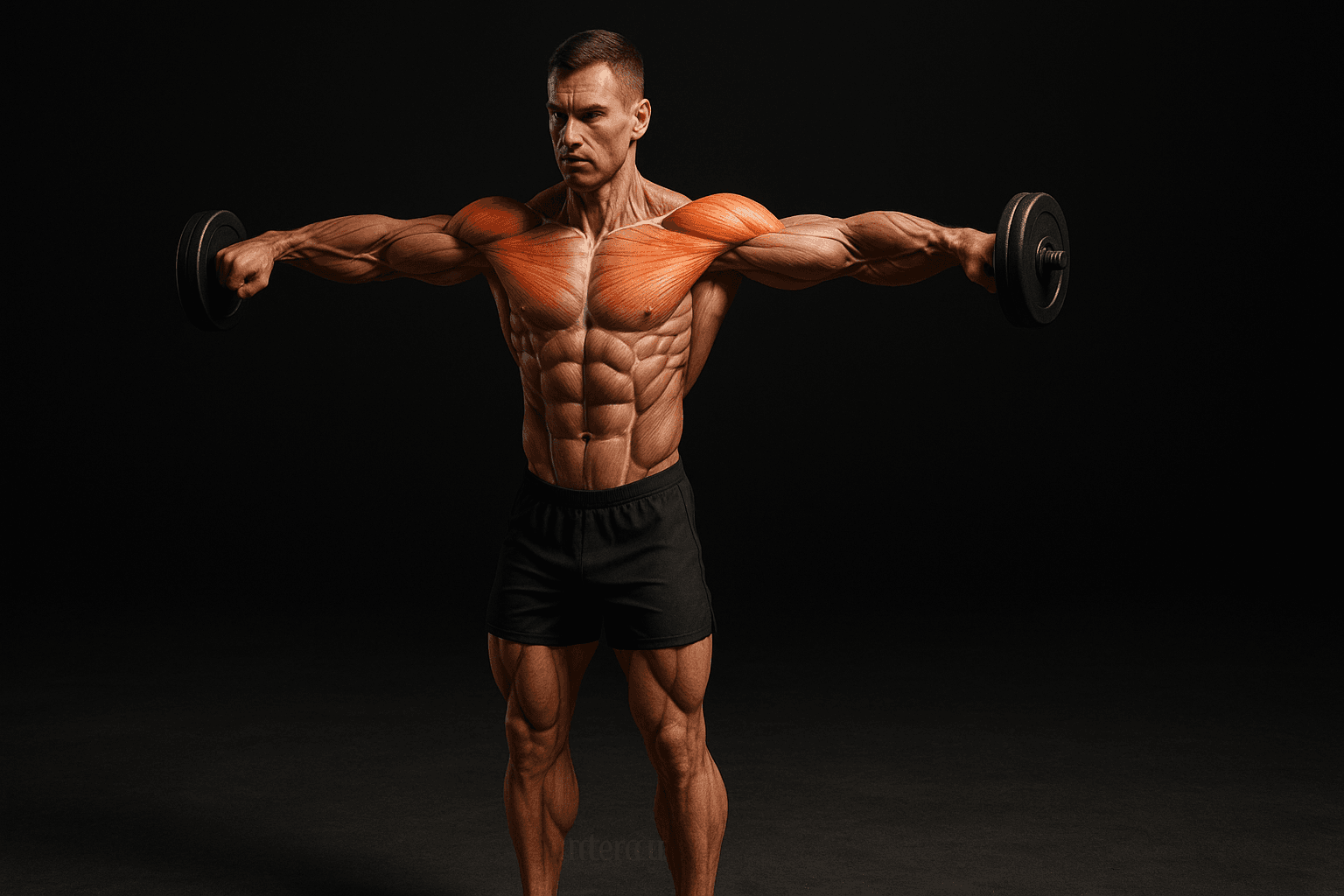
Photo by RepBro.
What is the proper form for a lateral raise?
Proper lateral raise form is: stand tall with a slight hip hinge, hold dumbbells at your sides, lead with your elbows (not your hands) to lift the arms out to shoulder height (about 90°) with a 10–20° bend in the elbows, pause briefly, then lower under control. Keep the scapula stable—no shrugging—and use a tempo like 2 seconds up, 0–1 second hold, 2 seconds down. This targets the lateral (middle) deltoid while minimizing trap and joint compensation.
How do I set up safely?
- Foot stance: feet hip-width apart; weight evenly distributed.
- Grip and dumbbells: neutral grip (palms facing your body) at the start. Choose a weight you can move with strict form for 8–15 reps—typically 2–12 kg (5–25 lb) per hand for many trainees.
- Body position: stand tall with a slight forward tilt at the hips (~5–10°) to keep the deltoids in a stronger line of pull. Keep a neutral spine and braced core.
- Elbow angle: a small bend (10–20°) in the elbow—imagine “hinging” at the elbow slightly so the hands don’t lead the movement.
- Scapula: think “long neck, shoulder blades down and back” to avoid shrugging early.
Step-by-step execution cues
- Starting position: Hold dumbbells at your sides, wrists neutral, chest up.
- Breath and brace: Take a normal breath in, brace your core. Exhale as you initiate the lift.
- Lead with the elbow: Initiate by moving the upper arm (humerus) upward; keep the elbow slightly higher than the wrist so the pinky is marginally higher than the thumb at the top.
- Lift path: Raise the arms out to the side until the upper arm is parallel to the floor (about 90°). Do not force the weights higher.
- Pause: Hold 0–1 second at the top—feel the lateral deltoid—but avoid shrugging.
- Lower under control: Inhale as you slowly lower the weights back to the starting position over ~2 seconds.
- Repeat: Maintain tempo and posture for the set.
Pro tip: pretend you’re pouring water out of a glass in each hand—this promotes the slight external rotation and keeps the deltoid engaged.
Breathing and tempo
- Breathing: Exhale during the concentric (lift) and inhale during the eccentric (lower). Keep breathing regular; do not hold your breath except in brief bracing if needed.
- Tempo: Use a 2/0/2 tempo as a default—2 seconds concentric (up), 0–1 second pause at the top, 2 seconds eccentric (down). For strength or tempo work, you can try 1/0/3 or slow eccentrics (3–4 seconds down) to increase time under tension.
Sets, reps and progression
- Typical ranges: 3–4 sets of 8–15 reps. For hypertrophy, keep reps in the 8–12 range; for higher endurance focus, 12–15 reps.
- Progression: Increase reps first, then add small weight increments (0.5–1 kg / 1–2 lb per dumbbell) only if you can keep perfect form. If you must swing or shrug, reduce weight.
- Variation: Single-arm lateral raises, leaning-away cable lateral raises, or inclining your torso slightly can help hit the deltoid from a different angle.
Common mistakes and how to fix them
-
Mistake: Using too much weight and swinging the torso.
- Fix: Reduce load by 20–50%. Use a slow tempo and keep the core braced. Perform single-arm sets to control momentum.
-
Mistake: Shrugging the shoulders; traps take over.
- Fix: Focus on depressing the scapula (pull the shoulders down) before each rep. Try a 1–2 second isometric pause with scapula down between reps.
-
Mistake: Lifting above shoulder height.
- Fix: Stop at parallel (90°). Going higher shifts work to the upper traps and increases impingement risk.
-
Mistake: Leading with the hands (wrists higher than elbows) or straightening the elbows.
- Fix: Keep a slight elbow bend and think about lifting the elbow first; imagine guiding with the elbow.
-
Mistake: Internal rotation—palms forward and shoulders rolling forward.
- Fix: Keep a neutral or slightly externally rotated wrist so the pinky is higher than the thumb at the top. Pinch the shoulder blades gently together but not overly retracted.
Drill: Perform lateral raises with a 1–2 kg (2–5 lb) lighter weight focusing on 3 sets of 12 slow reps and perfect form. Use this as a technique reset.
Variations and when to use them
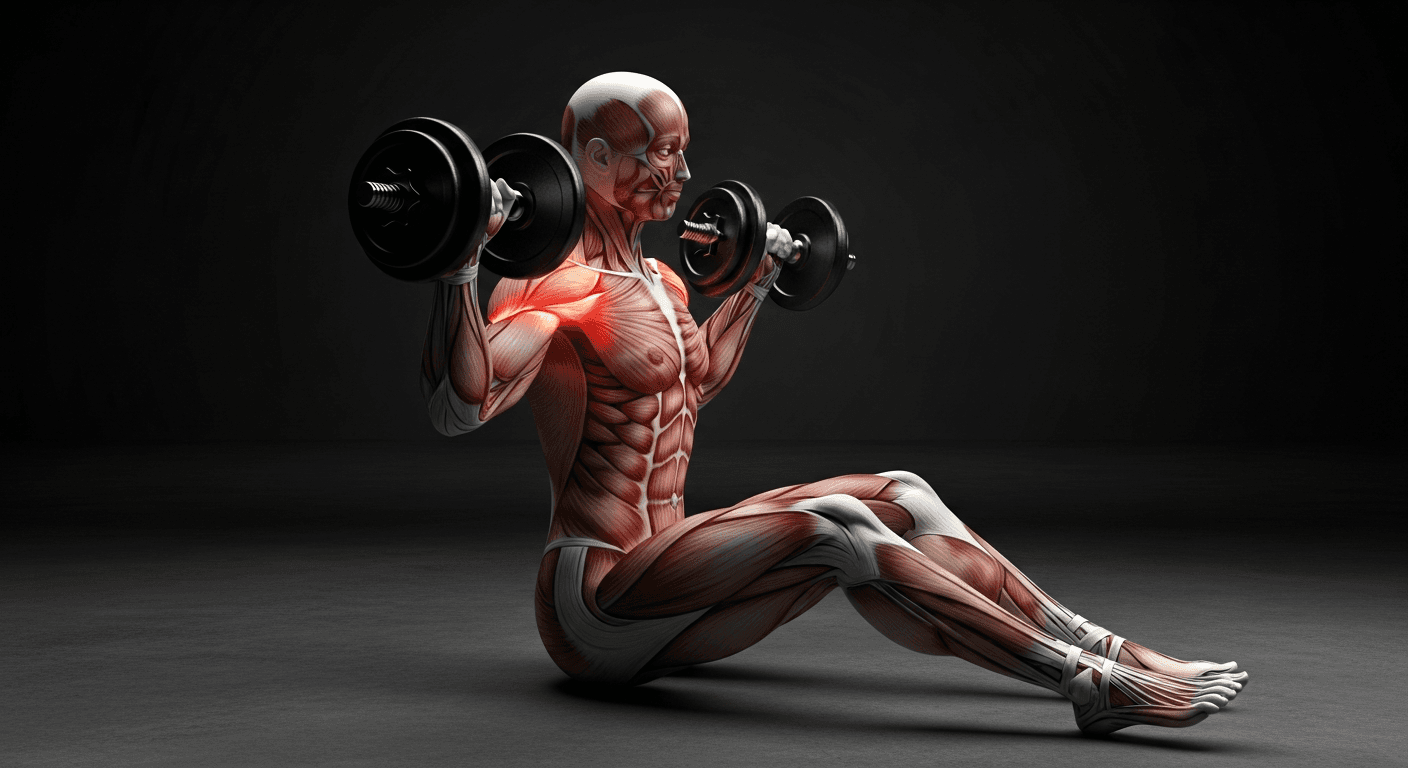
- Seated lateral raise: reduces torso swing; good for strict form.
- Cable or band lateral raise: keeps constant tension through the range.
- Incline bench lateral raise (lying on your side or at 30°): changes the line of pull to emphasize different deltoid fibers.
- Leaning-away single-arm lateral raise: increases range and constant tension on one side.
If you track workouts, tools like RepBro help log weights, tempo, and notes—useful when microscopically progressing lateral raises.
Safety note
Stop and seek professional advice if you feel sharp or unusual shoulder pain during or after the exercise. This guide is educational; it is not medical advice or a diagnosis. Consult a qualified clinician or coach for persistent pain or specific clinical concerns.
When to choose a different exercise?
If you have a history of rotator cuff issues or painful overhead movement, try cable or band lateral raises with limited range, or consult a professional for alternatives. For broader shoulder development, pair lateral raises with pressing movements and external rotation work; see comparisons with other shoulder isolation moves at https://www.repbro.app/vs.
One-sentence takeaway: Use a modest weight, lead with the elbows, stop at shoulder height, control the tempo, and stop if you feel sharp pain.
Frequently asked questions
- How high should I lift my arms in a lateral raise?
- Stop when your upper arms are roughly parallel to the floor (about 90° at the shoulder). Lifting higher increases trap involvement and risk of impingement.
- Should I bend my elbows during lateral raises?
- Yes—keep a small bend of about 10–20° at the elbow to shorten the lever and reduce torque on the shoulder while still targeting the lateral deltoid.
- How heavy should the dumbbells be?
- Pick a weight you can control for 8–15 reps with strict form—often 2–12 kg (5–25 lb) per hand depending on experience. Lower the weight if you must swing or shrug to lift it.