Lateral Raise Alternatives at Home (Minimal Equipment)
Five practical at-home substitutes for the lateral raise using bands, dumbbells, or bodyweight; what each preserves and loses versus the standard lateral raise, and when to use them.
Photo by RepBro.
Direct answer
If you don’t have gym cables or heavy dumbbells, use these five home substitutes: band lateral raise, single-arm leaning-away band raise, side-lying (floor) lateral raise, scaption (45° raise), and standing/band or dumbbell overhead press. Each preserves some middle-deltoid work but differs in torque curve, isolation, and overload options.
What home exercises actually mimic the lateral raise movement?
- Band standing lateral raise (two-arm or single-arm): mirrors the movement plane and isolates the middle deltoid. Bands increase tension toward the top of the lift, which changes the torque curve relative to free weights.
- Single-arm leaning-away band lateral: increases long-range tension and time-under-tension at the top, useful for progressive overload without heavy plates.
- Side-lying dumbbell (or water jug) lateral raise: reduces momentum and gravity assistance, improving isolation with very light loads.
- Scaption (raise in the scapular plane at ~30–45°): preserves deltoid loading while being friendlier to the shoulder joint for many lifters.
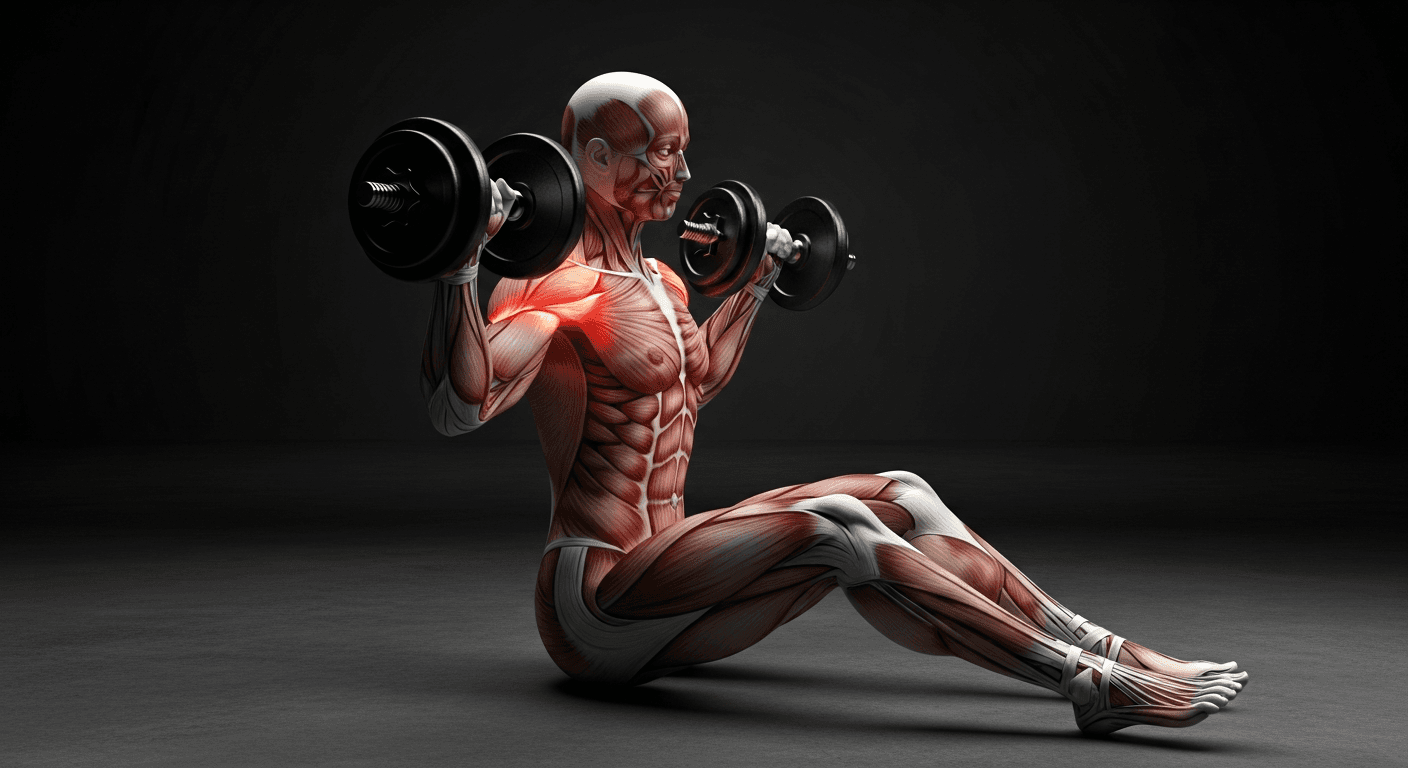
- Overhead press (standing, single or double arm): not a pure lateral raise but loads the deltoids concentrically and eccentrically with higher absolute load, helping size and strength when isolation isn’t possible.
How does each alternative preserve and lose the key features of a lateral raise?
| Exercise | Preserves | Loses | Typical equipment | When this swap is adequate |
|---|---|---|---|---|
| Standing band lateral raise | Movement plane and continuous tension on middle delts | Peak external torque profile; absolute heavy loading | Bands | Good for reps/technique and progressive overload with heavier bands |
| Single-arm leaning-away band | Increased top tension and range; unilateral control | Exact lateral plane purity; set-up varies | Band anchored under foot | Good when you lack heavy weights but want high TUT (time under tension) |
| Side-lying lateral raise | Isolation and reduced momentum; great for light work or prehab | Very limited absolute overload; ROM slightly altered | Dumbbell or household object | Adequate for volume work, control, and rehab-oriented sessions |
| Scaption (30–45°) | Deltoid engagement with safer shoulder mechanics | Slightly less pure middle-deltoid isolation | Dumbbell or band | Adequate when shoulders are sensitive to pure lateral raises |
| Overhead press | High absolute load and compound stimulus; builds overall shoulder mass | Less isolation of middle delts; more anterior delt/triceps involvement | Dumbbells/bands | Use when you can’t isolate but still want hypertrophy/strength gains |
How should I program these alternatives for size and strength?
- Frequency: work lateral deltoids 2–3 times per week for most trainees. Separate total weekly volume across sessions rather than cramming it into one workout.
- Sets and reps: aim for 2–4 sets per exercise, using a rep range that fits your goal and available load. For hypertrophy, use moderate reps (roughly 6–20 reps) per set with controlled tempo and full range of motion. For pure strength, prioritize heavier compound presses with lower reps.
- Progression: increase repetitions, reduce rest, use slightly heavier bands or heavier household loads, or add sets. For bands, move to thicker bands or double them to increase resistance.
- Exercise order: do isolation raises after heavy presses, or use a dedicated deltoid session where raises are fresh if you want more strict practice and time under tension.
These guidelines reflect standard consensus on frequency and hypertrophy programming rather than a single study; adjust for recovery and total shoulder stress.
When is a home alternative not enough and a gym is justified?
- You need precise, incremental loading (microplates, small plate jumps) to keep progressing after band strength limits are reached.
- You’re specializing in shoulder development and require a lot of weekly isolation volume that benefits from machines or cable cross arms for consistent torque through the full range.
- You want to use barbells or very heavy dumbbells for compound pressing that overloads the shoulder complex beyond what bands or household items can safely provide.
If these apply, return to a gym where you have access to heavier dumbbells, cable columns, and machines.
What are simple, specific cues to keep form close to a true lateral raise?
- Slight elbow bend (minimal change) and lead with the elbow, not the wrist. Keep palm facing the floor or slightly rotated.
- Keep torso vertical and avoid shrugging; the top of the raise is at shoulder height or slightly below.
- Use slow eccentrics (2–3 seconds down) and controlled concentric motion to avoid momentum.
What safety precautions should I follow?
Stop any exercise that causes sharp, catching, or radiating pain. Shoulder pain with overhead or lateral movement warrants evaluation by a qualified clinician. Warm up the shoulder girdle (light band pull-aparts, arm circles) before heavier work and avoid heavy loading through painful positions. This is general guidance and not medical advice.
What limitations should I be aware of for apps and AI coaching?
- No app or AI can visually correct your technique in real time or feel subtle compensations the way an informed coach can. Video review with a coach is more reliable for form fixes.
- Injuries, persistent pain, or rehabilitation require a qualified healthcare professional; apps and models cannot diagnose or prescribe medical rehab.
- A training plan is only effective if you consistently follow it; adherence and progressive overload matter more than tool choice.
Final practical notes: pick 1–2 of the alternatives above and rotate them into your program rather than swapping randomly. Bands are the most cost-effective and portable option; side-lying raises and scaption are useful for control and shoulder health, and overhead presses provide heavier progressive loading when isolation isn’t the priority.
Safety reminder: I cannot diagnose injuries. Stop on sharp pain and consult a qualified professional if you’re unsure about symptoms or exercise suitability.
Frequently asked questions
- Can resistance bands replace dumbbells for lateral raises?
- Yes. Bands reproduce the lateral raise pattern and provide continuous tension, making them a practical substitute for home training. They change the resistance curve (more tension at the top) and limit absolute loading, so they’re suitable for hypertrophy early on but may need heavier bands or other progressions for long-term strength goals.
- How often should I train the lateral deltoid at home?
- Train the lateral deltoid 2–3 times per week using 2–4 sets per exercise on each session, aiming for moderate loads that allow 6–20 reps per set. This aligns with general hypertrophy guidance; adjust volume up or down depending on total weekly shoulder work and recovery.
- When should I return to a gym for lateral raise work?
- Return to a gym when you need heavier, precisely incremented loading, cable machines for consistent torque, or access to machines that reduce cheating. Also consider a gym if you’re stalling on size/strength and home progressions (heavier bands, more reps) no longer produce improvement.