Leg Extension: Muscles Worked and Best Alternatives
Clear answer: leg extensions primarily train the quadriceps (vastus lateralis, medialis, intermedius, rectus femoris). Where it fits, programming tips, and 4 practical alternatives.
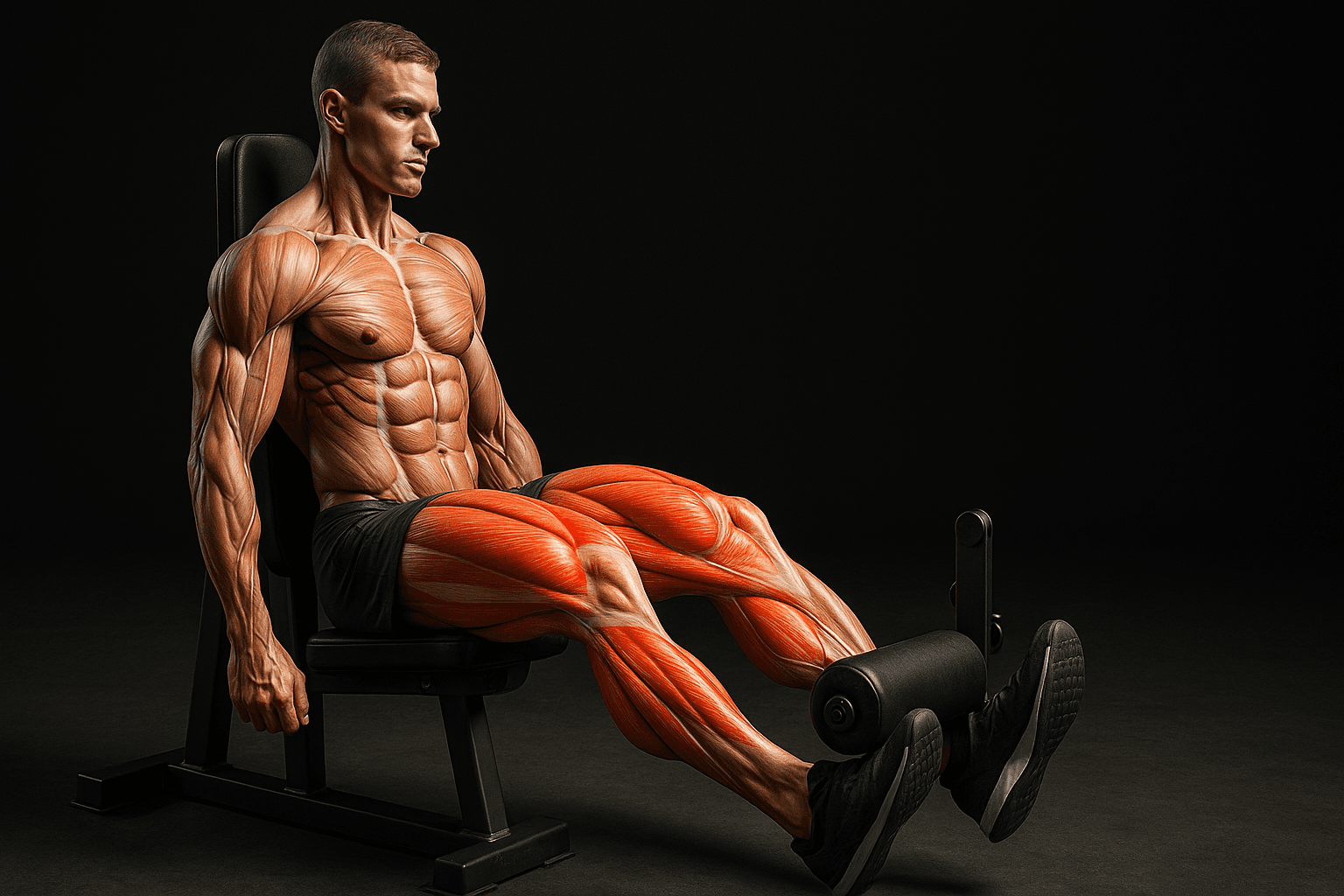
Photo by RepBro.
The leg extension primarily trains the quadriceps: vastus lateralis, vastus medialis, vastus intermedius, and rectus femoris. It’s an open-chain knee-extension exercise that isolates the knee extensors; secondary involvement is minimal (some hip flexor and core stabilization), and it does not significantly train the hamstrings or glutes.
Which muscles does the leg extension train, exactly?
Primary: the four quadriceps heads — vastus lateralis (outer quad), vastus medialis (inner/tear-drop region), vastus intermedius (deep), and rectus femoris (also a hip flexor).
Secondary: small stabilizers in the hips and trunk countering the seat position, plus the iliopsoas/rectus femoris contribution when the hip is flexed. The posterior chain (hamstrings, glutes) is not meaningfully loaded by this movement.
Practical takeaway: if your goal is direct, high-isolation stimulus to the quads — especially to emphasize the vastus medialis or finish a leg workout — the leg extension is efficient.
Where does the leg extension fit in a training program?
- Order: Use leg extensions as an accessory or finisher, after compound lifts (squats, front squats, deadlifts) or on a dedicated leg day where the goal is quad hypertrophy. Do not use it as your primary heavy compound.
- Frequency: 1–2 times per week for most lifters; 2–3 for focused hypertrophy blocks if recovery allows.
- Sets and reps: For strength carryover to knee extension specifically, 3–6 RM sets are possible but uncommon. For hypertrophy, 6–12 reps for 3–5 sets works well. For muscular endurance or metabolic work, 12–20+ reps.
- Load progression: Prioritize progressive overload (more weight, more reps, or better tempo). Because the leg extension isolates the knee, small weight increases still yield added tension.
If you use an app to manage exercise selection and progression, check RepBro for logging and plan tweaks.
What are the best alternatives and when to pick each?
Pick an alternative based on equipment, injury history, balance ability, and training goal.
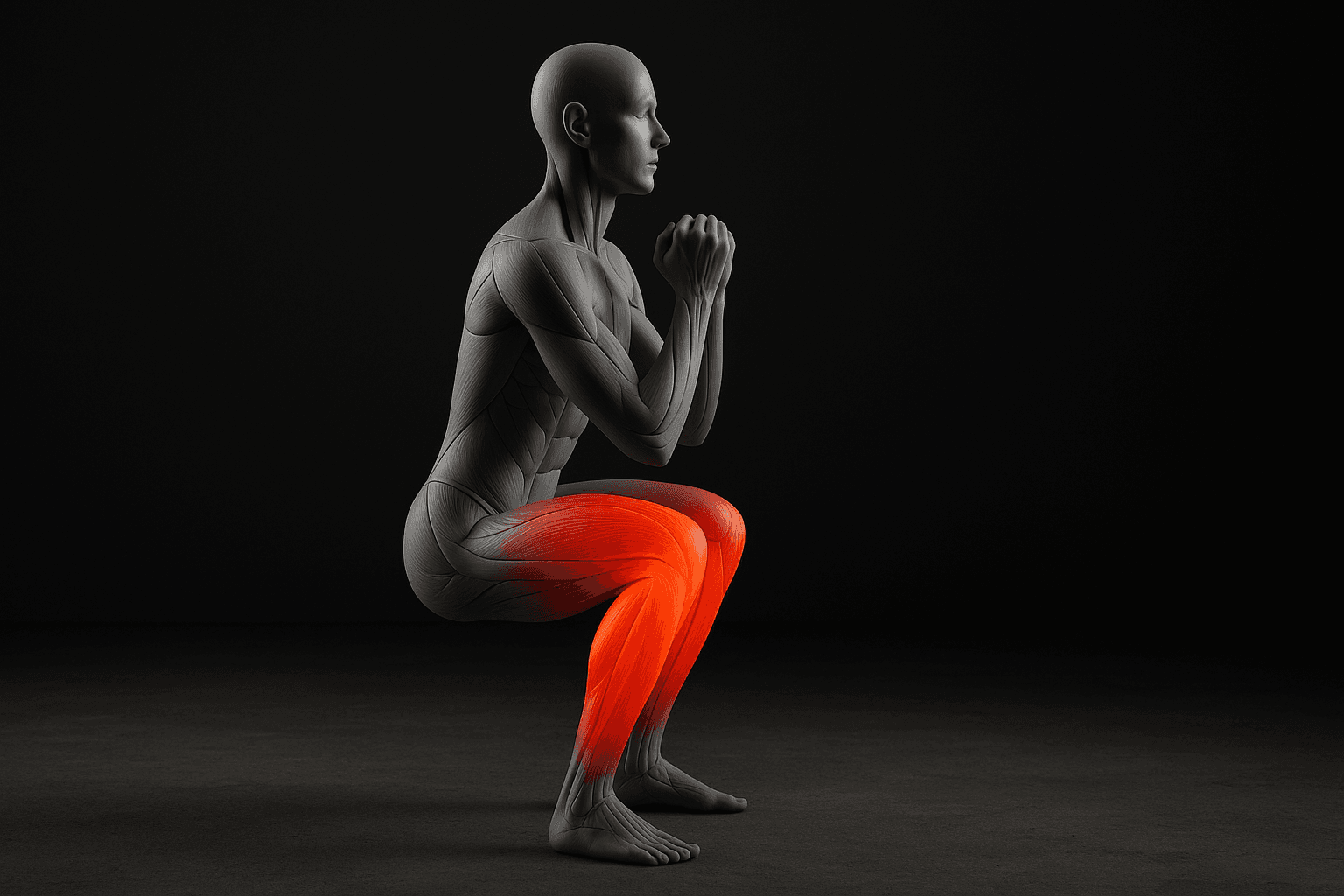
- Squats (barbell back squat or goblet squat)
- When to pick: You want a compound movement that loads quads plus glutes and hamstrings, increases overall strength, and transfers to real-world tasks.
- Equipment: Barbell + squat rack, or just a dumbbell/kettlebell for goblet variation.
- Pros: Better total-body stimulus and systemic hormonal response; high loading options.
- Cons: Less pure quad isolation; requires more technique and thoracic/hip mobility.
- Programming: 3–6 reps for strength, 6–12 for hypertrophy, 2–3 times/week depending on volume.
- Bulgarian split squat (rear-foot elevated split squat)
- When to pick: You need single-leg emphasis to correct left-right imbalances, reduce spine loading, or train quads and balance simultaneously.
- Equipment: Bench or box and a dumbbell or barbell.
- Pros: Strong quad stimulus when torso is more upright; unilateral carryover; minimal equipment.
- Cons: Higher coordination demand; may irritate knees if performed aggressively; reduce range if painful.
- Programming: 6–10 reps per leg for hypertrophy, 3–5 sets.
- Leg press (horizontal or 45-degree)
- When to pick: You want heavy quad loading without as much balance or spinal compression as barbell squats (useful for heavy sets near failure).
- Equipment: Leg press machine.
- Pros: High load capacity, controlled plane of motion, good for overloaded quad hypertrophy.
- Cons: Still a compound movement—glutes and hamstrings can contribute depending on foot placement; can encourage a posterior pelvic tilt at full hip flexion.
- Programming: 8–15 reps for hypertrophy, 3–6 sets.
- Sissy squats or weighted step-ups (depending on equipment)
- Sissy squat: If you want high quad isolation without a machine and you have the mobility and confidence to perform it. It places large torque on the knee — use bodyweight first and stop on sharp pain.
- Step-ups: If you want a lower-skill, single-leg option that’s gentler on the spine and easy to load progressively with a dumbbell or barbell.
- When to pick: Sissy squat = very quad-dominant isolation with minimal equipment. Step-up = functional single-leg work with adjustable intensity.
- Cable or band knee extensions (single-leg)
- When to pick: No leg extension machine available, but you have a low cable pulley or bands. Offers a similar knee-extension pattern and good control of resistance curve.
If you want a quick comparison between machine-based and free-weight choices, see the versus tool at https://www.repbro.app/vs.
How to choose based on common constraints
- No machine/gym: Goblet squats, Bulgarian split squats, step-ups.
- Need unilateral work: Bulgarian split squats or step-ups.
- Want heavy, safe loading without balance demands: Leg press.
- Want isolation similar to leg extension but no machine: single-leg cable extensions or banded knee extensions.
Safety and form notes
- Leg extension form: adjust the pad so it sits on the lower shin just above the ankle; align the machine axis with the knee joint; avoid locking the knee out violently at the top to reduce joint impulse.
- Stop and reassess if you feel sharp or joint pain. If persistent discomfort occurs, consult a qualified healthcare or movement professional — do not self-diagnose.
- For alternatives: keep a neutral spine on squats and split squats, control descent, and ensure step height for step-ups is about knee-to-hip level (adjust to tolerance).
Programming example
- Hypertrophy quad focus day: Compound first (back squat 3×6–8), unilateral (Bulgarian split 3×8 per leg), leg extension as finisher (3×12–15). Rest 60–120s between sets depending on intensity.
Final takeaway: Leg extensions are the simplest way to isolate the quadriceps, but effective alternatives (squats, Bulgarian split squats, leg press, sissy squats/step-ups, cable extensions) let you tailor training to equipment, balance, and recovery constraints—stop on sharp pain and consult a professional if problems persist.
Frequently asked questions
- Which muscles does the leg extension target?
- The leg extension primarily targets the quadriceps: vastus lateralis, vastus medialis, vastus intermedius, and rectus femoris. It secondarily requires minimal stabilization from the hip flexors and core but does not significantly train the hamstrings or glutes.
- How often should I include leg extensions in my program?
- For most trainees: 1–3 sets as an accessory 1–2 times per week for strength or hypertrophy, or 3–5 sets if the machine is a main quad-builder. Pair with heavy compound work earlier in the session.
- Are there good substitutes for leg extensions if I lack a machine?
- Yes. Effective alternatives include goblet or barbell squats, Bulgarian split squats, leg press, and sissy squats/step-ups. Pick based on equipment, balance needs, and whether you need single-leg work or heavier loading.