Leg Press: Proper Form, Step by Step
Leg press proper form: step-by-step setup, execution cues, breathing and tempo. Common mistakes, fixes, safety guidance and a short FAQ for gym lifters.
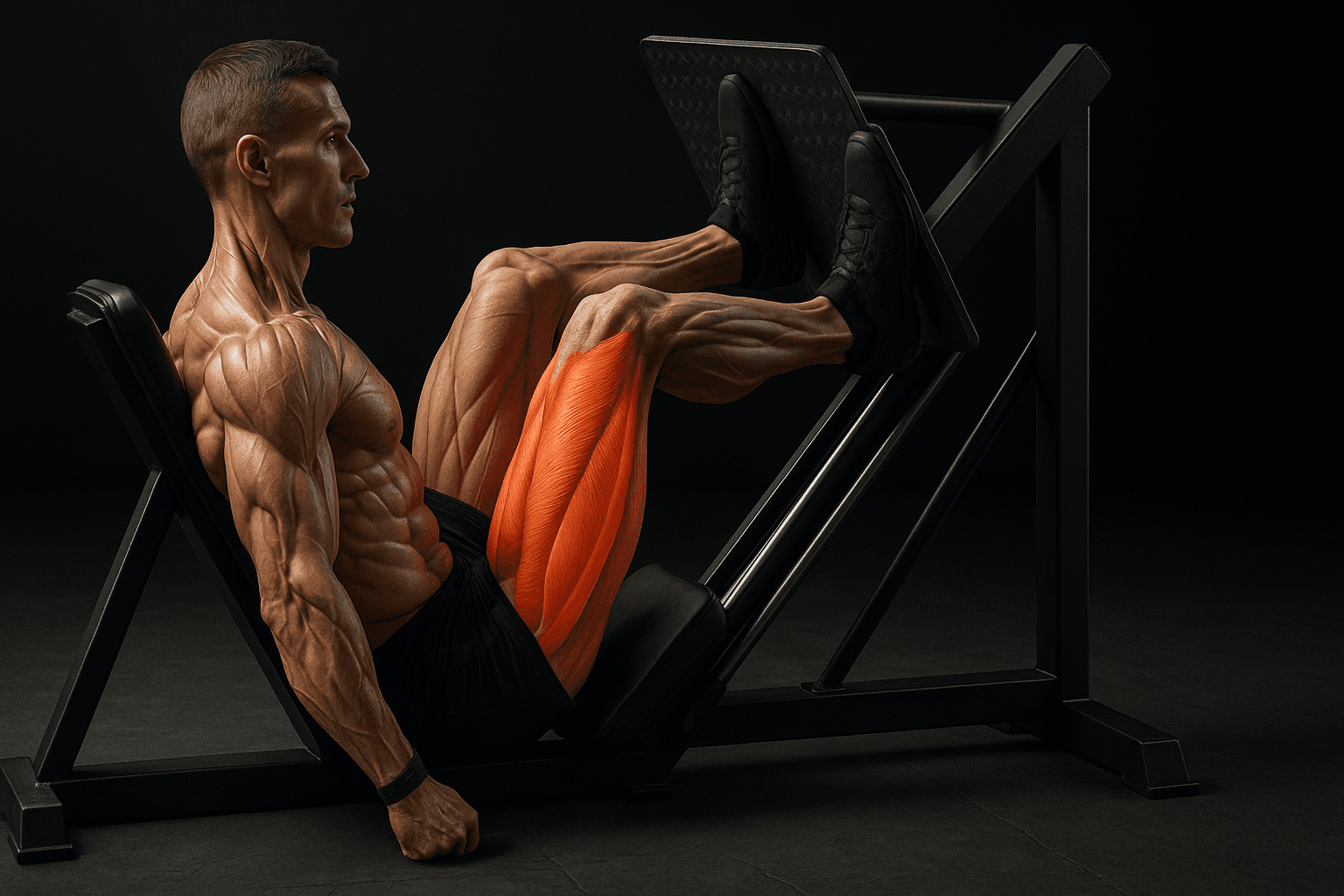
Photo by RepBro.
Leg press proper form means a stable setup, feet placed to target desired muscles, controlled descent with the back pressed into the pad, and a safe, forceful drive without locking the knees — follow the step-by-step cues below for a reliable, repeatable movement.
How do I set up the leg press properly?
- Rack and seat: Sit and set the back pad so your hips and lower back stay flush against it through the movement. Your hips should not lift during the descent.
- Foot placement: Start with feet shoulder-width apart (about 40–50 cm / 16–20 in) centered on the platform. Move feet higher to bias glutes/hamstrings or lower to bias quads. Adjust trip increments of ~5–10 cm (2–4 in) depending on limb length.
- Knee alignment: Point toes forward or slightly outward (10–15°) so knees track over toes. Your knees should track the second or third toe during the entire motion.
- Bar/lever safety: Engage the machine’s safety catches before loading. Practice one empty-set rep to ensure travel fits in the safety range.
- Unrack: Grip the side handles (or the machine’s grab handles), unlock the sled as designed, and control the initial movement a few centimeters before your first rep.
What are the execution cues for each rep?
- Start position: Legs almost extended but not locked — keep a 5–10° knee bend (soft lockout). Feet fully in contact with the platform, heels pressing down.
- Brace: Take a moderately deep breath into your belly and brace your core. For very heavy working sets, trained lifters may use a brief Valsalva-style brace; consult a professional if unsure.
- Descent (eccentric): Lower the platform in a controlled manner for 2–3 seconds. Keep your lower back pressed into the pad and stop when knees reach about 90°–100° of flexion or earlier if your hips start to come up.
- Drive (concentric): Exhale and drive through the heels/midfoot, extending the knees in about 0.5–1 second. Do not hyperextend or violently lock the knees—end each rep with a short, controlled lockout.
- Reset: Briefly re-brace at the top (0–1s), then begin the next rep. Keep breathing consistent: inhale on the descent, exhale on the drive.
What breathing and tempo should I use?
- Breathing: Inhale during the eccentric (lowering) phase; exhale during the concentric (pushing) phase. For heavy singles, a short, controlled breath-hold with proper bracing is common, but it increases blood pressure — consult a professional if you have cardiovascular concerns.
- Tempo guidance: Use 2-0-1 (eccentric 2s, no pause, concentric 1s) for strength and 3-1-1 for hypertrophy. Keep load light enough to maintain the prescribed tempo for all reps.
What are the common mistakes and how do I fix them?
-
Mistake: Hips/low back lifting off the pad on descent.
- Fix: Raise the seat or reduce range so hips stay glued to the pad; reduce load; focus on eccentric control and breathing to maintain intra-abdominal pressure.
-
Mistake: Knees collapsing inward (valgus).
- Fix: Widen foot placement slightly, cue knees to track the toes, strengthen hip abductors with accessory work, and reduce load until the pattern is corrected.
-
Mistake: Heels coming off the platform.
- Fix: Move feet slightly lower and keep midfoot pressure; perform mobility drills for ankle dorsiflexion and ensure you’re not trying to use excessive hip drive.
-
Mistake: Full aggressive locking of knees at the top.
- Fix: Finish with a soft lockout (5–10° bend) to protect joint and maintain tension on the muscles.
-
Mistake: Feet too high or too low for the goal.
- Fix: Use shoulder-width for general purpose. Move feet 5–10 cm higher for more posterior chain focus, or lower for more quad focus; test with light sets and note where you feel the work.
When should I use heavier vs lighter loads?
- Use heavier loads with low reps (3–6) and a 2-0-1 tempo for strength if your technique is solid and you can brace safely.
- Use moderate loads with 6–15 reps and a 3-1-1 tempo for hypertrophy. Always pick a weight that allows you to finish the set with the same technique you started with.
Is the leg press safer than squats?
The leg press reduces some balance and spinal compression demands versus a barbell squat, but it introduces its own risks (hip rounding, poor knee tracking). Use the leg press as a complement to free-weight work, not a blanket replacement. For a side-by-side look at different exercises and when to use them, see our comparison content at https://www.repbro.app/vs. Also track sets and technique reliably with tools like RepBro.
Safety note
Stop immediately on sharp or unusual pain. This guide is for technique only and does not diagnose injuries. If you experience persistent pain, consult a qualified healthcare or exercise professional before continuing.
One-sentence takeaway: Keep a stable setup, control the descent to about 90°–100° of knee flexion while keeping the lower back on the pad, and drive without locking the knees to safely and effectively perform the leg press.
Frequently asked questions
- Should my knees go past my toes on the leg press?
- A small forward movement of the knees can be normal when using a full range, but avoid exaggerated forward travel that lifts your hips or stresses your lower back; prioritize maintaining full foot contact and a neutral spine. If you feel sharp knee pain, stop and consult a professional.
- How deep should I descend on the leg press?
- Descend until your knees are about 90° to 100° of flexion or until your lower back remains flat against the pad—whichever comes first. For most people that avoids excessive lumbar rounding or hip loss of contact.
- What tempo is best for strength or hypertrophy on the leg press?
- For strength use a controlled 2-0-1 tempo (2s eccentric, no pause, 1s concentric). For hypertrophy use 3-1-1 (3s eccentric, 1s pause, 1s concentric). Adjust load so form stays clean for the chosen tempo.