Machine Chest Press Alternatives at Home (Minimal Equipment)
Four practical at-home substitutes for the machine chest press using bodyweight, dumbbells, or bands, with what each preserves and loses and when to use a gym machine.
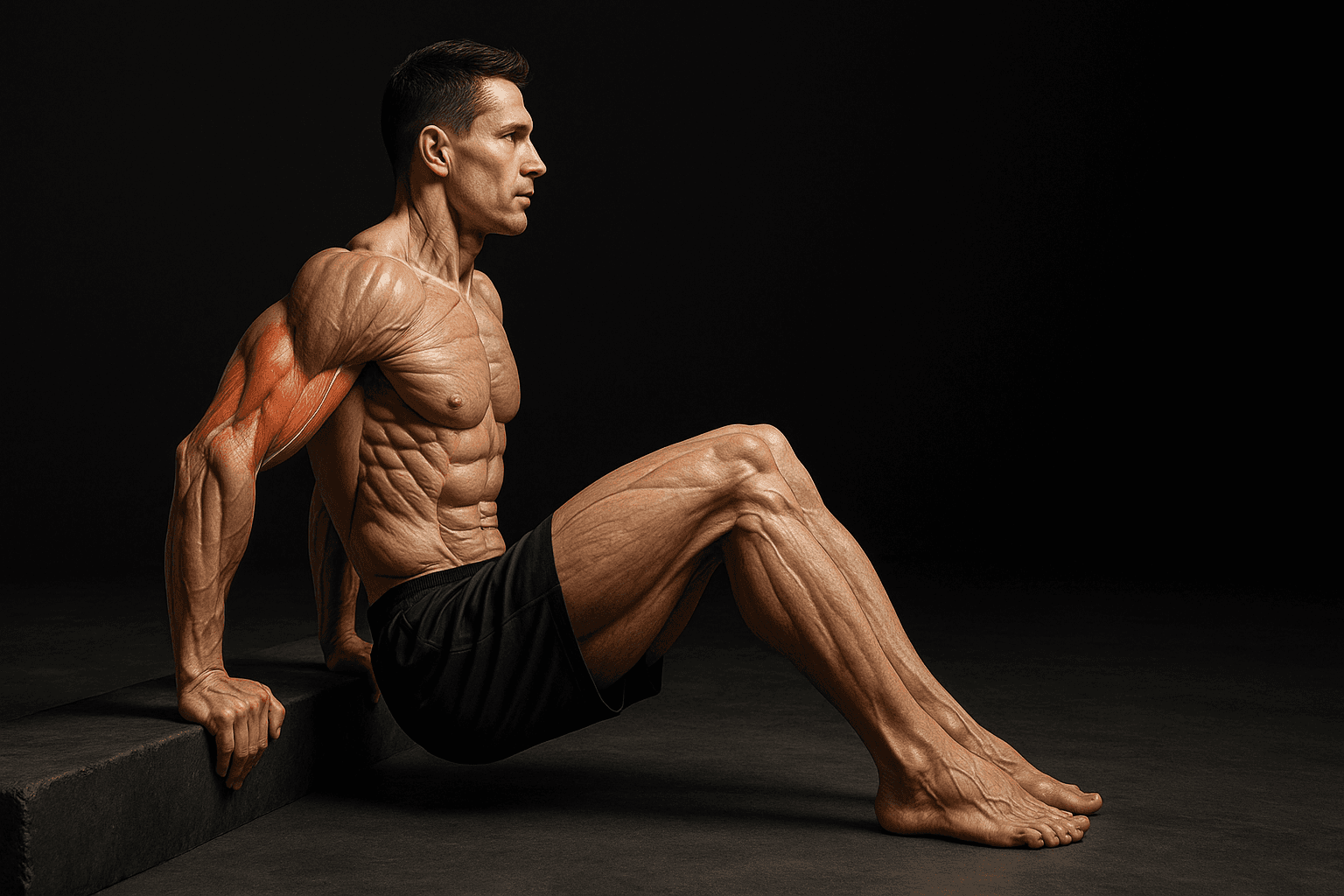
Photo by RepBro.
Direct answer (short):
Push-ups and dumbbell presses are the most practical machine-chest-press alternatives at home. They preserve the horizontal pressing pattern and can deliver hypertrophy and strength when you progressively increase difficulty or load; bands help when heavy dumbbells aren’t available.
What home exercises actually mimic the machine chest press?
- Push-up (and progressions): bodyweight, full-body tension, easy to scale by elevation or added load.
- Dumbbell floor press: preserves horizontal pressing pattern and allows heavier load than many bodyweight options.
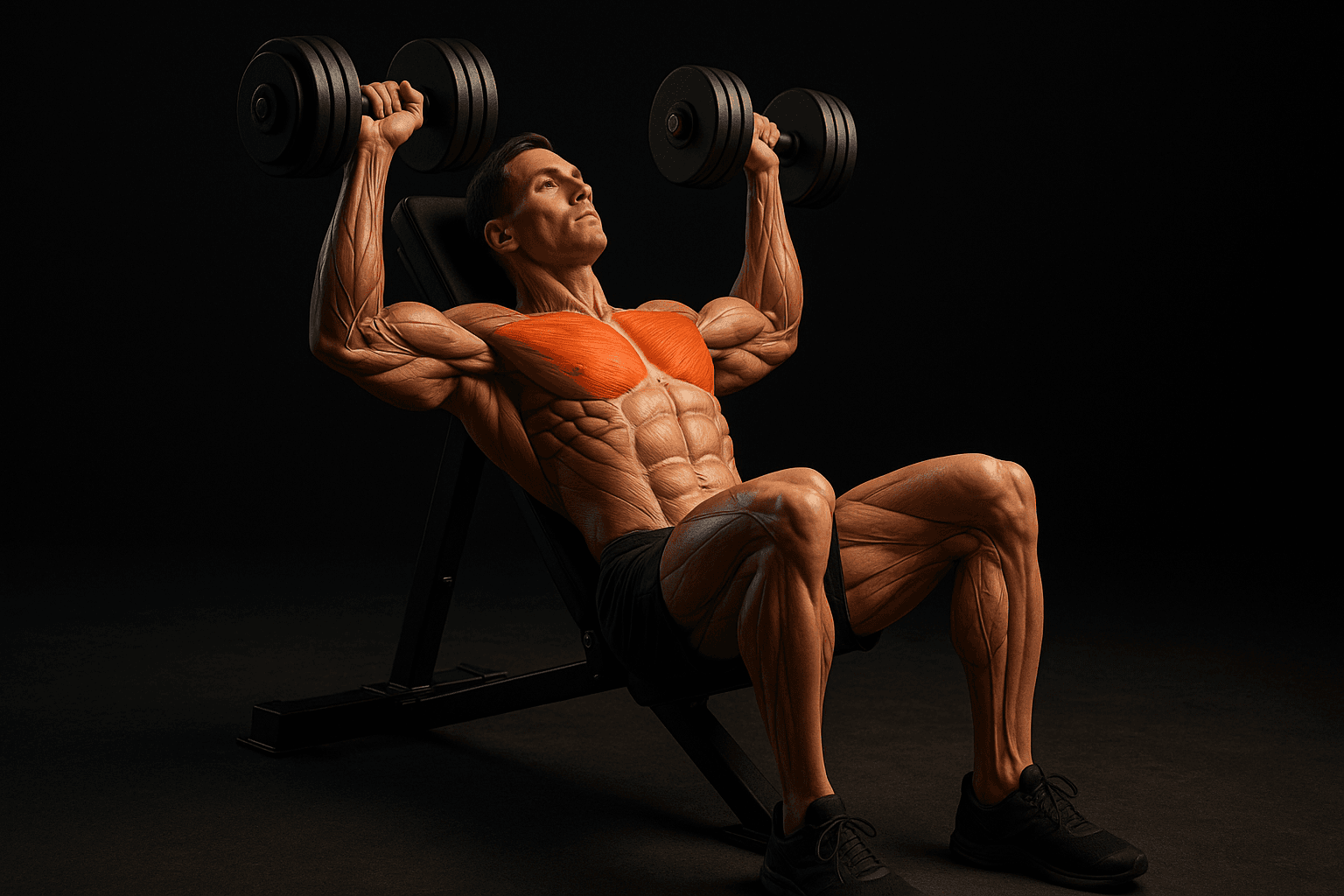
- Dumbbell bench press (or on a stability ball/chair): approximates machine ROM with free-weight stabilizer demand.
- Resistance-band standing chest press: portable and repeatable; keeps the horizontal push pattern with accommodating resistance.
- Single-arm dumbbell press or unilateral band press: trains imbalance, core stability and gives more loading options.
Each keeps the basic horizontal push movement, which is the essential training stimulus of a machine chest press.
What does each substitute preserve versus lose compared to the machine?
-
Push-ups
- Preserves: anti-flexion core demand, scapular control, horizontal press pattern, range of motion (can be adjusted).
- Loses: very heavy absolute loading and precise progressive microloading (unless you add weight).
-
Dumbbell floor press
- Preserves: heavy bilateral load capacity, similar pressing mechanics, lower shoulder ROM (safer for some shoulders).
- Loses: full stretch at the bottom (floor stops descent), greater stabilizer demand than a guided machine.
-
Dumbbell bench press (or stability-ball variation)
- Preserves: full ROM and load; closely matches barbell/machine pressing mechanics.
- Loses: machines’ fixed path and immediate safety when failing (spotter or racks needed for heavy loads).
-
Resistance-band chest press
- Preserves: horizontal push pattern, accommodating resistance that increases through the concentric range.
- Loses: consistent maximal resistance through the whole range; bands change leverage and force curve differently from machines.
-
Single-arm presses
- Preserves: pressing stimulus and can equalize strength differences; higher core demand.
- Loses: total bilateral load at once and often absolute weight potential.
How do these alternatives compare in a quick table?
| Exercise | Loadability (how heavy) | Stability demand | Range of motion | Easy to progress at home |
|---|---|---|---|---|
| Push-up (weighted/progressions) | Medium | Moderate–High | Full (variable) | High (bodyweight variations, weight vest) |
| Dumbbell floor press | High (if dumbbells available) | Medium | Reduced bottom ROM | Medium (need heavier dumbbells) |
| Dumbbell bench press | High | High | Full | Medium (heavier dumbbells or barbell needed) |
| Band chest press | Low–Medium | Low–Medium | Variable | High (bands are easy to add) |
| Single-arm dumbbell press | Low–Medium | High | Full | Medium (progress with weight or reps) |
When is a home swap adequate and when should I return to a gym machine?
Adequate at home when:
- Your goal is general hypertrophy and aesthetics; progressing load, reps, or volume is possible with dumbbells, bands, or weighted push-ups.
- You’re early- or intermediate-level and a wide range of adaptation remains.
- You need training continuity (travel, limited time) and can still apply progressive overload.
Consider the gym when:
- You need very high absolute loads to keep progressing and you’ve outgrown available home weights.
- You require precise linear progression or very small incremental loading (especially for advanced strength phases).
- You’re training maximal singles or heavy triples and need safety, spotters, or machine-guided movement for heavy sets.
How should I program these at-home alternatives for chest growth?
- Frequency: 2 sessions per week for chest is a reasonable starting point; adjust to 3 if you tolerate more volume.
- Volume: aim to accumulate enough hard sets each week for your chest (programmed across sessions). Current sports-science consensus emphasizes total weekly volume and progressive overload more than the exact exercise.
- Progression: increase reps, sets, time under tension, range of motion, or resistance (bands/weights) systematically. Use planned deloads every few weeks to recover.
For hypertrophy, common rep ranges used in practice are roughly 6–20 reps per set; choose weight/variation so the last reps are challenging while keeping form.
What about technique and safety?
- Maintain scapular control: retract slightly and avoid letting shoulders round forward during presses.
- Keep elbows in a range that feels safe for your shoulders (often 30–45° from the torso for presses); adjust as needed.
- For push-ups, keep a straight line from head to heels and brace the core.
Safety note: stop if you feel sharp joint pain. If you have ongoing shoulder pain or a recent injury, consult a qualified health professional before loading the area. No app or article can diagnose or treat injuries.
What limitations should I expect from apps or remote guidance?
- An app or AI cannot reliably see or correct your form in real time; video coaching or an in-person professional is needed for nuanced technique fixes.
- Apps can’t diagnose injuries or prescribe medical rehab—only a clinician can do that safely.
- Program effectiveness depends on consistency: a good plan won’t work if you skip sessions or ignore recovery.
If you want automated set tracking and simple progression prompts while training at home, consider using a workout app like RepBro to log sessions and progressive overload.
Bottom line: can you replace a machine chest press at home?
Yes. Push-ups, dumbbell presses, and resistance-band presses preserve the key horizontal pressing stimulus. For most trainees pursuing size and general strength, they are adequate if you apply progressive overload and manage weekly volume. Return to a gym machine when you need higher absolute loads, very precise incremental loading, or machine-guided safety for maximal lifts.
Limitations (recap): apps can’t watch your form or treat injuries; consult a qualified professional for pain, rehab, or complex programming. Consistency and progressive overload remain the deciding factors for gains.
Frequently asked questions
- What is the best machine chest press alternative at home?
- A direct answer: push-ups and dumbbell presses are the closest at-home substitutes. Push-ups preserve full-body tension and are convenient; dumbbell floor or bench presses preserve loading and concentric strength. Choice depends on available load and your goals (strength vs. hypertrophy).
- Can I build chest size without a machine chest press?
- Yes. Progressive overload, sufficient weekly volume, and exercise variety are the main drivers of hypertrophy. Bodyweight, dumbbell, and band exercises can all produce growth when load or difficulty is increased across sessions and you train the chest about twice weekly.
- How often should I train chest at home if I don't have a machine?
- Train chest 2–3 times per week, spreading volume across sessions. Prioritize progressive overload (more reps, sets, or resistance) and planned deloads. Frequency should fit total weekly volume and recovery; adjust based on performance and soreness.