Machine Chest Press: Muscles Worked and Best Alternatives
Which muscles does the machine chest press train (primary/secondary), program role, and 4 practical alternatives with when to pick each.
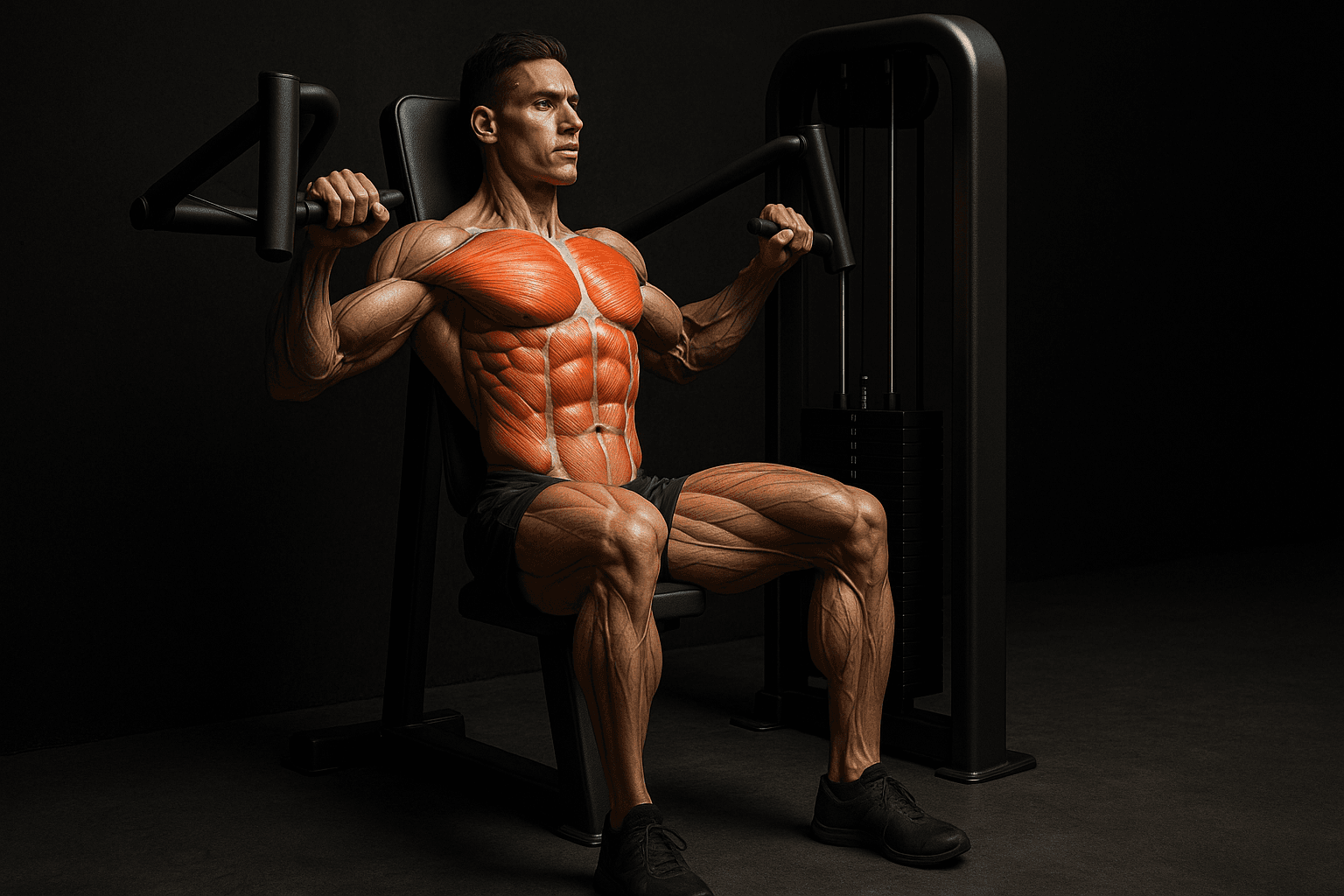
Photo by RepBro.
What muscles does the machine chest press work?
The machine chest press primarily trains the pectoralis major (the large chest muscle) with the sternal (mid/belly) fibers most active on a flat/neutral press path. The main secondary movers are the anterior deltoid (front shoulder) and the triceps brachii (elbow extension). The machine also requires rotator-cuff and scapular stabilizers (like the serratus anterior and lower trapezius) to control the shoulder, but these are worked less than with free-weight presses.
How does that compare to free-weight pressing?
Compared with barbell or dumbbell bench pressing, the machine chest press reduces the demand on stabilizer muscles and limits horizontal rotation. That means you can often train with less technique work, more consistent force curves, and a slightly safer feeling—especially without a spotter—but you lose some stability and coordination training that carries over to real-world strength.
Where does the machine chest press fit in a program?
- Beginners: Use it as a primary horizontal pressing movement 2×/week for 2–4 sets of 8–15 to build movement confidence and chest volume.
- Intermediate trainees: Use it either as a main press (3–5 sets of 6–12) to accumulate volume without heavy stabilization stress, or as an assistance/volume exercise after a heavy barbell or dumbbell press.
- Advanced lifters: Use machines for extra volume, tempo work, or to push hypertrophy without overloading stabilizers—for example 8–15 reps across 6–12 sets distributed across a week.
Recommended rep ranges (practical):
- Strength focus: 3–6 reps with heavier loads (prefer free weights for max strength carryover).
- Hypertrophy focus: 6–12 reps.
- Joint-sensitive or rehab-focused use: 10–15 reps with controlled tempo.
What are the practical benefits and limits?
Benefits:
- Safer to push near failure without a spotter.
- Easier to load and track small increments on selectorized machines.
- Predictable range and consistent force curve—good for building volume.
Limits:
- Less stabilizer development and carryover to free-weight strength.
- Fixed path may feel awkward for people with unique limb lengths or past shoulder injuries.
Safety note: stop on sharp or unusual pain, and consult a qualified medical or fitness professional if pain persists—this is not medical advice.
What are solid alternatives and when to pick each?
- Barbell Bench Press
- When to pick it: You want maximal bar-loaded strength and neurological adaptations; you have a spotter or safety pins in a power rack.
- Equipment: Barbell, bench, rack.
- Pros: Higher potential peak loads, better for competitive strength goals and full-body coordination.
- Cons: Greater stabilizer demand and shoulder stress at very heavy loads; requires setup and often a spotter.
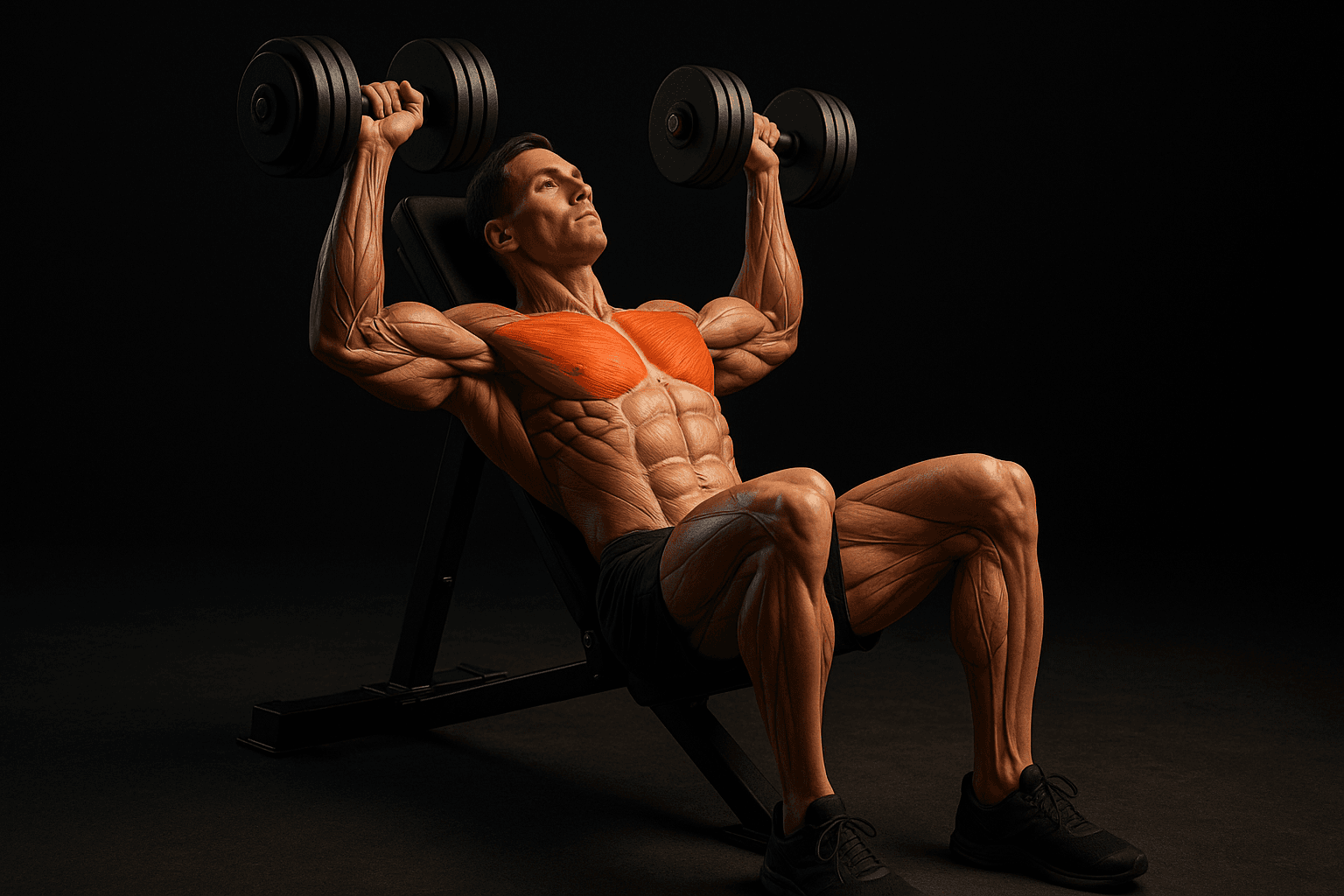
- Dumbbell Bench Press (flat or incline)
- When to pick it: You need to correct left-right imbalances, increase range of motion, or reduce joint compression with a more natural arc.
- Equipment: Dumbbells and bench.
- Pros: Unilateral work helps fix asymmetries; wrists/shoulders can find more natural paths; increased ROM can improve chest activation for some lifters.
- Cons: Harder to load very heavy safely; requires more stabilizer strength than machines.
- Push-Ups (progressions: knee, incline, weighted)
- When to pick it: You have little or no equipment, want a functional press, or need a durable, low-cost conditioning tool.
- Equipment: None for bodyweight; weight plate or vest for progression.
- Pros: High transfer to daily function, trains core stability, easy to program as high-rep or tempo work.
- Cons: Hard to precisely load small increments; may be limited for advanced hypertrophy unless weighted.
- Standing Cable Chest Press / Cable Fly
- When to pick it: You want continuous tension, angle variation, and easier manipulation of line of pull to attack weak points or plateaus.
- Equipment: Cable machine or functional trainer.
- Pros: Constant tension throughout the range, easy to change angle (incline/decline/neutral), excellent for unilateral work and scapular control.
- Cons: Lower absolute load than barbell; requires cable setup space.
When to choose which alternative (summary):
- Equipment limits: choose push-ups (none) or dumbbells if no machine.
- Shoulder issues: prefer dumbbells (neutral rotations) or cables; avoid fixed-path machines if they force painful positions. Consult a clinician for persistent issues.
- Plateau on machine: switch to dumbbells or cables to overload stabilizers and change tension profile; use unilateral work or slow eccentrics to increase time under tension.
How to use the machine chest press without stalling progress
- Track progression: add 0.5–5 kg (1–10 lb) when you hit the top of your rep range for two consecutive sessions.
- Vary the stimulus every 4–8 weeks: change rep ranges, add paused reps, slow eccentrics (3–4 seconds down), or insert unilateral presses.
- Combine with a free-weight press 1×/week if you want strength carryover—machines for volume days, free weights for heavy days.
Exercise form & safety brief
- Set the seat so handles line up roughly with your mid-chest (around the nipple line) at the start.
- Keep a small, natural arch in the low back; feet flat on the floor.
- Press in a slightly diagonal path (not straight up) so elbows finish slightly in front of the body to protect the shoulder joint.
- Control the eccentric phase; avoid locking the elbows aggressively at the top if your shoulders are irritable.
- Stop on sharp pain and consult a qualified professional if symptoms persist.
For practical programming and to track these exercises alongside others, check the RepBro app (https://apps.apple.com/us/app/gym-workout-coach-repbro/id6763749305) and comparison resources if you're deciding between tools and approaches (https://www.repbro.app/vs).
One-sentence takeaway: The machine chest press is a reliable, low‑skill way to load the pectoralis major, anterior deltoid, and triceps for hypertrophy and volume—use it for safe, repeatable work and switch to barbell, dumbbell, cable, or push-up variations when you need more carryover, joint-friendliness, or variety.
Frequently asked questions
- How often should I include the machine chest press in my program?
- Include it 1–3 times per week depending on goals: 1–2x for maintenance or low-volume strength focus, 2–3x for hypertrophy with 6–12 total weekly sets for chest. Adjust volume progressively.
- Is the machine chest press safe for people with shoulder pain?
- Machines can be shoulder-friendly because they stabilize the path and reduce rotational stress, but if you have ongoing shoulder pain consult a qualified clinician; use neutral grips, reduced range of motion, and stop if sharp pain occurs.
- How should I progress on a selectorized chest press machine?
- Progress by adding 0.5–5 kg (1–10 lb) when you can complete the top of your target reps for 2 sessions in a row, or increase reps/sets or reduce rest for more volume-based progression.