Nordic Hamstring Curl: Proper Form, Step by Step
Step-by-step guide to Nordic hamstring curl form: setup, execution, breathing, tempo, progressions, common mistakes, safety notes, and limitations.
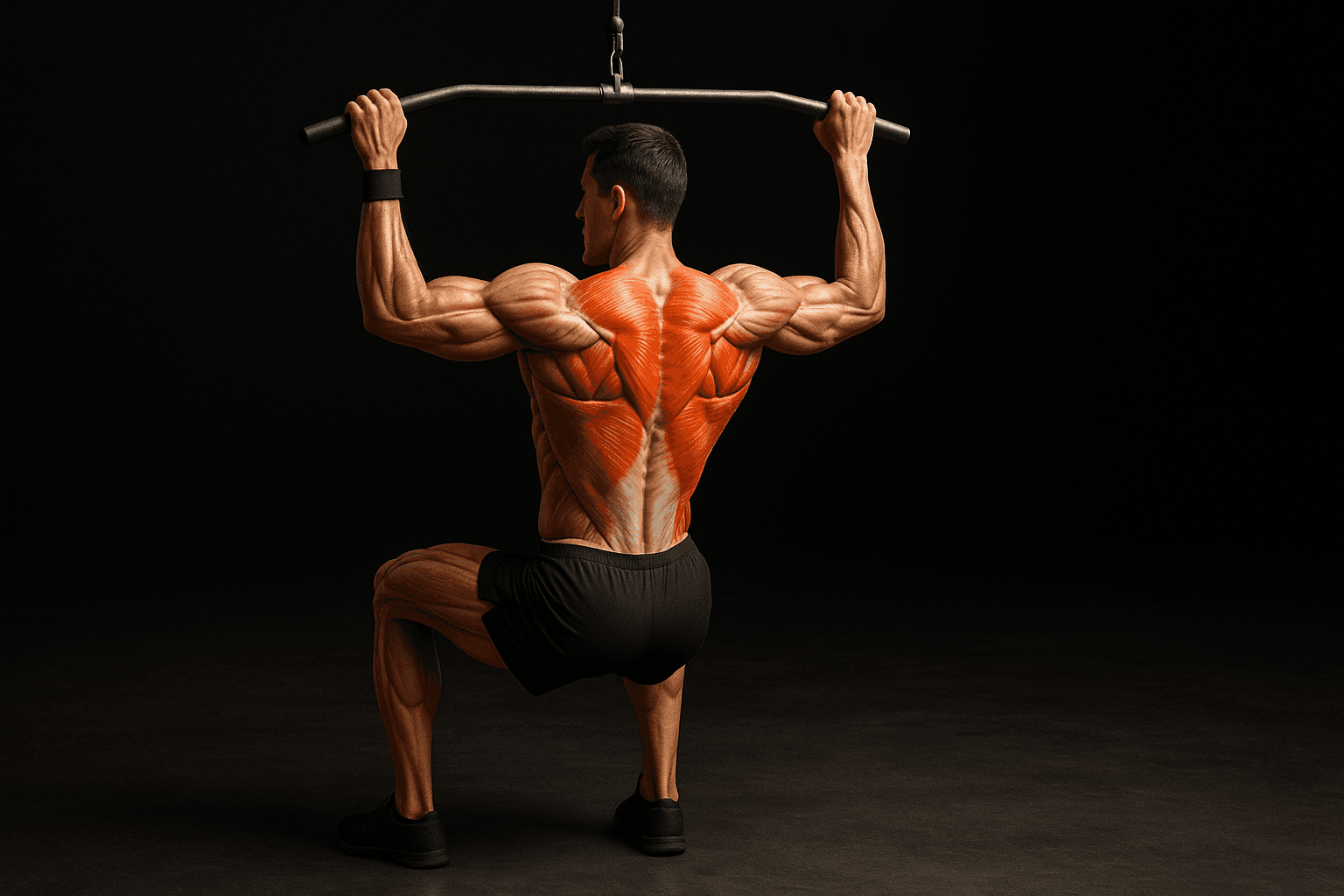
Photo by RepBro.
Direct answer (40–60 words):
The Nordic hamstring curl requires a rigid hip position and controlled eccentric lowering. Knees anchored, core braced, lower slowly for 3–5 seconds keeping a straight line from knees to shoulders, then return by pushing with hands or a band. Start assisted, progress volume gradually, and stop for sharp pain.
How do I set up the Nordic hamstring curl correctly?
- Anchor: Secure your ankles under a stable anchor — partner holds heels, a low rack, or anchor strap. Use a band looped around your ankles if needed for assistance.
- Padding: Use a thick mat or wedge under the knees to avoid discomfort.
- Position: Knees hip-width apart, hips stacked over knees, torso upright and braced. Hands rest at chest level, ready to catch the floor.
- Tension: Squeeze glutes and engage the posterior chain to create a straight line from knees to shoulders.
Cue checklist: knees fixed, hips locked (no sudden hinge forward), look slightly ahead, breathe.
How do I perform the movement and what tempo should I use?
Execution steps:
- Brace: Take a full breath, brace your core and glutes, maintain straight hip-knee alignment.
- Lower: Begin a slow, controlled forward descend by letting the hamstrings lengthen. Aim for a 3–5 second eccentric phase; resist the fall using hamstrings.
- Catch: When you can no longer control the descent, land onto your hands (lightly) and push your chest up to return to the start, or use the band/partner to assist the concentric return.
- Reset: Re-brace for the next rep.
Tempo recommendation: 3–5 seconds eccentric, minimal pause at the bottom, assisted concentric. For advanced trainees, some sets can include a full eccentric-only rep where you control a slower descent to near-floor and use hands minimally to return.
Breathing: Inhale before the eccentric; control exhalation as you come back up. Keep breathing regular between reps — do not hold breath for entire sets.
Safety note: Stop immediately on sharp or radiating pain. If you have acute or chronic hamstring pain, consult a qualified clinician before attempting Nordics. Never use this guide as a medical diagnosis.
How should I progress Nordics and how often should I train them?
Progression path:
- Beginner (weeks 1–3): Band-assisted or partner-assisted; 1–3 sets of 3–6 reps, 2 sessions per week.
- Intermediate (weeks 4–8): Reduce assistance, 2–3 sets of 4–8 reps, maintain 2 sessions per week.
- Advanced (>8 weeks): Unassisted Nordics or loaded variants; 3–5 sets of 6–10 reps, once or twice weekly depending on overall load.
General guidance: Train eccentrics 1–2 times per week in-season for athletes, and up to twice weekly in off-season strength phases. Increase volume slowly — add reps, sets, or reduce assistance incrementally every 1–3 weeks depending on recovery.
Evidence note: Randomized trials and meta-analyses support eccentric hamstring work for strength gains and reduced hamstring strain risk in some populations; follow conservative progression to avoid overload.
What common mistakes do lifters make and how do I fix them?
Mistake: Hips collapse forward (bending at the waist) — Fix: Squeeze glutes and drive hips slightly forward; cue “tall chest.”
Mistake: Rushing the descent — Fix: Use a 3–5 second count. Tempo matters for eccentric adaptation.
Mistake: Returning with excessive momentum from arms — Fix: Use hands only as a brief aid; aim to reduce push-assist over time.
Mistake: Ankles slipping or unstable anchor — Fix: Use a solid anchor and ensure feet are secured; a partner holding heels at mid-calf is often safest.
Mistake: Too much volume too soon — Fix: Start with low sets/reps (see progression) and track soreness and function; recover fully between sessions.
Which Nordic variation should I choose: band, standard, or loaded?
| Variation | Difficulty | Suggested reps/sets | When to use |
|---|---|---|---|
| Band-assisted | Low | 1–3 sets of 3–6 | Beginners, rehabbing, or early progressions |
| Standard Nordic | Medium | 2–4 sets of 4–8 | Building eccentric strength and practical hamstring loading |
| Loaded/one-leg or added weight | High | 3–5 sets of 4–8 | Advanced trainees needing higher intensity |
Choose based on current strength, pain history, and ability to maintain form for the full eccentric.
Is the Nordic curl appropriate if I currently have hamstring pain?
Short answer: Not without professional guidance. If you have sharp, acute, or radiating pain, stop and consult a clinician. A qualified physiotherapist can assess whether modified eccentric work is appropriate and prescribe graded progressions or alternative exercises.
What should I watch for in everyday training to avoid overuse?
Monitor soreness quality (muscle soreness is normal; sharp pain is not). Track total hamstring loading across sprinting, deadlifts, and Nordics. If performance or movement quality declines, reduce volume or frequency.
What can’t an app or video do for my Nordic curl training?
Limitations:
- No app or AI can truly see and correct your live joint angles and compensations as well as a qualified coach.
- Apps cannot diagnose injuries or replace clinical assessment; consult a professional for pain or rehab.
- A program only works if you follow it consistently; consistency and load management matter more than app choice.
If you want an app to log sets and progressive overload, consider tracking your Nordics with a workload plan — some users track progress in tools like RepBro for consistency.
Final safety reminder: Stop for sharp pain, progress gradually, and see a qualified healthcare professional for ongoing or worsening symptoms. This guide is informational and not a medical diagnosis or personalized rehab plan.
Frequently asked questions
- What is the correct starting position for a Nordic hamstring curl?
- Kneel on a padded surface with knees hip-width apart, hips stacked over knees, ankles secured under a stable anchor, and torso upright. Brace your core and squeeze glutes so the body is a straight line from knees to shoulders before initiating the descent.
- How should I breathe and tempo the Nordic hamstring curl?
- Inhale before you begin the controlled descent. Lower eccentrically over 3–5 seconds, maintaining a straight line. Use your hands to catch yourself and push to a tall kneel or stand; exhale during the push. Keep breathing steady between reps.
- How often and how many reps should I do Nordics to progress?
- Train Nordic curls about twice per week as part of a balanced program. Begin with 1–3 sets of 3–6 controlled reps using assistance; progress toward 3–5 sets of 6–10 unassisted reps over weeks as tolerated, prioritizing quality over volume.