Nordic Hamstring Curl: Muscles Worked and Practical Alternatives
Clear guide to which muscles the Nordic hamstring curl trains, where it fits in a program, how to progress it, and 3–4 practical alternatives with selection criteria.
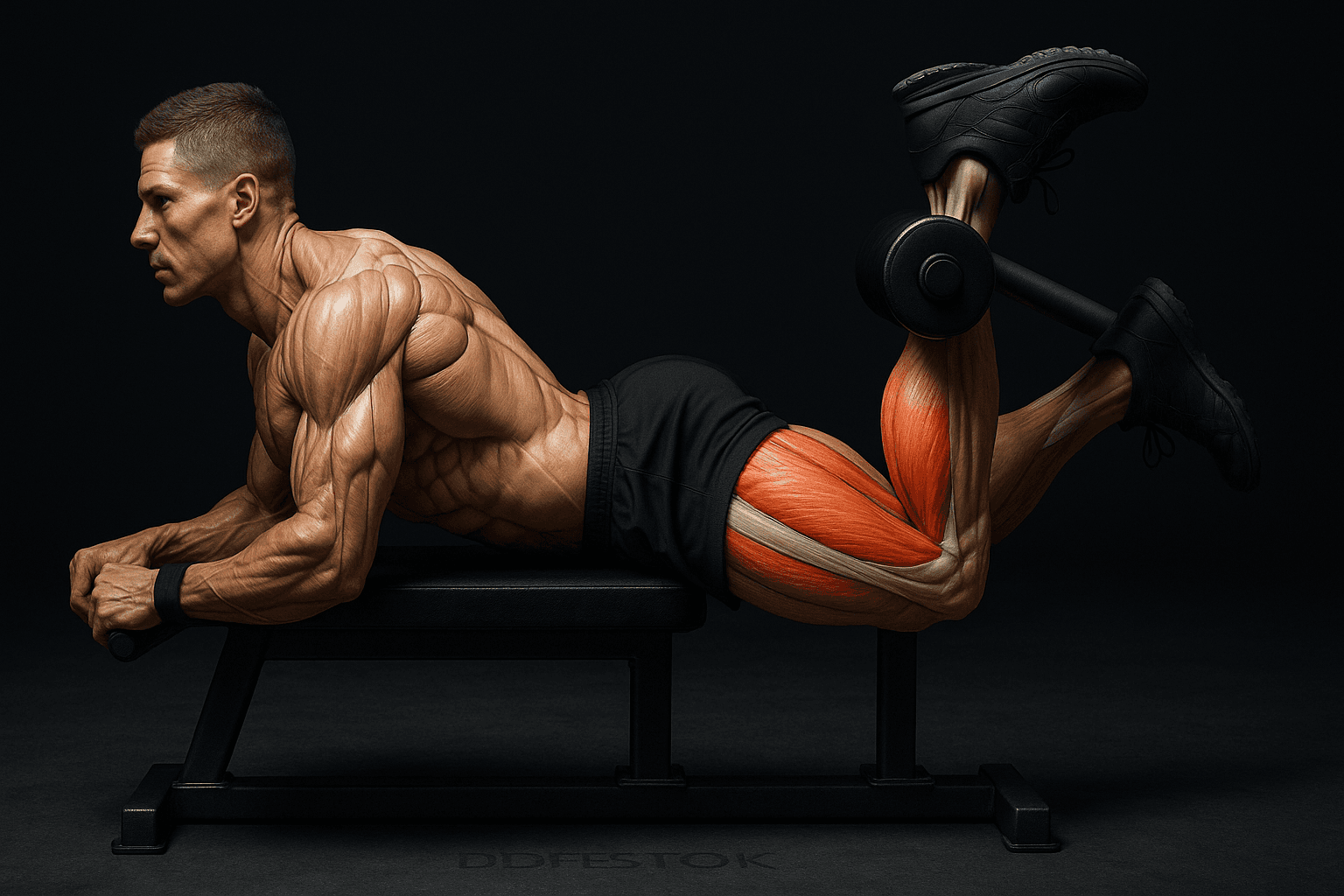
Photo by RepBro.
The Nordic hamstring curl primarily trains the hamstrings—especially the biceps femoris long head, semitendinosus and semimembranosus—through high-eccentric knee-flexion loading. It also recruits gluteus maximus, calves and core for stabilization; use it for eccentric strength, with progressions and alternatives when needed.
What muscles does the Nordic hamstring curl train and how do they work?
The Nordic hamstring curl is an eccentric-dominant, knee-flexion exercise. Primary muscles worked:
- Hamstrings (primary): biceps femoris long head, semitendinosus, semimembranosus — they resist knee extension as you lower your body.
- Secondary stabilizers: gluteus maximus contributes to hip extension control; gastrocnemius and soleus help stabilize the ankle; core muscles counter trunk flexion.
Functionally, Nordics emphasize eccentric strength (lengthening under load) of the hamstrings across the knee. Because they demand control through a long hamstring length, they are often used to increase eccentric capacity and to transfer to sprint-type demands.
Where does the Nordic hamstring curl fit in a training program?
Place Nordic curls as an accessory posterior-chain exercise. Typical uses:
- After primary lifts (squats, deadlifts) or on posterior-chain days.
- For athletes, include them during in-season work with conservative volume and progressive loading off-season for capacity building.
Training guidelines consistent with resistance exercise consensus:
- Frequency: 2–3 sessions per week for targeted hamstring work.
- Volume: 2–4 sets per session is common; adjust based on fatigue and recovery.
- Rep schemes: use lower reps with higher intensity (closer to maximal eccentric effort) when your goal is strength; higher reps for hypertrophy or endurance aims.
Progression options: increase range of motion, slow the tempo on the eccentric, add external load (vest, bands), or increase reps/sets over several weeks.
How should I progress the Nordic hamstring curl safely?
Progress gradually. Typical progression steps:
- Assisted Nordics: use a resistance band or push-off with hands to reduce load.
- Increase the eccentric range: start from a higher support (knees elevated) then lower the anchor height.
- Slow eccentrics: control the descent for 3–5 seconds, then catch yourself and return.
- Add external load or additional reps/sets after you can control full-range eccentrics cleanly.
Safety note: stop if you feel sharp pain, not normal muscle burn. If you have a history of tendon pain or recent hamstring strain, consult a qualified professional before loading eccentrics.
What are effective alternatives if I can't or shouldn't do Nordics?
Below are 4 practical choices and when to select them.
-
Glute-ham raise (GHR)
- When to pick: you have access to a GHD machine and want similar knee-hip combined loading; good for high hamstring activation with adjustable difficulty.
- Useful for athletes progressing toward full Nordics or for stronger hip extension emphasis.
-
Romanian deadlift (RDL) or single-leg RDL
- When to pick: gym access to a barbell or dumbbells; prefer hip-dominant posterior-chain training and lower knee stress.
- Useful for building hip extensors and reducing direct knee-flexion torque if tendon issues limit Nordics.
-
Swiss-ball or slider hamstring curls
- When to pick: limited equipment, or when you need a knee-flexion alternative with less absolute external load and easier regression or higher volume.
- Useful during rehab phases or for hypertrophy-focused work without high eccentric overload.
-
Lying or seated machine hamstring curl
- When to pick: you need precise load control, have tendon irritation, or must isolate knee flexion. Machines let you manage volume without heavy axial load.
- Useful in early rehab or when technical proficiency on Nordics is lacking.
How do these options compare at a glance?
| Exercise | Primary target | Load type | Equipment | When to choose |
|---|---|---|---|---|
| Nordic hamstring curl | Hamstrings (eccentric, knee-driven) | High eccentric | Minimal (anchor/knee pad) | When you can control full-range eccentrics and want high eccentric capacity |
| Glute-ham raise | Hamstrings + glutes (combined) | Eccentric + concentric | GHD machine | When you have a GHD and seek joint-specific strength |
| Romanian deadlift | Hamstrings + glutes (hip-dominant) | Concentric/eccentric hip bias | Barbell/dumbbells | When you need hip-driven posterior-chain strength and less knee load |
| Swiss-ball/slider curl | Hamstrings (knee-dominant) | Concentric/eccentric lower absolute load | Swiss ball or sliders | When equipment is limited or you require gentler loading |
| Machine hamstring curl | Hamstrings (isolated knee flexion) | Concentric/eccentric isolated | Seated/lying curl machine | When precise load control or rehab isolation is needed |
What safety considerations should I follow?
- Stop if you experience sharp, stabbing pain; transient muscle soreness is common but not sharp pain.
- Introduce eccentric loading progressively; allow adequate recovery between high-eccentric sessions.
- If you have a recent hamstring strain, tendon pain, or hip/back issues, seek assessment from a qualified clinician before performing intense Nordics.
Limitations: what an app or AI can’t do for your Nordic curl work?
An app or AI can suggest progressions, volume, and alternatives, but it cannot assess your movement quality or detect subtle compensations in real time. Only a qualified coach or clinician can diagnose injuries, perform hands-on assessments, and tailor rehabilitation. Also, any program only works when you consistently execute it and manage recovery; adherence and in-person feedback drive outcomes.
If you want a structured way to log accessory work and track progressive overload for hamstrings, use objective measures (load, reps, range) and review changes with a coach or clinician.
Safety reminder: this article is informational, not medical advice. Consult a qualified professional for diagnosis or personalized rehabilitation guidance.
Frequently asked questions
- Which muscles does the Nordic hamstring curl primarily target?
- The Nordic hamstring curl primarily loads the hamstrings eccentrically—the biceps femoris (long head), semitendinosus and semimembranosus. It also requires gluteus maximus, gastrocnemius and core activation for hip control and trunk stabilization, particularly during the long eccentric descent.
- How often should I include Nordic curls in my training?
- Include Nordic curls 2–3 times per week as part of a resistance program that trains major muscle groups. Aim for progressive loading across weeks, using 2–4 sets and rep ranges tailored to your goal (lower reps and higher intensity for strength emphasis, higher reps for endurance/hypertrophy).
- What are solid alternatives if I can't do Nordic curls?
- Good alternatives include glute-ham raises (if you have a GHD), Romanian deadlifts (barbell or single-leg) for hip-dominant loading, Swiss-ball or slider hamstring curls for knee-dominant movement with less joint stress, and machine hamstring curls for isolated knee flexion when managing load or rehabilitation.