Overhead Press: Proper Form, Step by Step
Step-by-step overhead press form guide: setup, execution cues, breathing, tempo, common mistakes with fixes, and safety-first tips—consult a professional for pain.
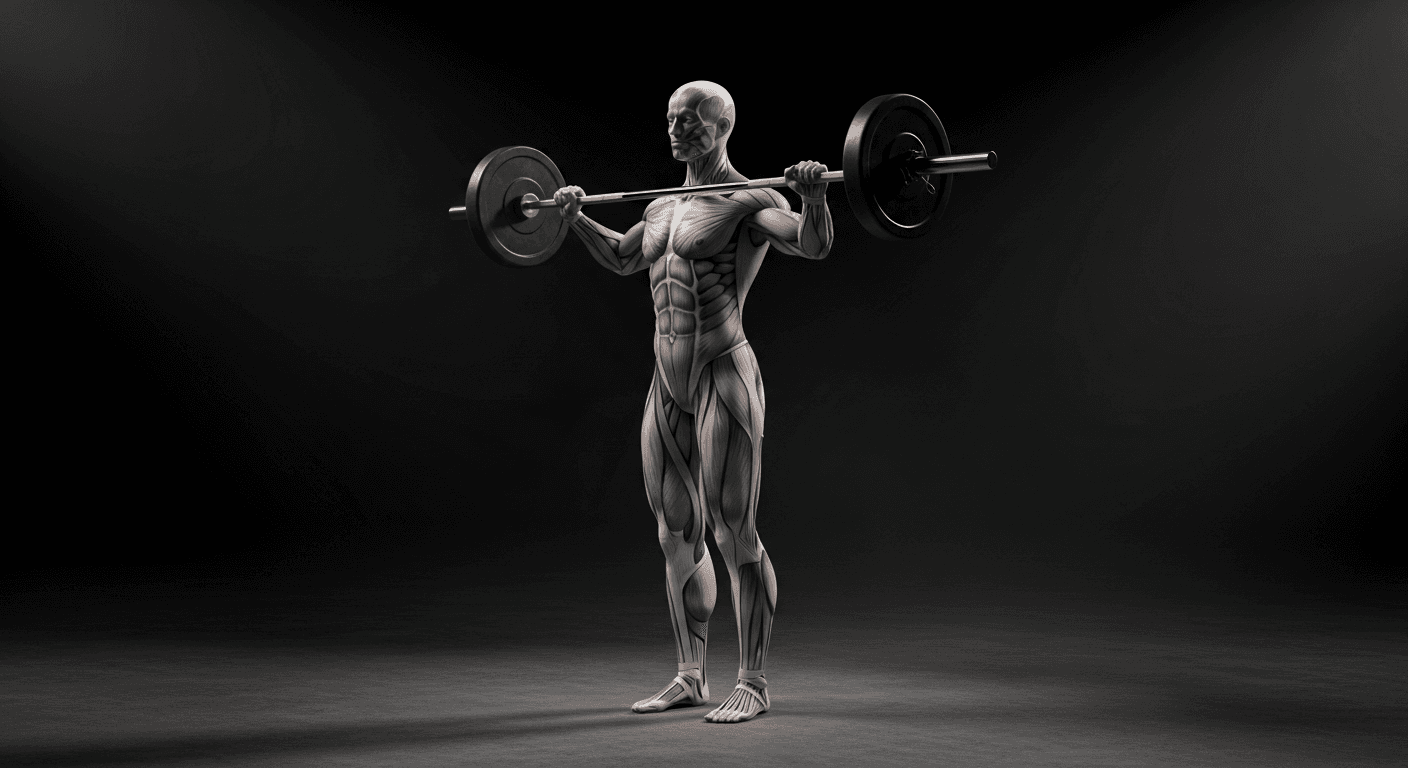
Photo by RepBro.
The shortest direct answer: Proper overhead press form means a vertical bar path from upper chest to full lockout overhead with a stable midline, shoulders packed, elbows slightly in front of the bar, feet hip-width, and controlled breathing and tempo. Follow the steps below for a complete setup and execution checklist.
How do I set up the bar and my body?
- Rack and grip
- Set the bar at about upper-chest height so you can unrack without dropping your hips. Use a full grip (thumbs wrapped).
- Grip width: roughly shoulder-width to 1.25× shoulder-width. When the bar is at your clavicle, your forearms should be near vertical.
- Stance and feet
- Feet about hip-width (30–50 cm / 12–20 in). Toes can point slightly out (10–20°).
- Upper-back and shoulder position
- Retract your scapula slightly and "pack" your shoulders: keep a short, stable upper back but avoid protracting (over-squeezing) the shoulder blades.
- Core and breathing setup
- Take a deep diaphragmatic breath into the belly and brace as if you expect a firm push to the stomach. This stabilizes the spine.
- Bar position before press
- The bar should rest near the top of your chest/clavicle, not on the throat. Elbows should be forward of the bar (not flared wide) to create a clean start position.
How do I execute the press, step by step?
- Unrack and step back
- Unrack the bar with straight arms, step back 1–2 steps, find your stance. Keep shoulders engaged.
- Press the bar up
- Drive the bar straight up and slightly back overhead. Think of moving the bar in a vertical line; in practice the bar will travel a small C-shaped path to clear your face.
- Push your head slightly forward as the bar leaves your chest, then let your head return so the bar can pass. "Move your head out of the way, then back under."
- Full lockout
- At lockout, stack the wrist, elbow, shoulder, and ear in one vertical line. Lock elbows without hyperextending aggressively; shoulder should feel stable, not pinched.
- Lower the bar under control
- Lower the bar to your upper chest in 2–3 seconds, reset your brace, then repeat.
What breathing and tempo should I use?
- Breathing:
- For heavy sets: take a deep belly breath and hold through the more difficult portion of the lift (Valsalva) then exhale at lockout. If you have cardiovascular concerns, use a controlled exhale during the concentric instead.
- For submaximal or higher-rep sets: inhale at the bottom, exhale on the way up, keeping a braced midline.
- Tempo:
- Concentric (press up): 0.5–2 seconds depending on load.
- Lockout pause: 0–1 second for most sets; 1–2 seconds if practicing stability.
- Eccentric (lowering): 2–3 seconds to control the bar and reduce momentum.
How should the bar path and head movement look?
- Bar path: As straight as practical; the bar should travel from upper chest to overhead with a small backward adjustment so it finishes over mid-foot.
- Head: As the bar clears the face, push your head slightly forward then move it back under the bar so your skull ends up under the bar at lockout.
What are common mistakes and how do I fix them?
- Mistake: Excessive back lean (arching).
- Fix: Reduce weight, focus on bracing the core and tucking the ribs down. Keep pelvis neutral; press more overhead than forward.
- Mistake: Elbows flared wide to the sides.
- Fix: Pull elbows slightly in front of the bar at the start; cue “elbows under the bar.” If mobility limits you, try a slightly wider grip or work shoulder mobility.
- Mistake: Bar drifts away from head (forward) or comes too far back.
- Fix: Practice a vertical bar path using lighter weights. Use the head-move cue: push head forward then back under the bar.
- Mistake: Grip too wide or too narrow.
- Fix: Adjust so forearms are vertical at the start; this typically places hands at about shoulder-width. Experiment with small changes.
- Mistake: Rushing the press and using leg drive (unless doing a push press).
- Fix: Slow the tempo; keep knees and hips still if performing a strict press.
- Mistake: Weak upper-back/shoulder stability.
- Fix: Add accessory work: face pulls, band pull-aparts, overhead holds, and scapular stability drills.
When should I choose a variation (dumbbell, seated, push press)?
- Strict standing barbell press: best for raw shoulder strength and core stability.
- Dumbbells: fixes side-to-side imbalances and allows slightly different joint paths.
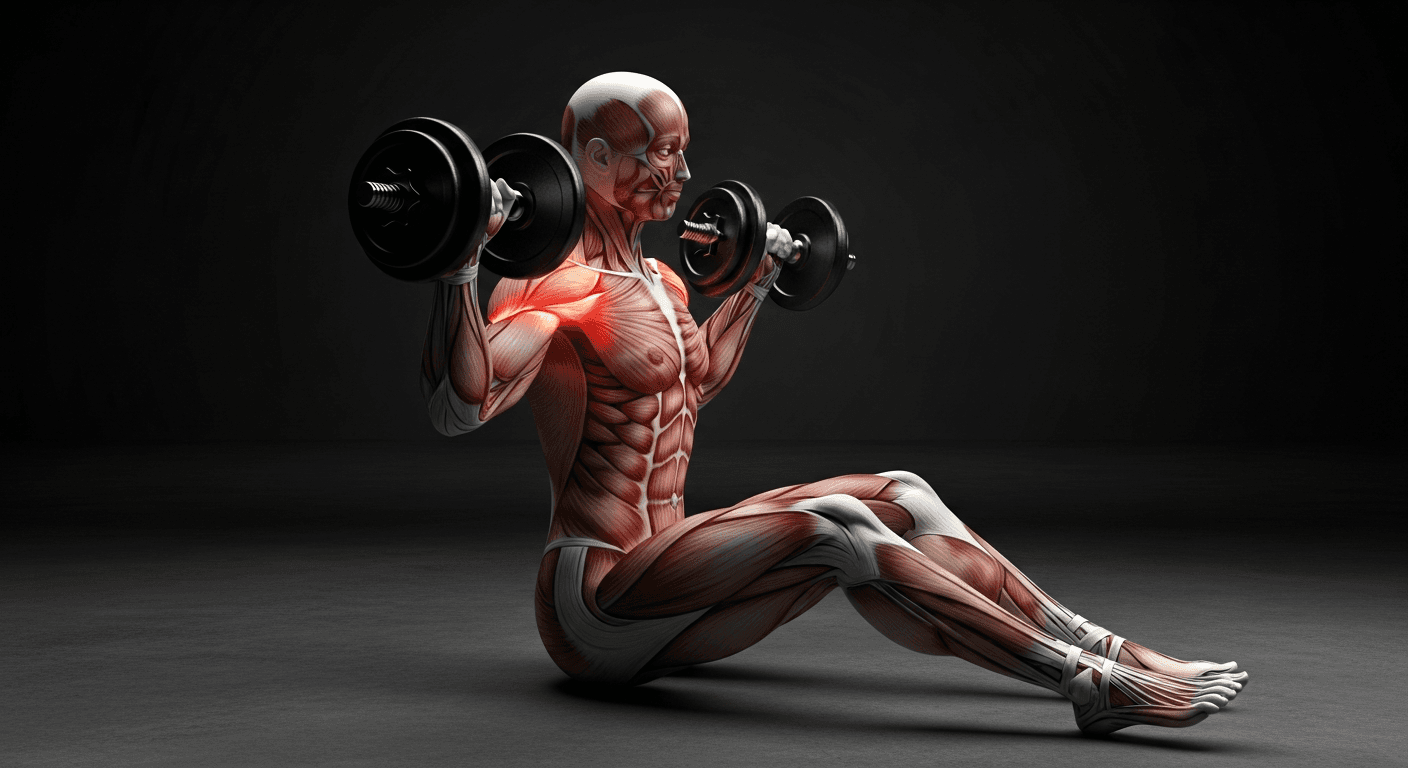
- Seated press: reduces leg and torso contribution—useful for isolating shoulders or when lower-back fatigue is limiting.
- Push press: adds leg drive to lift heavier loads; not a substitute for strict press technique. If you're comparing variations for programming, see https://www.repbro.app/vs for a quick reference.
Safety note
Stop immediately and consult a qualified professional if you experience sharp, sudden pain during the press; do not try to self-diagnose. If you have pre-existing shoulder or cardiovascular conditions, consult a clinician before using heavy Valsalva breathing or adding load.
Quick checklist before each set
- Bar at clavicle, forearms near vertical
- Feet hip-width, toes slightly out
- Shoulders packed, midline braced
- Deep belly breath taken
- Head cue ready (forward then back)
- Controlled tempo: 1–2s up, 2–3s down
One-sentence takeaway: The overhead press is a simple-looking lift that demands precise setup — vertical bar path, braced midline, correct elbow position, controlled breathing, and deliberate tempo make it both effective and safe when practiced consistently.
For tracking or integrating this lift into a plan, check out the RepBro app.
Frequently asked questions
- How wide should my grip be for the overhead press?
- Grip about shoulder-width to 1.25× shoulder-width. Your forearms should be roughly vertical with the bar at the start of the press; too wide or narrow changes joint angles and reduces efficiency.
- Should I use the Valsalva (hold breath) on heavy overhead presses?
- For heavy singles or low-rep sets, many lifters take a deep breath and hold until lockout to stabilize the torso. If you have high blood pressure or other health concerns, check with a clinician before using Valsalva.
- How often can I train the overhead press?
- 2–3 times per week is common for skill and strength work, with variation in volume and intensity across sessions. Adjust frequency based on recovery, shoulder health, and overall program context.