The Most Common Overhead Press Mistakes (and How to Fix Them)
Fix the 6 most common overhead press mistakes—bar path, grip, arching, elbow position, leg drive, and breathing—with clear, evidence-aware cues and one-step fixes.
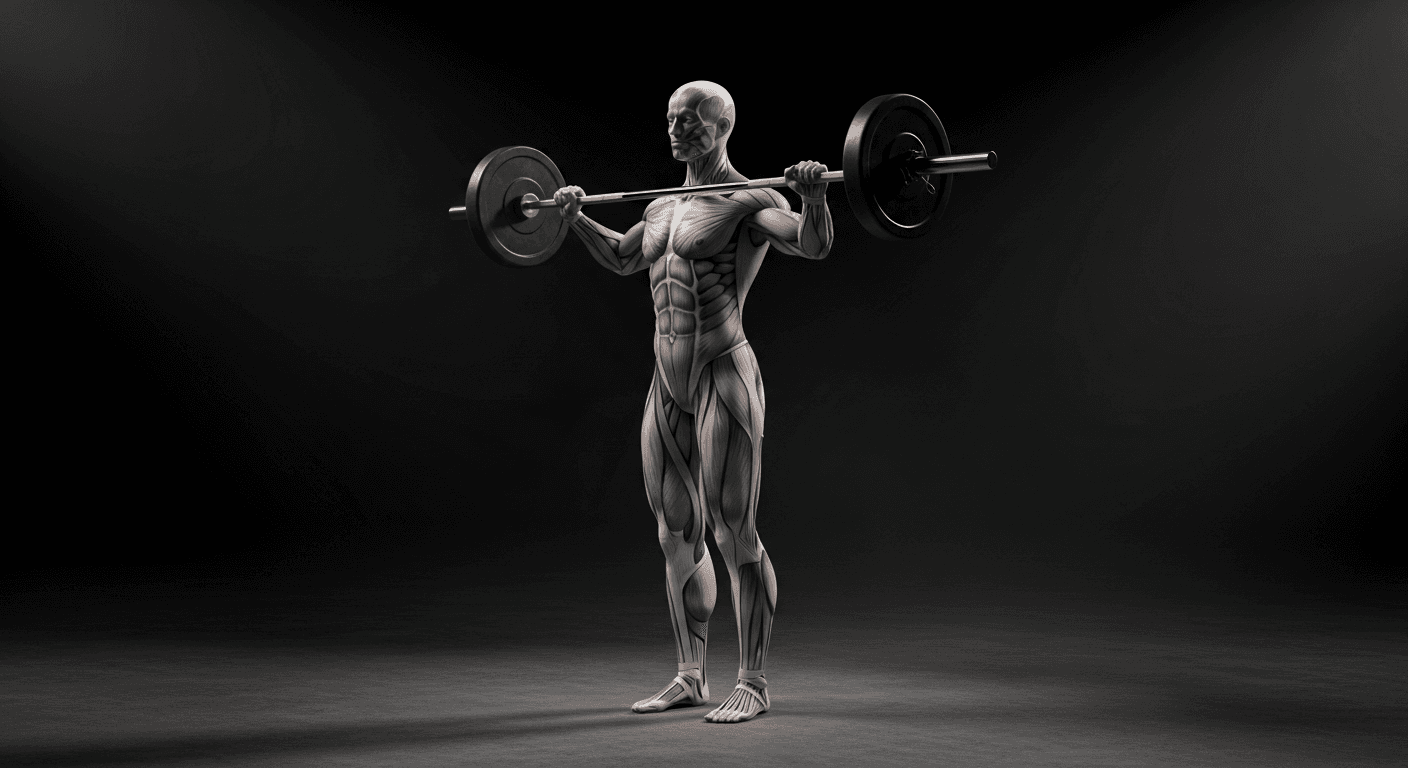
Photo by RepBro.
The most common overhead press mistakes are: incorrect bar path (bar drifts forward), excessive lower-back arch, using leg/hip drive instead of shoulder strength, wrong grip width, flared or backward elbows, and poor breath/brace timing. Each costs either lost strength gains, slower progress, or increased injury risk — and each has one clear fix you can try today.
Why does the bar drift forward and what should I do about it?
Why it happens: Most lifters press the bar slightly in front of the head because they start the press with the bar at the upper chest and push forward to clear the face. Habit, weak upper-back stability, or a too-wide grip are common causes.
What it costs: A forward bar path increases shoulder stress, reduces leverage, and lowers the load you can press by 5–15% compared with a vertical path.
Fix: Cue bar over mid-foot. Set your feet hip-width, grip the bar so it sits on the top of your chest, and press with the intent to move the bar straight up. Record one set from the side—if the bar drifts forward, narrow your grip 1 cm (0.5") and rehearse a paused press at the collarbone for 3 seconds before pressing.
Why do I over-arch my lower back and how do I stop it?
Why it happens: Overarching usually comes from trying to move more weight by leaning the torso back, poor core bracing, or tight lats/hip flexors preventing the ribcage from settling over the hips.
What it costs: Excessive lumbar extension increases shear forces at the lower back and reduces shoulder efficiency. It raises injury risk and can steal power from the press.
Fix: Learn a neutral spine brace. Take a big belly breath, brace like you’re about to get punched (but without bulging excessively), and keep ribs down over hips. Reduce the load by 10–20% and do 3 sets of 5 strict presses focusing on this brace before increasing weight.
Why am I using my legs (a jerk) on strict presses and why is that bad?
Why it happens: When the load exceeds pressing capacity, lifters use a leg dip or hip-drive to help. This is a technique mismatch—push press/push jerk use leg drive; strict press should not.
What it costs: Relying on leg drive hides weak shoulders, slows strict-press progress, and creates inconsistent training stimulus.
Fix: Remove leg help by using a controlled cadence: 1-second concentric without any hip dip. If you catch yourself driving with legs, drop the weight 15–30% and repeat 3 sets of 6 strict reps with a coach or video feedback. If you want to use leg drive intentionally, switch to push press and track it separately (see how lifts compare: https://www.repbro.app/vs).
Why are my elbows flared/backward and how does that hurt performance?
Why it happens: Flared elbows (too horizontal) or elbows pulled too far back stem from poor setup or trying to find a stronger pressing angle without addressing mobility or grip.
What it costs: Elbows flared forward increases anterior shoulder impingement risk; elbows too far back create an inefficient pressing angle that reduces power and increases wrist strain.
Fix: Set the elbows under the wrist and slightly in front of the bar at the start. Cue “elbows slightly forward, forearms vertical.” Drill 3–4 sets of 5 paused presses, each time checking elbow position with a mirror—aim for a consistent stack of wrist-forearm-elbow-bar.
Why is my grip the wrong width and what are the consequences?
Why it happens: People copy others, use a contest bench width, or grip where the bar feels comfortable without checking mechanics.
What it costs: Too-wide grip reduces the range of motion advantage and weakens leverage; too-narrow increases shoulder flexion and wrist extension, both reducing pressing strength by up to 10% and raising irritation risk.
Fix: Find shoulder-width grip. Measure: place thumbs roughly in line with the bends of your elbows when the bar is at your chest; a quick test is that your forearm is vertical. Mark this spot with tape. Use that same grip for warm-up sets for 2 weeks to reinforce the pattern.
Why am I breathing poorly and how does that limit my press?
Why it happens: Lifters either hold breath for too long, breathe shallowly, or exhale too early, often due to nervousness or poor cueing.
What it costs: Poor breath-and-brace timing reduces intra-abdominal pressure, which means less spine stability and less force transfer—so you lift less and risk back strain.
Fix: Use a simple sequence: inhale big into the belly, brace for 1–2 seconds, press, and exhale at the top. Practice this pattern unloaded: 3 sets of 6 reps with the empty bar focusing purely on breath timing before adding load.
What should I do if I still have pain or inconsistent progress?
Why it happens: Persistent pain or plateau can come from mobility deficits, previous injury, or a programming mismatch.
What it costs: Continuing through sharp pain can worsen conditions and delay progress.
Fix: Stop any set that produces sharp or radiating pain. See a competent coach or clinician for assessment. You can still work around the issue with alternatives like seated dumbbell presses, but only after professional clearance.
Safety note: Stop on sharp pain, seek a qualified professional if pain persists, and never interpret this article as a medical diagnosis.
If you want to track technique-focused progress, use an app like RepBro to separate strict-press vs push-press work and keep consistent grip/tempo across sessions.
One-sentence takeaway: Fixing one technical issue at a time—bar path, grip, brace, elbows, arch, or leg drive—will make the overhead press safer and measurably stronger within weeks when practiced consistently.
Frequently asked questions
- How wide should my overhead press grip be?
- Use a grip that puts your forearms vertical at the bottom of the press—usually thumbs roughly at shoulder-width or 1–2 cm (0.5"–1") outside. Too wide loses leverage; too narrow stresses the wrists.
- Is leg drive allowed in the overhead press?
- Strict overhead press should use minimal leg drive. If you intentionally use hip/leg drive to lift heavier loads, call it a push press. See a comparison at https://www.repbro.app/vs.
- How do I practice a better bar path?
- Film 1–2 sets from the side, aim for the bar to travel roughly in a straight line over the mid-foot. Use a slow 3-second eccentric and pause at the collarbone to ingrain the path.