The Most Common Pull-up Mistakes (and How to Fix Them)
Pinpoint and fix the 6 most common pull-up mistakes—why they happen, what they cost, and one concrete fix for each to build strength safely and efficiently.
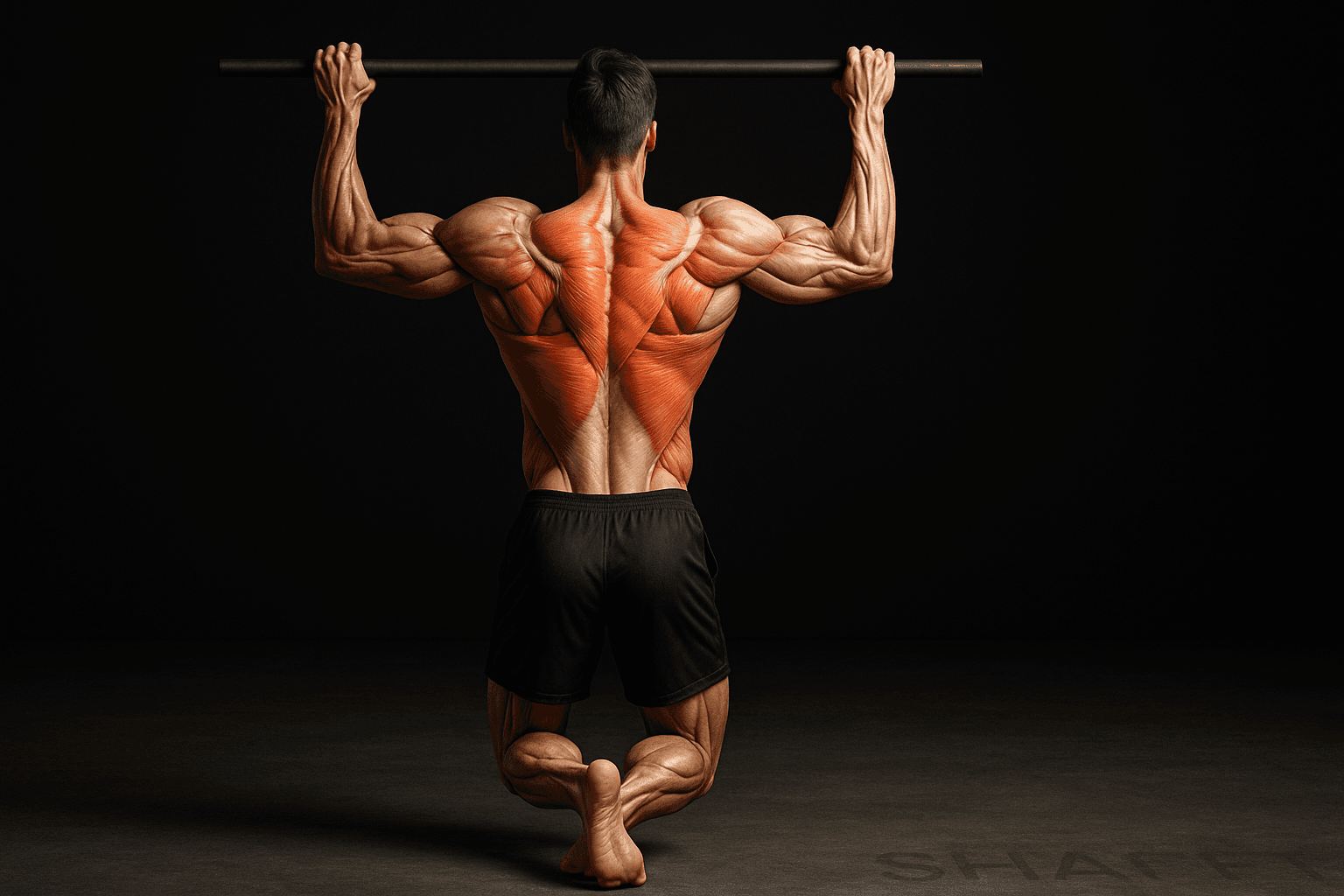
Photo by RepBro.
The most common pull-up mistakes are: not starting from a dead hang (no scapular engagement), pulling with the arms and flaring the elbows, using momentum/kipping when you need strict strength, doing partial reps, using the wrong grip width or poor grip, and excessive swinging/poor core tension. Each costs you strength or raises injury risk — below are why they happen, what you lose, and one practical fix for each.
Why am I not starting from a proper dead hang?
Why it happens: People either shrug into the movement (shoulders up) or start already partially contracted because they haven’t learned scapular control. It feels easier to “hop” into the rep rather than reset.
What it costs: Loss of range of motion, weaker lats and scapular stabilizers, and greater shoulder impingement risk over time.
Fix: Do 3 sets of 8–12 scapular pull-ups as a warm-up — hang relaxed, depress and retract your shoulder blades to lift the body 5–10 cm, hold 1–2 s, lower slowly. Then begin every set of pull-ups from a full dead hang (scapula active) for at least the first 4 weeks.
Why do my elbows flare out so much during the pull?
Why it happens: People instinctively use biceps and upper traps by allowing elbows to go wide; this is often from weak lats or copying a ‘wider look’ seen in media.
What it costs: Less lat recruitment, more stress on the rotator cuff and shoulder joint, and slower strength gains.
Fix: Cue elbows back, not out — think “pull elbows to pockets” or lead the bar with your chest/sternum. Drill horizontal rows with elbows tucked (3 sets of 8–10, tempo 2:1:2) to learn the movement pattern.
Why am I kipping or using momentum when I want strength?
Why it happens: Kipping feels easier and lets you string reps together when strict pull-up strength is lacking. Many people default to a swing to get past the sticking point.
What it costs: If your goal is strength or muscle, momentum reduces tension on the target muscles and increases shoulder strain when done incorrectly.
Fix: Temporarily remove kipping from strength training. Use band-assisted strict pull-ups or negatives. Example progression: 3×5 strict band-assisted pull-ups twice a week, plus 3×3 controlled 5-second negatives once a week, for 6–8 weeks.
Why do I do partial reps or stop short of the bar?
Why it happens: The top or bottom range often feels hardest; fatigue, lack of mobility, or poor habit leads to cutting reps short.
What it costs: Limited muscle development, poor strength through full range, and carryover to other lifts is reduced.
Fix: Use full range or controlled negatives. If you can’t do full reps, do 4–6 full-range negatives per set with a 3–6 second descent, 3–5 sets. Gradually reduce eccentric time as concentric strength improves.
Why is my grip hurting or why do my shoulders ache with certain widths?
Why it happens: Grip that’s too wide reduces your pulling mechanical advantage, and overly narrow grips can overload elbows and wrists. Thumbless (suicide) grip can reduce control and increase fall risk.
What it costs: Less efficient force production, higher shoulder stress, and potential wrist/hand discomfort.
Fix: Use a shoulder-width to 1.25× shoulder-width grip (~40–60 cm / 16–24 in for most adults). Wrap the thumb around the bar for safety. If discomfort persists, try a neutral grip bar or rings for a few weeks and progressively return.
Why am I swinging my legs or craning my neck?
Why it happens: Lack of core tension and trying to get the chin over the bar by craning the neck or kicking to create momentum.
What it costs: Inefficient force transfer, reduced lat involvement, and neck strain.
Fix: Brace your core (imagine a 1–2/10 Valsalva), cross your feet and hold them still. Train hollow-body holds (3×20–30 s) and practise strict pull-ups with a 1–2 s pause at sternum-to-bar to break the habit.
Are there general cues that help all of these problems?
- Start every set from a dead hang, then initiate by retracting the scapula.
- Pull the elbows down/back rather than up/out.
- Breathe: exhale on the concentric, inhale on the descent. Don’t clench and hold your breath for every rep.
Safety note: Stop if you feel sharp joint pain; consult a healthcare or qualified coach for persistent pain or if you’ve had a prior shoulder injury. This article is technique-focused and not a diagnosis.
If you track workouts or want to build a plan that corrects these issues systematically, tools like RepBro can help you log progress and import plans — compare features with other apps at https://www.repbro.app/vs.
One-sentence takeaway: Fixing these common faults—start from a dead hang, control the scapula, keep elbows back, use appropriate grip, avoid cheating momentum, and brace your core—will net faster strength gains and lower injury risk than simply doing more reps.
Frequently asked questions
- How often should I practice pull-ups to improve technique?
- Practice pull-up-specific work 2–3 times per week, mixing technique drills, assisted/negative reps, and volume sets—avoid daily max-effort attempts to prevent overuse.
- Is kipping bad for pull-up progress?
- Kipping isn't 'bad'—it’s a conditioning/skill pattern. For raw pulling strength and hypertrophy, prioritize strict pull-ups; reserve kipping for metabolic conditioning or sport-specific work.
- How can I stop plateaus if I can’t add full reps?
- Use progressive overload via added eccentrics (3–6s negatives), band-assisted reps, weighted holds, and structured sets like 5x5 or 8x3 with 2–3 min rest; reassess grip, scapular control, and frequency.