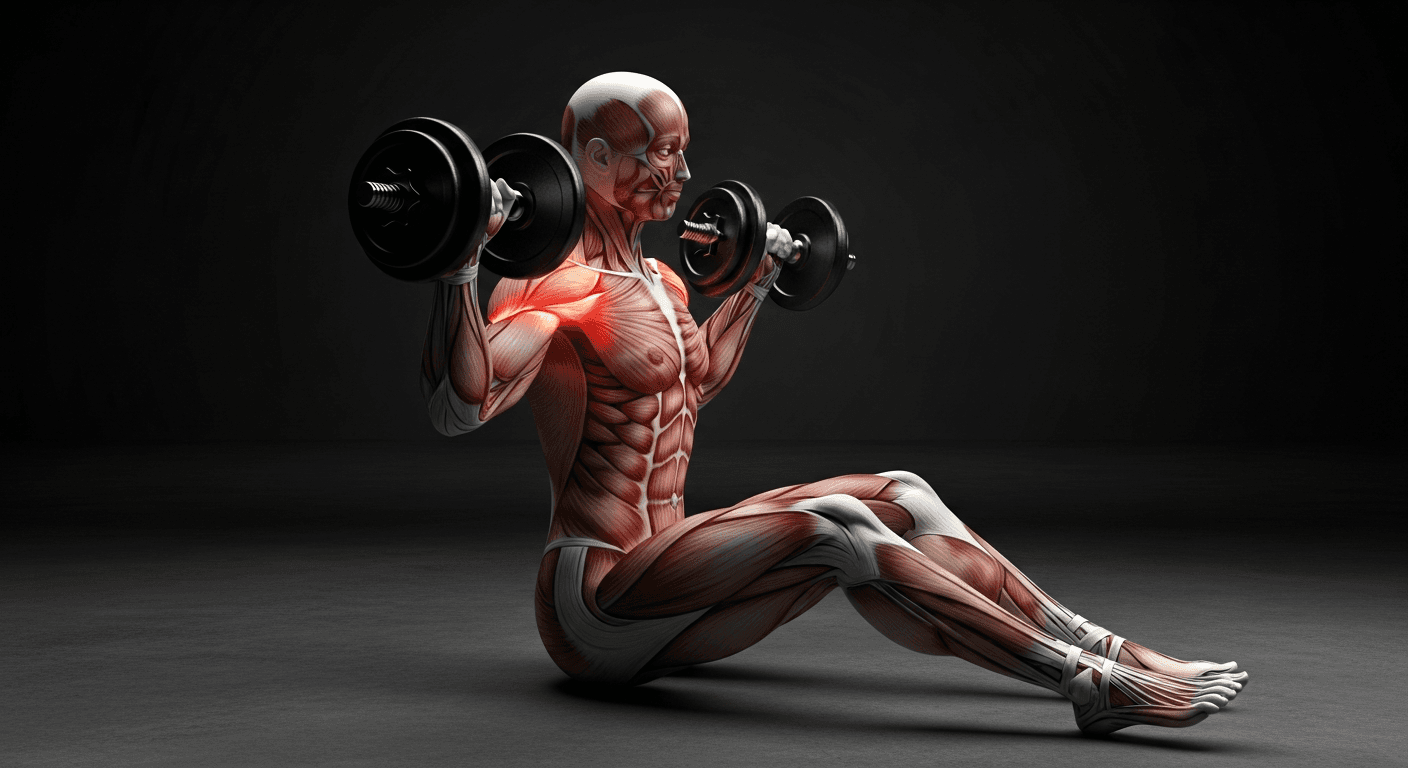
How Many Sets and Reps for the Push Press?
Practical, evidence-aware set/rep/frequency ranges for the push press by goal (strength, hypertrophy, endurance), weekly progression rules, and clear signals for when to add weight or reps.

Photo by RepBro.
Direct answer (40–60 words):
The push press fits multiple goals. For strength use 3–6 sets of 1–6 reps; for hypertrophy 3–6 sets of 6–12 reps; for endurance 2–4 sets of 12–20+ reps. Train the movement 1–3 times weekly, progress by small load jumps or adding reps, and increase weight after two consecutive successful sessions.
How should I pick sets, reps, and intensity for the push press by goal?
-
Strength: 3–6 sets of 1–6 reps at high intensity (roughly ≥85% of 1RM). Focus on heavy, technically sound reps and full recovery between sets (2–5+ minutes). Frequency: 1–3 times per week.
-
Hypertrophy: 3–6 sets of 6–12 reps at moderate intensity (about 65–85% 1RM). Rest 60–120 seconds. Emphasize controlled eccentric, solid lockout, and slightly higher weekly volume across pressing variations. Frequency: 1–3 times per week.
-
Muscular endurance / conditioning: 2–4 sets of 12–20+ reps at lower intensity (<65% 1RM) or as part of metabolic conditioning. Use shorter rests (30–90 seconds). Frequency depends on overall program but usually 1–3 times weekly.
The push press is an explosive overhead press with leg drive. For power development, use lower reps (1–5) with an emphasis on intent to move the bar fast; include dynamic-effort sessions if power is a primary goal.
How many weekly sets should I aim for with pressing work?
Evidence-based consensus for hypertrophy and strength typically recommends weekly sets per muscle group rather than per exercise. Reasonable weekly ranges:
- Strength emphasis for pressing musculature: aim for the equivalent of 6–15 heavy sets weekly across all pressing variations (push press, strict press, bench, dips).
- Hypertrophy emphasis: aim for 10–20 total weekly sets for shoulders/chest across pressing variations, adjusted for experience and recovery.
Distribute those sets across 2–3 sessions to improve frequency and recovery. The push press can contribute a portion of this total; combine it with strict pressing and horizontal pressing as needed.
What’s a practical comparison of sets/reps/intensity by goal?
| Goal | Sets per session | Reps per set | Intensity (%1RM) | Weekly frequency |
|---|---|---|---|---|
| Strength | 3–6 | 1–6 | ≥85% | 1–3×/week |
| Hypertrophy | 3–6 | 6–12 | 65–85% | 1–3×/week |
| Endurance | 2–4 | 12–20+ | <65% | 1–3×/week |
Use that table as a template; individual needs vary.
How should I progress the push press week to week?
-
Use small, consistent increments. For upper-body/overhead lifts, add about 1–2.5 kg (2–5 lb) total when possible. If such increments aren’t available, add 1–2 reps per set.
-
The 2-for-2 rule is practical: if you complete your prescribed reps/sets for two consecutive sessions with good technique, raise the weight at the next session.
-
When progress stalls, try:
- Backing off volume or intensity for a deload week.
- Switching rep ranges (e.g., 3 weeks of 6–8 reps, then a heavier 3-week block of 3–5 reps).
- Adding assistance or mobility work to address technical/weak link issues.
- Track weekly total volume (sets×reps×load) to objectively monitor progress and fatigue.
When should I add weight versus add reps?
Add weight when:
- You hit the top of the prescribed rep range across all sets for two consecutive sessions, and technique is solid.
Add reps (or sets) when:
- You can’t increase weight without breaking form or losing bar speed.
- You want to accumulate volume without large jumps in absolute load, or plates don’t allow small increments.
If you miss reps regularly, reduce the load ~5–10% or drop to the lower end of the rep range and rebuild.
What are practical session templates for each goal?
-
Strength session example: Warm-up, 5 sets × 3 reps @ heavy (work up to a top working weight), assistance: 3 sets of 5 strict overhead presses, posterior chain work.
-
Hypertrophy session example: Warm-up, 4 sets × 8 reps @ moderate load, 3–4 sets of lateral raises, 3 sets chest/upper-back accessory, finish with light metabolic conditioning.
-
Endurance session example: Warm-up, 3 sets × 15 reps @ light load, 30–60 seconds rest, followed by circuit conditioning.
How often should I deload and how will I know?
Deload every 3–8 weeks or when you notice persistent strength loss, poor sleep, higher RPE across normal loads, or joint soreness. A deload can be a week of reduced volume (30–60%) and/or reduced intensity to restore performance.
Safety note
Stop if you experience sharp or unusual pain. The push press requires competent technique—stable bracing, clean dip-drive, and controlled overhead lockout. This article isn’t a diagnosis; consult a qualified coach or medical professional for persistent pain, injury history, or individual programming needs.
What can apps and AI coaching not do? (Limitations)
No app or AI can reliably see and correct your live technique, assess medical history, or replace an in-person evaluation from a qualified coach or clinician. They can help track sets, reps, and progress but cannot feel your joint stress, observe subtle compensations, or provide individualized rehab. Consistency, sleep, nutrition, and hands-on coaching remain essential.
If you track progression digitally, use a reliable tracker to log small jumps and apply the 2-for-2 rule; apps such as RepBro can simplify recording loads and progression tracking.
References and further reading: follow consensus strength and conditioning guidelines (NSCA, ACSM) for load, volume, and recovery principles. Adjust numbers to your experience, recovery capacity, and overall program.
Frequently asked questions
- How many reps should I do on the push press for strength?
- For strength-focused push press work, use low reps: 1–6 per set, 3–6 sets, and lift heavy (roughly ≥85% of your 1RM for traditional strength work). Train the push press 1–3 times per week and progress load when you can complete targets with clean technique for two sessions.
- What’s the ideal push press volume for hypertrophy?
- For muscle growth, aim for 6–12 reps per set and 3–6 sets, using moderate intensity (about 65–85% 1RM). Accumulate 8–20 weekly sets for pressing movements depending on training age and recovery, and progressively add reps or small load increases as tolerance allows.
- How should I progress week to week with the push press?
- Progress linearly until progress stalls: add small load increments (1–2.5 kg/2–5 lb) when you hit your rep targets across sessions, or add 1–2 reps per set if weight jumps aren’t feasible. Use a 2-for-2 rule: two sessions meeting targets → increase weight.