Push-up Alternatives at Home (Minimal Equipment): What to Use, What You Lose, and When to Go to a Gym
Four to five at-home push-up substitutes using bodyweight, dumbbells, or bands: what each keeps and misses versus push-ups, progression tips, safety, and when to get gym access.
Photo by RepBro.
Answer-first (40–60 words):
You can substitute push-ups at home with incline push-ups, dumbbell floor presses (including single-arm), banded chest presses, and pike/hand‑position variations. Each preserves horizontal pushing stimulus differently; some lose range of motion, scapular mobility, or core demand. Use progressions until you need heavier loads or a bench/barbell.
What practical push-up alternatives can I do at home with minimal equipment?
- Incline push-ups (hands on a bench, couch, or table)
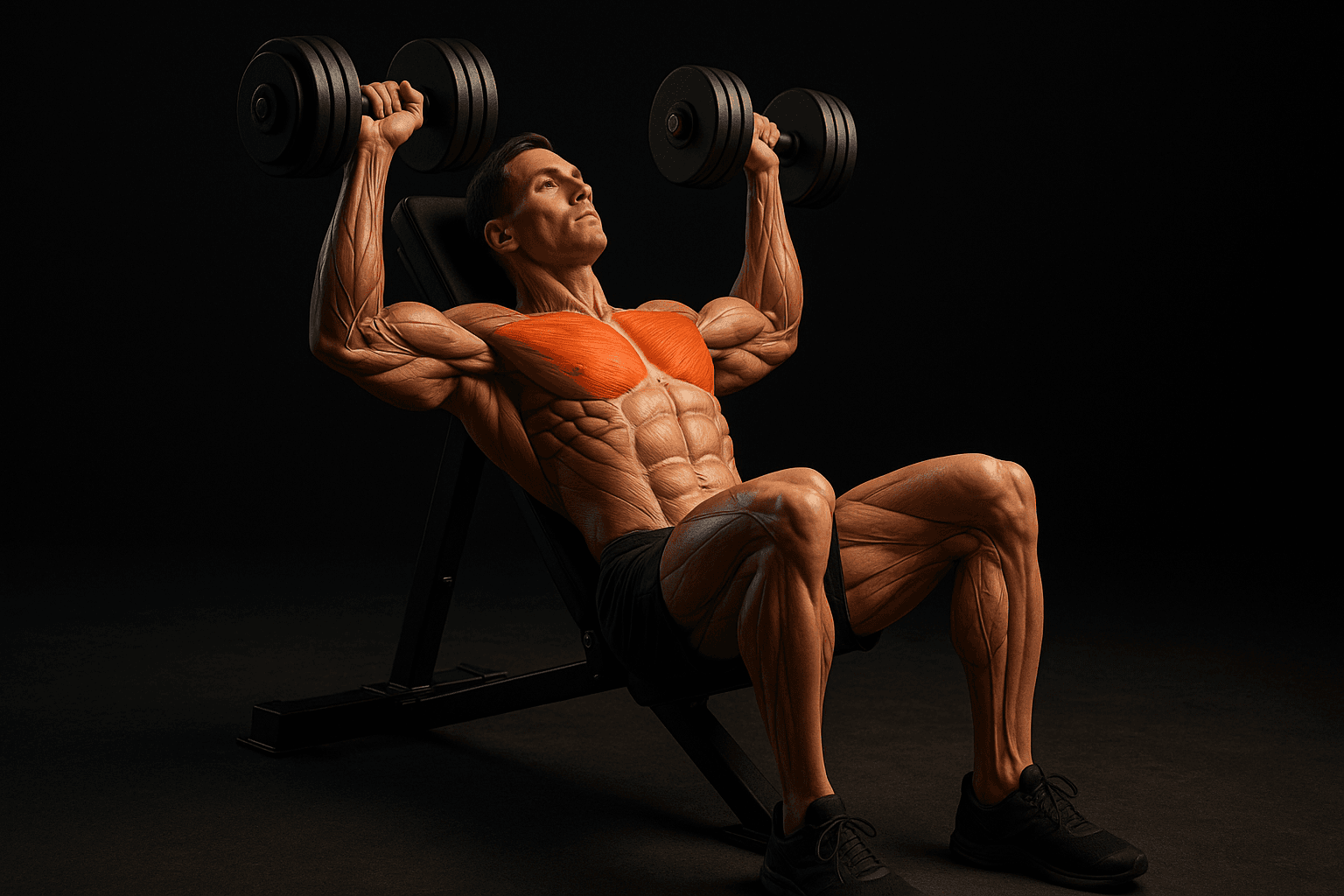
- Dumbbell floor press (bilateral) or single-arm floor press
- Standing band chest press or banded push (loop or tube band)
- Pike push-ups (for more shoulder load) or elevated-feet decline push-ups for greater overload
These require only a stable elevated surface, one pair of dumbbells, or a resistance band.
What does each alternative preserve and lose vs a standard push-up?
| Exercise | Equipment | What it preserves | What it loses or reduces |
|---|---|---|---|
| Incline push-up | None (elevated surface) | Horizontal push pattern, scapular control, core tension | Overall loading intensity and shoulder/lower-chest demand is reduced vs floor push-up |
| Dumbbell floor press | Dumbbells | Horizontal load, progressive resistance, triceps involvement | Limited shoulder flexion and scapular protraction range; lower core/stability demand than push-up |
| Single-arm dumbbell floor press | One dumbbell | Unilateral strength, core anti-rotation demand, progressive load | Reduced bilateral stability pattern and full ROM compared with floor push-up |
| Standing band chest press | Resistance band | Horizontal push mechanics, continuous tension, easy progression | Different force curve, requires anchor; less bodyweight/core demand |
| Pike/decline push-up | None (elevate feet) | Greater shoulder (deltoid) loading, vertical force emphasis | Can be more shoulder-dominant and less chest-focused; harder to progressively overload safely |
When is a home swap adequate, and when should I go to a gym?
Adequate at home:
- Your goal is general upper-body strength, hypertrophy, or fitness.
- You want to build pushing strength without near-maximal loads.
- You value convenience and consistency over maximal loading.
Consider the gym when:
- You need progressive heavy loading beyond your available dumbbells/bands (e.g., heavy barbell bench for strength sports).
- You want precise bench or barbell technique practice (powerlifting, testing 1RM).
- You need specialized equipment (heavy adjustable bench, full racks, calibrated plates).
Home options often cover 80–90% of typical recreational lifters’ needs. For specialized strength goals or maximum barbell overload, gym equipment becomes necessary.
How should I progress these alternatives to keep getting stronger?
Principles that apply to all variations:
- Progressive overload: increase reps, sets, band tension, or dumbbell weight over weeks.
- Frequency: target horizontal push 2–3 times per week, splitting total weekly volume across sessions.
- Volume: for hypertrophy, accumulate multiple working sets per muscle group across the week. For strength, prioritize heavier loads and lower reps.
- Specificity: choose decline/incline or unilateral variations depending on whether you want more shoulder, chest, or core emphasis.
Practical progressions:
- Incline push-up: lower the incline over weeks until you reach the floor, then add a weighted vest or slow eccentrics.
- Dumbbell floor press: increase weight, add pauses at the bottom, or switch to single-arm presses for more core demand.
- Band chest press: move farther from the anchor, use thicker bands, or change hand position/tempo.
- Pike to handstand progression: increase elevated height, partial wall handstand holds, and then smaller assistance.
How many sets and reps should I do?
Common, evidence-aligned ranges: 6–12 reps per set works well for combined strength and hypertrophy with heavier loading; 8–20 reps can be effective for bodyweight or band work when absolute load is limited. Aim for multiple effective sets per week (distribute 6–20 working sets per week per muscle group depending on experience, recovery, and overall program). Adjust based on fatigue and progress.
Safety note: stop any exercise that causes sharp joint pain; soreness is normal but acute pain is not. If you have a history of shoulder or wrist issues, consult a qualified healthcare or strength professional before progressing. This article does not diagnose injuries or guarantee prevention.
Quick sample session (home, minimal equipment)
- Warm-up: 5 minutes of shoulder mobility and band pull-aparts
- A1: Incline push-ups — 3 sets of 8–15 reps
- A2: Dumbbell single-arm floor press — 3 sets per side of 6–10 reps
- B1: Standing band chest press — 2–3 sets of 12–20 reps
- Accessory: Triceps extension or plank variations — 2–3 sets
Adjust load and reps so the last 1–3 reps of each working set are challenging but maintainable with good form.
What limitations should I be aware of (and what apps/AI can’t do)?
- No app or AI can reliably see or correct your form in real time across every context; recorded video reviewed by a qualified coach is superior for technical feedback.
- Algorithms can’t replace medical diagnosis or tailored rehabilitation — if you have an injury, see a licensed clinician or physical therapist.
- A training plan is only effective if you follow it consistently; technology helps track progress but doesn’t create adherence by itself.
Safety and closing note: prioritize controlled technique and gradual progression. If you want to track sets, reps, and progression simply from your phone, consider logging tools like RepBro to keep consistent records and progressive overload visible. Remember that consistent, well-managed loading drives results more than any single exercise choice.
If you need a brief plan tailored to your equipment and goals, provide your current level, available weight/band options, and how often you can train each week.
Frequently asked questions
- Can I replace push-ups with dumbbell presses at home?
- Yes. Dumbbell floor or single-arm presses reproduce horizontal pushing load and allow progressive resistance, so they’re an effective substitute for strength and hypertrophy. They reduce scapular protraction range and core demand compared with full push-ups, so add core work or unilateral variations to compensate.
- How often should I train push movements at home?
- Train horizontal push movements 2–3 times per week, dividing total weekly sets across sessions. Aim for multiple hard sets per week to drive adaptation and increase load or reps gradually. Recovery, progressive overload, and exercise variety matter more than exact frequency.
- When aren’t home alternatives enough?
- Home options are adequate for most general strength and size goals, but if you need maximal heavy loading, maximal velocity bench practice, or precise barbell bench progressions for competition, a gym with a bench and heavy barbell is necessary.