Push-up: Muscles Worked and Best Alternatives
What muscles do push-ups train, where they fit in a program, and 4 solid alternatives for beginners, plateaus, limited equipment, or shoulder issues.
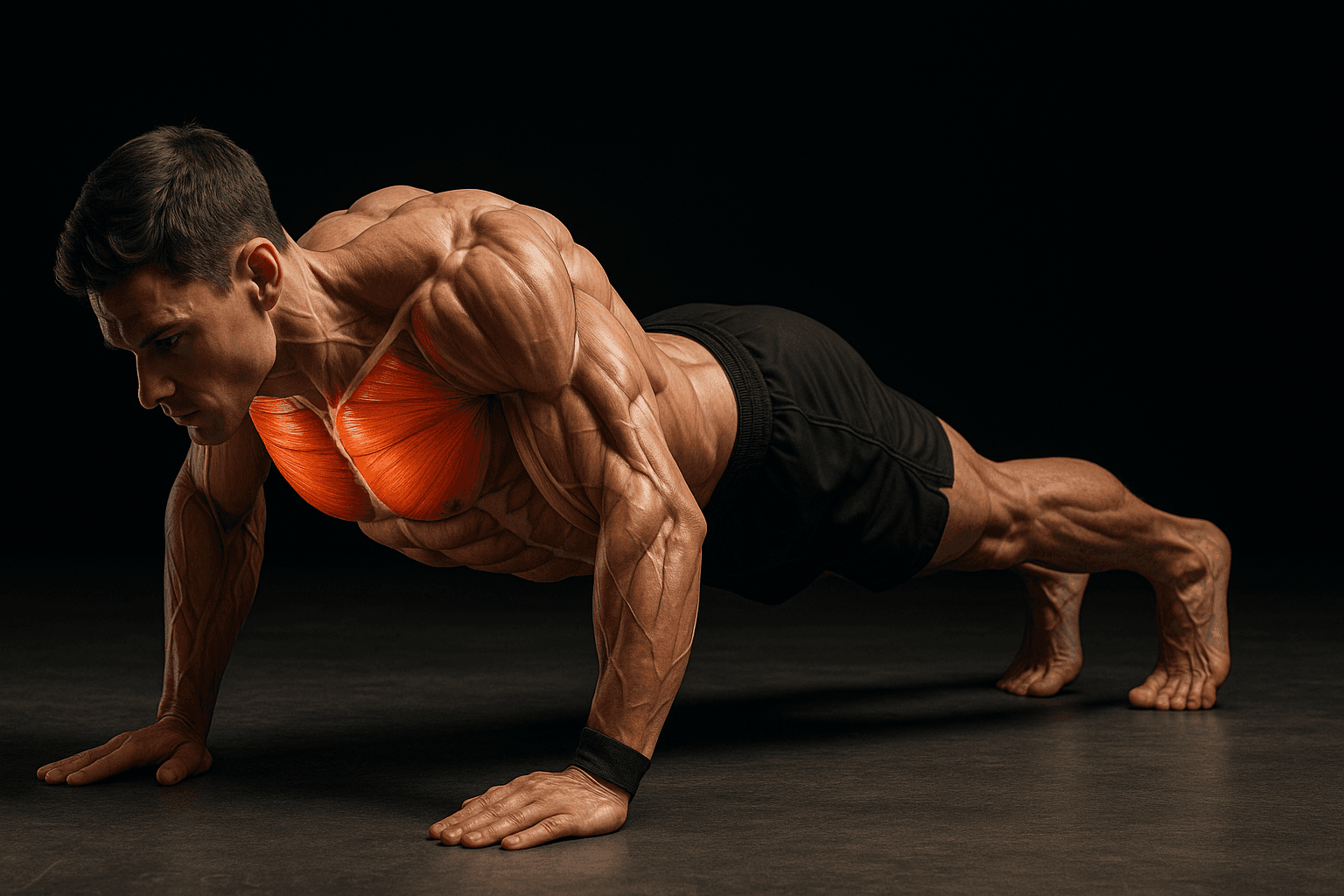
Photo by RepBro.
First paragraph answers the query directly.
Push-ups primarily train the pectoralis major (chest), anterior deltoid (front shoulder), and triceps brachii, with important secondary work for the serratus anterior, scapular stabilizers, and core (abs and hip extensors). They are a horizontal pushing movement that also taxes shoulder stability and anti-extension core control.
Which muscles are primary vs secondary with a push-up?
Primary:
- Pectoralis major (sternal and clavicular heads) — main horizontal press.
- Triceps brachii — elbow extension, a large contributor as depth increases.
- Anterior deltoid — assists shoulder flexion and stabilization.
Secondary / supportive:
- Serratus anterior — visible in the protraction phase (especially in push-up plus).
- Scapular stabilizers (mid/lower trapezius, rhomboids) — control shoulder blade movement.
- Core muscles (rectus abdominis, obliques, erector spinae, glutes) — resist trunk sag and rotation.
- Biceps/forearm muscles — isometrically for elbow and wrist stabilization.
How should push-ups fit into a training program?
- Role: Primary horizontal press in a bodyweight or upper-body session. Use as a main lift when you lack gym equipment, or as an accessory after heavier vertical or horizontal pressing.
- Frequency: 2–4 sessions per week depending on volume and recovery.
- Sets and reps: For strength use 3–5 sets of 3–6 reps with added resistance; for hypertrophy 3–4 sets of 6–12 reps with progressive overload; for endurance 2–4 sets of 15–30+ reps. Adjust rest 60–180 seconds depending on intensity.
- Progression: Increase load (weighted vest/plate), change leverage (decline → standard → incline), swap to harder variations (rings, single-arm), or increase volume.
Basic push-up form (what to do and what to avoid)
- Hand position: Slightly wider than shoulder-width for balanced chest/triceps work. Fingers splayed to distribute force.
- Elbow angle: Keep elbows roughly 30–45° from the torso — not flared at 90° and not pinned to the ribs.
- Scapula: Allow controlled retraction at the top and protraction at the top of the push; avoid shrugged shoulders.
- Core and hips: Brace abs, glutes, and keep a straight line from head to heels to prevent sagging or hiking hips.
- Range of motion: Lower until chest is within ~2–3 cm (about 1 in) of the floor or until you can maintain scapular control and straight body alignment.
Safety note: Stop on sharp pain, don’t push through acute joint pain, and consult a qualified professional if something hurts unusually. This is guidance, not a diagnosis.
Best alternatives — when to pick each
- Incline push-up / knee push-up (regression; no equipment)
- When to pick: You’re a beginner, returning from a layoff, or rehabbing low-load strength. Also useful for high-volume conditioning without heavy stress.
- Why: Reduces the percentage of bodyweight you press by shifting load to feet or lowering the angle; allows practice of mechanics.
- Programming: 3–5 sets of 8–20 reps. Move to lower inclines as sets become easy.
- Weighted push-up (progression for plateaus; small equipment)
- When to pick: You can do 20+ clean reps of a standard push-up for multiple sets and need a strength/hypertrophy stimulus.
- Why: Adding a 5–25+ kg (10–55 lb) plate, weighted vest, or resistance band increases mechanical tension without changing technique substantially.
- Programming: For strength 3–5 sets of 3–6 reps; for hypertrophy 3–4 sets of 6–12 reps. Increase weight in 2.5–5 kg (5–10 lb) steps.
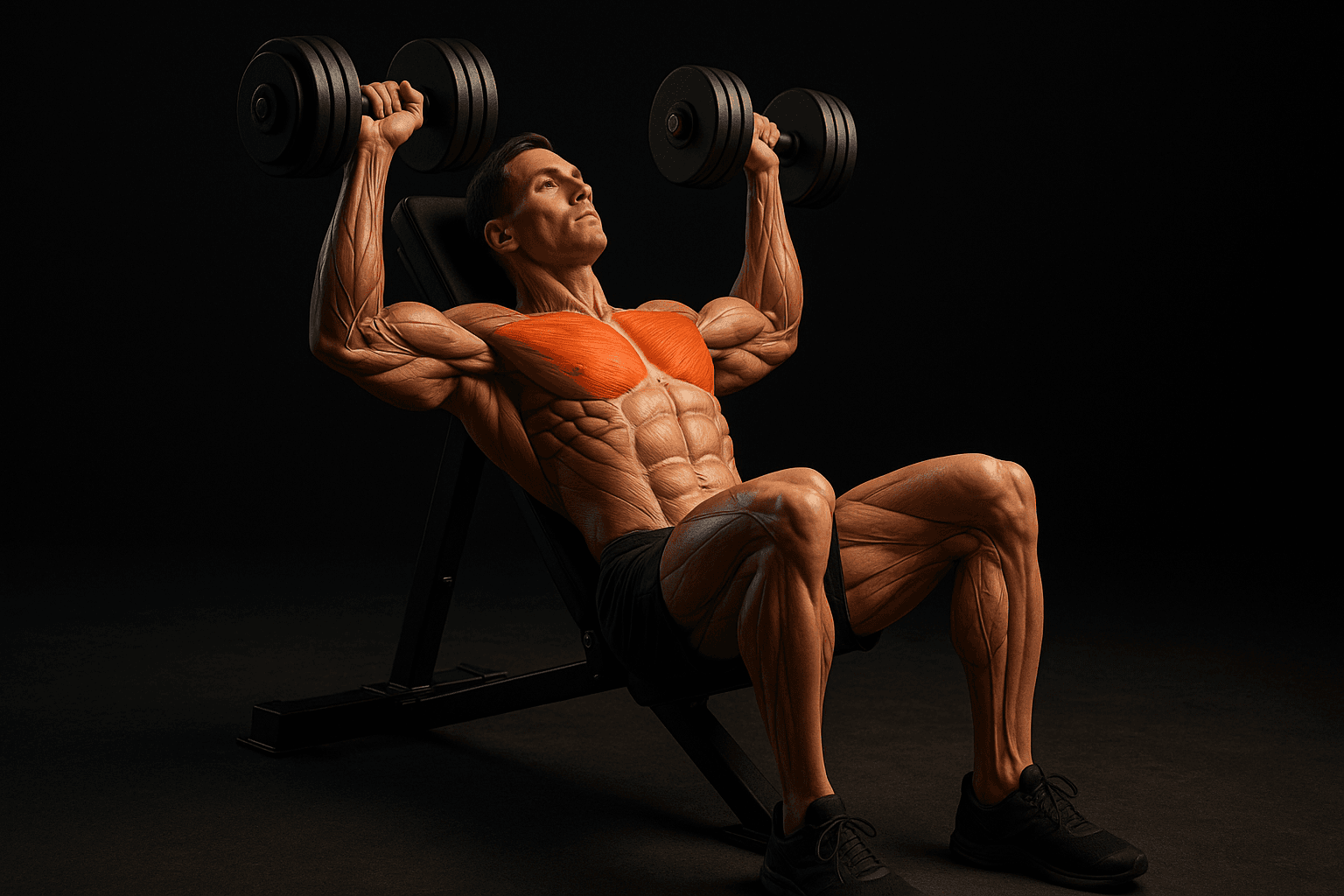
- Dumbbell bench press or floor press (equipment-access alternative; shoulder-friendly)
- When to pick: You have gym access and want precise progressive overload, or if you need a variation that limits shoulder ROM (floor press) to reduce impingement-like symptoms.
- Why: Dumbbells allow neutral grips and unilateral work to fix imbalances; the floor press limits shoulder extension and reduces stress on the shoulder joint.
- Programming: 3–5 sets of 4–8 reps for strength, 6–12 reps for hypertrophy. Use slower tempos to increase time under tension.
- TRX/ring push-ups or push-up plus (scapular control / stability)
- When to pick: You need to improve scapular stability, scapulo-thoracic control, or shoulder resilience; or want a progressible instability stimulus.
- Why: Unstable handles force serratus anterior and scapular muscles to work harder. The push-up plus (extra scapular protraction at top) targets the serratus anterior specifically.
- Programming: 3–4 sets of 6–15 reps. Reduce instability or angle if form breaks.
Choosing between alternatives: quick guide
- No equipment / beginner: Incline or knee push-ups.
- Stalled on reps and have basic equipment: Add weight to push-ups.
- Access to gym and want heavier progressive overload / isolate imbalances: Dumbbell bench press or floor press.
- Shoulder stability or scapular control issue: TRX/ring push-ups or push-up plus, and consult a professional if pain persists.
Want to compare push-up vs bench press or import routines?
If you want a direct comparison between push-ups and bench press variations, see RepBro’s comparison resources at https://www.repbro.app/vs. If you’re bringing programmed progressions into an app or coach, check import options at https://www.repbro.app/import and use the RepBro app for tracking.
Final safety note: Review technique on lighter loads before progressing, stop on sharp pain, and consult a qualified clinician or coach for persistent joint issues.
One-sentence takeaway: Push-ups are an effective horizontal pressing movement for chest, triceps, and shoulders—use regressions for beginners, added load for plateaus, and presses or instability tools to address equipment limits or scapular control issues.
Frequently asked questions
- Do push-ups build the chest?
- Yes — push-ups primarily load the pectoralis major (chest). They also train the anterior deltoid and triceps, and can produce hypertrophy when you provide progressive overload via volume, added weight, or harder variations.
- How many push-ups should I do to get stronger?
- For strength aim for 3–6 reps with added resistance; for hypertrophy target 6–12 reps with progressive load; for endurance 15–30+ reps. Use 3–5 sets and increase load or difficulty when sets become easy.
- Are push-ups bad for my shoulders?
- Push-ups are safe for most people when done with good shoulder mechanics (scapula control, elbows ~45° from torso). Stop on sharp pain and consult a professional if you have a shoulder condition—consider regressions or alternative pressing variations.