Rack Pull: Muscles Worked and Best Alternatives
Clear, evidence-aware guide to which muscles rack pulls train, where they fit in a program, and 3–4 alternative exercises with practical selection cues.
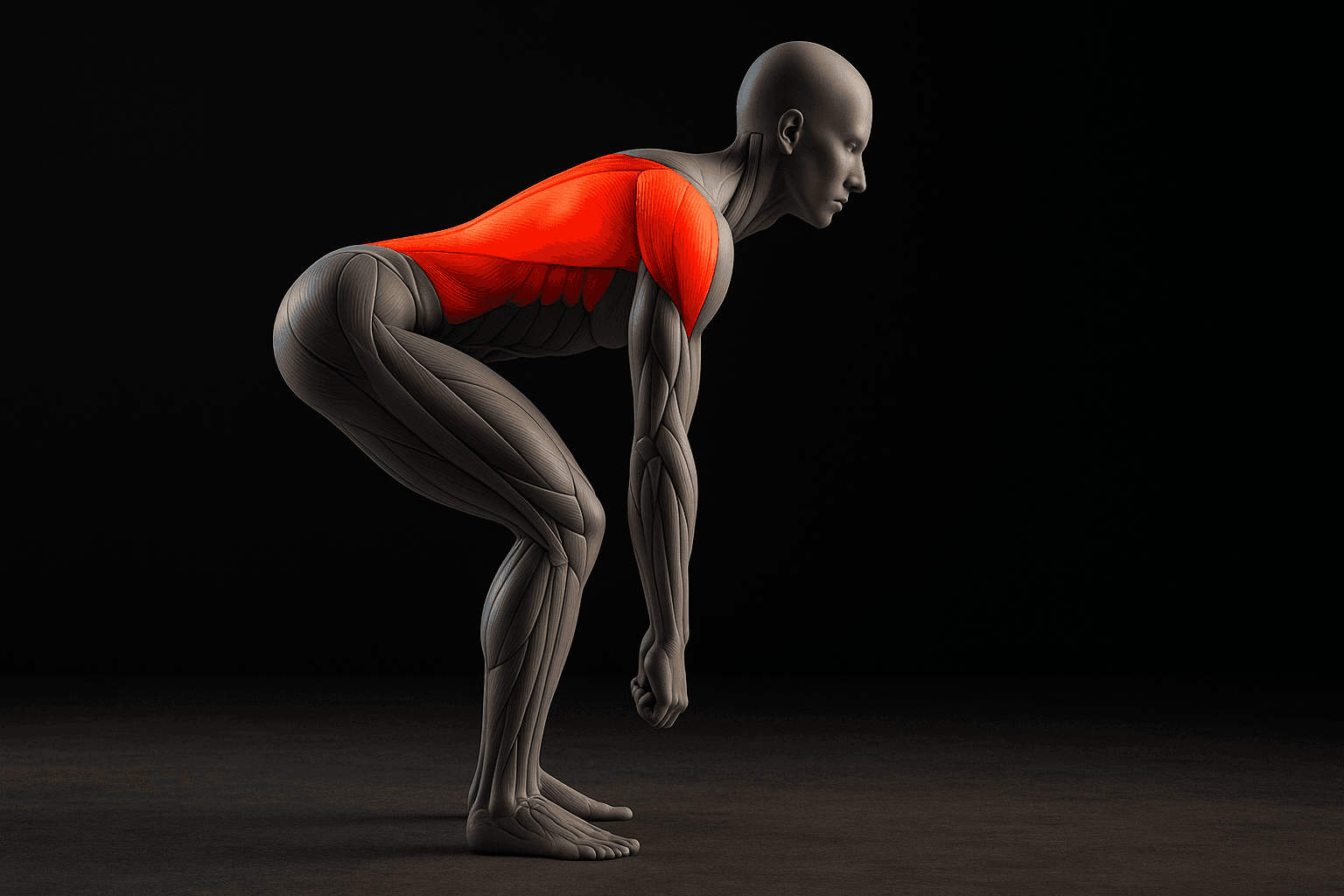
Photo by RepBro.
Rack pull direct answer (40–60 words):
Rack pulls primarily train the posterior chain—spinal erectors, glutes, and hamstrings—with secondary involvement from the traps, lats, rhomboids and grip. They are a partial-range deadlift used to overload the top half of the lift and improve lockout strength, upper-back strength, and heavy-handling capacity.
What muscles does a rack pull train, and which are primary vs secondary?
Primary muscles
- Spinal erectors (erector spinae): the main anti‑flexion muscles holding the torso rigid under load.
- Gluteus maximus: prime hip extensor, heavily involved in lockout.
- Hamstrings: active in hip extension and controlling posterior chain tension.
Secondary muscles
- Trapezius and upper/mid back (rhomboids, rear delts): stabilize and retract the scapulae during lockout.
- Latissimus dorsi: helps maintain tension and bar path against the body.
- Forearms and grip musculature: significant due to heavy loads and reduced bar momentum.
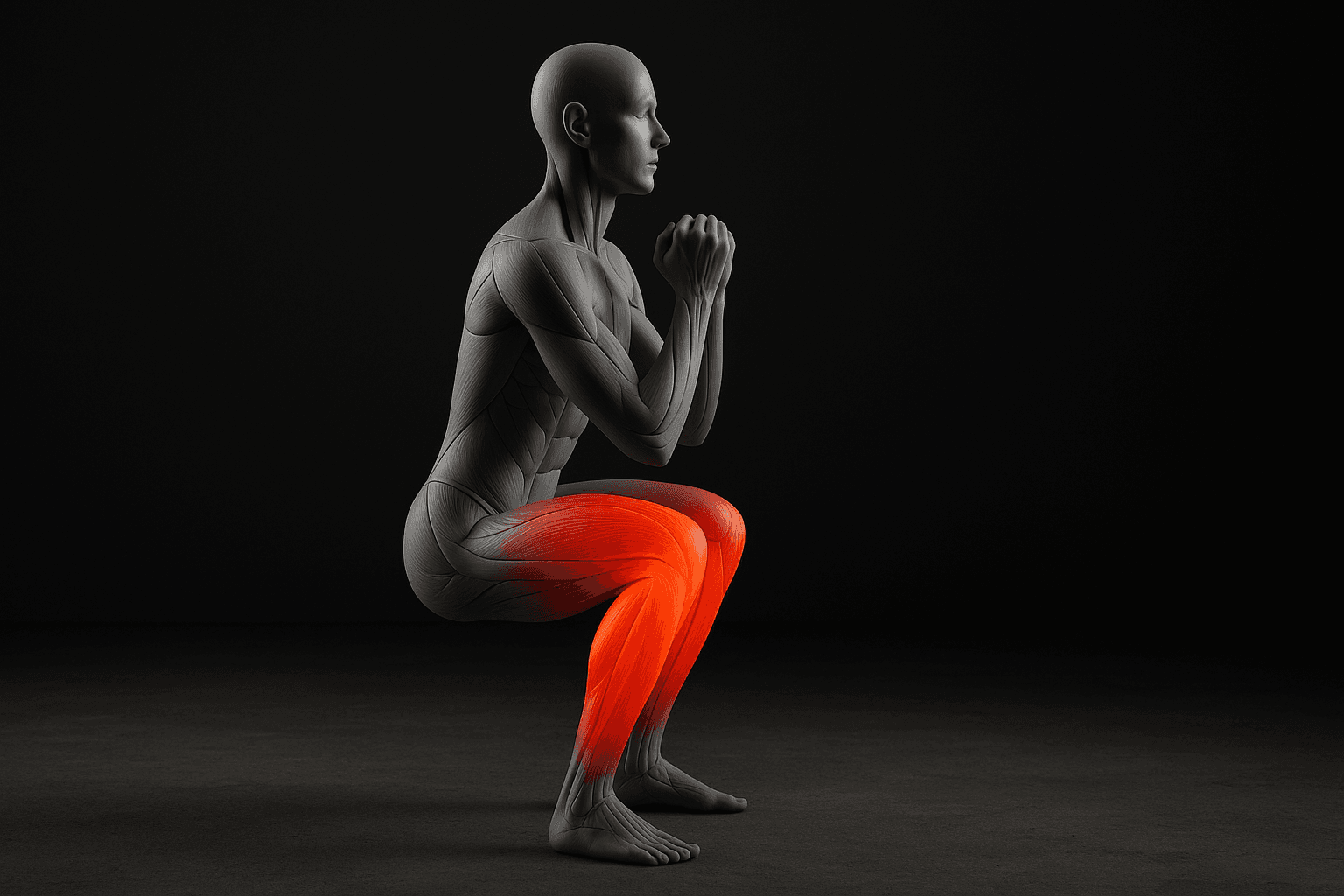
Because rack pulls remove most knee flexion when set at or above the knees, quadriceps contribution is smaller than in a conventional deadlift.
How does a rack pull differ from a conventional deadlift in mechanics and muscle emphasis?
- Range of motion: Rack pulls start from an elevated position (safety pins/blocks), shortening the ROM vs a floor deadlift. That shifts emphasis away from initial leg drive and onto hip extension and upper-back lockout.
- Joint angles: Less knee flexion and often less ankle dorsiflexion, more hip hinge and trunk extension demand.
- Load tolerance: Shorter ROM lets you handle heavier absolute loads safely for training overload at the top portion of the lift.
Practical implication: rack pulls are a tool for building upper-lockout strength, upper‑back thickness, and handling near-maximal loads without repeatedly exposing the low back to full-length deadlift stress.
When should I include rack pulls in a program and how often?
Program roles
- Lockout emphasis: To strengthen the final phase of the deadlift.
- Overload block: To accustom the nervous system to heavier loads for short ROM training.
- Upper-back accessory: To improve scapular stability and trap development.
Frequency and volume (evidence‑aligned guidance)
- Frequency: 1–2 sessions per week is common for an accessory heavy partial; more than twice weekly increases fatigue management needs.
- Sets and reps: For neural/strength focus use low reps (2–6) and multiple heavy sets; for hypertrophy use higher reps (6–12) with moderate loads. Adjust within overall weekly volume recommendations and individual recovery.
- Progression: Follow progressive overload (add load, sets, or reps over weeks) and include planned deloads when performance declines or fatigue accumulates.
How should I perform a rack pull safely?
Brief technique cues
- Set the bar at the target height (below the knee, at knee, or above—choose per goal).
- Approach with a flat back, braced core, and tension in the lats; hips and shoulders should rise together when possible.
- Drive through the hips, extend the spine to lock out, then lower under control.
Safety note: Stop on sharp pain. If you have current lower‑back pain or a history of serious injury, consult a qualified professional before loading. No app or article can diagnose; a coach or clinician should assess technique and readiness.
What are practical alternatives to rack pulls and when should I choose each?
Comparison table
| Exercise | Main emphasis | Equipment | When to pick it |
|---|---|---|---|
| Rack pull (partial deadlift) | Top-half lockout, traps, spinal erectors | Barbell + rack/blocks | Overload lockout, upper-back strength, heavy handling without full ROM |
| Romanian deadlift (RDL) | Hamstrings, glutes, hip hinge | Barbell or dumbbells | Build hamstring/glute strength and tension through long ROM; useful for hypertrophy and posterior-chain control |
| Trap-bar deadlift | Hip-dominant with more upright torso, quad/hip balance | Trap (hex) bar | If low-back shear is a concern or you need a friendlier bar path; also good for general strength when you can’t rack-pull heavy bars |
| Conventional deadlift (including paused/deficit) | Full-range posterior chain and leg drive | Barbell | When you need to address weaknesses in the start or mid‑range; paused/deficit variations help specific sticking points |
| Single-leg RDL / kettlebell RDL | Unilateral glute/hamstring control, balance | Kettlebell or dumbbell | Equipment-limited settings, rehab/ unilateral imbalances, or to reduce absolute loading while maintaining tension |
When to pick each
- You have a lockout plateau: Use rack pulls at or above the sticking point to accustom the nervous system to heavier top‑end loads.
- You lack hamstring development or hip control: Use RDLs and single‑leg RDLs to increase eccentric control and hypertrophy through the hip hinge.
- You have low-back irritation with conventional deadlifts: Try trap-bar deadlifts to reduce shear and allow a more upright torso.
- You want full-range strength and transfer to floor deadlifts: Focus on conventional deadlifts, and use paused or deficit variations to target weak ranges.
How does this fit into long-term programming?
Use rack pulls as a time-limited tool inside a larger plan. During a strength block, prioritize heavy compound lifts and place rack pulls as an accessory aimed at a specific weakness. Track objective markers (barbell loads, rep quality), manage weekly volume, and deload periodically.
Limitations
- An app or article cannot see or correct your form; only in-person coaching or video analysis by a qualified coach can reliably diagnose technique issues.
- Injuries and rehabilitation require assessment and direction from a licensed clinician or physiotherapist; this guide is informational, not diagnostic or prescriptive for injury recovery.
- A training plan is effective only with consistent adherence; program choice matters less than progressive, consistent work over time.
Final practical notes
- Start rack pulls with conservative loads while you learn setup and bracing; increase load gradually.
- Keep other posterior-chain volume in check to avoid overtraining—monitor recovery and performance.
Safety reminder: stop immediately with sharp pain and seek professional advice for persistent issues. No protocol guarantees injury prevention.
If you use a coaching or tracking app, pair it with video review and periodic in‑person assessment to maximize transfer from accessory work like rack pulls into your full deadlift and overall strength goals.
Frequently asked questions
- Which muscles does a rack pull work?
- Rack pulls primarily target the posterior chain: spinal erectors, glutes, and hamstrings, with substantial secondary work from the traps, lats, rhomboids and forearms (grip). Because the lift starts from an elevated position, it places greater emphasis on hip extension and upper back than on knee-driven leg drive.
- When should I use rack pulls in my program?
- Use rack pulls as an accessory to overload the top half of the deadlift, to build lockout strength, or to train heavy loads with reduced lumbar and knee range of motion. They’re appropriate 1–2 times per week for strength blocks, with standard progressive overload and periodic deloads.
- What are practical alternatives to rack pulls?
- Useful alternatives include Romanian deadlifts for hamstring and hip-hinge development, trap-bar deadlifts when you need a more upright torso or lower shear on the spine, and conventional deadlifts (including paused or deficit variations) when you need full-range strength. Kettlebell single‑leg RDLs help with equipment limits or unilateral weaknesses.